1 free read left. Create a free account for unlimited reading + AI research.
Create free accountWhitepaper DiGRA
1 free read left. Create a free account for unlimited reading + AI research.
Create free accountWhitepaperDiGRA
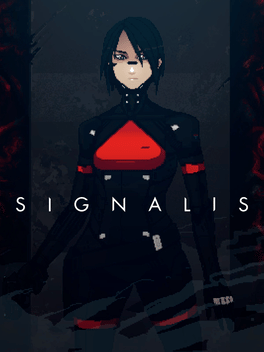
The paper closely reads Signalis, a 2022 survival horror game developed by rose-engine, through its cyborg protagonist Elster.
This paper examines "posthuman gaming" through a close reading of the 2022 survival horror game Signalis, developed by rose-engine, arguing that the game's cyborg protagonist, Elster, destabilizes human-centered agency and queers conventional identities at a moment of planetary ecological crisis. Drawing on theorists including Keogh, Wilde, Puar, and Neimanis, the authors position gameplay itself as an embodied posthuman practice, in which the player and the avatar form a cyborgian assemblage. The study is conceptually rather than empirically grounded: it offers no survey data, sample, or quantitative methodology, and its evidence rests on textual and gameplay analysis of a single title.
The central claims are twofold. First, the authors contend that Signalis enacts a destabilization of human agency and a queering of identity, with the player's goal of recovering memories to save a queer lover reframing a dystopian narrative as a romance and a study of trauma. Second, they argue that the game's horror mechanics, particularly the viral "sickness" of Bioresonance and the corruption of Replikas, function as a vehicle for ecological horror, critiquing the hubris of technological progress pursued at environmental cost. The paper also refines Wilde's avatar-player model by arguing that the cyborg framework is not antithetical to posthuman gaming but is strengthened by medium-specific features such as a fixed avatar.
The analysis is notable for its interdisciplinary reach, linking game studies, queer theory, posthumanism, and horror scholarship. Its scope is limited to one game and a theoretical framework, so its conclusions are interpretive rather than generalizable to the broader gaming landscape. The authors frame their contribution as an opening for further dialogue on how technology and ecology might be reconnected rather than treated as opposing poles.
Each row is a game or company this document names, each column a document, oldest first. A mark means that document names it. Select a row to see those documents.

DiGRA · 2026

DiGRA · 2026



DiGRA · 2026



DiGRA · 2026



DiGRA · 2026



DiGRA · 2026



DiGRA · 2026



DiGRA · 2026

DiGRA · 2026



DiGRA · 2026



DiGRA · 2026

DiGRA · 2026
DiGRA · 2026