1 free read left. Create a free account for unlimited reading + AI research.
Create free accountWhitepaper DiGRA
1 free read left. Create a free account for unlimited reading + AI research.
Create free accountWhitepaperDiGRA
They seek to correct this anthropocentric limitation.
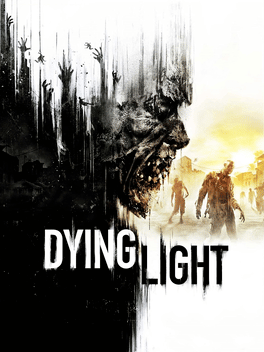
This paper, by Will McKeown and Poppy Wilde of Birmingham City University, applies Deleuzoguattarian frameworks to questions of authority, agency, and spatiality in videogames, using the open-world zombie survival game Dying Light (Techland 2015) as its case study. The authors argue that existing Deleuze-informed scholarship on game play has tended to frame agency exclusively from the player's position, an anthropocentric limitation they seek to correct. Instead, they contend that authority is distributed across a virtual game-space comprising items, enemies, buildings, landscapes, traversal methods, and non-player characters, with these elements forming a non-hierarchical, rhizomatic network.
The analysis draws on several core concepts. The rhizome is used to describe how Dying Light's progression, enemy types, difficulty settings, and weapon durability together produce a shifting balance between human and zombie rather than a fixed hierarchy. The authors also map the game world along a continuum of striated and smooth space. Daytime streets are read as relatively fixed and rule-governed, while rooftops become smoothed into open, contested terrain once fast, climbing "Viral" zombies appear. Finally, the concepts of de- and re-territorialization frame the city of Harran as a site where zombies reinscribe spaces and reconfigure control, with the player periodically reclaiming areas as safe houses, leaving authority in constant flux.
Methodologically, the paper is a theoretical and textual case study rather than an empirical study, offering close readings of gameplay features rather than survey or sample data. Its scope is limited to a single title and to the theoretical literature on game space, play, and power, and it positions itself as an effort to bring Deleuze and Guattari into closer engagement with specific game texts.
Each row is a game or company this document names, each column a document, oldest first. A mark means that document names it. Select a row to see those documents.

DiGRA · 2026

DiGRA · 2026



DiGRA · 2026



DiGRA · 2026



DiGRA · 2026



DiGRA · 2026



DiGRA · 2026



DiGRA · 2026

DiGRA · 2026



DiGRA · 2026



DiGRA · 2026

DiGRA · 2026
DiGRA · 2025