1 free read left. Create a free account for unlimited reading + AI research.
Create free accountWhitepaper Bina Nusantara University
1 free read left. Create a free account for unlimited reading + AI research.
Create free accountWhitepaperBina Nusantara University
This research assesses the viability of three JavaScript-compatible frameworks: Bullet, Cannon, and JigLib. The study focuses on compatibility, physical accuracy, feature completeness, and computational performance.
Methodology. The evaluation of physics frameworks was based on a custom engine wrapper testing rigid body collisions.
This evaluation assesses the viability of integrating open-source physics frameworks into WebGL-based game engines. By developing a prototype engine and conducting comparative experiments, the research examines three specific JavaScript-compatible frameworks: Bullet, Cannon, and JigLib. The study focuses on four key metrics: compatibility with the engine, physical accuracy, feature completeness, and computational performance across different browser environments.
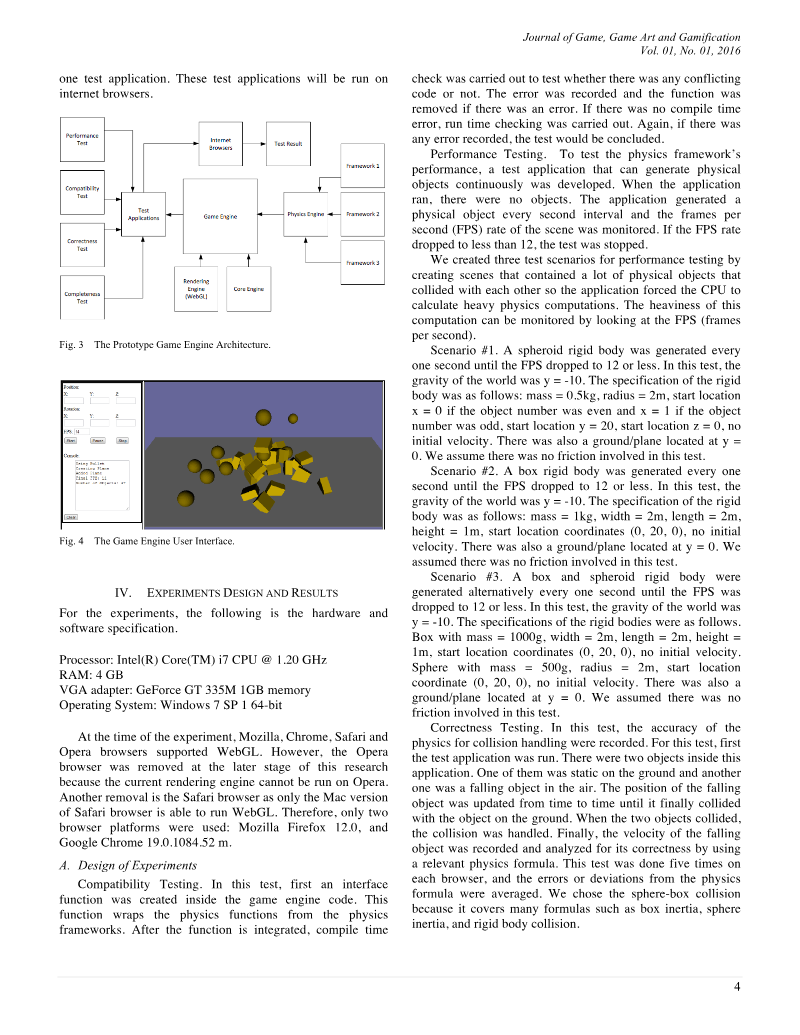
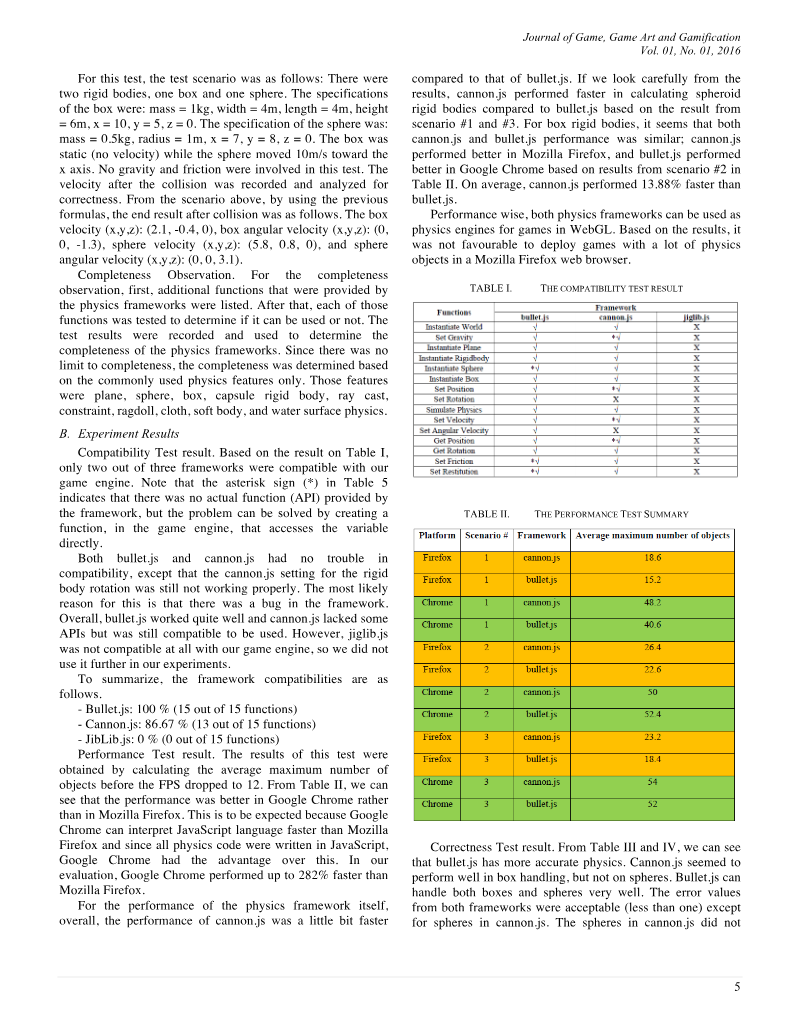
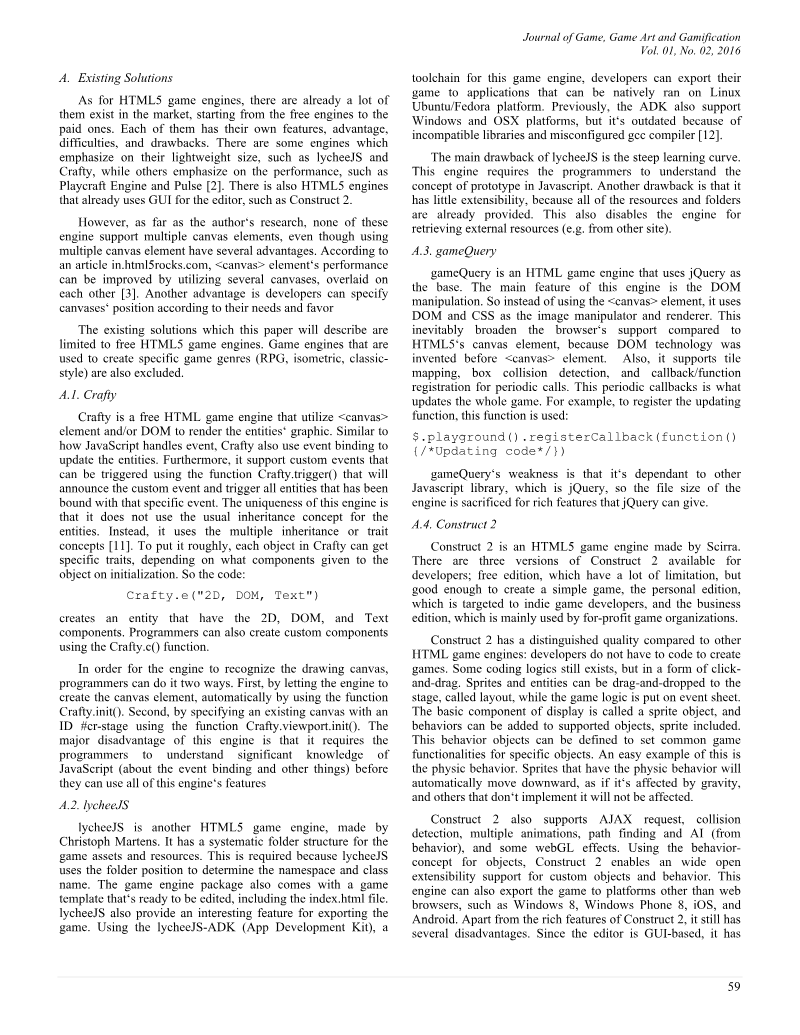
The methodology involved creating a custom game engine architecture that acts as a wrapper for the physics frameworks, allowing for standardized testing. Experiments were conducted on Mozilla Firefox and Google Chrome using test scenarios involving rigid body collisions, such as box and sphere interactions. Performance was measured by tracking the maximum number of objects a scene could support before the frame rate dropped below 12 frames per second.
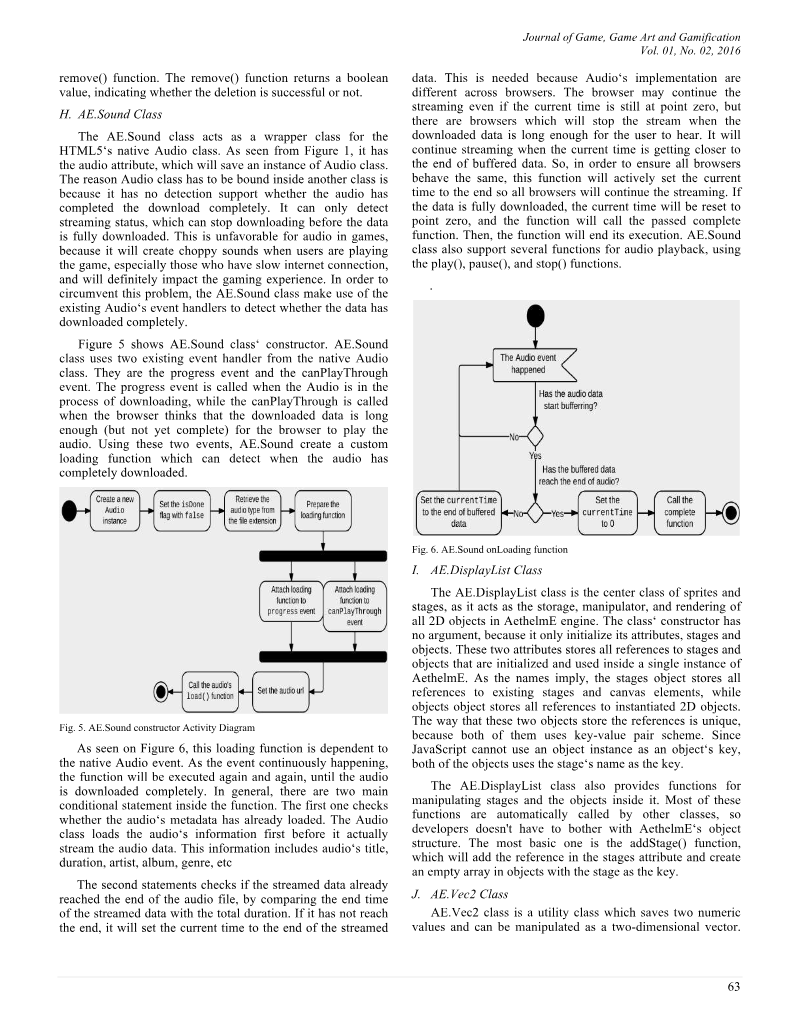
The findings indicate that Bullet is the most robust option, achieving 100% compatibility with the test engine and demonstrating superior accuracy and stability due to its use of continuous collision detection. While Cannon proved to be approximately 13.88% faster on average, it exhibited instability and lacked certain APIs, making it less suitable for high-precision genres like fighting or racing games. JigLib was found to be entirely incompatible with the prototype engine. Furthermore, the study highlights that Google Chrome significantly outperforms Mozilla Firefox in handling WebGL-based physics, with performance gains of up to 282% in some scenarios. Ultimately, the research concludes that while Bullet is the preferred choice for accuracy-dependent applications, Cannon remains a viable, lightweight alternative for simpler, performance-sensitive projects.
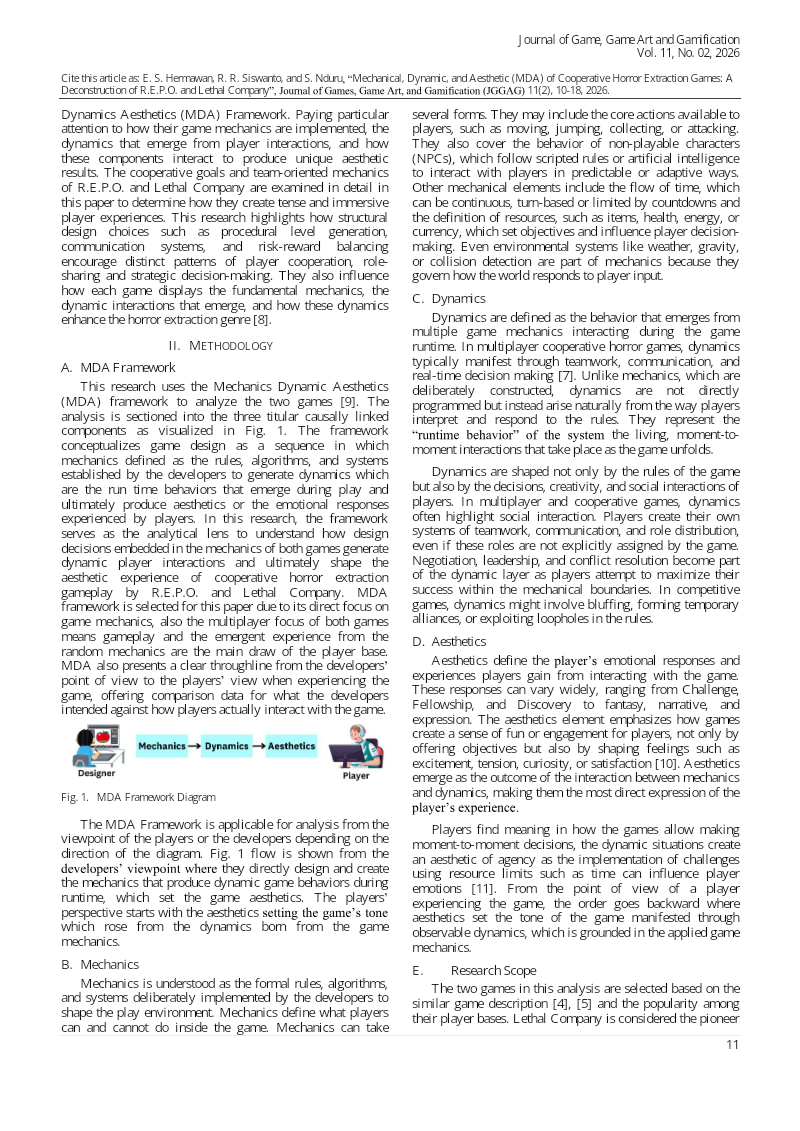
Each row is a game or company this document names, each column a document, oldest first. A mark means that document names it. Select a row to see those documents.
Bina Nusantara University · 2026
Bina Nusantara University · 2025
Bina Nusantara University · 2024
Bina Nusantara University · 2023
Bina Nusantara University · 2023
Bina Nusantara University · 2021
Bina Nusantara University · 2021
Bina Nusantara University · 2021
Bina Nusantara University · 2021
Bina Nusantara University · 2021
Bina Nusantara University · 2021
Journal of Games, Game Art, and Gamification · 2021
Game Developers Conference · 2020