Physics Based
Documents
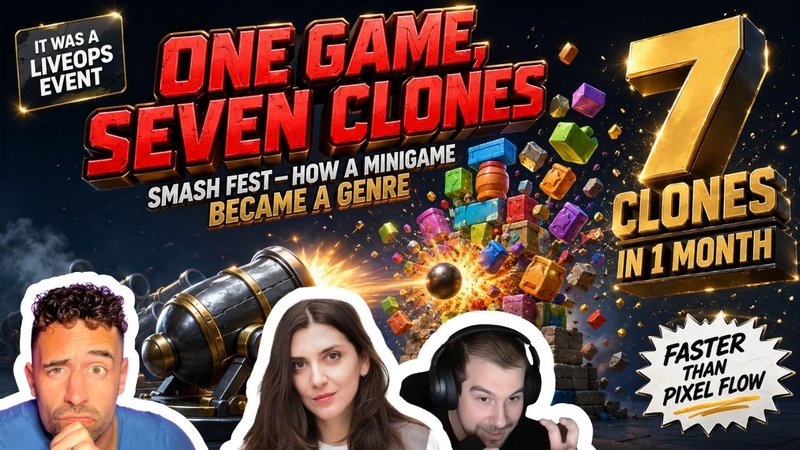
💣 How Smash Fest created a NEW Puzzle category overnight
The mobile gaming industry is currently witnessing the rapid emergence of a new physics-based puzzle sub-genre, catalyzed by the success of minigame mechanics originally featured in established titles like Toon Blast. By isolating the core loop of using limited projectiles to topple structures, developers have successfully transitioned these temporary LiveOps events into standalone, high-performing applications. This trend demonstrates a shift toward rapid product iteration, where successful micro-mechanics are extracted and scaled into full games to capture immediate market interest.
Market leaders such as Smash Fest initially set the benchmark by achieving approximately 300,000 daily downloads and generating nearly $1 million in daily revenue through a combination of in-app purchases and advertising. However, the landscape is highly competitive and volatile; following the removal of early frontrunners from major app stores, competitors like Royal Smash have moved to capture market share. These successors are refining the category by deploying more aggressive monetization strategies, such as frequent rewarded ad placements, and utilizing significantly higher volumes of creative assets across diverse advertising channels to maintain visibility.
The primary driver for success in this category is the ability to maintain low cost-per-install metrics through intuitive, frustration-free gameplay that translates effectively into playable advertisements. As at least seven major studios have already entered this space, the market is experiencing a surge of derivatives similar to previous industry trends. While the category remains relatively uncrowded compared to more saturated puzzle segments, the rapid pace of development and the necessity for sophisticated LiveOps mean that late entrants must prioritize aggressive creative scaling and optimized monetization to remain viable. Analysts expect this influx of physics-based titles to continue, with new iterations likely to dominate top-chart rankings in the near term.
- The physics-based puzzle sub-genre emerged by isolating and scaling successful minigame mechanics—specifically projectile-based structure toppling—previously used as temporary LiveOps events in games like Toon Blast.
- Market leader Smash Fest achieved significant scale with approximately 300,000 daily downloads and nearly $1 million in daily revenue generated through a hybrid model of in-app purchases and advertising.
- The category is characterized by high volatility and rapid competition, as seen when successors like Royal Smash moved to capture market share following the removal of early frontrunners from major app stores.
- Success in this space relies on maintaining low cost-per-install (CPI) metrics by utilizing intuitive, frustration-free gameplay that functions effectively within playable advertisements.
- New entrants are refining the category by deploying more aggressive monetization, such as frequent rewarded ad placements, and scaling visibility through high volumes of creative assets across diverse channels.

Sandloop review: It looks simple. That’s the point.
Sandloop, a physics-based sorting game published by Voodoo, exemplifies the effectiveness of a minimalist design philosophy in the hyper-casual mobile market. By prioritizing a streamlined early-game experience that delays monetization and menu access until level 20, the title successfully minimizes initial user churn. The core gameplay revolves around strategic bucket placement to clear sand layers, creating a satisfying puzzle loop that avoids complex mechanics in favor of accessible, physics-driven challenges.
Financially, the game has demonstrated robust performance, generating between $60,000 and $120,000 in daily ad revenue during its first month, supported by approximately 50,000 daily downloads. Despite these strong early metrics, the title operates on a high-spend acquisition model, with daily marketing expenditures reaching $200,000 to maintain growth across major platforms like AppLovin, Google, and Facebook. This strategy targets a three-month payback period, though the current creative output of 250 assets is considered insufficient to reach the scale of industry-leading titles.
The broader puzzle category is currently undergoing a transition, with established publishers shifting focus toward in-app purchases rather than relying solely on ad-heavy monetization. While Sandloop serves as a successful example of Voodoo’s portfolio diversification, its long-term viability remains contingent on balancing difficulty curves and economy scaling. Analysts caution that the lightweight nature of the game may ultimately limit its growth potential, particularly if major match-three developers enter the space. Consequently, sustainable success in this sector requires moving beyond simple mechanics to ensure long-term player retention and revenue stability.
- Sandloop generates $60,000 to $120,000 in daily ad revenue from approximately 50,000 daily downloads.
- The game utilizes a high-spend acquisition model with $200,000 in daily marketing costs, targeting a three-month payback period.
- To minimize initial user churn, the game delays all monetization and menu access until level 20.
- Current creative output of 250 assets is deemed insufficient to achieve the scale required to compete with industry-leading titles.
- The puzzle category is shifting toward in-app purchases, challenging the long-term viability of ad-heavy, minimalist titles like Sandloop.
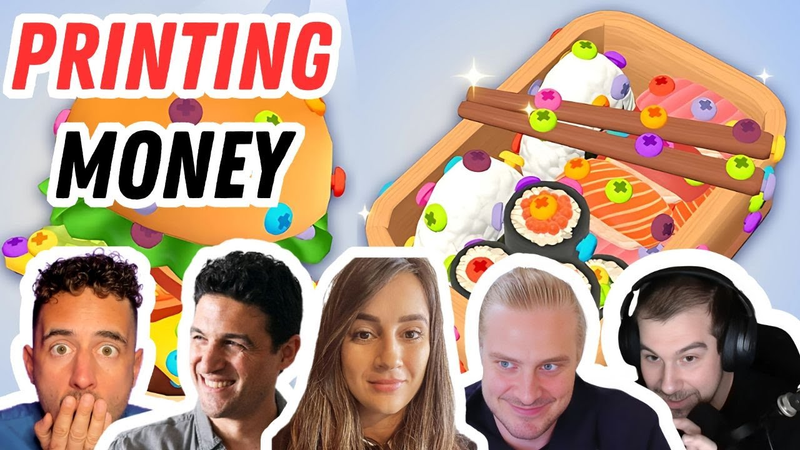
Screw Master 3D Live Review: 15% D30 retention & 80k+ daily revenue? The real hybrid casual KPIs
- Screw Master 3D achieves approximately 80k to 100k in daily revenue, with a significant portion driven by a high-engagement 'unlock box' rewarded ad placement that maintains a 60%+ engagement rate.
- The game maintains strong long-term retention, allowing for aggressive user acquisition spending based on LTV projections that extend to Day 90, Day 120, or even Day 180.
- To mitigate eCPM degradation caused by high ad frequency, the developers utilize 'skip-it' mechanics, which allow users to bypass ads while maintaining monetization through alternative premium options.
- The development team employs a rapid iteration strategy for product features, such as testing and removing theme park mechanics, to keep the game fresh and avoid limiting the difficulty design space.
- Creative testing is primarily conducted on Facebook to quickly identify high-performing concepts, which are then scaled across a diverse channel mix including TikTok, Google, and various incentive networks.