Wizards of the Coast
CompanyUnited States
Documents about Wizards of the Coast
TWIG #396: AppLovin's Q2, Unity's Supersonic Fire Sale and GTA VI's Netflix Trailer Drama
The mobile gaming industry is currently navigating a period of significant structural realignment, characterized by aggressive consolidation, shifting monetization strategies, and a cooling of growth expectations for major ad-tech players.
- AppLovin experienced a 29% share price decline despite 53% year-over-year revenue growth, as investors reacted to decelerating AI performance improvements and conservative forward guidance.
- Unity sold its Supersonic publishing arm to Triple Dot for $40 million, marking a strategic pivot away from direct publishing to focus on its Vector AI ad-tech infrastructure.
- The mobile gaming industry is shifting its primary performance metric from short-term acquisition cycles to 28-day return-on-ad-spend (ROAS) to prioritize sustainable user value.

The Miraculous Story Behind Baldur’s Gate 3
The development and release of Baldur’s Gate 3 represents a significant anomaly in the modern video game industry, characterized by a complex history of licensing, financial instability, and creative perseverance.
- Larian Studios' success with Baldur's Gate 3 is attributed to its status as a rare, large-scale, privately owned developer, which allows it to avoid the short-term pressures of quarterly earnings and investor demands faced by publicly traded companies.
- The development of Baldur's Gate 3 required a massive scaling effort, with the studio growing its workforce from 140 to 450 employees to manage the complex production pipeline required for full cinematic integration.
- Baldur's Gate 3 has achieved significant commercial success, selling over 20 million copies and winning multiple Game of the Year awards despite facing major external challenges, including the COVID-19 pandemic and the forced relocation of staff due to the 2022 Russian invasion of Ukraine.
Universes Beyond comes to Dungeons & Dragons | Design Club
Wizards of the Coast is aggressively pivoting the Dungeons & Dragons brand to meet the high-growth revenue expectations set by parent company Hasbro.
- Wizards of the Coast is shifting Dungeons & Dragons toward a high-volume product model to meet Hasbro’s aggressive revenue growth expectations.
- The strategy mirrors Magic: The Gathering by integrating external franchises into the fifth edition ruleset through the Universes Beyond initiative.
- The World of Warcraft expansion serves as the flagship for this model, providing modular toolkits of species, classes, and dungeons designed to overlay onto existing campaigns.
🚨📢 BREAKING NEWS: Applovin Record Revenue, More Layoffs, EvE online sold back
The gaming industry is currently experiencing a period of significant corporate restructuring, marked by record financial performances for some entities and aggressive downsizing for others.
- AppLovin reported record Q1 revenue of $1.84 billion, a 25% year-over-year increase, while Unity posted a $347 million loss despite a 17% revenue increase to $508 million.
- CCP Games is being sold back to its CEO by Pearl Abyss for $120 million, a significant drop from its $425 million valuation in 2018.
- Supercell acquired Metacore, resulting in a 30% workforce reduction at the studio as part of a strategic shift in the merge-game genre.

Gamestop Bids on Ebay, Battlefield’s Preorder Battlepass, & The PS5 DRM Scare | Games For Breakfast
The gaming industry is currently navigating a period of significant volatility characterized by aggressive corporate expansion, labor unrest, and shifting consumer rights.
- GameStop has proposed a $55.5 billion acquisition of eBay, a move widely criticized as financially reckless and disconnected from the company’s actual market valuation.
- The South Korean Supreme Court ruled against Iron Mace in an intellectual property dispute, ordering a $3.84 million judgment regarding the game Dark and Darker.
- Wizards of the Coast is facing significant labor unrest as employees organize over concerns regarding stagnant pay, the use of artificial intelligence, and declining quality control.
The "Parents Decide Act" Sucks, D&D's New Game Masters & Bloodborne's got Jack | Games For Breakfast
The current legislative landscape in the United States faces scrutiny over the proposed Parents Decide Act, a bill mandating age verification across operating systems.
- The U.S. House of Representatives is reviewing the 'Parents Decide Act,' a proposed law that would require operating system providers to verify the age of all users and mandate parental verification for anyone under 18.
- Dungeons & Dragons is developing an in-house live play show, signaling a strategic move to establish its own branded content separate from independent successes like Critical Role.
- The gaming industry lacks a standardized 'red band' trailer system equivalent to the film industry, complicating the marketing of games that contain mature themes or potential triggers for general audiences.
The Unintended Consequences of MTG's Universes Beyond | Extra Credits Gaming
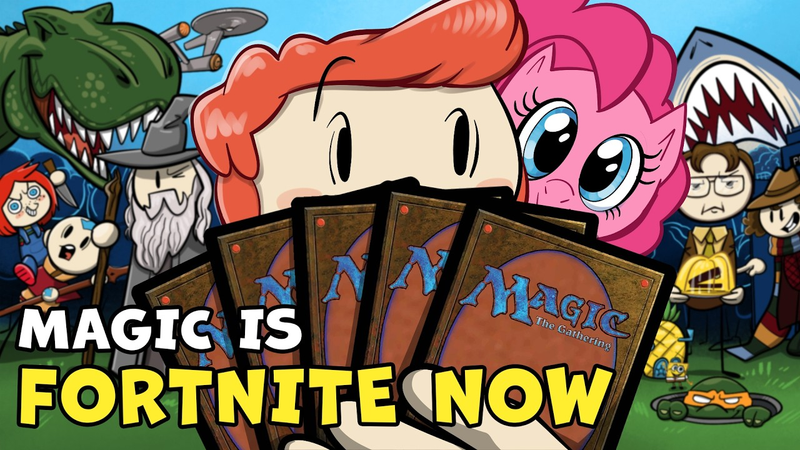
The expansion of Magic: The Gathering through the Universes Beyond initiative represents a significant strategic shift for Wizards of the Coast, characterized by the integration of external intellectual properties into the game’s established multiverse.
- Wizards of the Coast's 'Universes Beyond' strategy has driven significant financial growth, with Magic: The Gathering becoming Hasbro's first brand to exceed $1 billion in annual revenue in 2022.
- The 2025 Final Fantasy set generated $200 million in revenue in a single day, a milestone that took the Lord of the Rings set six months to achieve, contributing to a 23% revenue growth for the tabletop division.
- Organized play for Magic: The Gathering saw a 40% increase in unique players during the first half of 2025, signaling strong engagement with the crossover-heavy release schedule.

Sony’s Good News, Discord’s Supervillain Arc, and No Hogwarts at Wizards | Games For Breakfast
The contemporary gaming industry is currently defined by a strategic tension between the successful revitalization of legacy intellectual property and the volatile challenges of maintaining live-service ecosystems.
- Sony’s recent State of Play event received positive reception, contrasting with the current industry trend of negative sentiment toward major publishers like Blizzard.
- Discord is facing significant user backlash regarding recent platform changes, leading to widespread cancellations of Nitro subscriptions and the disabling of their feedback site.
- Wizards of the Coast has officially confirmed there are no plans for Harry Potter-themed Magic: The Gathering cards, opting instead to focus on their existing intellectual property.
$55,000,000,000 Buyout , Bowser’s Nintendo Retirement, & Game Showcase Roundup | Games For Breakfast
The gaming industry is currently navigating a period of profound structural and strategic transformation, characterized by aggressive corporate consolidation and the rapid expansion of intellectual property crossovers.
- A consortium led by the Saudi Public Investment Fund and Silver Lake has proposed a $55 billion acquisition to take Electronic Arts private, raising concerns regarding debt-driven management and the potential degradation of creative output.
- Wizards of the Coast is aggressively expanding Magic: The Gathering by integrating high-profile intellectual properties like Marvel and Star Trek, a strategy aimed at growth that risks brand dilution and player fatigue.
- Nintendo of America president Doug Bowser is set to retire, marking a significant leadership transition for the hardware manufacturer.
Roblox’s Louisiana Lawsuit, AI Age Verification, and Pokemon’s Unhappy Meal | Games For Breakfast
The gaming industry is currently grappling with a convergence of legal, ethical, and operational challenges that threaten to reshape platform governance and consumer engagement.
- Roblox is facing a significant lawsuit from the state of Louisiana, which alleges that the platform’s architecture prioritizes corporate growth over the safety of its younger user base.
- The industry is shifting toward AI-based age verification and facial telemetry to meet regulatory requirements, though these tools raise serious concerns regarding biometric data privacy and security vulnerabilities.
- Steam is currently experiencing regional transaction disruptions as payment processors tighten restrictions in response to the platform's adult content policies.

Wizards of the Coast will bet on new talent for future D&D and Magic video games
Wizards of the Coast is strategically pivoting toward becoming a major publisher of premium video games by leveraging its core intellectual properties, Dungeons & Dragons and Magic: The Gathering.
- Wizards of the Coast is pivoting to become a major publisher of premium video games by leveraging its Dungeons & Dragons and Magic: The Gathering intellectual properties.
- The company has partnered with the newly formed studio Giant Skull, led by industry veteran Stig Asmussen, to develop a new Dungeons & Dragons title.
- Wizards of the Coast is establishing a centralized content creation team to support studios with fantasy-focused art and world-building for projects developed in Unreal Engine 5.

Magic is the New Fortnite, Xbox Backs Down on Prices and Nightreign gets Duos! | Games For Breakfast
The gaming industry is currently defined by a tension between aggressive intellectual property exploitation and a volatile shift toward AI-driven infrastructure.
- Wizards of the Coast is successfully leveraging 'Universes Beyond' crossovers to drive revenue, with the Final Fantasy set for Magic: The Gathering generating $200 million in a single day.
- Major gaming corporations are prioritizing AI integration and short-term profit optimization, leading to workforce instability and significant layoffs despite record profitability.
- Xbox has retracted plans for $80 price points on upcoming titles, signaling a strategic shift toward prioritizing brand ubiquity over aggressive hardware-based monetization.

