Quest
Company
Documents about Quest
Pokémon GO Surpasses $3.6 Billion in Lifetime Revenue
Pokémon GO has solidified its position as the dominant force in the location-based mobile gaming sector, surpassing $3.6 billion in lifetime global player spending as of its four-year anniversary in July 2020.
- Pokémon GO has surpassed $3.6 billion in lifetime global player spending four years after its July 2016 launch.
- The game generated $905 million in 2019, marking its most successful year to date and surpassing the $832.5 million earned during its 2016 launch window.
- H1 2020 revenue reached $445.3 million, putting the title on track to match or exceed its 2019 record despite global pandemic-related lockdowns.
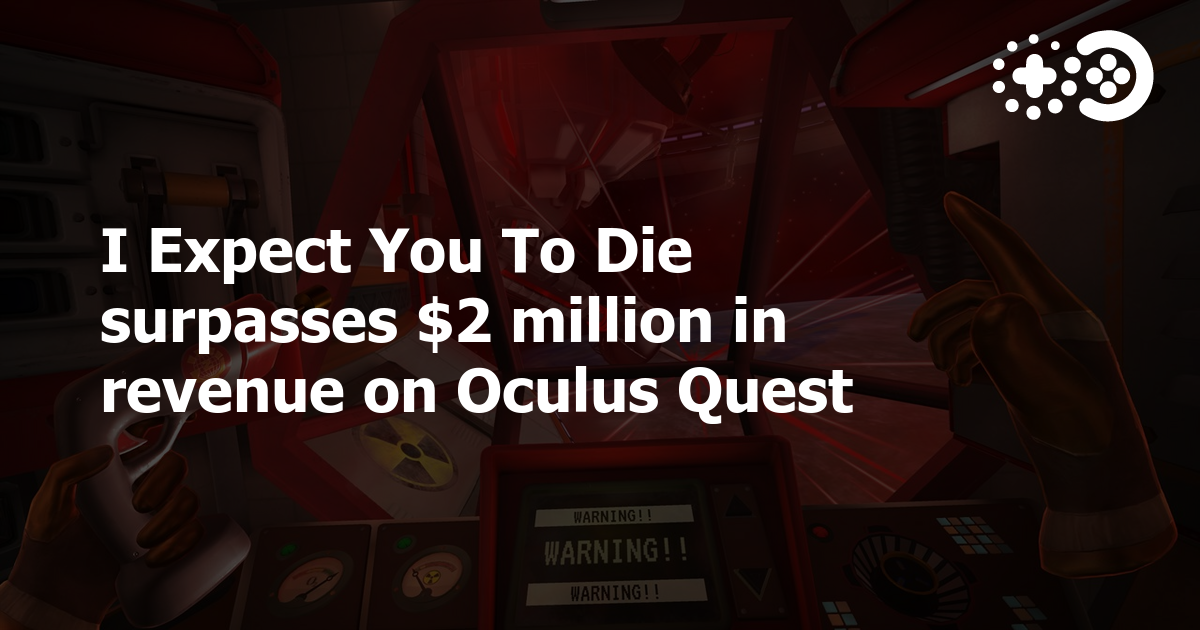
I Expect You To Die Surpasses $2 Million in Revenue on Oculus Quest
The VR escape room puzzler I Expect You To Die achieved significant commercial success on the Oculus Quest platform, generating $2 million in revenue within its first year of availability.
- The VR title 'I Expect You To Die' generated $2 million in revenue on the Oculus Quest within its first 12 months of release.
- The Oculus Quest revenue for 'I Expect You To Die' reached two-thirds of the total $3 million the game earned across PC VR and PSVR platforms combined over a prior two-year period.
- VR publisher nDreams implemented a permanent £1,000 pay raise for all 180 full-time employees to help staff manage rising energy costs and the cost-of-living crisis.
Game Discoverabilityland: The Summer of Games
This analysis examines the evolving landscape of video game discoverability and platform performance as of mid-2020.
- The Steam Summer Game Festival featured nearly 1,000 unique titles, creating a high-density environment that threatens to dilute individual game visibility for indie developers.
- Native support for macOS and Linux is declining due to technical barriers like the deprecation of OpenGL and the increased reliance on compatibility layers like Valve’s Proton.
- Success in the current market requires complex, multi-platform release strategies and a heavy reliance on community-driven marketing rather than relying solely on store algorithms.
Plus: Yes, Manor Lords is a Smash Hit - but How Big?
The primary objective of this analysis is to evaluate the commercial performance and market trends of recent video game releases, with a specific focus on the breakout success of the city-builder Manor Lords.
- Manor Lords achieved a breakout launch with over 150,000 concurrent users on Steam and is projected to surpass one million copies sold within its first week.
- High-quality, small-team, or solo-developed titles are increasingly outperforming traditional AAA productions, as evidenced by Manor Lords' 89% positive rating and massive pre-release interest from 311,000 Steam followers.
- Recent Steam performance data shows a clear divide, with niche hits like Rotwood reaching 25,300 concurrent users while larger titles like Dead Island 2 and TopSpin 2K25 faced moderate debuts due to technical and monetization issues.

Zynga vs. Supercell: The Quest to Be the World’s Most Valuable Mobile Gaming Company
This analysis evaluates the divergent strategic trajectories of Zynga and Supercell, two prominent mobile gaming publishers, to determine their long-term viability and potential for market leadership.
- Supercell’s long-term strategy focuses on innovation and creating 'forever franchises' through decentralized, autonomous teams, while Zynga relies on a strategy of aggressive M&A and the optimization of live operations.
- Zynga’s growth has been driven by a series of accretive acquisitions, including the acquisition of Peak Games, which would vault them from 8th to 4th place among top mobile game publishers by Q1 2020 revenue.
- Supercell has experienced a decline in revenue and profitability in recent years, leading to speculation that its 2016 valuation of $10.2 billion may have significantly decreased, potentially evidenced by a 2019 Tencent stake acquisition at a lower valuation.

The Hidden Levers of Game Discovery: Supply and Demand
The primary thesis of this analysis is that video game discoverability is increasingly dictated by a fundamental mismatch between supply and demand.
- The number of games on Steam grew from 5,000 in 2015 to over 60,000 by 2022, creating a supply-side saturation that outpaces the 62% growth in daily active users since 2019.
- The market has shifted to a 'no-reset' environment where evergreen hits and Games as a Service (GaaS) titles capture long-term player attention, making it increasingly difficult for new releases to gain traction.
- While Unity reported a 93% increase in game creation between 2020 and 2021, the market has transitioned to a 'hit-driven' curve where the majority of indie titles struggle to recoup costs compared to previous years.

Epic Games & The Quest to Push Boundaries
Epic Games has evolved through several distinct iterations since its founding in 1991, consistently leveraging the intersection of gaming and technology to maintain a competitive advantage.
- Epic Games operates as an iterative entity that leverages its internal successes, such as Fortnite, to build foundational infrastructure like the Unreal Engine that serves both the company and the broader developer ecosystem.
- Fortnite’s success was driven by a combination of social connectivity, cross-game avatar persistence, the Battle Pass monetization model, and high-profile live events featuring partners like Marshmello and Star Wars.
- The Epic Games Store (EGS) aims to challenge industry gatekeepers by offering a competitive 12% revenue cut to developers, attempting to disrupt the market dominance of platforms like Steam.
Pokémon GO Has Best Year Ever in 2019
Pokémon GO achieved its most successful year since its 2016 launch, generating an estimated $894 million in gross player spending throughout 2019.
- Pokémon GO achieved its highest annual revenue since its 2016 launch, generating $894 million in gross player spending during 2019.
- The game ranked as the fifth highest-earning mobile game globally in 2019, trailing only behind titles like Candy Crush Saga and Honor of Kings.
- Revenue growth in 2019 was driven by consistent live operations and in-game events, specifically the introduction of Team Rocket in July, which led to $116 million and $126 million in revenue for August and September respectively.
Top Mobile Games by Worldwide Revenue: September 2019
This analysis details the top-performing mobile games by worldwide gross revenue for September 2019, utilizing data from the Store Intelligence platform.
- PUBG Mobile was the top-earning mobile game globally in September 2019, generating over $158.5 million in revenue, a 7.6x increase compared to September 2018.
- Pokémon GO secured the second-highest worldwide revenue at approximately $116 million, marking a 33% year-over-year growth.
- Square Enix’s Dragon Quest Walk, released exclusively in Japan on September 11, 2019, debuted in ninth place with $59.2 million in revenue from 1.5 million downloads.
Pokémon Masters Catches $33 Million Globally in Its First Month
Pokémon Masters achieved significant commercial success during its initial month of availability, generating $33.3 million in global player spending following its August 29, 2019, release.
- Pokémon Masters generated $33.3 million in global player spending during its first month following its August 29, 2019, release.
- While the title achieved the second-highest grossing launch month for a Pokémon mobile game, it earned significantly less than Pokémon GO, which grossed $302 million in its first month.
- The game significantly outperformed recent franchise releases, earning roughly 4.4 times more than Pokémon Quest ($7.6 million) and 44 times more than Pokémon Rumble Rush ($760,000) in their respective first months.
Pokémon Masters Revenue Surpasses $25 Million in Its First Week
Pokémon Masters achieved a strong commercial debut, generating an estimated $26 million in gross revenue during its first week of availability in September 2019.
- Pokémon Masters grossed approximately $26 million in its first week of release, marking the second-best mobile launch in the franchise's history.
- Japan was the primary market for the game's launch, accounting for $16 million or 62% of total first-week revenue.
- The title significantly outperformed other recent franchise entries, such as Pokémon Quest ($3 million), Pokémon: Magikarp Jump ($1 million), and Pokémon Rumble Rush ($300,000).
Nightmare Reaper: Doing a 1.0 Steam Release the Right Way
The transition from Early Access to a 1.0 full release on Steam represents a critical inflection point for indie developers.
- A successful 1.0 launch can drive massive momentum, as evidenced by Nightmare Reaper selling 10,400 units in six days—50% of its total volume accumulated over three years of Early Access.
- Strategic marketing for the 1.0 release, including a 70-streamer Twitch event and high-reach YouTube coverage, helped nearly double the game's wishlist from 39,000 to 75,000.
- Maintaining an 'Overwhelmingly Positive' review status throughout the development cycle is essential for securing long-term discoverability and consumer trust.