Nova
CompanyUnited States
Documents about Nova
OVUS NOVA Is a Board Game Now! - (Turn Based)
The transition of the game Ovus Nova into a turn-based strategy format serves as a case study for evaluating core gameplay mechanics and accessibility.
- The developer rejected the turn-based pivot for Ovus Nova, concluding that the original real-time design better preserves the game's core identity and tension.
- Transitioning to a turn-based format successfully addressed player confusion and visual readability issues but sacrificed the exponential growth mechanics central to the original experience.
- The turn-based prototype utilized a three-action-per-turn system—move, convert to eggs, or detonate—which improved strategic clarity but risked creating predictable, infinite defensive gameplay loops.
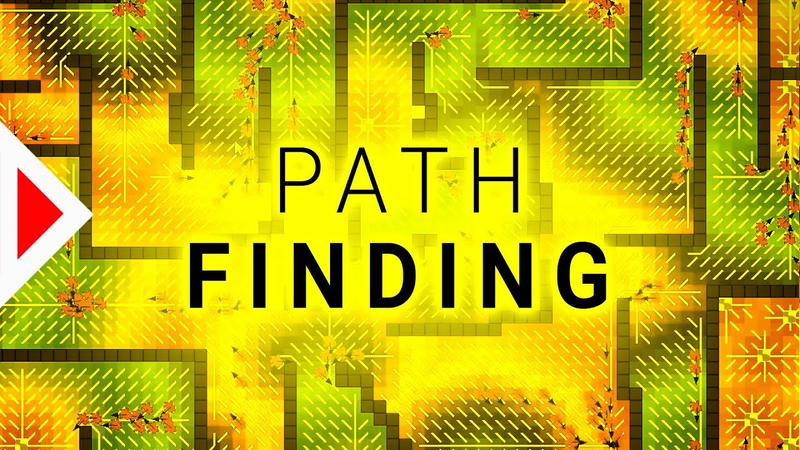
The Pathfinding for OVUS NOVA! (Walls) - Part 1
The development of an efficient pathfinding system for the real-time strategy game Ovus Nova requires balancing complex navigation with high-performance demands.
- The pathfinding system for Ovus Nova utilizes a flood-fill algorithm to pre-calculate shortest paths from every grid cell to target 'eggs', allowing units to follow directional data rather than calculating individual routes.
- To resolve severe performance bottlenecks that caused frame rates to drop to zero, the project migrated from the Game Maker Studio 2 Virtual Machine to the YoYo Compiler (YYC).
- Computational load was further optimized by spreading pathfinding calculations across 60 frames instead of attempting to update the entire map in a single frame.
Streaming: Concept Art Fails!
The development of Ovus Nova centers on the critical intersection of character design and gameplay readability.
- The development of Ovus Nova prioritizes functional gameplay readability over high-fidelity detail to ensure players can immediately distinguish between friendly and hostile units.
- Designers utilize distinct, recognizable silhouettes and clear elemental mechanics to resolve player confusion caused by overly complex or ambiguous assets.
- The creative workflow relies on rapid sketching and layout management to define the evolutionary lifecycle and behavioral traits of space-themed creatures.

Should We Do Endless Mode? - Ovus Nova
The development of the strategy game Ovus Nova involves an experimental transition from a structured, level-based progression system to a roguelike endless mode.
- The transition to an endless roguelike mode for Ovus Nova was abandoned because it failed to provide the strategic depth and engagement found in the original level-based design.
- Procedural generation in the prototype led to inconsistent difficulty, characterized by unfair spikes and stagnant gameplay loops that lacked intentional design.
- The development team struggled to balance exponential growth, resulting in gameplay that oscillated between being overly punishing early on and trivial as the player population expanded.
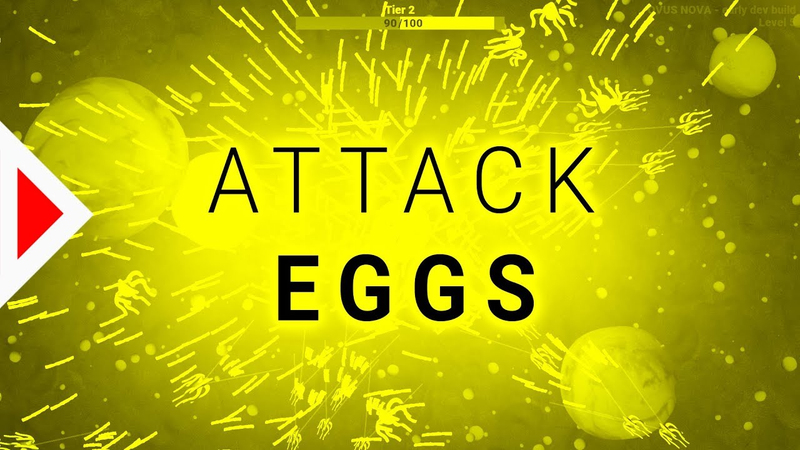
Attack Mode & Upgrades - Ovus Nova
The development of Ovus Nova has shifted from an action-oriented experience to a tactical strategy game through the implementation of a turret-based combat system and a tiered upgrade mechanic.
- Ovus Nova has pivoted from a reflex-based action game to a tactical strategy title by replacing explosive unit mechanics with a persistent, turret-based combat system.
- The new progression system uses research points, accumulated through idling, to force a strategic trade-off between immediate defensive unit detonation and long-term power-up acquisition.
- Combat depth is driven by a tiered upgrade pool featuring specialized options like turret mode for duration, instant attack for burst damage, and attack eggs for defensive utility.
How to Fix Your Game When You Find Out That It Sucks!
This analysis outlines a strategic framework for identifying and rectifying fundamental design flaws in game development, specifically focusing on the strategy title Ovus Nova.
- Prioritize early, iterative feedback loops to identify 'game breakers'—mechanics that hinder engagement, clarity, or marketability—before development progresses too far.
- Address gameplay friction by observing player interactions to pinpoint where confusion occurs, rather than forcing a flawed design.
- Improve player comprehension by replacing abstract visual effects with recognizable animations and establishing clear, distinct faction dichotomies, such as biological versus robotic.
4 Reasons My Game Sucks!
The development of the strategy game Ovus Nova faces four critical design flaws that threaten its long-term viability.
- The game suffers from a single dominant strategy that eliminates the need for player experimentation and renders gameplay repetitive.
- Frequent pausing mechanics severely degrade pacing, stripping the game of the tension and unpredictability required for engaging content.
- New players face significant barriers to entry due to a lack of visual clarity regarding factions, objectives, and unit logic.
Solo Indie Dev - 2. Month Review
This two-month progress review evaluates the experiences of a solo indie game developer balancing game production with YouTube content creation.
- The primary barrier to solo indie development is the psychological 'Dark Night of the Soul' phase, where the initial excitement fades and discipline is required to overcome self-doubt.
- The developer failed to reach the target of 200 subscribers, prompting a strategic pivot away from daily content creation due to concerns over video quality and searchability.
- Playtesting for the project 'Nova' revealed that the current gameplay iteration lacks sufficient engagement, necessitating further refinements before a vertical slice can be completed.

OVUS NOVA - Big Update Trailer! - (March 2018)
Ovus Nova is an experimental strategy game centered on the management and tactical deployment of space-faring creatures.
- Ovus Nova is an experimental strategy game focused on managing space-faring creatures through two core mechanics: unit duplication and directional detonation.
- The game features a tactical pause mode that allows players to halt real-time combat to strategize and adjust unit positioning.
- A resource-based ability system, controlled via keyboard shortcuts, enables players to execute specialized actions like instant hatching and area-of-effect damage.
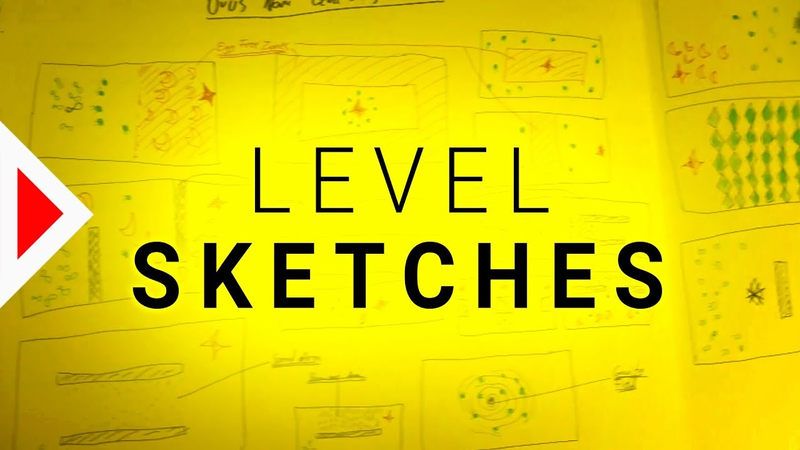
Sketching Levels for Ovus Nova - (Level Design Ideas)
The development of the strategy game Ovus Nova centers on a design philosophy that prioritizes mechanical depth through a limited set of versatile features rather than an expansive, feature-heavy approach.
- The development philosophy for Ovus Nova prioritizes mechanical depth by utilizing a limited set of versatile features that can be combined for maximum strategic complexity.
- Level design incorporates egg-free zones to restrict spawning locations, forcing players to adopt specific tactical positioning.
- Walls are being implemented to manipulate unit movement and pathfinding, enabling the creation of complex layouts like mazes and protected safe zones.

OVUS NOVA - New Abilities! - [Resource Management?] - Dev Log
Ovus Nova, a real-time strategy game, has undergone a significant design shift by integrating resource management and a suite of active abilities to increase tactical depth.
- Ovus Nova has shifted from a simple strategy game to a complex, choice-driven experience by integrating a resource management system fueled by unit sacrifice.
- Players generate a specific currency by detonating existing units, which is then reinvested into active abilities such as spawning creatures, area-of-effect damage, or instant egg hatching.
- To prevent exponential power growth and maintain balance, the developer implemented a scaling cost system where each consecutive use of an ability becomes more expensive.

Ovus Nova Dev Log - More Control Over Your Units - [Improving the Gameplay]
The development of Ovus Nova focuses on transitioning the title from a passive experience toward a more active real-time strategy framework.
- Ovus Nova is shifting from a passive experience to an active real-time strategy framework to increase player agency over unit movement and combat.
- A new directional cursor system replaces random unit behaviors, allowing players to control unit orientation and attack trajectories.
- Developers introduced directional cues during the unit hatching phase to enable strategic deployment and improve combat efficiency.