Nova
CompanyUnited States
Documents about Nova
The Legend of Zelda: Ocarina of Time and GTA 6: The video game industry’s Barbenheimer moment
The simultaneous anticipation surrounding the upcoming remake of The Legend of Zelda: Ocarina of Time and the impending launch of GTA 6 represents a pivotal cultural moment for the gaming industry.
- The simultaneous anticipation for the Ocarina of Time remake and GTA 6 serves as a primary catalyst for market engagement, mirroring major industry showcases.
- The gaming industry is experiencing cyclical volatility, marked by significant layoffs in North America contrasted with growth in the Asia-Pacific region.
- Studios are shifting development strategies by balancing cost-effective outsourcing with the need for local talent retention and cultural alignment.

What Fully On-Chain Games Mean for Gamers & Developers
Fully on-chain gaming represents a fundamental shift in industry architecture, moving game logic and data from centralized servers to decentralized blockchain nodes.
- Fully on-chain gaming shifts core logic and data from centralized servers to decentralized nodes, ensuring game persistence and immunity to developer shutdowns.
- The model treats game assets as a public commons, protecting player progress from the obsolescence typical of traditional server-based titles.
- Scaling solutions like Arbitrum Nova are being utilized to mitigate transaction friction and gas fees, enabling competitive gameplay through Layer 2 and Layer 3 infrastructures.

Making Games Is Just Like Making Pizza.
The process of independent game development mirrors the complexities of culinary preparation, requiring a balance between individual creative control and the efficiency of collaborative efforts.
- Independent development requires balancing the total autonomy of solo work, which extends timelines, against the faster production cycles and diverse skill sets offered by team-based collaboration.
- Managing multiple concurrent projects, specifically 'Will You Snail', 'Ovus Nova', and an undisclosed university project, creates a high risk of burnout that necessitates a shift toward long-term viability over immediate output.
- The 'Will You Snail' project is the primary focus, utilizing a simplified core design to avoid the market appeal and design issues that hindered the secondary project, 'Ovus Nova'.
Suddenly My Game Is Fun Again!
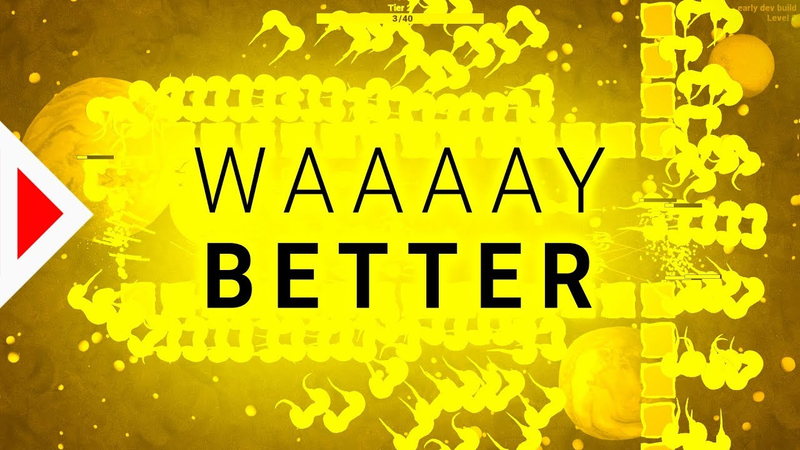
The development of the real-time strategy game Ovus Nova has undergone significant mechanical refinements to improve player agency and overall engagement.
- The developer transitioned from randomized unit movement to a swipe-based system, granting players direct control over egg-hatching directions and tactical navigation.
- The upgrade bar now fills automatically, with a mechanic that accelerates progression three times faster when no eggs are present on the screen to create a strategic trade-off.
- Core gameplay was simplified by removing slow-hatching red eggs and implementing a restriction against stacking eggs to reduce user frustration.

Another Brick In The Wall! - Pathfinding for OVUS NOVA - (Part 2)
The development of the PC strategy game Ovus Nova has reached a significant milestone with the successful implementation of wall mechanics and a highly optimized pathfinding algorithm.
- The Ovus Nova pathfinding system now supports stable performance of 140 to 200 FPS, even when managing large unit counts simultaneously.
- The implementation of wall mechanics and optimized collision detection has enabled complex level design, including support for destructible environments and varied terrain.
- Development in GameMaker was hindered by the lack of native, efficient tools for migrating scripts and assets between projects, necessitating manual workarounds.

OVUS NOVA Is a Board Game Now! - (Turn Based)
The transition of the game Ovus Nova into a turn-based strategy format serves as a case study for evaluating core gameplay mechanics and accessibility.
- The developer rejected the turn-based pivot for Ovus Nova, concluding that the original real-time design better preserves the game's core identity and tension.
- Transitioning to a turn-based format successfully addressed player confusion and visual readability issues but sacrificed the exponential growth mechanics central to the original experience.
- The turn-based prototype utilized a three-action-per-turn system—move, convert to eggs, or detonate—which improved strategic clarity but risked creating predictable, infinite defensive gameplay loops.

The Pathfinding for OVUS NOVA! (Walls) - Part 1
The development of an efficient pathfinding system for the real-time strategy game Ovus Nova requires balancing complex navigation with high-performance demands.
- The pathfinding system for Ovus Nova utilizes a flood-fill algorithm to pre-calculate shortest paths from every grid cell to target 'eggs', allowing units to follow directional data rather than calculating individual routes.
- To resolve severe performance bottlenecks that caused frame rates to drop to zero, the project migrated from the Game Maker Studio 2 Virtual Machine to the YoYo Compiler (YYC).
- Computational load was further optimized by spreading pathfinding calculations across 60 frames instead of attempting to update the entire map in a single frame.
Streaming: Concept Art Fails!
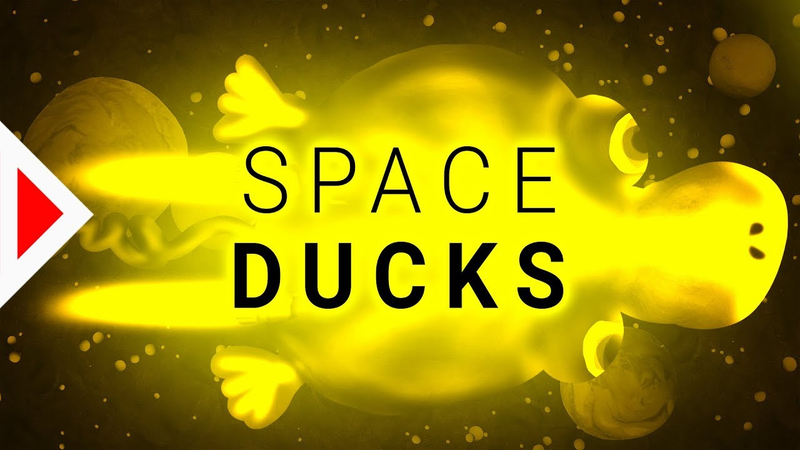
The development of Ovus Nova centers on the critical intersection of character design and gameplay readability.
- The development of Ovus Nova prioritizes functional gameplay readability over high-fidelity detail to ensure players can immediately distinguish between friendly and hostile units.
- Designers utilize distinct, recognizable silhouettes and clear elemental mechanics to resolve player confusion caused by overly complex or ambiguous assets.
- The creative workflow relies on rapid sketching and layout management to define the evolutionary lifecycle and behavioral traits of space-themed creatures.

Should We Do Endless Mode? - Ovus Nova
The development of the strategy game Ovus Nova involves an experimental transition from a structured, level-based progression system to a roguelike endless mode.
- The transition to an endless roguelike mode for Ovus Nova was abandoned because it failed to provide the strategic depth and engagement found in the original level-based design.
- Procedural generation in the prototype led to inconsistent difficulty, characterized by unfair spikes and stagnant gameplay loops that lacked intentional design.
- The development team struggled to balance exponential growth, resulting in gameplay that oscillated between being overly punishing early on and trivial as the player population expanded.
Attack Mode & Upgrades - Ovus Nova
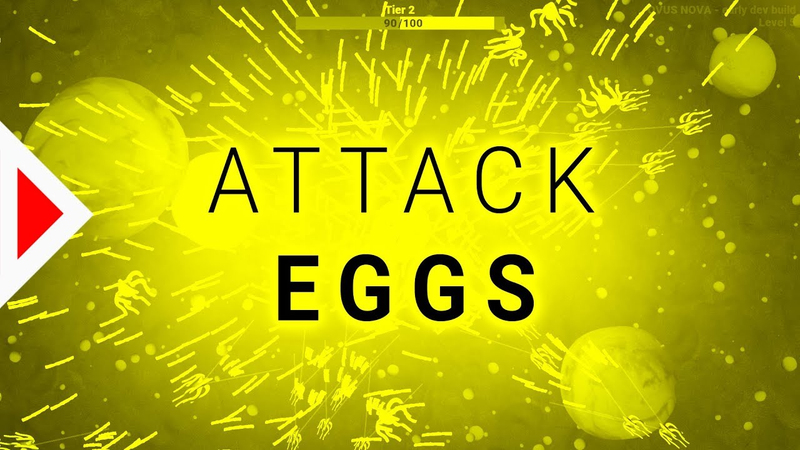
The development of Ovus Nova has shifted from an action-oriented experience to a tactical strategy game through the implementation of a turret-based combat system and a tiered upgrade mechanic.
- Ovus Nova has pivoted from a reflex-based action game to a tactical strategy title by replacing explosive unit mechanics with a persistent, turret-based combat system.
- The new progression system uses research points, accumulated through idling, to force a strategic trade-off between immediate defensive unit detonation and long-term power-up acquisition.
- Combat depth is driven by a tiered upgrade pool featuring specialized options like turret mode for duration, instant attack for burst damage, and attack eggs for defensive utility.

How to Fix Your Game When You Find Out That It Sucks!
This analysis outlines a strategic framework for identifying and rectifying fundamental design flaws in game development, specifically focusing on the strategy title Ovus Nova.
- Prioritize early, iterative feedback loops to identify 'game breakers'—mechanics that hinder engagement, clarity, or marketability—before development progresses too far.
- Address gameplay friction by observing player interactions to pinpoint where confusion occurs, rather than forcing a flawed design.
- Improve player comprehension by replacing abstract visual effects with recognizable animations and establishing clear, distinct faction dichotomies, such as biological versus robotic.
4 Reasons My Game Sucks!
The development of the strategy game Ovus Nova faces four critical design flaws that threaten its long-term viability.
- The game suffers from a single dominant strategy that eliminates the need for player experimentation and renders gameplay repetitive.
- Frequent pausing mechanics severely degrade pacing, stripping the game of the tension and unpredictability required for engaging content.
- New players face significant barriers to entry due to a lack of visual clarity regarding factions, objectives, and unit logic.