Moon
Company
Documents about Moon
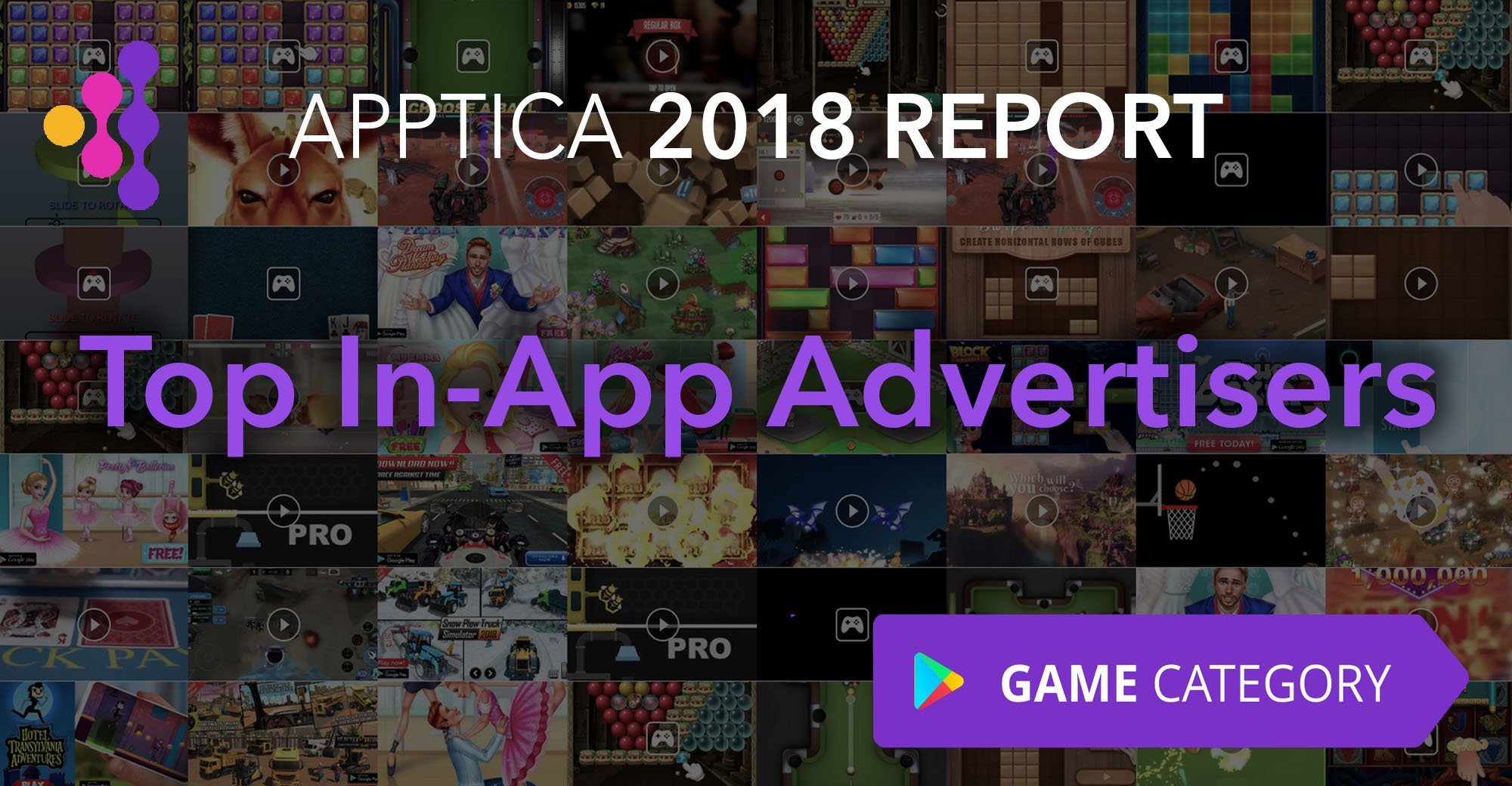
Best of Casual: Apptica Report on Top Advertisers 2018
The 2018 analysis of the casual mobile gaming sector identifies the most active advertisers based on ad impression volume.
- The top five most active casual game advertisers in 2018 were Bubble Shooter (Happy Dragon Inc), Coin Master (Moon Active), Homescapes (Playrix), Gardenscapes (Playrix), and Candy Crush Saga (King).
- Quarterly leadership in ad impressions shifted throughout 2018, with Coin Master leading Q1, Homescapes dominating Q2 and Q3, and Bubble Shooter (Happy Dragon Inc) taking the lead in Q4.
- Playable ads were identified as the top-performing ad format for casual game user acquisition strategies in 2018.
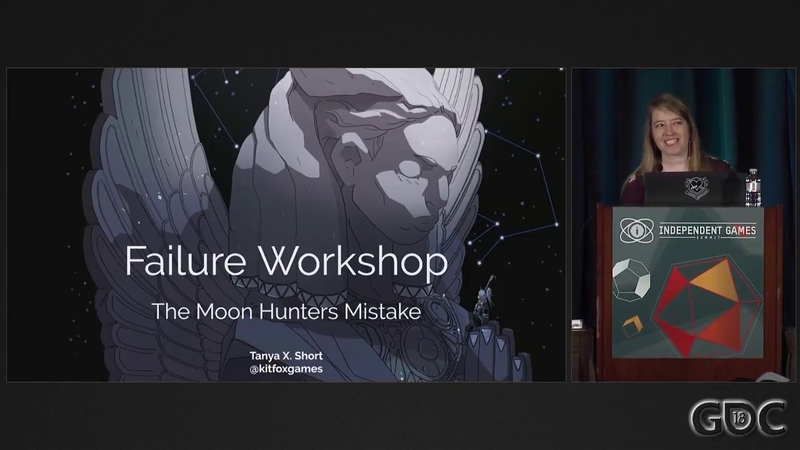
The 2018 Failure Workshop
The independent game development sector frequently suffers from a culture that prioritizes rigid production schedules over product quality, leading to avoidable commercial failures and significant psychological distress.
- Prioritizing rigid production schedules over product quality leads to avoidable commercial failures, negative community sentiment, and significant psychological distress for development teams.
- The case of Moon Hunters illustrates that rushing unfinished, buggy software to meet arbitrary deadlines results in immediate revenue loss and necessitates extensive, burnout-inducing post-launch support.
- Developers should shift focus toward long-term sustainability by prioritizing core gameplay quality over release efficiency, as flawed launches can be salvaged through consistent updates and transparent communication.
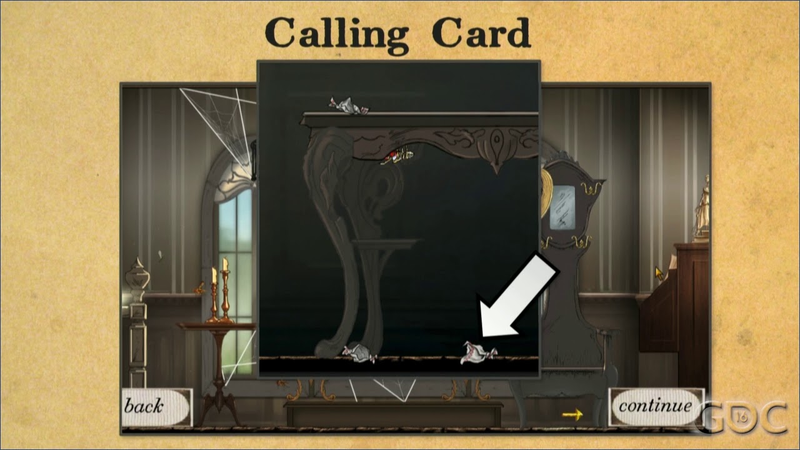
Advanced Environmental Storytelling in Spider: Rite of the Shrouded Moon
Spider: Rite of the Shrouded Moon demonstrates how environmental storytelling can successfully replace traditional dialogue and text to convey complex, non-linear narratives.
- Environmental storytelling in 'Spider: Rite of the Shrouded Moon' relies on non-linear narrative delivery where the author does not control the order in which players encounter story fragments, requiring players to actively piece together mysteries without text or dialogue.
- To maintain narrative cohesion, designers should use 'calling cards'—recurring, interactive props like candy wrappers or toys—to establish a character's presence across different levels without requiring unique assets for every interaction.
- Portraits serve as critical anchor points in environmental storytelling, allowing designers to link specific names, faces, and character traits to props found throughout the game world.

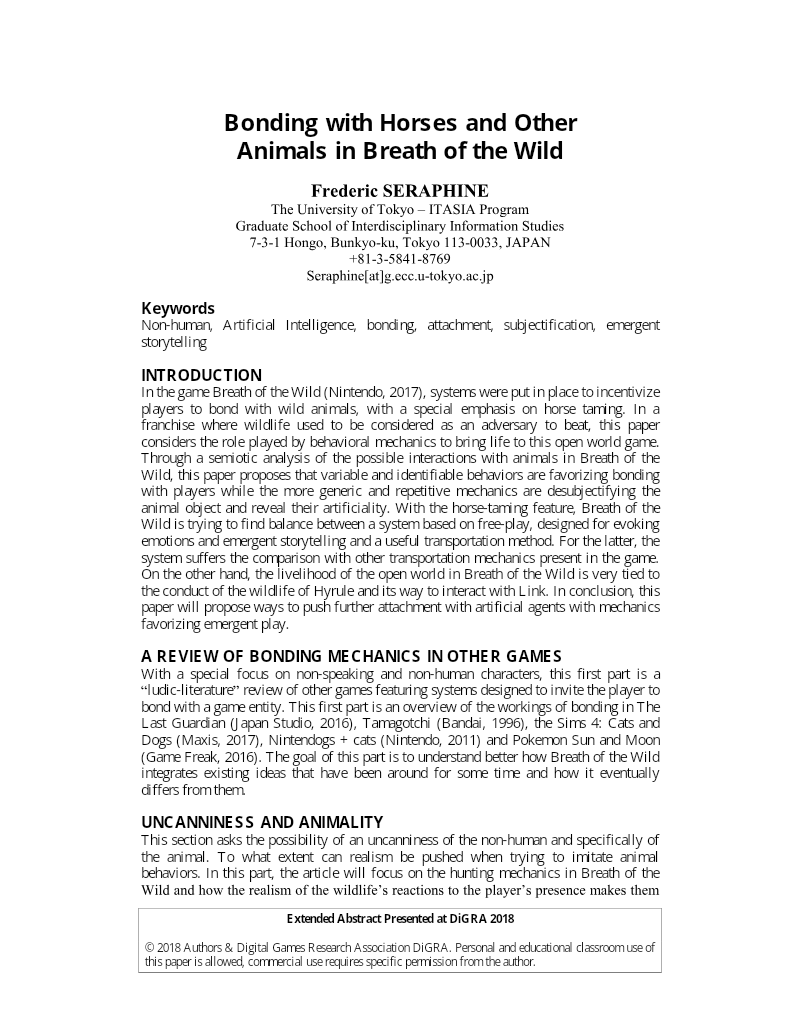
Bonding with Horses and Other Animals in Breath of the Wild
This extended abstract, presented at DiGRA 2018 by Frederic Seraphine of the University of Tokyo, examines how the animal and horse systems in Breath of the Wild (Nintendo, 2017) foster player attachment to non-human artificial agents.
- Imperfect, variable animal behavior, such as a horse's delayed readiness for riding and unpredictable control responsiveness, gives animals a sense of personality, while fully trained, predictable behavior risks making them feel impersonal.
- Generic and repetitive animal mechanics strip creatures of subjectivity and expose the game's artificiality, undermining player attachment to non-human agents.
- Naming and accessory customization function as appropriation mechanics that let players project personality onto animals and support emergent, player-authored narrative.
2017 CESA Games White Paper
The 2017 CESA Games White Paper serves as a comprehensive annual analysis of the global and domestic computer entertainment industry.
- The Japanese domestic home video game market (hardware and packaged software) totaled 314.7 billion yen in 2016, with an additional 7.9 billion yen in the digital download software market.
- The global home video game market, covering both hardware and software, was estimated at 2.5794 trillion yen in 2016.
- The Japanese domestic market for smart device game applications reached 1.1699 trillion yen, with China currently holding the largest market share globally and Japan ranking second.

Financial Results Briefing: Fiscal Year Ending March 2017
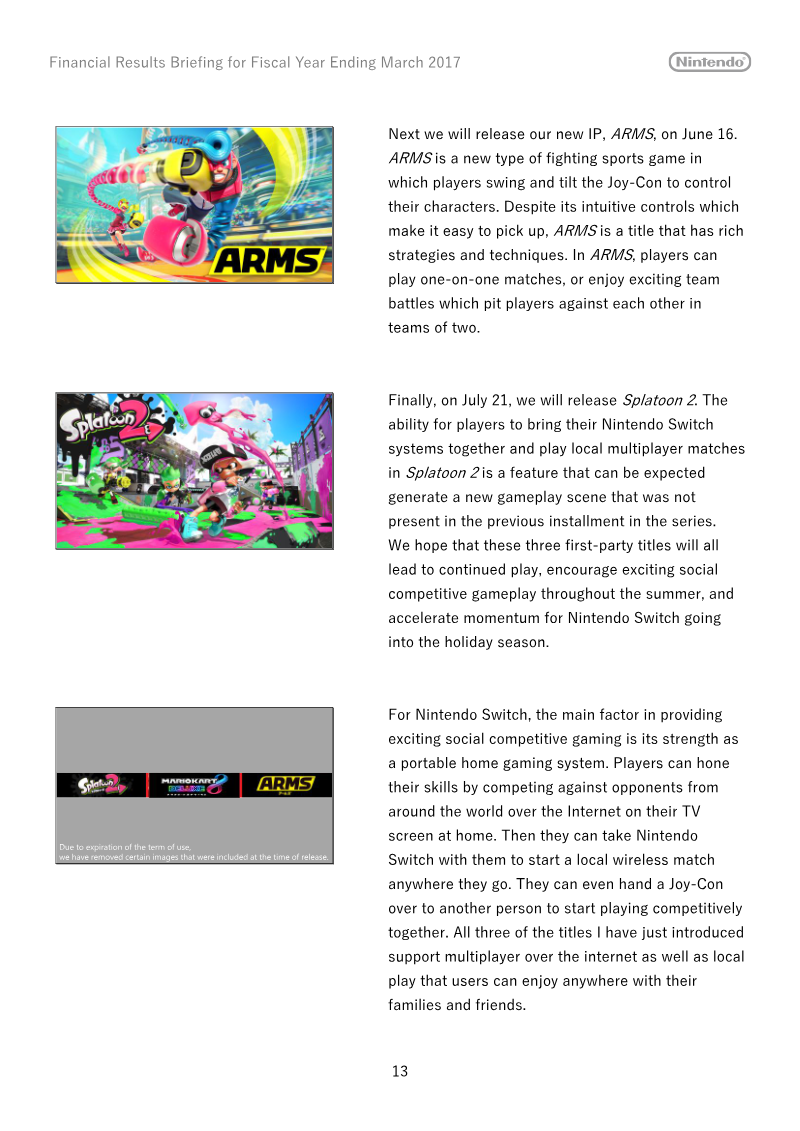
The fiscal year ending March 2017 served as a pivotal transition period for Nintendo, defined by the successful market introduction of the Nintendo Switch.
- Nintendo shipped 2.74 million Nintendo Switch units during its initial launch period, exceeding internal performance expectations.
- The company set a target to ship 10 million Nintendo Switch units in the fiscal year following March 2017, supported by a pipeline of first- and third-party software.
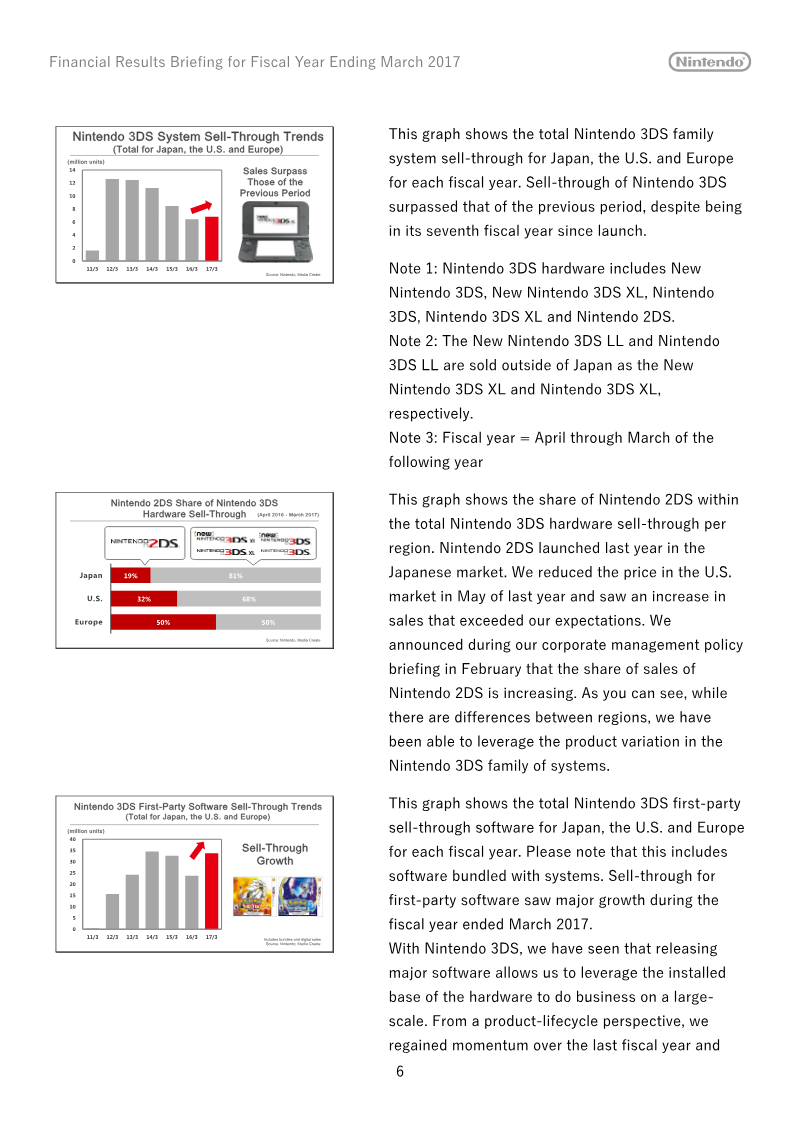
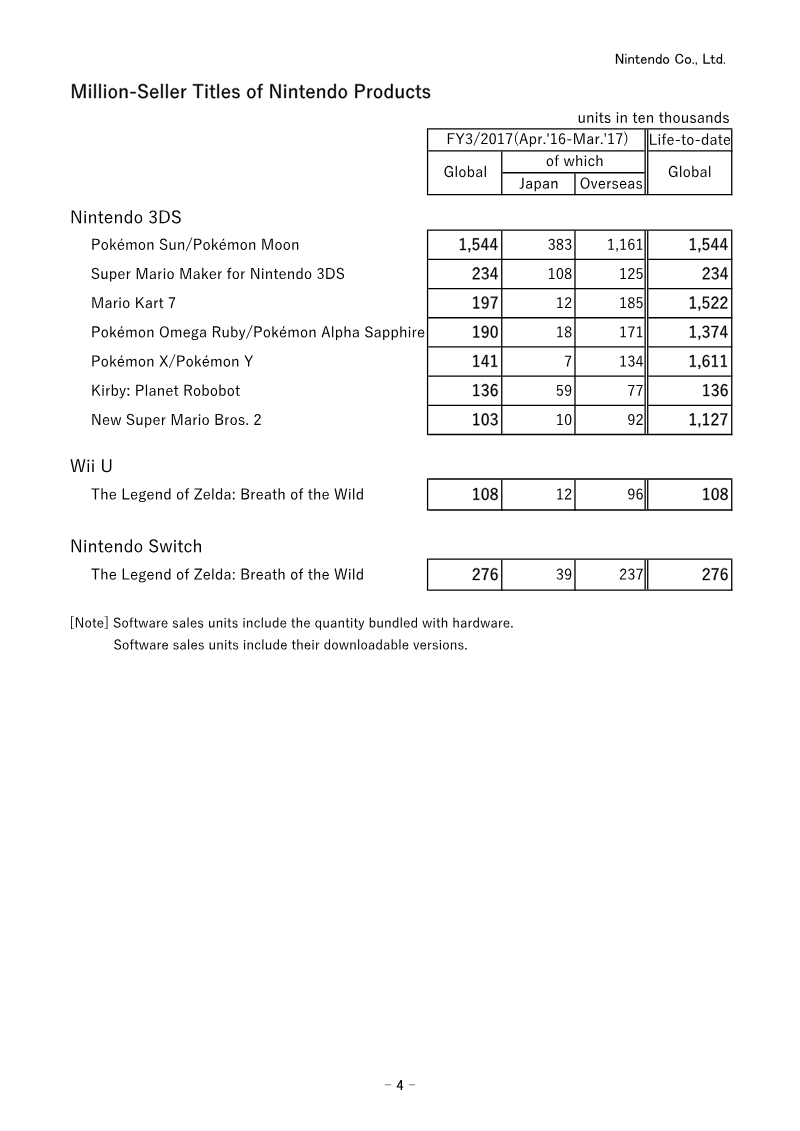
- The Nintendo 3DS family maintained strong performance in its seventh year, driven by the success of Pokémon Sun and Pokémon Moon.

Nintendo Earnings Release: Supplementary Information for Fiscal Year Ended March 2017
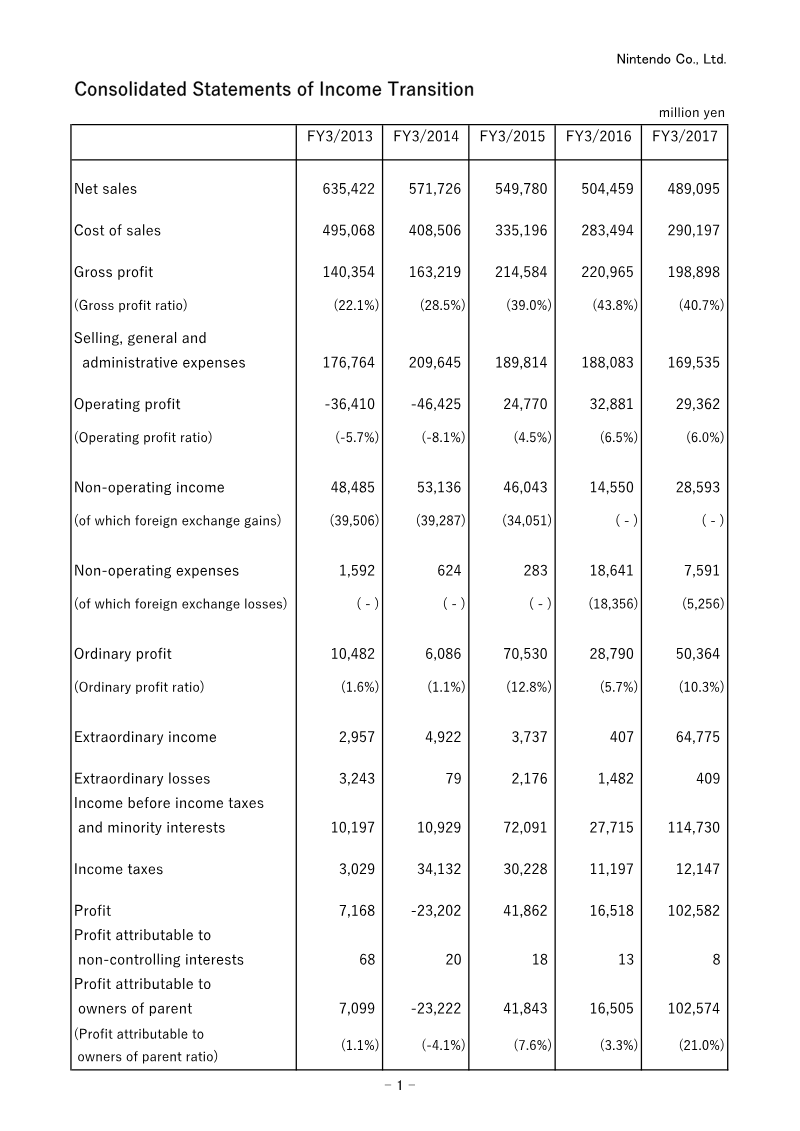
The fiscal year ended March 2017 represented a pivotal transition period for Nintendo, characterized by the launch of the Nintendo Switch hardware and a significant shift in financial performance.
- Nintendo's net sales for the fiscal year ended March 2017 were 489.1 billion yen, a slight decline from the prior year, while profit attributable to owners of the parent rose to 102.6 billion yen.
- The profit increase was bolstered by significant extraordinary income, reflecting a strategic shift in asset management and operations during the Switch's introduction.
- Gross profit margin held roughly stable at about 40.7%, while selling, general, and administrative expenses were reduced to 169.5 billion yen.
Top Mobile Games of Q1 2017: Revenue Grew 53% YoY as Asian Titles Expanded Their Dominance
The mobile gaming industry experienced significant growth in the first quarter of 2017, characterized by a 53 percent year-over-year increase in worldwide gross revenue, which reached approximately $11.9 billion.
- Worldwide mobile game revenue reached $11.9 billion in Q1 2017, marking a 53% year-over-year increase from $7.8 billion in Q1 2016.
- Google Play games revenue grew by 83% year-over-year to approximately $5.3 billion, while App Store games revenue grew 35% to $6.6 billion.
- Mobile games remain the primary monetization driver, accounting for nearly 80% of App Store gross revenue and over 91% of Google Play gross revenue.


Corporate Management Policy Briefing: Nine Months Financial Results for Fiscal Year Ending March 2017
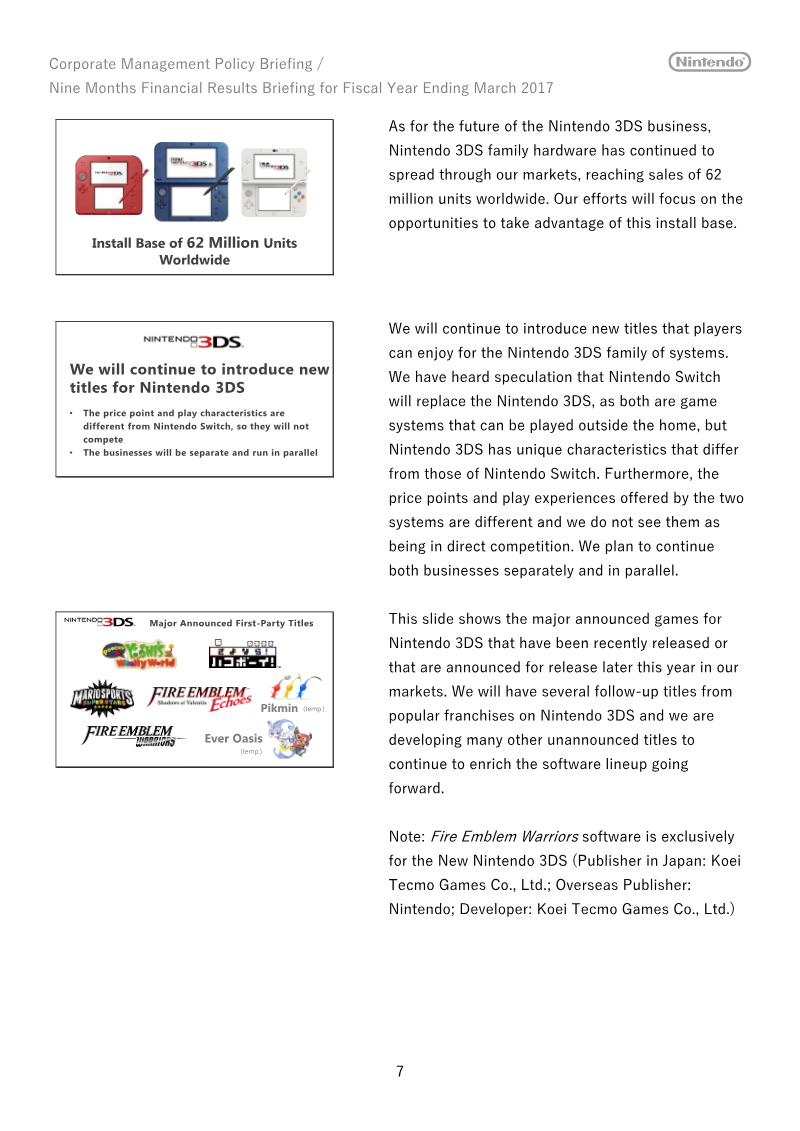
Nintendo’s fiscal strategy for the nine months ending March 2017 centers on a dual-platform approach, leveraging the established success of the 3DS while aggressively transitioning into the Nintendo Switch era.
- Nintendo launched the Nintendo Switch in March 2017 with an ambitious global shipment target of two million units for the fiscal year.
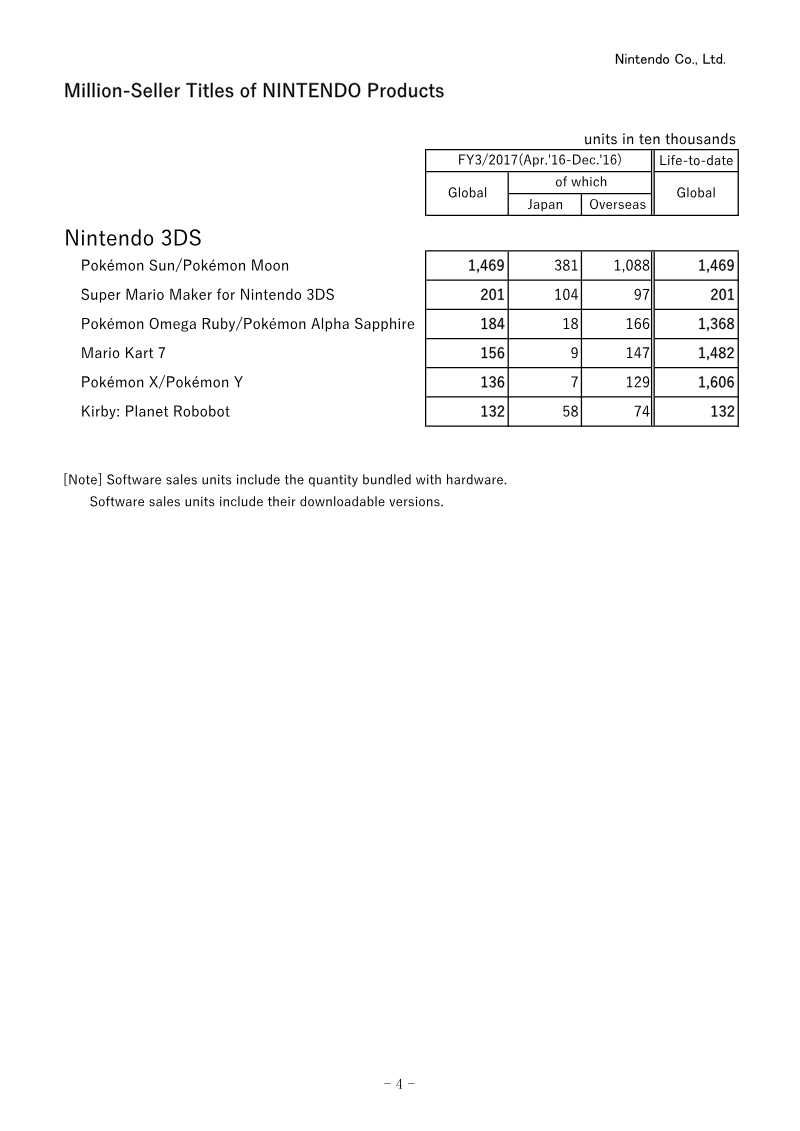
- The 3DS remains a primary revenue driver, supported by the success of Pokémon Sun and Pokémon Moon, which achieved over 13 million units in sell-through.
- The company is diversifying its portfolio by expanding into smart-device gaming, highlighted by the performance of Super Mario Run and the launch of Fire Emblem Heroes.

Consolidated Financial Highlights: Nine Months Ended December 2016
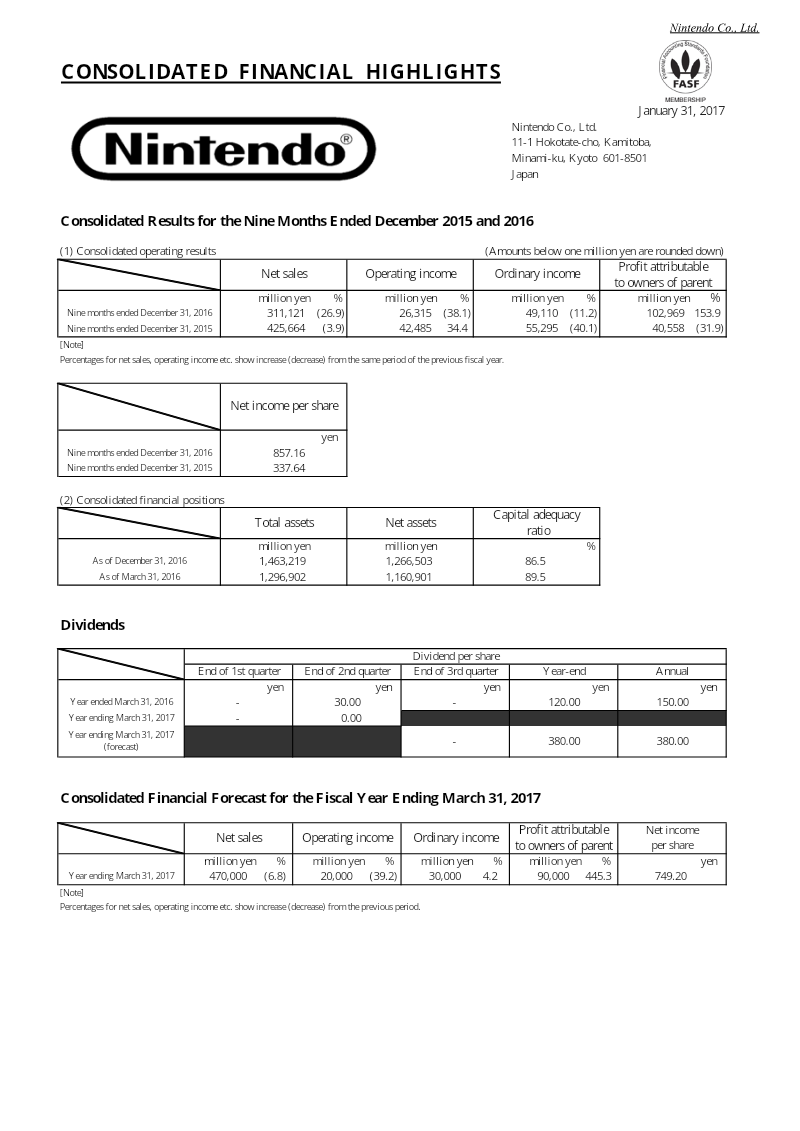
This financial report details the consolidated operating results for Nintendo Co., Ltd. for the nine-month period ending December 31, 2016.
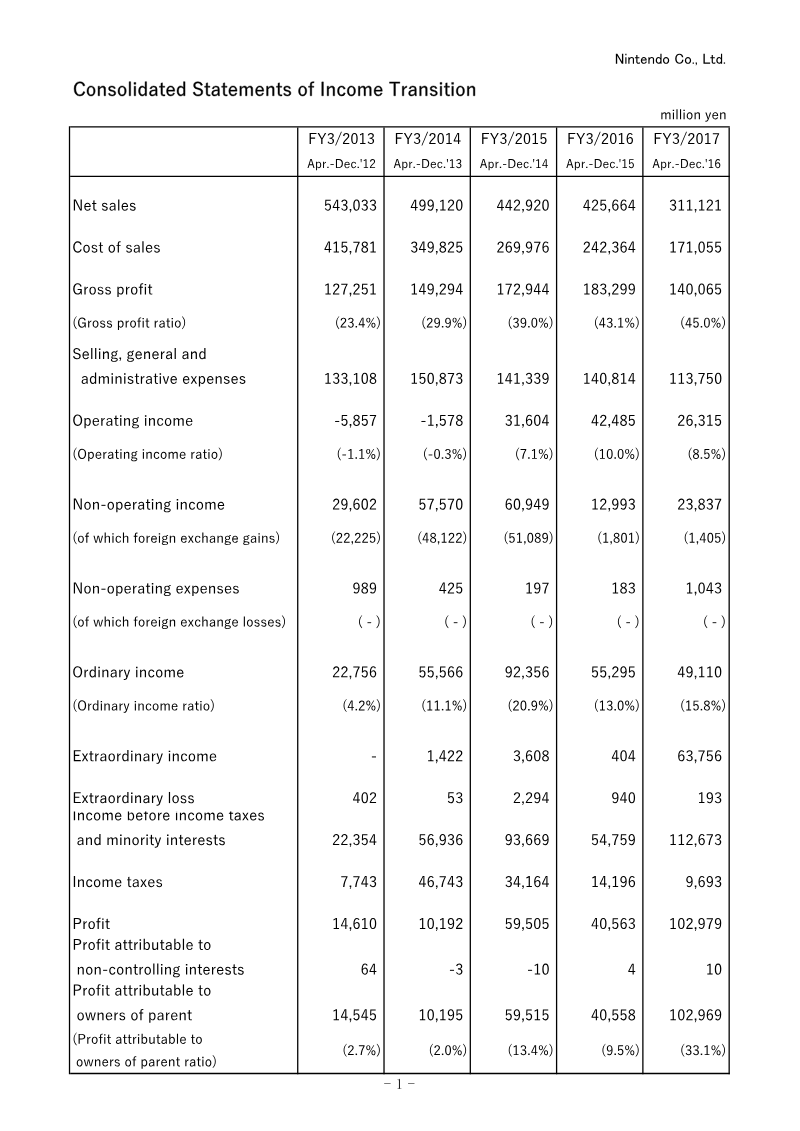
- Nintendo reported net sales of 311.1 billion yen for the nine months ending December 2016, a 26.9% decrease year-over-year, alongside a 38.1% decline in operating income to 26.3 billion yen.
- Profit attributable to owners of the parent surged 153.9% to 102.9 billion yen, primarily due to a 63.5 billion yen extraordinary gain from the sale of equity in the Seattle Mariners ownership group.
- Wii U hardware sales plummeted 75% to 0.76 million units as the company executed a managed phase-out of the console ahead of the March 2017 Nintendo Switch launch.

Nintendo Earnings Release: Supplementary Information (Nine-Month Period Ended December 2016)
This financial summary outlines Nintendo’s consolidated performance for the nine-month period ending December 31, 2016.
- Net sales for the nine-month period ending December 31, 2016, fell to 311.1 billion yen from 425.7 billion yen in the previous year.
- Profit attributable to owners of the parent rose to 102.9 billion yen, up from 40.6 billion yen, driven by 63.8 billion yen in extraordinary income.
- Operating income declined to 26.3 billion yen, resulting in an operating income ratio of 8.5 percent.

The Triple Postmortem - Black Ice, 6180 The Moon, The More You Know (About the Devil)
Independent game development thrives when creators prioritize financial stability and disciplined scoping over the pursuit of industry trends.
- Maintain a day job while developing indie games to ensure financial stability and reduce pressure during the long development cycle.
- Actively identify and reach out to your specific target audience at conventions or online communities, as players will not naturally discover niche titles on their own.
- Establish professional standards and clear expectations with contractors, including firm deadlines, to avoid losing assets or stalling development for years.