Metacore
Company
Documents about Metacore

Panel: Better Games Together: Uniting the Industry Through Pride and Pixels
Better Games Together is a collaborative initiative founded in 2022 by several prominent Finnish game companies, including Supercell, Metacore, Next Games, and Rovio, in partnership with We in Games Finland.
- Founded in 2022, the 'Better Games Together' collective unites major Finnish studios including Supercell, Metacore, Next Games, and Rovio to drive systemic LGBTQIA+ inclusion through cross-company collaboration.
- Industry-wide research conducted by the group identified that while progress has been made regarding sexual orientation, there is a critical need for increased support and development for trans and non-binary professionals.
- The initiative has moved beyond corporate Pride branding to implement concrete actions, including quarterly employee meetups, roundtable discussions, and specialized training on topics like intersex awareness.

two & a half gamers session #12 - Metacore 65M loss, Niantic 1 hit wonder, Industry conference guide
The mobile gaming industry currently faces significant challenges regarding user acquisition strategies, the sustainability of metaverse platforms, and the evolving utility of professional conferences.
- High-budget celebrity-led television advertising, such as Metacore’s $20 million campaign, is failing to deliver measurable returns compared to traditional digital user acquisition channels, leading to significant financial losses.
- The mobile gaming industry is struggling to replicate the success of foundational hits like Pokémon GO without the leverage of established intellectual property, highlighting the risks of relying on single-hit titles.
- Professional industry conferences like GDC and Gamescom have shifted in value from formal, lecture-based education to informal, face-to-face networking, which senior practitioners now view as the primary benefit of attendance.
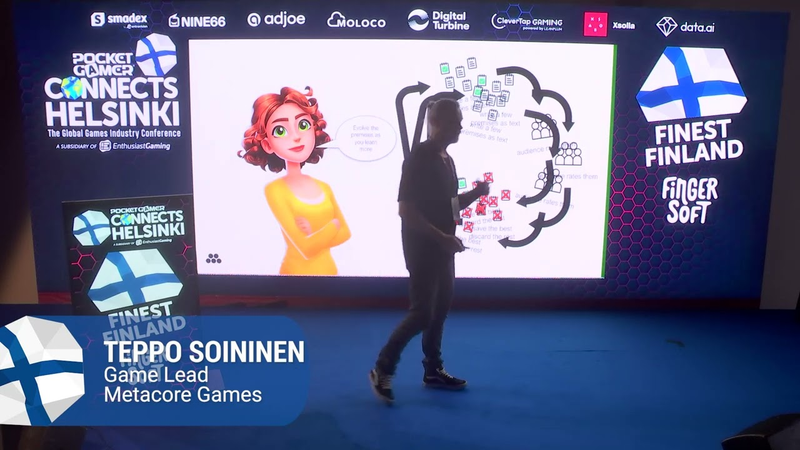
You Need to Know who is Going to Play Your Game - Teppo Soininen, Metacore Games
Concept testing serves as a critical risk-mitigation strategy in mobile game development, allowing studios to validate ideas before committing significant time and capital to production.
- Concept testing acts as a primary risk-mitigation strategy by validating game ideas during pre-production to avoid committing capital to unviable projects.
- Developers should prioritize the core 'fantasy' or entertainment promise of a game, ensuring mechanics, art, and narrative align with specific audience preferences before full production.
- Initial validation should utilize low-cost, text-based premises distributed to target audiences via platforms like PlaytestCloud to identify recurring themes and discard weak concepts early.

What Can We Learn From Microsoft and EA’s Earnings? - Naavik Gaming Podcast
The gaming industry is currently navigating a period of significant strategic recalibration, characterized by a shift away from speculative growth models toward sustainable, ecosystem-focused operations.
- Microsoft’s gaming segment reported a 13% revenue decline, underscoring the necessity of a consistent AAA release pipeline to sustain hardware sales and the Game Pass subscription model.
- Electronic Arts is shifting its mobile strategy away from fragmented co-development toward a unified, cross-platform approach to improve operational efficiency.
- Esports organizations are pivoting from standalone profit models toward content creation and merchandise, as the industry corrects from unsustainable, venture-capital-reliant valuations.

two & a half gamers session #12 - Metacore 65M loss, Niantic 1 hit wonder, Industry conference guide
The gaming industry currently faces significant challenges regarding marketing efficiency, platform monetization, and the long-term viability of major titles.
- High-budget TV advertising is not a guaranteed path to profitability, as evidenced by Metacore incurring a $65 million loss despite significant revenue growth.
- CD Projekt Red experienced a 63% year-over-year revenue decline, highlighting the difficulty of maintaining long-term financial momentum following a troubled product launch.
- Security vulnerabilities remain a critical industry risk, exemplified by the $600 million Axie Infinity crypto heist attributed to state-sponsored actors.