MachineGames
CompanySweden · Founded 2009
MachineGames was established in 2009 by former founding members of Starbreeze Studios and acquired by ZeniMax Media in 2010. Located in Uppsala, Sweden, MachineGames is a studio comprised of a seasoned group of developers recognized for their work creating story-driven games.
Connections
Each row is a game or company named alongside MachineGames, each column a document, oldest first. A mark means that document names it. Select a row to see those documents.
About the company
- Founded
- 2009
- Country
- Sweden
Company data from IGDB.com
Documents about MachineGames
PC & Console Predictions in 2026
The gaming industry is entering 2026 characterized by structural shifts in development, monetization, and market dominance.
- The $60 game price point is obsolete, replaced by a fragmented market ranging from $5–20 for indie hits to $100+ for tentpole releases like GTA VI, with $80 becoming the new AAA standard.
- Development cycles are contracting from 6–10 years as studios adopt AI tools for asset creation and coding, while shifting away from the expectation that every title must be a 200+ hour open-world experience.
- Sony is expected to enter the dedicated handheld gaming market to compete with the Nintendo Switch 2 and Steam Deck, driven by strong consumer demand for portable PlayStation experiences.

The Indiana Jones game developer has a fight club in its basement
MachineGames, the Swedish developer behind the Wolfenstein series and Indiana Jones and the Great Circle, operates with a distinct studio culture defined by a commitment to immersive, first-person storytelling and a collaborative, hobbyist-driven environment.
- MachineGames is developing 'Indiana Jones and the Great Circle' using a hybrid perspective model that blends first-person immersion with third-person transitions to maintain character visibility.
- The studio’s strategic development for the 'Indiana Jones' title is shaped by the Game Pass ecosystem, prioritizing strong onboarding and accessibility to serve a broad, diverse player base.
- MachineGames utilizes DLC as a core operational tool to manage production workflows, allowing teams to maintain momentum and refine mechanics after the primary project concludes.
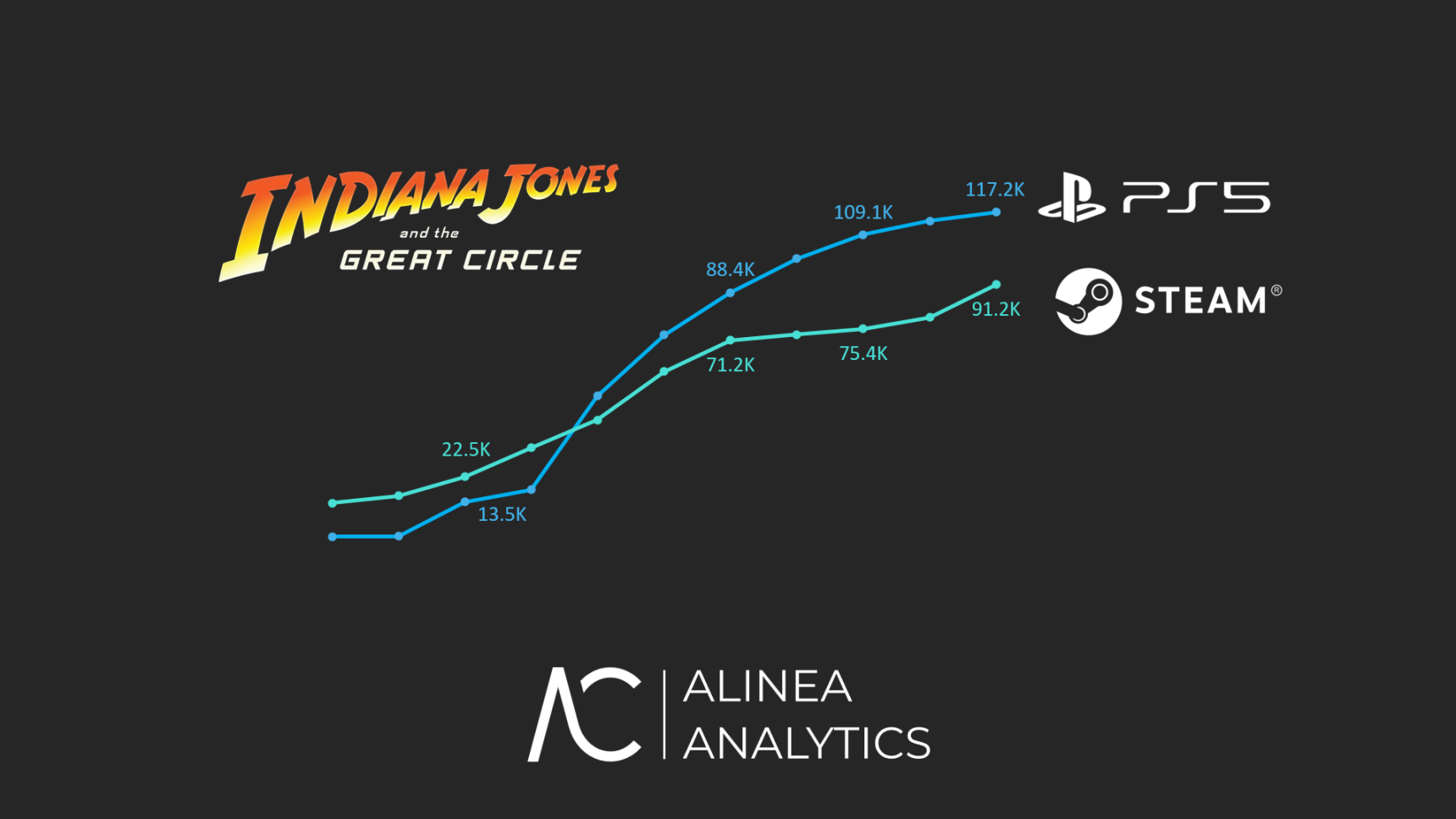
Indiana Jones Is Selling Copies Faster on PS5 Than It Did on Steam and Xbox
The commercial performance of Indiana Jones and the Great Circle on PlayStation 5 serves as a critical indicator of the viability of Xbox’s evolving third-party publishing strategy.
- Indiana Jones and the Great Circle sold 117.2K copies on PS5 in its first six days, outpacing the 91.2K copies sold on Steam during its equivalent launch window.
- While nearly 5 million Xbox players have accessed the game, the vast majority utilized Game Pass, which the report identifies as a factor that cannibalizes premium sales.
- The game has sold over 300K copies on Steam since its December 8, 2024, launch, generating approximately $17.5 million in revenue.
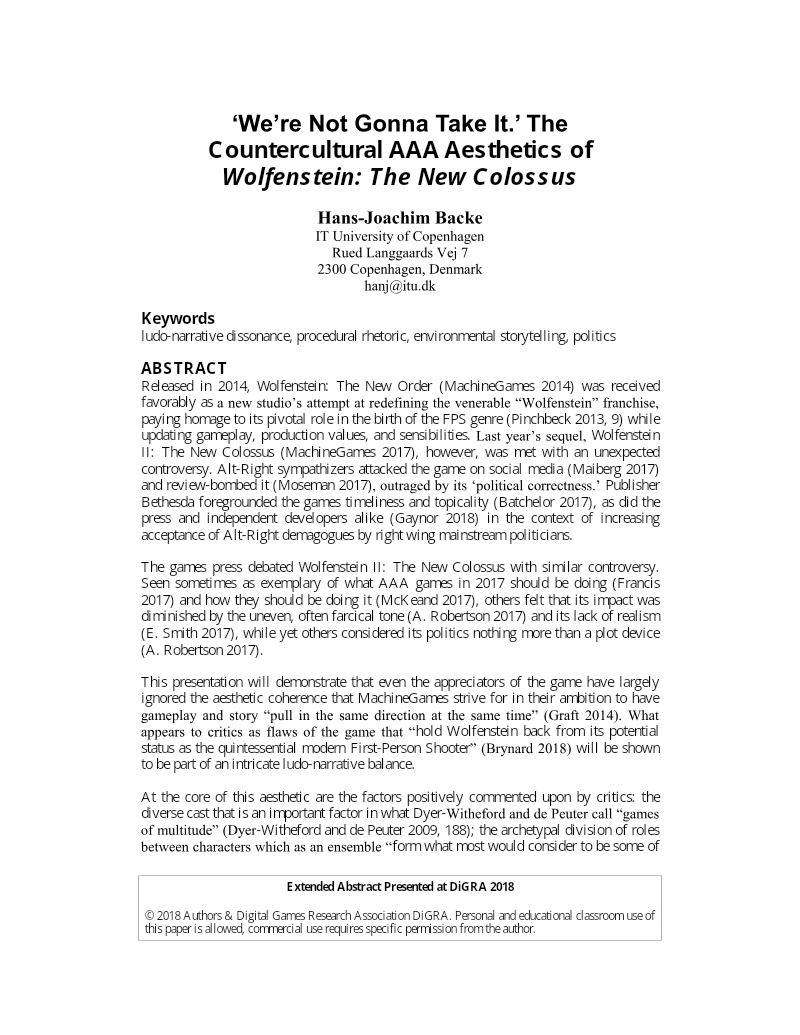
"We're Not Gonna Take It.": The Countercultural AAA Aesthetics of Wolfenstein: The New Colossus
Hans-Joachim Backe's analysis examines Wolfenstein II: The New Colossus (MachineGames, 2017) and argues that its apparent flaws are in fact deliberate components of a unified aesthetic.
- The paper argues that Wolfenstein II: The New Colossus (MachineGames, 2017) has apparent flaws that are deliberate parts of a unified aesthetic, and that critics and sympathetic reviewers missed the coherence between its narrative and ludic systems.
- The central thesis is that the game deploys Bakhtin's carnivalesque as a poetics of defamiliarization that stages the death and rebirth of first-person shooter conventions.
- The analysis reads the game's Nazi ideology as absurdist rather than endorsing, and interprets protagonist B.J. Blazkowicz's trajectory from an idealized Aryan body to a frail, grafted figure as an inversion of fascist notions of virility.