MachineGames
CompanySweden · Founded 2009
Documents about MachineGames
Article
PC & Console Predictions in 2026
The gaming industry is entering 2026 characterized by structural shifts in development, monetization, and market dominance.
- The $60 game price point is obsolete, replaced by a fragmented market ranging from $5–20 for indie hits to $100+ for tentpole releases like GTA VI, with $80 becoming the new AAA standard.
- Development cycles are contracting from 6–10 years as studios adopt AI tools for asset creation and coding, while shifting away from the expectation that every title must be a 200+ hour open-world experience.
- Sony is expected to enter the dedicated handheld gaming market to compete with the Nintendo Switch 2 and Steam Deck, driven by strong consumer demand for portable PlayStation experiences.
Sensor TowerDec 2025
Article
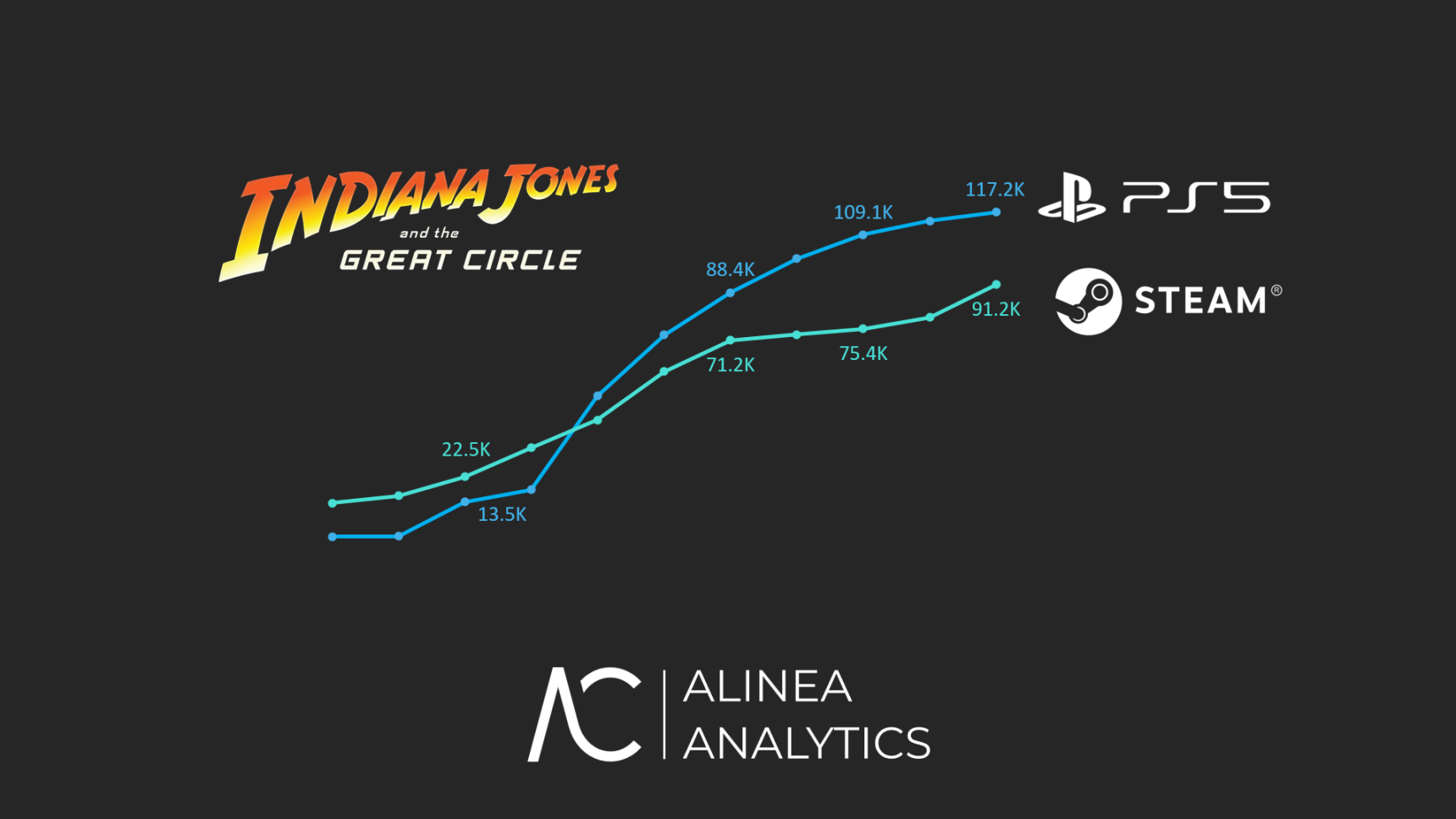
Indiana Jones Is Selling Copies Faster on PS5 Than It Did on Steam and Xbox
The commercial performance of Indiana Jones and the Great Circle on PlayStation 5 serves as a critical indicator of the viability of Xbox’s evolving third-party publishing strategy.
- Indiana Jones and the Great Circle sold 117.2K copies on PS5 in its first six days, outpacing the 91.2K copies sold on Steam during its equivalent launch window.
- While nearly 5 million Xbox players have accessed the game, the vast majority utilized Game Pass, which the report identifies as a factor that cannibalizes premium sales.
- The game has sold over 300K copies on Steam since its December 8, 2024, launch, generating approximately $17.5 million in revenue.
Alinea AnalyticsApr 2025
Article
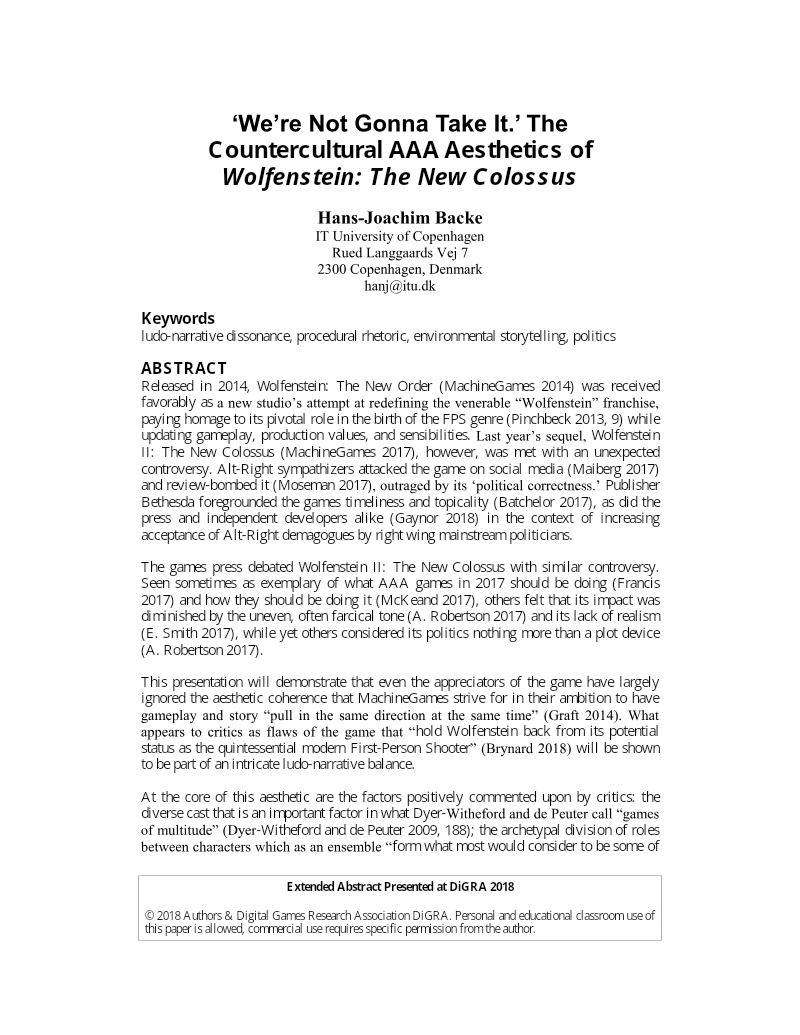
"We're Not Gonna Take It.": The Countercultural AAA Aesthetics of Wolfenstein: The New Colossus
Hans-Joachim Backe's analysis examines Wolfenstein II: The New Colossus (MachineGames, 2017) and argues that its apparent flaws are in fact deliberate components of a unified aesthetic.
- The paper argues that Wolfenstein II: The New Colossus (MachineGames, 2017) has apparent flaws that are deliberate parts of a unified aesthetic, and that critics and sympathetic reviewers missed the coherence between its narrative and ludic systems.
- The central thesis is that the game deploys Bakhtin's carnivalesque as a poetics of defamiliarization that stages the death and rebirth of first-person shooter conventions.
- The analysis reads the game's Nazi ideology as absurdist rather than endorsing, and interprets protagonist B.J. Blazkowicz's trajectory from an idealized Aryan body to a frail, grafted figure as an inversion of fascist notions of virility.
DiGRAJan 2018