1 free read left. Create a free account for unlimited reading + AI research.
Create free accountArticle DiGRA
1 free read left. Create a free account for unlimited reading + AI research.
Create free accountArticleDiGRA
Alt-Right audiences review-bombed the 2017 game, while critics argued about its tone, realism, and political sincerity.
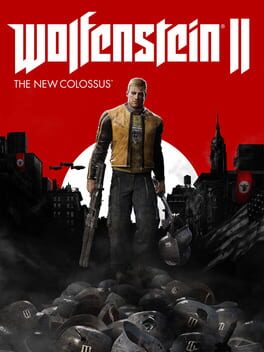
Hans-Joachim Backe's analysis examines Wolfenstein II: The New Colossus (MachineGames, 2017) and argues that its apparent flaws are in fact deliberate components of a unified aesthetic. Responding to a controversy in which Alt-Right audiences review-bombed the game and critics debated its tone, realism, and political sincerity, the paper contends that critics and even sympathetic reviewers have overlooked the coherence between the game's narrative and ludic systems. The central thesis is that the game uses the carnivalesque, drawing on Bakhtin's theory, as a poetics of defamiliarization that stages the death and rebirth of first-person shooter conventions.
The analysis identifies several mechanisms through which this aesthetic operates. The diverse ensemble cast and archetypal character roles are presented as contributions to what the author, drawing on Dyer-Witheford and de Peuter, terms "games of multitude." The game's treatment of Nazi ideology is read as absurdist rather than endorsing, and its protagonist's trajectory, from an idealized Aryan body to a frail, grafted figure, is interpreted as an inversion of fascist notions of virility. Gameplay elements that critics found awkward, including stealth mechanics that force failure, reduced health, and a limited but freely combinable arsenal, are framed as procedural rhetoric that replaces ideals of purity and strength in numbers with strength through diversity.
The study is a single-case, qualitative close reading of one game, supported by sequence-level analysis and the theoretical frameworks of Bakhtin and procedural rhetoric. It draws on an extensive body of contemporaneous press criticism, publisher statements, and scholarship on #Gamergate, situating the game within debates about AAA politics in 2017 and 2018. The paper is presented as an extended abstract for DiGRA 2018.



DiGRA · 2022
Extra Credits · 2026