indie
CompanyUnited States
Documents about indie

Making Indie Games Is Like Buying A Lottery Ticket
The transition from corporate game development to independent game creation is frequently misunderstood as a viable alternative to industry layoffs.
- The indie game market is hyper-saturated, with over 21,000 games released on Steam in 2025 alone, making commercial viability difficult even for critically acclaimed titles.
- Transitioning to independent development is a high-risk financial endeavor rather than a stable career pivot, as it frequently requires personal savings, grants, or family support to cover years of development costs.
- The 'starving artist' model of indie development is functionally inaccessible to mid-career professionals who have significant financial obligations like mortgages and dependents.
The Onslaught of Summer Games Fest, Steam Deck price go BRRRR & the Logo Wars! | Games for Breakfast
The modern gaming industry is currently navigating a period of significant structural and ethical turbulence, characterized by the oversaturation of promotional events and the aggressive consolidation of corporate power.
- Summer Game Fest (June 1–8) has been criticized for its cluttered schedule, with organizers grouping diverse showcases into single days rather than spreading them out, which risks sidelining niche and identity-focused game presentations.
- Take-Two Interactive has effectively shut down RageMP, a prominent multiplayer modding platform for Grand Theft Auto V, by asserting that it is the only authorized platform for the game.
- Rising hardware costs, specifically regarding the Steam Deck, are being driven by persistent component shortages that impact even newer iterations of the hardware.
TWIG #385: $100M for Indies, Lilith Goes Casino, Google Play Changes, and Toon Blast Breaks Bad
The mobile gaming landscape is undergoing a fundamental transformation driven by shifting discovery mechanics, evolving monetization strategies, and a recalibration of investment models.
- Griffin Gaming Partners has launched a $100 million project-based fund using revenue-share agreements to provide an alternative to equity-focused venture capital for indie studios.
- Embracer Group plans to split into two separate entities by 2027, decoupling its prestige intellectual property from its mobile assets to reverse the effects of unsustainable acquisition strategies.
- Google Play’s shift toward AI-powered conversational search requires developers to move from keyword-based optimization to natural language strategies, likely favoring ad networks with higher bid capacity over individual developers.

🚨📢BREAKING NEWS: AppLovin Fingerprinting Exposed, Sensor Tower's M&A, Embracer's $192M Write-Down
The mobile gaming industry experienced significant shifts in late May 2026, characterized by strategic market consolidation, allegations of widespread privacy circumvention, and financial restructuring among major players.
- AppLovin is facing allegations that its mediation cipher enables deterministic re-identification of iOS users by transmitting 50 device parameters to over 12 downstream networks every 30 seconds, effectively bypassing Apple’s App Tracking Transparency (ATT) protections.
- Embracer Group recorded a $192 million write-down on its mobile business following the divestiture of Easybrain to Miniclip, though the company maintained 2% organic growth and a 4% increase in EBITDA.
- Sensor Tower acquired Apptopia to capture the SMB market, creating a strategic funnel to convert indie developers and smaller studios into long-term enterprise clients.

AI Games Need Soul, Not Slop
The integration of artificial intelligence into game development should prioritize creative intent and emotional resonance over the mass production of generic content.
- Parable Studios' 'Millennium Whisper' is the first on-device AI game on Steam, utilizing small, game-specific models rather than massive, general-purpose systems to ensure creative intent and emotional depth.
- On-device AI eliminates the need for per-user server costs and reliance on third-party APIs like OpenAI or Azure, allowing indie developers to maintain creative ownership and avoid recurring operational expenses.
- Parable Studios replaces scraped, generic online data with actor-led data capture, where performers improvise within a controlled system to create high-quality, purpose-built training datasets.
He Knew Nothing... But Made $800,000 On His First Game (w/ Cakez) — Ep 66
The development of independent games requires a strategic shift from technical perfectionism toward prioritizing immediate, frictionless player engagement.
- Prioritize the 'five minutes of fun' core gameplay loop over technical perfectionism, as building custom engines or renderers often fails to provide tangible value to the end user.
- Commercial viability is driven by strong visual hooks and clear branding, which are more critical for initial reception than mechanical depth.
- Leverage Steam’s playtesting and demo features to build momentum and cultivate a dedicated audience before the official product launch.
🚨📢 BREAKING NEWS: Applovin Record Revenue, More Layoffs, EvE online sold back
The gaming industry is currently experiencing a period of significant corporate restructuring, marked by record financial performances for some entities and aggressive downsizing for others.
- AppLovin reported record Q1 revenue of $1.84 billion, a 25% year-over-year increase, while Unity posted a $347 million loss despite a 17% revenue increase to $508 million.
- CCP Games is being sold back to its CEO by Pearl Abyss for $120 million, a significant drop from its $425 million valuation in 2018.
- Supercell acquired Metacore, resulting in a 30% workforce reduction at the studio as part of a strategic shift in the merge-game genre.
S07, E15: The modern mobile gaming economy (with Phil Black)
The mobile gaming industry is undergoing a structural transformation characterized by market consolidation and a pivot away from the unsustainable hyper-casual model.
- Direct-to-consumer (DDC) web shops are becoming a standard strategy for midcore games, particularly in the 4X genre, to bypass platform fees and increase LTV, with some third-party providers now offering fees as low as 5%.
- The competitive advantage in user acquisition (UA) has shifted away from creative output—which is easily cloned—toward sophisticated predictive infrastructure, such as cohort-level modeling and signal engineering.
- The mobile gaming market is experiencing a consolidation of revenue into puzzle and 4X genres, with hyper-casual games serving as a 'minor league' farm for testing mechanics that are later integrated into more complex, high-revenue core loops.
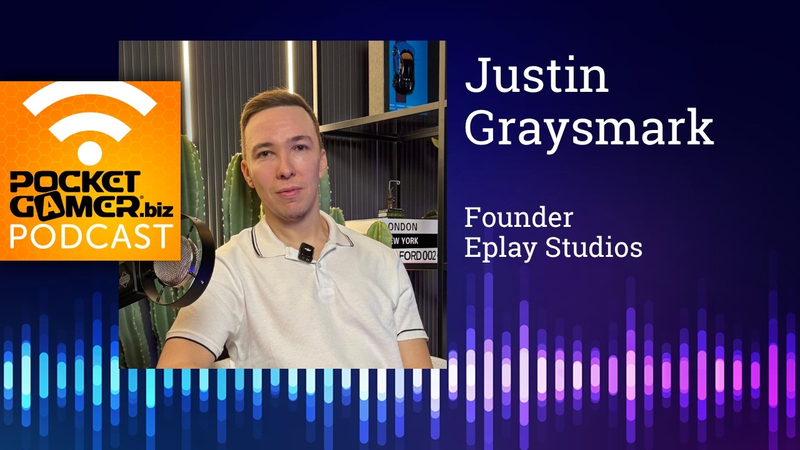
The Martial Arts Mindset That Won 2 Million Players
The transition from an unconventional background in English education to the successful founding of Eplay Studios illustrates the potential for indie developers to thrive by prioritizing player-centric, skill-based competitive gaming.
- Eplay Studios achieved 2 million installs across a portfolio of 25 competitive games by focusing on real-money, skill-based gameplay.
- The studio leverages the Skillz platform and Beamable to outsource complex infrastructure, including matchmaking, payments, and live operations, allowing the team to focus exclusively on core game mechanics.
- Success in competitive gaming requires prioritizing player trust through strict fairness and balance, as players will churn if they perceive the competition as rigged or uneven.
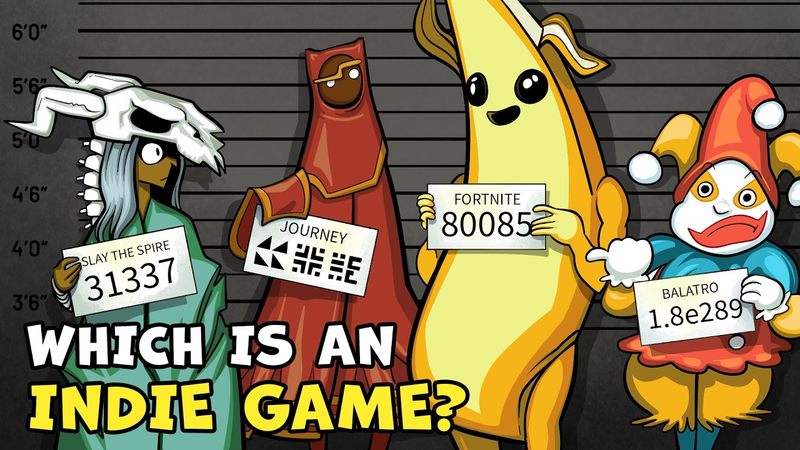
Defining "Indie" in 2026 | Extra Credits Gaming
The term indie in the video game industry has evolved from a clear descriptor of independent production into a complex, contested, and often contradictory label.
- The term 'indie' has evolved from a descriptor of self-funded, hobbyist-led development in the 1980s to a nebulous marketing label that no longer reliably distinguishes between studio size, funding models, or creative independence.
- Modern industry giants like Epic Games, which was founded in 1991 and maintains self-publishing status for Fortnite despite a 40% ownership stake by Tencent, demonstrate that self-publishing does not inherently equate to the 'indie' identity.
- The historical distinction between AAA and indie games—defined by 3D hyperrealism versus unique art styles and corporate versus 'punk rock' culture—has blurred as AAA studios increasingly adopt stylized aesthetics and indie developers rely on external publishers like Devolver Digital or Humble Bundle.
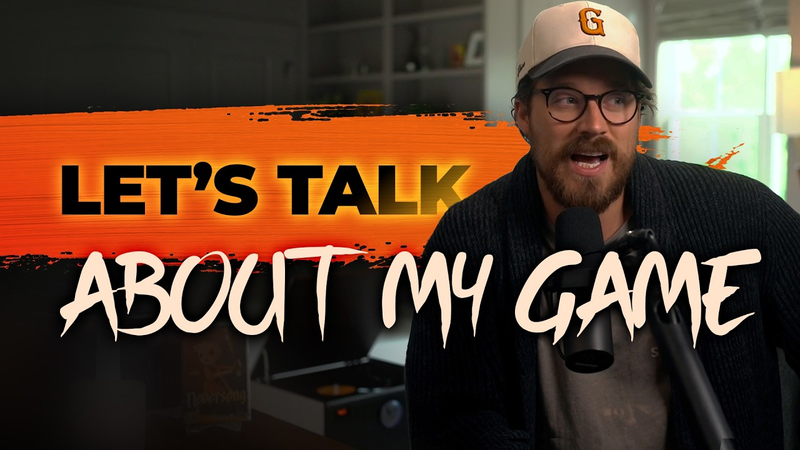
I Have Some News About My Indie Game "Twisted Tower"
The development of the indie game Twisted Tower, a project five years in the making, is currently in its final, high-intensity phase.
- Beta testing is a critical, painful process that requires gathering honest feedback from a representative audience to overcome developer ego and identify objective flaws.
- Effective beta testing involves analyzing specific metrics such as game difficulty, completion time, worst-case experiences, and pricing expectations to inform final development decisions.
- Game development requires a strict sequential workflow where tasks like localization and cutscene finalization cannot occur until core gameplay and story elements are validated through testing.
Skybound cuts back indie publishing to focus on Invincible VS and The Walking Dead
Skybound is fundamentally restructuring its business model to prioritize the internal development of its core intellectual properties, specifically Invincible and The Walking Dead, over the publishing of third-party indie titles.
- Skybound is pivoting its business model away from third-party indie publishing to focus exclusively on internal development of its core intellectual properties, specifically Invincible and The Walking Dead.
- The company has established an internal studio, Quarter Up, to maintain direct creative control and ensure video game adaptations align with the quality and tone of its existing comic and television franchises.
- This strategic shift aims to mitigate the risks associated with licensed game development and prevent the brand dilution often caused by low-quality, third-party titles.