indie
CompanyUnited States
Documents about indie
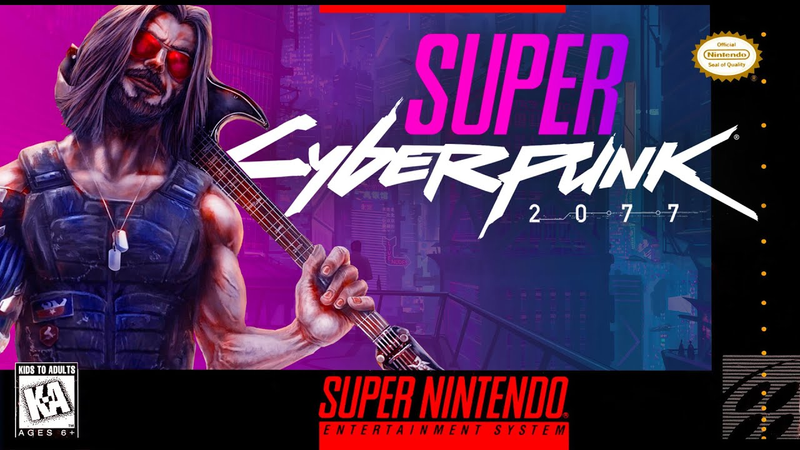
I made Cyberpunk 2077... BUT IT'S 2D
This analysis examines the technical and creative process of adapting a complex 3D AAA title into a 2D platformer.
- The project successfully distilled a complex 3D AAA title into a 2D Metroidvania-style prototype using the Unity engine within a one-week development cycle.
- 2D development requires more intensive character animation and rigging than 3D, as the entire character model must be visible and responsive to cursor movement at all times.
- Dynamic lighting, fog, rain, and post-processing glow effects are the primary drivers for replicating a high-fidelity 'cyberpunk' atmosphere in a 2D environment.
Unreal Engine 5 Reaction | Unchained Report
The release of the Unreal Engine 5 tech demo represents a significant milestone in game development, sparking widespread industry discussion regarding the future of graphical fidelity and production workflows.
- Unreal Engine 5 introduces Nanite for automated geometry management and Lumen for real-time global illumination, aiming to eliminate traditional production bottlenecks like manual baking and level-of-detail management.
- The UE5 tech demo functions primarily as an aspirational marketing benchmark for next-generation hardware like the PlayStation 5 and Xbox Series X rather than an immediate, universal standard for all game development.
- While these technologies offer significant productivity gains, they do not remove the necessity for artistic expertise or rigorous optimization in dynamic, gameplay-heavy scenarios.
Stadia and Cloud Gaming | Unchained Report
Stadia’s market entry and long-term viability as a cloud gaming platform face significant skepticism due to a lackluster content strategy and a poorly executed launch.
- Stadia’s long-term viability is threatened by a lack of exclusive, high-caliber first-party content that differentiates it from established console ecosystems.
- The platform currently lacks a 'killer app' that leverages unique cloud-native features, such as deep YouTube integration, to justify its existence as a fourth console competitor.
- Stadia’s library is perceived as weak because it relies heavily on older, previously played titles rather than the deep, established catalogs offered by competitors like Microsoft and Sony.

Can I make a bouncy ball game DEEP & EMOTIONAL?
The primary objective of this development project is to determine if a simple, mechanics-driven game centered on a bouncy ball can effectively convey a profound, emotional narrative.
- Minimalist mechanics, such as a bouncy ball physics loop, can effectively serve as a vessel for complex emotional themes like grief and parental regret.
- Emotional resonance is achieved by aligning atmospheric storytelling with gameplay milestones, using voice-acted segments triggered by specific player actions.
- The project utilizes the Unity engine to build a 2D environment, employing a custom parallax script to create depth and immersion within a summer-themed setting.
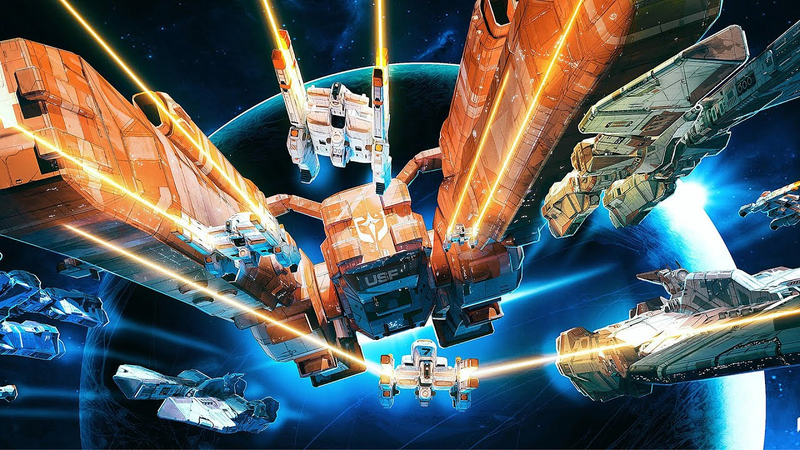
Indie MMO Development with Jason Lee | Game Dev Unchained Episode 245
The transition from AAA studios to independent development represents a strategic shift toward holistic production, where the hyper-specialization of large-scale firms is replaced by agile, cross-functional workflows.
- Indie MMO development prioritizes agile, cross-functional workflows over the hyper-specialization and risk-averse, feature-heavy cycles typical of AAA studios.
- Procedural generation and systemic design allow small teams to scale expansive, persistent universes without the overhead of massive, bloated development staffs.
- Studios are shifting from traditional crowdfunding toward equity-based fundraising, which aligns long-term project success with community investors rather than simple digital asset sales.

Crash Course in Online Features for Programmers
Game developers should prioritize the integration of existing platform APIs and middleware to implement online features rather than building custom, resource-intensive solutions from scratch.
- Prioritize the use of existing platform APIs and middleware for features like leaderboards and persistent storage to avoid the high resource costs of building custom backend solutions.
- Optimize network performance by minimizing memory allocation, utilizing domain-specific data compression, and strictly managing traffic to prevent inefficient object replication.
- Implement robust networking mechanics such as state verification, host migration, and 'rewind and replay' to maintain stability in peer-to-peer architectures.
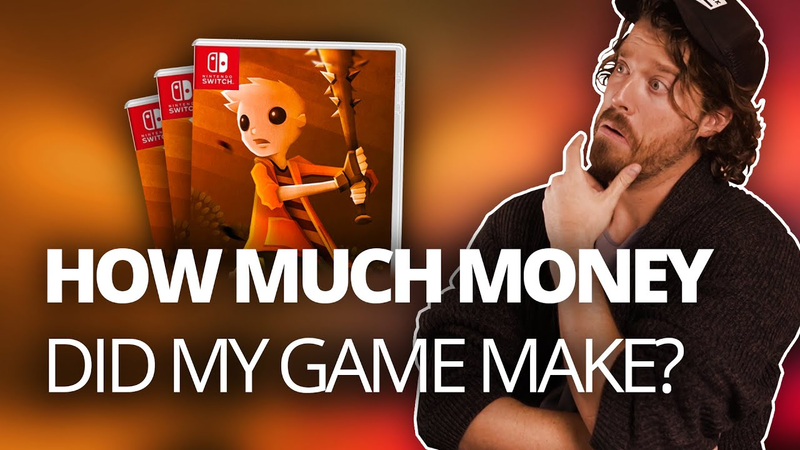
How much MONEY did my STEAM/SWITCH game make?
The primary objective is to illustrate the financial realities of independent game development by analyzing the performance of the title Never Song.
- Long-term financial sustainability in indie game development requires a diversified revenue model that combines storefront sales with crowdfunding, publisher advances, and personal brand cultivation.
- The game Never Song generated $90,000 in gross revenue from over 12,000 units on Steam and $30,000 from nearly 3,000 units on the Nintendo Switch within its first five months of release in May 2020.
- Relying solely on organic discovery within storefronts is insufficient due to high market competition, making a proactive marketing system essential for consistent visibility.
Global Outlook for the Game Industry After the Pandemic | Unchained Report
The game industry is undergoing a significant structural shift as it adapts to the global pandemic, moving away from centralized office environments toward a permanent, remote-first operational model.
- The game industry is shifting to a permanent, remote-first operational model, which is dismantling long-standing stigmas against distributed teams and accelerating the development of online-centric and massively multiplayer titles.
- Studios are increasingly bypassing local geographic constraints to access global talent pools, though this shift introduces complex regulatory challenges regarding international labor laws and local statutes like California’s AB5.
- Consumer demand for interactive entertainment has surged, evidenced by rising engagement metrics on platforms such as Steam.
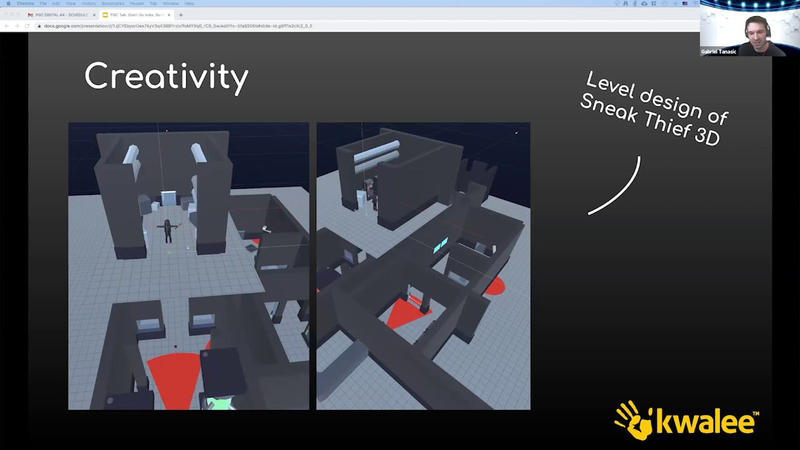
Superstar Session: Don't Go Indie, Go Hyper!
The hypercasual gaming sector offers a distinct alternative to traditional indie development, characterized by rapid prototyping, high creative turnover, and a focus on gameplay over complex production values.
- Hypercasual development prioritizes rapid prototyping, with core functionality often developed in under one week to allow for immediate marketability testing via click-through rate (CTR) analysis.
- The business model mitigates financial risk by utilizing a 'fail fast' approach, where developers abandon underperforming concepts early to focus resources exclusively on high-potential projects.
- Hypercasual games rely on broad accessibility and engaging mechanics rather than deep narratives or high-fidelity graphics, allowing for the use of asset packs and simplified programming to lower entry barriers.
Fireside Chat: You Need to be in South Korea! Everything You Need to Know About G-STAR (and Beyond)
South Korea stands as the world’s fourth-largest gaming market, representing approximately 6% of the global industry.
- South Korea is the world’s fourth-largest gaming market, accounting for 6% of the global industry and experiencing 15% growth during the pandemic.
- G-STAR, held annually in Busan, is the essential strategic gateway for foreign companies to access B2B networking and incubation support.
- Successful market entry relies on partnerships with established local publishers such as Nexon or Kakao to navigate the sophisticated, relationship-driven ecosystem.

how I made & played a game with PEWDIEPIE in 14 days
The account details a 14-day game development challenge undertaken by indie developer Thomas Brush, who successfully leveraged a social media dare to collaborate with high-profile content creator PewDiePie.
- Strategic collaboration with high-profile influencers can serve as a primary catalyst for rapid career growth and audience acquisition for indie developers.
- Executing a high-pressure, 14-day development challenge demonstrates that professional-grade projects can be completed under strict time constraints through iterative design.
- Live-streaming the entire development process functions as a powerful marketing tool, directly contributing to a substantial increase in the developer's subscriber base.
I Got Beaten Up by my Producer (Devlog)
Independent game development is characterized by a deceptive pace where significant effort often results in subtle, incremental progress.
- Solo indie development often requires a significant 'invisible' phase, as demonstrated by the developer spending 12 months on localization, accessibility, UI, and optimization after core gameplay was already finished.
- The project timeline for 'Will You Snail' extended to two and a half years due to the compounding effect of minor bug fixes, polish tasks, and the psychological pressure to achieve a high-quality final product.
- Workflow efficiency was improved by externalizing color palettes into text files, allowing for real-time visual adjustments without the need to restart the game engine.