Hutch
Company
Documents about Hutch

Digital Chocolate’s diaspora, Destiny: Rising woes, EA’s shooter revival, November’s top games, more
The mobile games industry continues to be shaped by the legacy of Digital Chocolate, a foundational company whose alumni—often referred to as the "D-Choc Mafia"—now hold significant leadership roles across the global gaming landscape.
- EA is actively recruiting a VP of mobile shooters to report to Vince Zampella, signaling a potential revival of mobile titles for the Apex Legends and Battlefield franchises.
- Destiny: Rising is struggling post-launch, with daily earnings dropping from a $300,000 peak in September to approximately $25,000, despite 4.4 million total downloads since August.
- Last War Survival led November mobile revenue with $115 million, followed closely by Roblox at $112 million and Monopoly Go at $111 million, according to Appmagic data.

Behind the Wheel of IP Licensing with Hutch's co-CEO, Peter Hansen-Chambers
The strategic integration of intellectual property within the mobile racing genre hinges on shifting from transactional licensing to long-term, relationship-based partnerships.
- Successful IP licensing in mobile racing requires shifting from transactional deals to long-term, relationship-based partnerships that prioritize community engagement over rigid initial KPIs.
- Developers must move away from console-style replication and instead adopt a mobile-first creative vision that demonstrates how a game can expand an automotive brand’s reach to new demographics.
- Securing high-profile partnerships depends on a studio’s proven track record of reliability and creative integrity, which eventually shifts the dynamic from cold-pitching to being actively sought out by manufacturers.

5 Things: About Autonomous Teams
Hutch has achieved significant commercial success, reaching an $80 million annual run rate and 300 million lifetime players, by fundamentally restructuring its operations around autonomous, cross-functional teams.
- Hutch achieved an $80 million annual run rate and 300 million lifetime players by restructuring operations into autonomous, cross-functional teams that hold full accountability for both creative and financial outcomes.
- Decentralizing decision-making power from management to developers serves as the primary engine for scaling the studio while maintaining consistent profitability.
- Effective Agile implementation at Hutch prioritizes psychological safety and developer empowerment over rigid processes, with leadership acting as servants to self-organizing teams.

Hutch: Fantastic Mistakes and How to Avoid Them
Hutch, a mobile-first game studio founded in 2011, transitioned from a console-focused development background to a profitable free-to-play business model by embracing lean development and iterative validation.
- Hutch transitioned from console development to a profitable free-to-play model by treating all design decisions as testable assumptions rather than fixed creative choices.
- The studio mitigates financial risk by prioritizing 'viable' products over 'minimum' ones, ensuring concepts are validated against live player data before full-scale production.
- Early titles like Smash Bandits failed due to a lack of market validation and a mismatch between skill-based gameplay and free-to-play monetization, whereas later titles like Top Drives succeeded by limiting innovation to specific, justified areas.
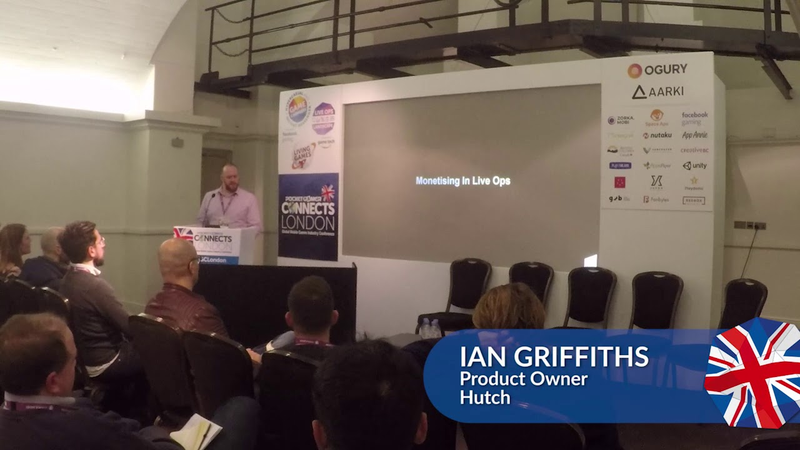
Hutch on monetising for live ops
The presentation outlines a strategic framework for monetizing live operations in mobile free-to-play games, specifically drawing from the experience of the London-based studio Hutch.
- Hutch increased average revenue per user (ARPU) by over 25% in Top Drives by implementing a system that triggers targeted starter pack offers every five player levels.
- Live Ops allows for continuous revenue growth beyond the launch month by building a base of hyper-engaged, long-term players who remain invested for years.
- Effective monetization in Live Ops relies on an expansive meta-game built on granular, extensible content that feeds directly into the core gameplay loop.
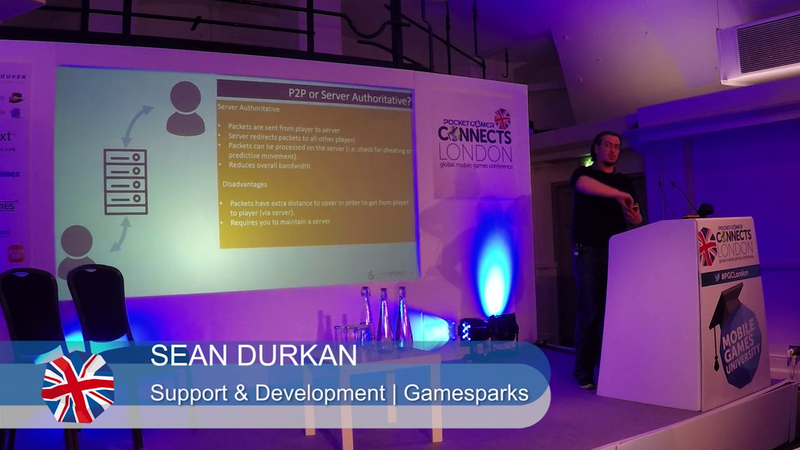
Race Kings port-mortem
The development of real-time multiplayer networking for mobile games presents unique challenges, primarily due to the inherent instability and bandwidth limitations of mobile networks.
- Hutch Games and GameSparks achieved a 60% reduction in packet size for Race Kings by utilizing an ordered UDP protocol instead of traditional TCP.
- The networking architecture prioritizes speed and flexibility by discarding outdated or late-arriving data, which is essential for maintaining synchronization in fast-paced mobile racing games.
- The platform employs a server-authoritative model to ensure robust cheat detection and centralized management of the game state.