Glu Mobile
Company
Documents about Glu Mobile

The Future is User-generated: Roblox IPO Cements New Course for Games Industry
The Roblox public offering marks a significant shift in the games industry, signaling the transition from traditional development models toward user-generated content (UGC) ecosystems.
- Roblox's IPO signals a structural industry shift toward user-generated content (UGC) ecosystems, which allow for content production at a scale impossible for traditional studios, such as the community producing 39,000 items for Roblox compared to 5,000 for EA's The Sims over five years.
- The UGC model offers high marketing efficiency, evidenced by Roblox generating $589 million in revenue with only $42 million in sales and marketing spend, significantly outperforming traditional mobile publishers like Glu Mobile.
- Roblox has achieved massive market penetration, capturing approximately 75% of American children aged 9 to 12 and reaching 31.1 million daily active users.
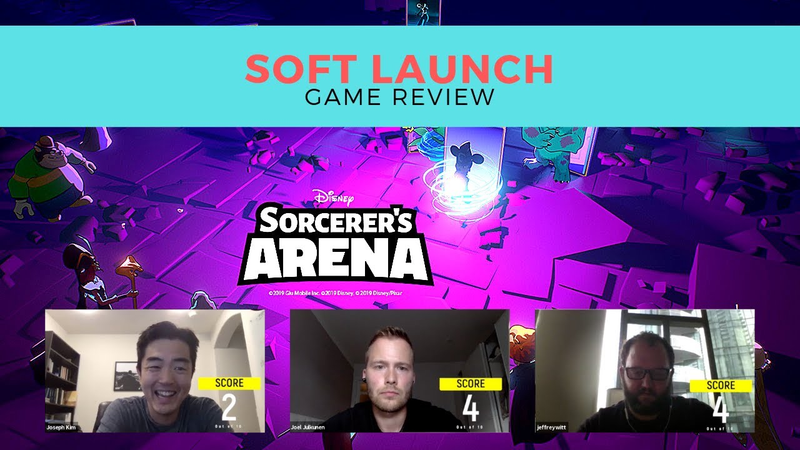
Disney Sorcerers Arena Mobile Game by Glu Mobile | Soft Launch Review
Disney Sorcerer’s Arena faces significant viability challenges as it navigates its soft launch phase, primarily due to a fundamental misalignment between its intellectual property and core gameplay mechanics.
- Disney Sorcerer’s Arena faces a critical demographic mismatch, as its complex, mid-core RPG mechanics fail to align with the casual, female-skewing audience typically associated with the Disney brand.
- The game is currently underperforming during its soft launch phase, characterized by low install volumes and poor revenue per download.
- Ineffective price anchoring and confusing monetization strategies serve as significant barriers to the game's commercial viability.
Live Events Are Changing the Music Industry
The emergence of virtual live events, exemplified by Marshmello’s Fortnite concert, signals a fundamental shift in how younger generations consume music and shared cultural experiences.
- Gaming platforms are emerging as primary venues for music consumption, evidenced by a single 10-minute virtual concert in Fortnite attracting 10 million viewers.
- Gaming video content has reached a global audience of nearly 700 million people, establishing gamers as the primary drivers of new cultural and technological consumption patterns.
- Major publishers like Electronic Arts and Take-Two Interactive are shifting their financial models away from unit sales toward long-term recurring revenue through subscriptions and content updates.

Industry Update: Q3 2018
This industry update provides a snapshot of the global interactive entertainment and media landscape during the third quarter of 2018.
- Sony achieved record operating profits in Q3 2018, supported by total PlayStation 4 hardware sales reaching 82.2 million units.
- Nintendo generated $1.51 billion in revenue, though analysts remain skeptical of the company's ability to meet its 20-million-unit annual sales target for the Switch.
- Activision Blizzard experienced a 14% decline in Blizzard revenue, a downturn attributed to increased market competition from Fortnite.
Monetisation masterminds
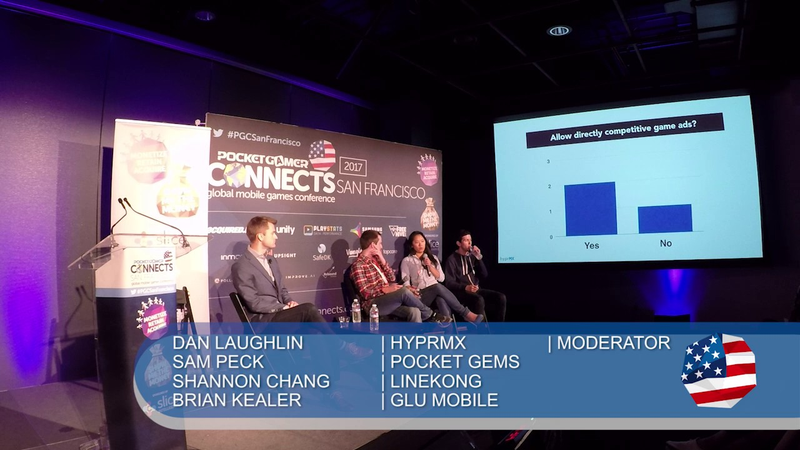
This discussion features monetization experts from Pocket Gems, Linekong, and Glu Mobile, focusing on the strategic integration of in-app purchases (IAP) and advertising within mobile games.
- Successful mobile monetization requires integrating five to nine ad networks to drive competition and maximize fill rates, despite the technical complexity of managing multiple SDKs.
- Rewarded video ads are now essential for all players, including those who already make in-app purchases, as they increase overall engagement and provide incremental value.
- Developers should move beyond basic payer versus non-payer segmentation by incorporating geographic and behavioral data to optimize both pricing and ad delivery.

Monetizer: Rival Fire
Rival Fire, a mobile shooter developed by Glu Mobile, represents a significant evolution in the company’s monetization strategy by integrating complex, RPG-inspired mechanics into a traditional arcade-style shooter framework.
- Glu Mobile’s Rival Fire marks a strategic shift for Western developers by adopting Asian-market monetization models, specifically through a partnership with Tencent.
- The game replaces high-cost, singular purchases with a granular, component-based upgrade system for weapons, armor, and squad gear to drive recurring spending.
- Monetization is sustained through a cycle of micro-rewards and RPG-inspired mechanics, including VIP status systems, daily tasks, and gacha-style loot crates with guaranteed high-tier drops.

How Glu evolved Frontline Commando from guns to girls and gacha
The evolution of Glu Mobile’s Frontline Commando franchise between 2011 and 2016 illustrates a broader industry shift from simple, linear mobile shooters toward complex, meta-heavy experiences influenced by Asian market design trends.
- Between 2011 and 2016, Glu Mobile shifted the Frontline Commando franchise from simple linear shooters to complex, meta-heavy experiences modeled after Asian mobile gaming trends.
- The 2016 title Rival Fire marked a definitive pivot toward high-frequency reward structures, replacing basic gear purchases with granular progression systems for individual weapon components and character stats.
- Glu Mobile expanded the franchise's social ecosystem in 2016 by integrating guilds, global chat, and friend-based assistance to drive long-term player retention.

How Glu has evolved UX in its celebrity games
Glu Mobile’s evolution of its celebrity-branded mobile game portfolio demonstrates a strategic refinement of user experience (UX) and interface design, moving from generic, low-fidelity mechanics to highly polished, brand-integrated environments.
- Glu Mobile’s transition from the 2011 Stardom titles to Kim Kardashian: Hollywood—which generated over $250 million in revenue—demonstrates that shifting to an aspirational aesthetic and intuitive UI is critical for commercial success.
- Early titles failed to resonate with the target demographic due to low-fidelity graphics, clunky navigation, and the use of obscure RPG-style terminology like experience points.
- The studio’s evolution shows that prioritizing visual clarity and thematic immersion over complex mechanics significantly improves user engagement.
iOS Gaming Leaders: February 2016
The February 2016 iOS gaming landscape was characterized by a seasonal contraction in download volume, alongside the emergence of high-performing indie titles and celebrity-branded games.
- Global iOS game downloads declined 7.5% in February 2016, falling from 688 million in January to 636 million.
- U.S. iOS game downloads dropped 15% month-over-month to 158 million, though this figure represented a 9.7% increase year-over-year.
- The indie title 'Color Switch' maintained the No. 1 spot for U.S. downloads and reached the top of the worldwide download charts, following a 23-day streak as the top iPhone app in the U.S.

FTUE: Kendall & Kylie
Kendall & Kylie, a free-to-play mobile title developed by Glu Mobile, serves as a thematic successor to the highly successful Kim Kardashian: Hollywood.
- Glu Mobile developed Kendall & Kylie as a thematic successor to Kim Kardashian: Hollywood, utilizing a portrait-oriented interface to specifically target a younger mobile demographic.
- The game employs a dual-currency monetization model consisting of soft currency earned through gameplay and hard currency (K-Gems) purchased with real money to accelerate progress.
- The core gameplay loop centers on an energy-based mechanic where players expend energy to complete tasks, earn experience points, and manage virtual currency.

Is there life for Glu Mobile after Kim Kardashian?
Glu Mobile’s 2015 financial performance highlights the volatility of the celebrity-driven mobile gaming model.
- Glu Mobile’s 2015 revenue stagnated at $250 million, a marginal 1% increase, highlighting the volatility of a business model heavily dependent on celebrity-driven titles.
- Revenue concentration remains a critical risk, with 'Kim Kardashian: Hollywood' and 'Racing Rivals' accounting for 47% of the company's total annual revenue.
- The commercial failure of 'Katy Perry Pop' and 'James Bond: World of Espionage' forced an organizational restructuring and a leadership change to address lapses in internal quality control.
IAP Inspector: Katy Perry Pop
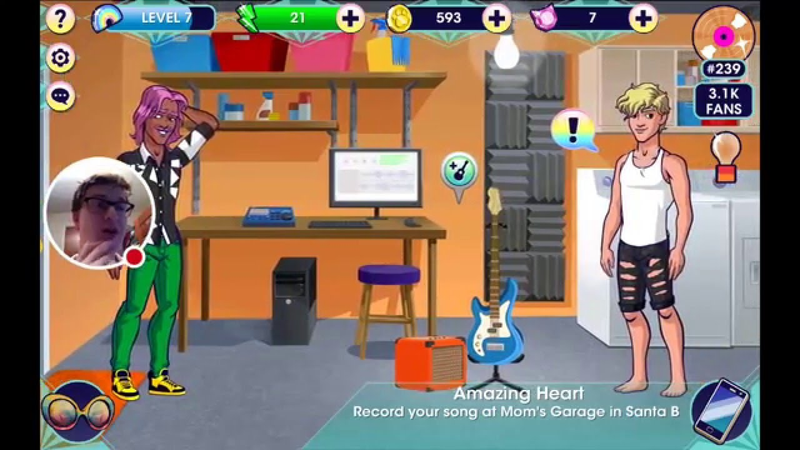
Katy Perry Pop, a mobile simulation game developed by Glu Mobile, functions as a thematic successor to the studio’s highly successful Kim Kardashian: Hollywood.
- Glu Mobile’s Katy Perry Pop utilizes a narrative-driven progression system modeled after the studio’s previous title, Kim Kardashian: Hollywood.
- The game employs a three-tier currency model consisting of energy, soft currency (Katy Coins), and hard currency (Katy Gems).
- Social progression is gated by a steep paywall, with high-profile networking interactions costing up to 100 Katy Gems, a currency difficult to earn through standard play.