Glu Mobile
Company
Documents about Glu Mobile
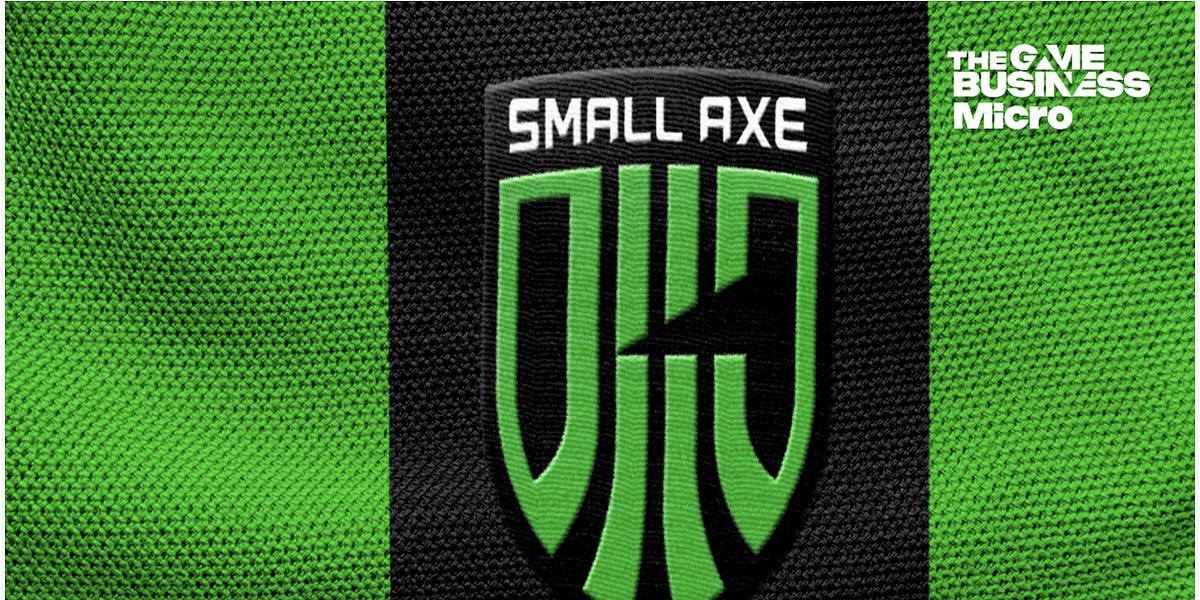
2K Is the Only One That Could Take on EA Sports FC
The establishment of Small Axe Studios by 2K Games marks a strategic expansion into the competitive sports simulation market.
- 2K Games has launched a new Vancouver-based studio, Small Axe Studios, specifically tasked with developing a new blockbuster sports franchise.
- The new studio is staffed by high-level industry veterans formerly of EA Sports, including leaders who worked on EA Sports FC, Madden, FIFA, UFC, and Skate.
- Small Axe Studios originated from the 2K Sports Lab, an internal research and development unit established by 2K in 2023.

The Ares Gameplan: UA Financing, Non-US Developers, and Kim Kardashian
Ares Interactive is positioning itself as a successor to Glu Mobile, leveraging a strategic focus on user acquisition (UA) financing and partnerships with non-US development studios.
- Ares Interactive has secured $70 million in funding to expand its portfolio of cross-platform free-to-play games.
- The company is led by founder Niccolo de Masi and executive Mike DeLaet, both of whom are former Glu Mobile veterans, leading to industry comparisons of Ares as 'Glu 2.0'.
- Ares is actively exploring the development of a celebrity-licensed game similar to the success of 'Kim Kardashian: Hollywood'.

Acquisition Retrospective: EA & Glu
Electronic Arts’ $2.1 billion acquisition of Glu Mobile is analyzed as a strategic failure, highlighting the challenges of integrating mobile-focused studios into a large-scale gaming organization.
- EA’s $2.1 billion acquisition of Glu Mobile is considered a failure due to the departure of key leadership, the decline of top-performing titles, and a significant overpayment for the asset.
- EA is falling behind its goal to grow its mobile business to $2 billion in annual revenue by 2024, having generated only $782 million in the 12 months following the acquisition.
- The rapid departure of Glu’s CEO Nick Earl and COO Eric Ludwig post-acquisition deprived EA of essential strategic guidance and missed an opportunity to integrate experienced leadership into EA’s broader mobile division.

Why EA Saw Decline in Mobile Revenue Despite Obtaining Big Hits Through Acquisitions
Electronic Arts experienced a significant decline in mobile revenue during early 2022 despite investing $3.5 billion in the acquisitions of Glu Mobile and Playdemic in 2021.
- Electronic Arts saw a 23% year-over-year decline in mobile revenue for the first quarter of 2022, despite a 22% increase in total downloads.
- In 2021, EA invested $3.5 billion to acquire Glu Mobile and Playdemic, yet all major acquired IPs—including Kim Kardashian: Hollywood and Golf Clash—experienced revenue declines post-acquisition.
- The primary cause of the performance decline is attributed to EA's decision to force the integration of acquired studios into its corporate structure rather than maintaining their autonomy.

On Opposing Perspectives, Secrets, and The Future of Blockchain Gaming
The gaming industry is currently experiencing a concerning shift toward dogmatism, where personal identity is increasingly tied to specific viewpoints, hindering the nuanced debate necessary for innovation.
- Blockchain gaming may disrupt traditional free-to-play engagement models by offering players economic incentives and rewards for their time, potentially shifting player retention strategies.
- Digital ownership through NFTs could evolve into a new investment asset class, particularly for demographics in developing nations or those excluded from traditional stock and real estate markets.
- Industry experts offer conflicting forecasts for blockchain gaming, ranging from the creation of games with a billion-user scale to the emergence of niche, high-monetization titles for smaller audiences.
How the Games Industry M&A Frenzy is Making New Genre Leaders in Mobile
The mobile gaming industry is experiencing a significant transformation driven by aggressive merger and acquisition activity, which is enabling major publishers to rapidly secure leadership positions across diverse genres.
- The mobile gaming industry is experiencing a significant M&A frenzy, driven by a maturing market, a lockdown-induced bump, and intense competition, allowing major publishers to quickly become genre leaders.
- EA became the No. 1 mobile Sports games publisher by U.S. revenue ($176 million) and the No. 1 Lifestyle games publisher ($123 million) between January 1 and August 31, 2021, largely due to its acquisitions of Glu Mobile and Playdemic.
- Activision Blizzard (including King) maintained its position as the No. 1 publisher in the Puzzle genre, generating approximately $873 million in U.S. player spending from January 1 to August 31, 2021, with Candy Crush Saga performing strongly.
Unity Readies up for IPO Roadshow: Can It Get Out of Epic's Shadow?
This industry analysis examines the strategic positioning of major gaming entities during a period of significant transition in early 2020.
- Unity Technologies is preparing for an IPO with $500 million in revenue while attempting to differentiate itself from Epic Games through acquisitions like Bolt and Finger Food and expansion into non-gaming verticals.
- Tencent’s online game revenue grew 31% year-over-year to $5.3 billion, highlighting strong performance in the Asian market during early 2020.
- Sony’s annual gaming revenue declined 14% to $18 billion as the PlayStation 4 lifecycle ended, though its PlayStation Plus service reached 41.5 million subscribers.
Zuck's Achilles Heel: Disney's Renewed Interest in Games and EA's Spending Spree
The gaming industry is currently defined by aggressive intellectual property (IP) licensing, rapid consolidation, and a contentious push for new monetization models.
- Electronic Arts spent $4.7 billion over a twelve-month period to acquire studios including Playdemic, Codemasters, and Glu Mobile to expand its mobile gaming footprint and gain leverage against platform holders like Apple.
- Disney has pivoted its interactive strategy to a licensing-heavy model, offloading the operational risks of game development by granting third-party developers like Ubisoft and Square Enix access to its franchise portfolio.
- Facebook’s attempt to integrate advertisements into its Oculus VR platform failed due to community backlash, forcing developers to withdraw from ad-testing programs and highlighting the incompatibility of current ad models with immersive environments.

The Future is User-generated: Roblox IPO Cements New Course for Games Industry
The Roblox public offering marks a significant shift in the games industry, signaling the transition from traditional development models toward user-generated content (UGC) ecosystems.
- Roblox's IPO signals a structural industry shift toward user-generated content (UGC) ecosystems, which allow for content production at a scale impossible for traditional studios, such as the community producing 39,000 items for Roblox compared to 5,000 for EA's The Sims over five years.
- The UGC model offers high marketing efficiency, evidenced by Roblox generating $589 million in revenue with only $42 million in sales and marketing spend, significantly outperforming traditional mobile publishers like Glu Mobile.
- Roblox has achieved massive market penetration, capturing approximately 75% of American children aged 9 to 12 and reaching 31.1 million daily active users.
Live Events Are Changing the Music Industry
The emergence of virtual live events, exemplified by Marshmello’s Fortnite concert, signals a fundamental shift in how younger generations consume music and shared cultural experiences.
- Gaming platforms are emerging as primary venues for music consumption, evidenced by a single 10-minute virtual concert in Fortnite attracting 10 million viewers.
- Gaming video content has reached a global audience of nearly 700 million people, establishing gamers as the primary drivers of new cultural and technological consumption patterns.
- Major publishers like Electronic Arts and Take-Two Interactive are shifting their financial models away from unit sales toward long-term recurring revenue through subscriptions and content updates.

Industry Update: Q3 2018
This industry update provides a snapshot of the global interactive entertainment and media landscape during the third quarter of 2018.
- Sony achieved record operating profits in Q3 2018, supported by total PlayStation 4 hardware sales reaching 82.2 million units.
- Nintendo generated $1.51 billion in revenue, though analysts remain skeptical of the company's ability to meet its 20-million-unit annual sales target for the Switch.
- Activision Blizzard experienced a 14% decline in Blizzard revenue, a downturn attributed to increased market competition from Fortnite.
iOS Gaming Leaders: February 2016
The February 2016 iOS gaming landscape was characterized by a seasonal contraction in download volume, alongside the emergence of high-performing indie titles and celebrity-branded games.
- Global iOS game downloads declined 7.5% in February 2016, falling from 688 million in January to 636 million.
- U.S. iOS game downloads dropped 15% month-over-month to 158 million, though this figure represented a 9.7% increase year-over-year.
- The indie title 'Color Switch' maintained the No. 1 spot for U.S. downloads and reached the top of the worldwide download charts, following a 23-day streak as the top iPhone app in the U.S.