Glu Mobile
Company
Documents about Glu Mobile

Week in Mobile Games E67 - The $55bn EA acquisition unpacked
The acquisition of Electronic Arts by Saudi Arabia’s Public Investment Fund, in partnership with Silver Lake and Affinity Partners, marks a transformative $55 billion shift in the gaming landscape.
- Electronic Arts is set to be acquired by an investor consortium led by Saudi Arabia's Public Investment Fund, Silver Lake, and Affinity Partners in an all-cash deal valued at $55 billion, with closure expected in the 2027 financial year.
- EA's mobile division has seen revenue decline for two consecutive years, with recent performance falling below pandemic-era highs despite the company having launched over 50 mobile titles in the last decade.
- Genshin Impact's mobile revenue has declined annually since its launch, with year five generating approximately $500 million, which is half of the revenue recorded in year four.
TWIG #300 🎉🎉🎉 SPECIAL EPISODE 🎉🎉🎉
The contemporary games industry is currently navigating a painful structural contraction, driven by the end of zero-interest-rate policies and a post-pandemic decline in user engagement.
- The games industry is undergoing a structural contraction caused by the end of zero-interest-rate policies and a post-pandemic decline in user engagement, leading to widespread studio closures and layoffs.
- Electronic Arts is facing criticism for prioritizing AI and user-generated content over the revitalization of core franchises like Battlefield and The Sims, a strategy some analysts attribute to management consultants rather than creative leadership.
- Mobile gaming success is currently defined by Monopoly GO!, which illustrates that combining social casino mechanics with developer creative autonomy remains a highly effective monetization model.

TWIG #178 EA’s acquisition of Glu does not seem to be going according to the plan…
Electronic Arts’ acquisition of Glu Mobile faces significant performance challenges, as evidenced by a decline in the revenue and download metrics of key acquired titles.
- Electronic Arts’ acquisition of Glu Mobile is underperforming, as key titles including Golf Clash, Design Home, Covet Fashion, Kim Kardashian: Hollywood, and MLB Tap Sports show consistent declines in both revenue and user acquisition.
- While EA reported a 68 percent growth in mobile bookings for Q3 2022, this increase was driven by the consolidation of acquired portfolios rather than organic growth within the business.
- The integration of Glu assets is hindered by a significant exodus of leadership talent from the acquired studios, threatening the long-term viability of the portfolio.

Game Biz #1: Game Industry M&A [EA, Zynga, Glu, and More]
The gaming industry is currently undergoing a period of aggressive consolidation, characterized by a strategic shift toward vertical integration and the pursuit of mobile market dominance.
- Major publishers like Electronic Arts are acquiring mobile-focused entities such as Glu Mobile to address dormant mobile portfolios and satisfy investor growth demands.
- The deprecation of IDFA (Identifier for Advertisers) is forcing companies to internalize ad tech and user acquisition data to maintain control in a constrained privacy landscape.
- Industry M&A strategy is split between Zynga’s centralized, synergistic model and Embracer Group’s decentralized approach, with analysts questioning the long-term viability of the latter without centralized support.
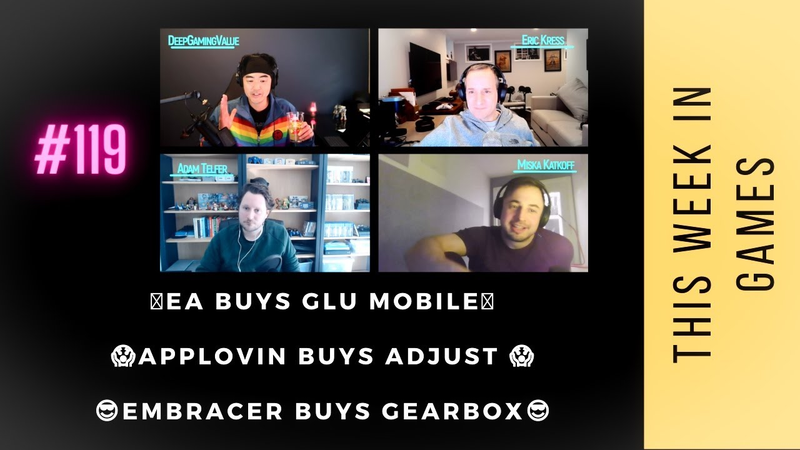
TWIG 119 : EA Buys Glu, AppLovin Buys Adjust, Embracer Buys Gearbox, and Predictions (Shooter, Mktg)
The gaming industry is currently undergoing a period of intense consolidation and strategic realignment, driven by the need to secure mobile expertise and navigate a shifting landscape defined by privacy changes and evolving monetization models.
- The gaming industry is undergoing rapid consolidation, highlighted by Electronic Arts' $2.1 billion acquisition of Glu Mobile and Embracer Group's $1.3 billion purchase of Gearbox Entertainment.
- The mobile shooter genre is a high-growth market that generated $2.1 billion in 2020, requiring deep-progression systems similar to Warframe or Escape from Tarkov to remain competitive.
- The deprecation of the Identifier for Advertisers (IDFA) is forcing a strategic shift away from traditional user acquisition toward reliance on established intellectual property and diversified marketing channels.
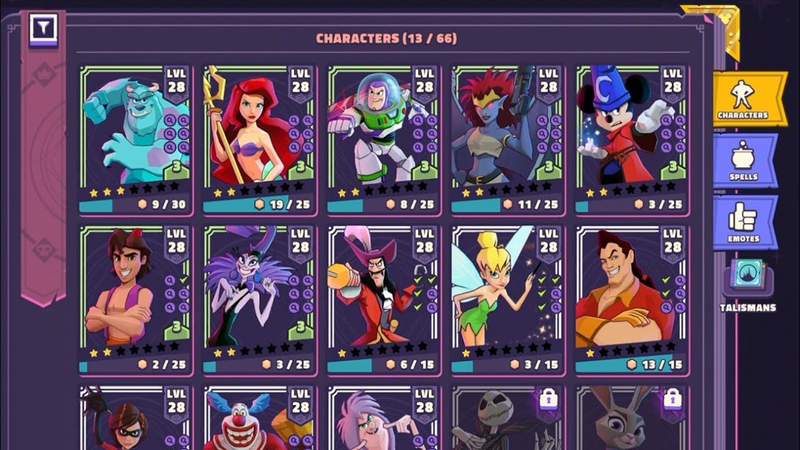
How does DISNEY SORCERER'S ARENA retain, engage and monetize?
Disney Sorcerer’s Arena, a squad-based turn-based RPG developed by Glu Mobile, utilizes a complex, multi-layered monetization and engagement model built upon the broad appeal of the Disney and Pixar intellectual property.
- Disney Sorcerer’s Arena utilizes a shard-based collection system for Disney and Pixar characters, mirroring the core mechanics of Star Wars: Galaxy of Heroes.
- Monetization is driven by an aggressive, multi-layered economy featuring randomized loot boxes, specialized stores, and frequent pop-up offers designed to accelerate player progression.
- The game employs a tiered battle pass system called the 'Pass Holder' season, which incentivizes monthly recurring spending through a premium 'Gold Pass' offering exclusive bonuses.
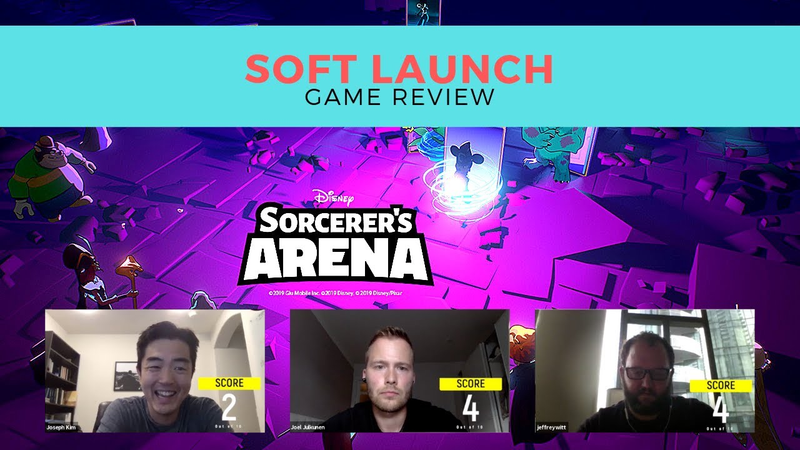
Disney Sorcerers Arena Mobile Game by Glu Mobile | Soft Launch Review
Disney Sorcerer’s Arena faces significant viability challenges as it navigates its soft launch phase, primarily due to a fundamental misalignment between its intellectual property and core gameplay mechanics.
- Disney Sorcerer’s Arena faces a critical demographic mismatch, as its complex, mid-core RPG mechanics fail to align with the casual, female-skewing audience typically associated with the Disney brand.
- The game is currently underperforming during its soft launch phase, characterized by low install volumes and poor revenue per download.
- Ineffective price anchoring and confusing monetization strategies serve as significant barriers to the game's commercial viability.
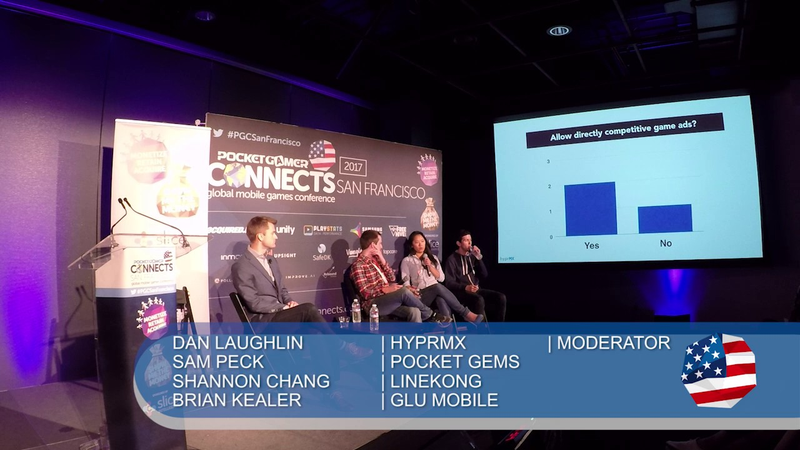
Monetisation masterminds
This discussion features monetization experts from Pocket Gems, Linekong, and Glu Mobile, focusing on the strategic integration of in-app purchases (IAP) and advertising within mobile games.
- Successful mobile monetization requires integrating five to nine ad networks to drive competition and maximize fill rates, despite the technical complexity of managing multiple SDKs.
- Rewarded video ads are now essential for all players, including those who already make in-app purchases, as they increase overall engagement and provide incremental value.
- Developers should move beyond basic payer versus non-payer segmentation by incorporating geographic and behavioral data to optimize both pricing and ad delivery.

Monetizer: Rival Fire
Rival Fire, a mobile shooter developed by Glu Mobile, represents a significant evolution in the company’s monetization strategy by integrating complex, RPG-inspired mechanics into a traditional arcade-style shooter framework.
- Glu Mobile’s Rival Fire marks a strategic shift for Western developers by adopting Asian-market monetization models, specifically through a partnership with Tencent.
- The game replaces high-cost, singular purchases with a granular, component-based upgrade system for weapons, armor, and squad gear to drive recurring spending.
- Monetization is sustained through a cycle of micro-rewards and RPG-inspired mechanics, including VIP status systems, daily tasks, and gacha-style loot crates with guaranteed high-tier drops.

How Glu evolved Frontline Commando from guns to girls and gacha
The evolution of Glu Mobile’s Frontline Commando franchise between 2011 and 2016 illustrates a broader industry shift from simple, linear mobile shooters toward complex, meta-heavy experiences influenced by Asian market design trends.
- Between 2011 and 2016, Glu Mobile shifted the Frontline Commando franchise from simple linear shooters to complex, meta-heavy experiences modeled after Asian mobile gaming trends.
- The 2016 title Rival Fire marked a definitive pivot toward high-frequency reward structures, replacing basic gear purchases with granular progression systems for individual weapon components and character stats.
- Glu Mobile expanded the franchise's social ecosystem in 2016 by integrating guilds, global chat, and friend-based assistance to drive long-term player retention.

How Glu has evolved UX in its celebrity games
Glu Mobile’s evolution of its celebrity-branded mobile game portfolio demonstrates a strategic refinement of user experience (UX) and interface design, moving from generic, low-fidelity mechanics to highly polished, brand-integrated environments.
- Glu Mobile’s transition from the 2011 Stardom titles to Kim Kardashian: Hollywood—which generated over $250 million in revenue—demonstrates that shifting to an aspirational aesthetic and intuitive UI is critical for commercial success.
- Early titles failed to resonate with the target demographic due to low-fidelity graphics, clunky navigation, and the use of obscure RPG-style terminology like experience points.
- The studio’s evolution shows that prioritizing visual clarity and thematic immersion over complex mechanics significantly improves user engagement.

FTUE: Kendall & Kylie
Kendall & Kylie, a free-to-play mobile title developed by Glu Mobile, serves as a thematic successor to the highly successful Kim Kardashian: Hollywood.
- Glu Mobile developed Kendall & Kylie as a thematic successor to Kim Kardashian: Hollywood, utilizing a portrait-oriented interface to specifically target a younger mobile demographic.
- The game employs a dual-currency monetization model consisting of soft currency earned through gameplay and hard currency (K-Gems) purchased with real money to accelerate progress.
- The core gameplay loop centers on an energy-based mechanic where players expend energy to complete tasks, earn experience points, and manage virtual currency.