Engine
Company
Documents about Engine
Making Connections: Real-Time Path-Traced Light Transport in Game Engines
Real-time path tracing has reached a critical inflection point in modern game development, enabling the rendering of complex, dynamic scenes with thousands of light sources at a consistent 60 frames per second.
- ReSTIR (Reservoir-based Spatio-Temporal Importance Sampling) enables real-time path tracing in Unreal Engine 5 by using statistical resampling to select and reuse the most essential light paths, significantly reducing the computational cost of light transport.
- Implementing a state machine-based control flow for shaders—consolidating random number generation and resampling code into single locations—improves performance by 20% to 40% by optimizing instruction cache usage.
- ReSTIR allows for GPU-driven lighting that replaces traditional N by M complexity occluder-receiver tracking with statistical sampling, eliminating the need for expensive per-light passes and reducing CPU draw call overhead.

The Next Era of Modding
The gaming industry is undergoing a fundamental transformation as user-generated content transitions from a hobbyist pursuit into a professionalized, revenue-generating pillar of game development.
- User-generated content is shifting from a hobbyist pursuit to a professionalized, revenue-generating pillar that helps studios mitigate the industry-wide content treadmill.
- Modding is increasingly viewed as a net-positive business strategy that reduces production costs and development timelines compared to traditional AAA expansion models.
- Console ecosystems are the primary drivers of market expansion, accounting for over 65 percent of all mod downloads for major titles.

Creatives end cards arms-race, why is soft launching in US a terrible idea? Night crows review (#69)
The mobile gaming industry is currently grappling with an escalation in aggressive advertising tactics, specifically regarding rewarded ad end cards.
- Aggressive rewarded ad end cards, including 45-second durations and deceptive design patterns, are actively degrading player retention and brand sentiment.
- Publishers should prioritize long-term player health over short-term click-through metrics by using negative user feedback to demand more equitable ad formats from network partners.
- Soft-launching in the U.S. is often misguided due to high acquisition costs and intense competition that obscure accurate performance data.

GDC Vibes / data.ai x Sensor Tower / Epic Announcements / US v. Apple
The gaming industry is currently navigating a period of significant structural adjustment, defined by a transition from speculative growth toward an era of efficiency and operational discipline.
- Mobile consumer spending is projected to decline in 2024, with 32% of all users and 41% of high-value spenders planning to reduce their in-app purchases.
- The gaming industry is shifting from speculative growth to operational discipline, characterized by widespread layoffs and a trend of experienced developers launching new studios focused on core quality.
- The U.S. Department of Justice’s antitrust lawsuit against Apple and Epic Games’ launch of a mobile store represent a direct challenge to the dominance of closed, vertically integrated mobile ecosystems.

Nvidia (NVDA) to the moon! | Pixels & Profits #9
Nvidia has successfully pivoted from its origins as a gaming hardware manufacturer to become the primary architect of the global artificial intelligence infrastructure.
- Nvidia's revenue structure has shifted heavily toward data centers, which generated $18 billion in the quarter ending January 2024, accounting for over 80% of total revenue.
- Nvidia maintains a significant competitive moat due to the immense capital and hardware-focused infrastructure required for chip production, which is far more difficult to replicate than software-based competition.
- The company is successfully expanding its ecosystem beyond hardware through software SDKs and platforms like Maxine, Riva, NeMo, and Omniverse, which facilitate generative AI development and 3D world simulation.
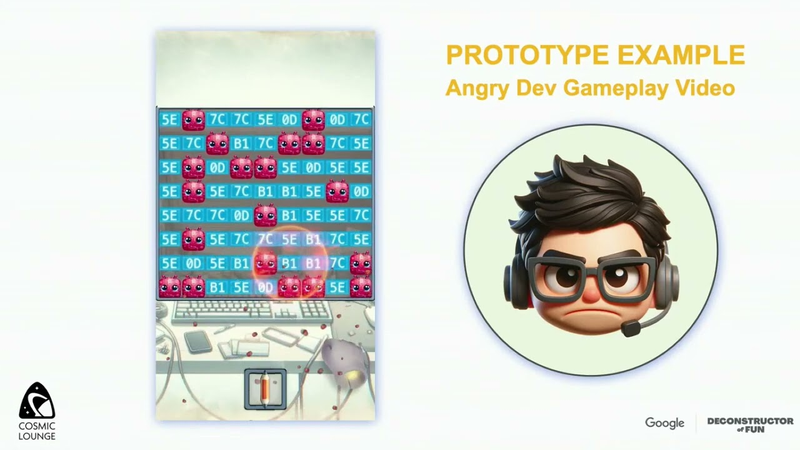
The Future of Gaming is AI: Tomi Huttula, CEO Cosmic Lounge
The integration of artificial intelligence into game development is fundamentally transforming the production lifecycle, particularly within the casual puzzle genre.
- AI-driven workflows, as implemented by Cosmic Lounge, can reduce production time for level creation and live operations by a factor of ten.
- Cosmic Lounge’s proprietary 'Puzzle Engine' uses a modular, data-driven architecture that allows AI to analyze mechanics and optimize levels based on performance data.
- AI tools enable designers to generate placeholder art and configure game logic in hours, removing the need for dedicated engineering or art resources during the prototyping phase.

Can You Really Make A 2D Game In Unreal?
Developing 2D games within Unreal Engine is a viable, albeit often overlooked, path for independent developers.
- Unreal Engine is a viable platform for 2D development, evidenced by the success of professional-grade titles such as Octopath Traveler and Ender Lilies.
- The engine's licensing model is highly favorable for independent developers, requiring no royalty payments until a project generates $1 million in gross revenue.
- Performance testing confirms that 2D projects in Unreal can maintain stable frame rates exceeding 300 FPS on hardware like the Steam Deck, debunking concerns that the engine is too resource-heavy for 2D.

Web3 Mech Combat with MetalCore
MetalCore represents a strategic effort to merge high-fidelity, open-world mech combat with integrated blockchain utility.
- MetalCore is a PC-based, open-world mech combat game developed by Studio 369 using Unreal Engine 4, focusing on large-scale, three-way faction warfare.
- The game utilizes Immutable’s middleware to integrate Web3 elements, employing a dual-currency approach that limits blockchain transactions to high-value events to maintain a traditional user experience.
- The economy is driven by the $MCG utility token, allowing players to scavenge resources, craft mechs, and mint them as NFTs for trading or renting.

Games: Once Upon Now in Hollywood
The entertainment industry is undergoing a fundamental shift as video games emerge as the primary source of intellectual property for Hollywood.
- Hollywood is shifting its primary source of intellectual property from comic books to video game franchises, following the commercial success of titles like The Super Mario Bros. Movie and The Last of Us.
- Game developers are increasingly retaining significant creative control, including script and director approval rights, to ensure adaptations remain faithful to their established canon.
- Upfront royalty payments for game-to-film adaptations currently range from $1 million to $20 million per project.

Gaming x AI: How Atlas makes models for 3D worlds 200X faster! (ft. CEO Ben James)
The integration of generative AI into 3D asset production marks a significant shift in game development, enabling the creation of complex, game-ready environments up to 200 times faster than traditional manual modeling.
- Generative AI tools can accelerate 3D asset production by up to 200 times compared to traditional manual modeling methods.
- The technology converts 2D inputs, such as sketches and photographs, into structured 3D geometry that integrates directly into Unity and Unreal Engine pipelines.
- AI-driven workflows are designed to be non-destructive, providing artists with editable, clean assets that allow for rapid iteration rather than replacing human designers.

How This Game Dev Sold 50,000+ Copies of His Game — Full Time Game Dev Podcast Ep. 006
Achieving commercial success as a solo game developer requires a disciplined synthesis of creative passion, technical versatility, and market-driven pragmatism.
- The developer of Cultic achieved commercial success by selling over 50,000 units through a strategic blend of creative differentiation and market-driven pragmatism.
- Visual identity serves as a strategic tool; the developer utilized a 3D-to-sprite aesthetic to mask technical limitations while ensuring the game stood out in a saturated market.
- Transitioning to full-time development required a disciplined 'second shift' approach, balancing a full-time job with dedicated late-night development for over a year before securing a publishing partnership.

Why Solo Developers Should Use Unreal
This analysis examines the viability of Unreal Engine for solo developers, specifically addressing common misconceptions regarding technical requirements and development workflows.
- Solo developers can build complex, commercially successful games like 'Choo Choo Charles' entirely using Unreal Engine's visual scripting system, Blueprints, without writing a single line of C++ code.
- Common industry claims that specific advanced features—such as spline-based track systems—are impossible to implement in Blueprints are frequently incorrect and often stem from gatekeeping rather than technical limitations.
- Development efficiency and project completion are more important than adhering to 'proper' industry workflows, as evidenced by the creator's unconventional, manual approach to UV mapping and texturing.