VideoDeconstructor of Fun
The Future of Gaming is AI: Tomi Huttula, CEO Cosmic Lounge
15 Mar 202427 min video
Transcript
[Music] [Applause] [Music] all right hello everybody it's really great to be here to talk about a super exciting topic which is the future of uh developing games with AI and I'm going to I'm going to be showing you some concrete examples of how our company Cosmic launches uh Building puzzle games using AI power technology uh before we go there quick introduction about myself so um co-founder and CEO of cosmic lounge and I've been in the games games industry for a long time about 30 years and 24 years of that in game development so I've been mostly in a technology product leadership roles in leading game studios like Electronic Arts and and King and what is really great about that is that those um Tech teams they are usually Central teams and you uh get a chance to work with u a lot
of different game projects so I calculated that I've been part of U more than 100 um launch games and and that of course has given me an opportunity to see like what makes developing games operating games hard and what also makes developing and operating is easy okay so the key messages in my presentation they are that yes AI is really changing how games are developed and and uh it is big part of the future of of game development so my recommendation to everybody here who's working for a game studio is that um you should be getting your teams and Technology ready for AI at the approach we have taken at the cosmic lunch is that we have built our own in-house uh AI powered U Tex stack called puzzle engine for puzzle game development um a little bit about the company so it was founded 2022 and and and this was really before the AI boom
started to happen so the purpose for us founding the company was really about you know having several veteran you know game creators together talking about like you know what would be the much better ways to build much better games and when we started sort of thinking about what the solutions are that's when we sort of started seeing like okay there's a lot of new AI models and and AI Services popping up and very quickly we realized that all right AI can really help us solve those problems so it really AI became as part of the solution and and that way it also became part of our DNA and um and if you think about the timing I would say that our timing was really perfect because uh and you know because of we sort of started looking for Solutions and once we saw the solution from AI uh we got a pretty good Head Start of U starting to develop games using AI okay uh Founders we have six Founders super veteran theme average experience
in game development 15 years working on more than 10 top Crossing puzzle game titles so we know how to design uh build and operate these kind of games and uh we have also done previous exits um of technology and Studio exits to Disney and Pla and we have currently uh 20 uh developers in three locations Helsinki where is our headquarter in Olu which is a city up uh very North in Finland which is by the way uh the world's most northern game Studio street street address with that office and then also in Stockholm um so our approach uh what we do how we build puzzle games and and use AI power tech for that is that uh puzzle engine our in-house technology uh it um it enables game designers to use no code tool set to generate a lot of different uh core game designs and also marketing miname designs and also Market
test them and once we are then with a market testing finding new high potential uh puzzle genres we want to use the first mover advantage and be the first company of creating a game on that J and then when we go into the uh operations phase we are then U generating levels and liveops content like 10 times faster using our a powered production line okay so soon we will get to the AI use cases but when I'm talking about AI I'm mostly talking about that in the context of puzzle engine so it's our in in-house technology uh so this looks like a sales video it's not so we are not licensing the tool we are pretty selfish in that way we just um you know have all the goodies of puzzle Eng in ourselves but it gives you the context of uh where we using AI so let's check out the video
for [Music] [Music] okay so that was a quick overview what the puzzle engine does and um now let's
talk about using AI with puzzle engine let's start with the technology side and there's three principles we have used in how we integrate AI to our our technology the first one is uh super important so um ability to add and remove AI models so we are not building the AI models ourselves we are using uh AI models from different partners we do you know train and tune them for our purposes but we are really focusing on the application l here but uh this is important for us because Aon field is changing really fast so some model which might be the you know best one this month for some specific use case it might not be the best one in couple of months also the legislation might be changing so we thought that it's it's it's a really critical principle for us that we are able to do the Integrations very fast um here's one anecdote now that this is a Google event so our CTO a few weeks ago did actually an integrate to one of the Google verdex a models and
it took him 30 minutes to do it and I was pretty impressed but that's what he really designed our architecture for um second thing which is maybe less of a principle but more an architecture this is this is actually where we are where we differ a lot how uh other companies who are Building puzzle games do their game architecture so uh puzzle games you need a lot of levels and uh so every company is of course not hardcode in the levels the level data is in uh you know you configure levels so that's in data format but we also do that but we also have the game mechanic like how what are the rules of the game like how do you do matches or if you do matches or how you do interaction in the game also that is a configuration for us and that gives us a lot of advantages I'll show later but one of the advantages is that you can actually expose how the game works to AI or in machine learning and when AI can see the sort of correl ation of actually
game logic not not just you know what is the level design it can make better recommendations for uh for example level creation and optimization the third uh principle that we thought is really important for our teams uh especially the non Engineers like level designers and artists that they don't really need to think about the complexity of using different AI models we wanted to design end to end workflows for them so uh designers can really do pretty all the things in puzzle engine uh and because that's how we we sort of hide all the complexity behind the the tool set or the tool UI and we also enabled them to create their own workflow template so they can actually so when they generate levels so if they generate art they can actually do a template for certain use case for themselves all right so now let's go into the actual uh use cases so let's start with AI in prototyping
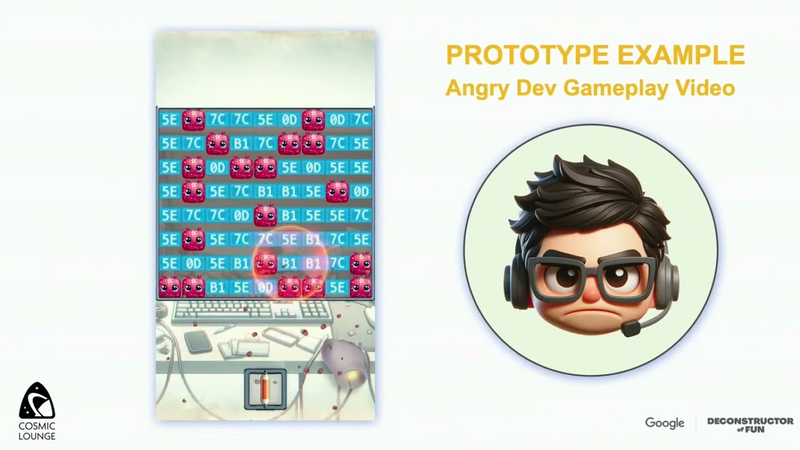
so why prototyping is important for us is that um well every game compan is full of a lot of creative people and the creative people they have a lot of ideas about Gams the challenge of course always has been that how do you know if some idea is good is there heat potential in that in that idea and it's really important to be able to see the idea in action and typically companies designer has an idea but they need an artist they need an engineer to try the idea even internally and then later of course externally Market testing and so we wanted to enable it super easy for designers they can actually come up with ideas create a prototype just with puzzle engine without an artist or without an engineer so here's an imaginary situation um so let's imagine that uh our game uh game design team they came up with a potentially fantastic new game idea which they call angry de uh in this
imaginary uh game idea it's about a coder angry Dev who's developing code his code is very buggy he's getting very angry and he's starting to throw anything on his desk on the on the code to get rid of the Box I've seen actually some Engineers do that and now the designer can just go to puzzle engine and then start creating the game so in this what is seen here is that they start creating placeholder art assets they can use already existing templates of like the AI use cases generate art they can select what style so in this case cute style and then they just describe the object that they want to use so in this case it's a software B and then the AI is making um you know different opt presenting different options and then the designer can pretty much just drag and drop it to the to the Prototype uh designers can then just continue this by generating rest of the assets art assets they need for the Prototype so so far they didn't need an artist and they don't need an engineer either because
they can also configure the game logic from the puzzle engine UI there's also an embedded U level editor in puzzle engine so they can pretty much put together the whole game Prototype u in um actually a few hours so I'll show you a video of uh what angry de prototype looks like it's actually prototype I did myself just for demonstration purposes and really took me uh five to six hours to do this so this is what angry Dev looks like so angry Dev is throwing all these items on the game board and and every item has a different sort of configuration some of them do like a vertical effect some of them do horizontal effect and um here the player is trying to generate bug free lines of code and then that's a match and that's what happens in the game like that and then of course when the Box are gone you have a happy Dev all right so is this the best game in the the world maybe not but that's
exactly the sort of purpose of prototyping you want to try what your idea feels like what it looks like and then then decide if you're going to take that further or not all right so that was prototyping so all the art was generated by Ai and when you do a prototype you know there's a lot of placeholder art so you know AI is pretty good of doing doing art for um for that purpose so now let's go into let's stay in the art uh generative art use cases but go to the production so actually making final a game art and that's a a little bit different situation at the moment so um I was when I'm talking to our art team and sort of asking like you know where is AI really helping you to make the game uh like everybody is it's pretty obvious that that um um AI is excellent for exploring iterating different ideas like you can do things that you know were not even possible uh before uh which means that uh the art
team needs to spend less time doing placeholder art so all of their time can be used for doing the final art so there's some areas where you can actually use AI already to produce um for example backgrounds I'm going to show you some examples but then there are some areas where the current art AI is not yet good enough but there's still lot of benefit of like a productivity um advantage that you get from using AI so here's 27 images of a railroad um and um why I wanted to show this is just to give an sort of example of you know art team they can if they if they need a background image so AI is pretty good already doing pretty you know good looking 2D backgrounds for for mobile games so they can just generate Lads of different ideas and then pick one they like or even test if they are not sure about that but imagine like a couple of years ago you would have gone gone to the art team and say like hey can you can you draw really polished um images of railroad
like maybe like a 30 of them that would have been a like a really you know not an easy conversation because it would have taken a couple of weeks for them to do it now you can really uh do do things that you were not even thinking about before so that's a very sort of concrete change that AI is bringing for developing games so now let's go into an U other art use case which is more challenging for AI uh so AI is not yet there for keeping the consistency of like for example training characters but so you can't really use that for um for that so much but um if you are sort of designing your art production pipeline really well and thinking about how can you take the most sort of advantage of uh AI Services you actually get pretty good results so this is something what one of our artists was sort of using as an example when she was uh thinking about what the pipeline is
then I after this I asked like okay like how much was AI really helping you to go through this and she said that that about 70% of the work that she would have needed to do manually was done by AI so even if AI is not there yet uh through um final character art there's already a benefit if you find the right way to use it all right so now let's move away from the uh art which is usually the thing that people are mostly talking about when you talk about gener generative AI let's go to level production and so we are making casual puzzle games and you need a lot of levels like some of the games they have you know 10,000 levels so it's really of course it was an obvious problem for us to Sol like how you how how could we become more productive in generating levels so um one use case is AI assisted level evaluation and you might have seen
the word assisted AI assisted used in couple of slides here and that really reflects our sort of approach what we how we think about AI so we don't think that AI is doing anybody's job like you know just replacing somebody um we are thinking about AI as helping our team members to do their job better they can be more productive they can do you know get better results and that's also in uh in level testing so uh level testing so you have an AI bot which is playing through the levels and then giving uh sort of results for the designers uh before they actually deploying the levels live so think about like the comparing to like you need to you know put the game live level live wait for the results and then realize that you have a too difficult level or the maybe the beginning of the level was too difficult but the end was too easy so like balancing uh getting information about what is the you know balance of the game play on on the levels so super useful for for level designers then we
also hooking we haven't launched our game yet but what we are preparing to do is also hook the sort of business performance and player gameplay data uh into this uh level testing so that we can use the information about what kind of levels churn what kind of levels monetize better and then I mentioned about the architecture of U in we are the whole game mechanics is presented in data format so our machine learning can actually um use all Al that to understand how to test levels better and um this is also embedded in the in the puzzle engine so here is actually a video of um um AI bot testing level this is of course like actually it's much faster but we slowed it down so so that you can actually see something uh interestingly also this level has been generated by by Ai and I mentioned the integration with Google vertex that our CTO did couple of
weeks ago this is actually what we used it for we we custom tuned one of the models uh to generate levels and this is one of the levels that we generated with u with Google verdex so talking about the AI assisted level Generation Um so again it's AI assisted level generation so it's really design level designer you have two level designers which is actually quite a lot for a theme of uh 20 uh but they are working together with AI and what they can do for example is that they can design few levels as examples themselves then feed it to Ai and say that do more of these or if they don't have enough examples they can actually generate a lot of levels with AI and then pick the ones that they want to feed back to AI as examples they can also uh configure guidelines for uh how to generate levels so use only these elements in the levels that you are generating um and again I mentioned that we did a custom tuned
model for this this is really so special use case that you really need to uh you know custom tune your AI models that you are using for level generation we also do uh some procedural automation so when um um when you feed in the example levels for AI puzzle engine is changing the format so that it's easier for AI to process it and once AI is giving back to level designs then we then puzzle engine is again processing that data and make it something that is useful for level designers to to look at uh and again also here we are hooking in player data performance data uh you know may you know what we are of course expecting when we expose to the whole game logic for AI is that AI can find correlations with some mechanics in the game with a better um monetization and less turn for example um last one here out outut filtering with AI assisted level testing
so what that what I mean by that is that now that we have um AI level generation we have also AI level testing putting those things together think about a level designer coming to the work in the morning and seeing a list of uh recommended levels which has been generated by Ai and also pre-tested by AI so that's what what we mean and uh yeah so if you if you think about all the sort of phases that are needed all the steps which are needed for generating those loads of levels there level creation level testing level iteration level optimization there is a place for AI to make it more productive in each part each step of this U end to end workflow and um it's really important for us that we are able to put them to one behind sort of one tool set so you don't need to jump between different tools when you when you work with levels and then if you start
thinking about the number of levels you know if there's 10,000 per game you multiply that with a games in your portfolio you start looking at in pretty significant U sort of advantage of the productiv productivity lift that you can get from using AI okay so um last topic last item here which is using Ai and marketing so this would deserve its own presentation so I'm just going to look at one very specific uh area which is mini games so you probably all of course understand what mini games are but just as a recap um um comparing to fake ads so some companies are advertising um you know showing ad creatives which have gameplay which actually doesn't exist in the game uh with that you get a lower CPI but then you take a retention loss when the players go to the game and they realize that there's nothing like that here at all but enough of course people stay that that sort of makes sense for uh for some companies to do that but of
course a better situation would be that it's if it's easy for you to add mini games like actual those mini games that you are advertising into your game and that is super easy for us with a puzzle engine because it's the same same um sort of architectural difference we have is that you can just come up with different miname ideas and then you can U create videos and test which which ones are attracting the players the most and then when you found it you just add it to the game it's it's really as easy as just adding a new level uh for us because it's it's just content so okay now mini games and um mini games and AI um in in the UA context um so I mean the obvious sort of uses of a here is similar to to what we already discussed like generating miname levels with AI also having a bot playing through the mini games and have automated recording of of the game play so that
you can use that in the ads you can generate art assets for the ad creatives you can also generate video and if you take this a little bit further you can of course um analyze have ai help analyzing the gameplay data how players are actually playing these mini gamess and and feed that back into your creative process so you can find maybe you know ideas that you might not thinking about like what would be a better mini game so I had a session with our head of marketing about uh this area and we were talking about like where does he see where is he already using AI in the area of user acquisition where where does he see he will be using in the future and he showed me a list of the things that he's planning to do and already doing and that list is is was actually pretty long and and um not going through all of this here now but I just wanted to also use this as an example how AI is really changing how how games are developed and how it's sort of entering into all of the different aspects of uh of of uh games including
marketing okay so this is um uh pretty much the sort of end of my presentation but I wanted to end this with u with uh making everybody you know think about a little bit like okay you know we are now in the future of uh using AI in developing games but where where are we going next so what is the future of future of using AI um in game development so I thought that I would maybe some Mize this in one question can AI design games obviously uh games are not made made for we are not making gains for AI we are making gains for humans um uh but can AI design games so um we we started thinking about that and actually from te you know technology perspective with our architecture of the mechanics also being configurations Yes actually we could uh train AI model to generate new kind of
game mechanics and then we would be testing them with players but that's not what we are planning to do at the moment because that's not the problem that uh we think needs solving at the moment so uh we game designers have a lot of ideas and the current bottleneck is really about how to materialize those ideas in prototypes so that you can see if they are good ideas and if they should be taken further but I think this is an interesting interesting question so AI can generate levels can it actually generate uh game designs and maybe this is something that we should visit in a year maybe maybe here because AI is moving pretty fast and it's really entering into a lot of areas in game development and it's really also opening up new use cases or things what we haven't done before so that's what I had to uh present um and um after this um thanks for listening like super excited about this topic thank you
after after this we'll uh we'll be taking a break so 20 minute coffee break so I think we all need a cup of coffee at this time of day so thank you
Auto-generated captions from YouTube — names and numbers may be misheard.





















Comments