Dream Games
Documents about Dream Games

How Royal Kingdom Reached $145M in Less Than a Year
Royal Kingdom, developed by Dream Games, has established itself as a major commercial force in the mobile gaming sector, generating $145 million in revenue and securing 55 million downloads within its first year following a November 2024 launch.
- Dream Games' Royal Kingdom generated $145 million in revenue and reached 55 million downloads within its first year following its November 2024 launch.
- The game maintains strong player engagement with a 32.8% DAU/MAU ratio and a 9.5% Day 30 retention rate.
- Monetization is driven by a non-intrusive model focused solely on in-app purchases, resulting in an ARPDAU of $0.15.

Dream Games: Revenue and Valuation
Dream Games, an Istanbul-based mobile studio founded in 2019, has established itself as a premier developer in the global puzzle game market.
- Dream Games reached a $5 billion valuation as of May 2025, following a private equity transaction where CVC Capital Partners acquired the stakes of early venture capital investors.
- The studio’s annual revenue grew from $222 million in 2020 to an estimated $1.6 billion in 2025, driven primarily by the success of its flagship title, Royal Match.
- Royal Match has generated over $3 billion in lifetime revenue by late 2024 and maintains a premium, ad-free model that relies on high production quality and aggressive user acquisition.
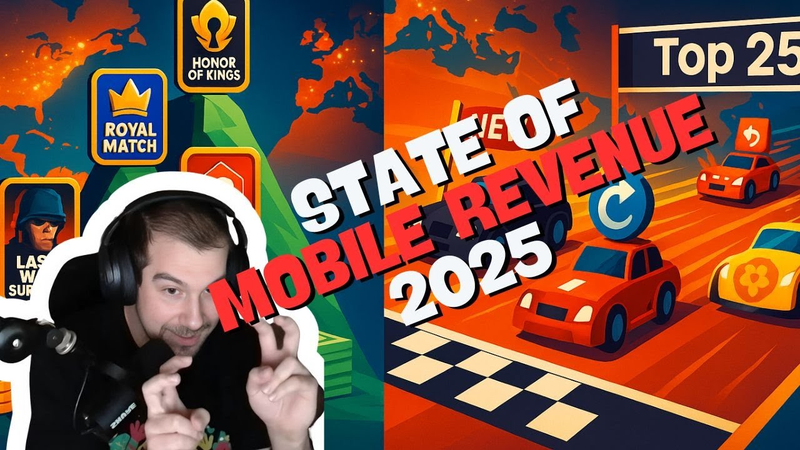
📊 Chart Compass: State of Mobile Revenue 2025 - What’s Actually Moving the Needle by Jakub Remiar
The mobile gaming industry in 2025 is characterized by a shift toward portfolio-based strategies, where top-tier publishers prioritize scaling multiple high-performing titles simultaneously rather than relying on a single flagship product.
- Publishers are shifting from single-flagship models to portfolio-based strategies, exemplified by Rivergame and Dream Games, to scale multiple high-performing titles simultaneously.
- The industry is increasingly bypassing app store ecosystems through web shops to capture a larger share of revenue and avoid platform fees.
- Market dominance remains split between stable legacy giants like Monopoly Go, Candy Crush, and Roblox, and high-growth emerging categories such as merge games led by Gossip Harbor.
Drake Star Global Gaming Report: Q2 2025
The global gaming industry experienced a significant financial rebound during the first half of 2025, characterized by robust public equity performance and a stabilization of dealmaking activity.
- The Drake Star Gaming Index rose 28% in the first half of 2025, significantly outperforming the S&P 500's 5% gain, with Square Enix, Roblox, and Konami leading the market rebound.
- CVC completed a major $2.5 billion deal for a minority stake in Dream Games at a $5 billion valuation, marking one of the largest and most successful exits for gaming venture capital.
- Gaming M&A activity remained stable with 46 announced deals in Q2 2025, led by KRAFTON’s $516 million acquisition of ADK.


Drake Star Global Gaming Report Q2 2025
The global gaming industry experienced a significant financial resurgence during the first half of 2025, characterized by a 28 percent increase in the Drake Star Gaming Index.
- The Drake Star Gaming Index rose by 28 percent in the first half of 2025, significantly outperforming the S&P 500 and signaling a stabilization of market valuations.
- Q2 2025 saw 46 announced mergers and acquisitions alongside 110 private financing placements that totaled $3 billion in capital.
- CVC and Blackstone executed a landmark $2.5 billion investment in Dream Games, highlighting a strong market appetite for high-value strategic minority stakes.

Dream Games Switching VCs for PE - Here's What it Means...
The recent investment in the Turkish mobile gaming studio Dream Games marks a significant shift in late-stage capital strategy, as the company transitioned from venture capital (VC) backing to a private equity (PE) model.
- Dream Games has transitioned from venture capital to a private equity model, with CVC Capital Partners becoming the sole equity partner in a deal valuing the studio at approximately $4.5 billion.
- The transaction provided a liquidity exit for early-stage investors including Makers Fund, Balderton Capital, Index Ventures, and Double Down, while allowing the founders to retain operational control.
- The shift to private equity signals a strategic pivot for the studio from a 'growth-at-all-costs' venture capital mentality toward financial discipline, cash flow management, and dividend-focused operations.

Why Smart Founders Say No to Billions
The prevailing narrative in the technology and gaming sectors prioritizes rapid growth and eventual exit events—such as IPOs or acquisitions—as the ultimate markers of success.
- Founders are increasingly rejecting traditional IPOs and acquisitions to preserve operational autonomy, cultural integrity, and long-term product vision.
- Conventional exits carry high turnover risks, with 36% of founders departing within six months of an acquisition and 33% of employees leaving within the first year.
- Companies like Dream Games and Playrix demonstrate that founders can provide investor liquidity through secondary share sales or private equity partnerships without relinquishing control.
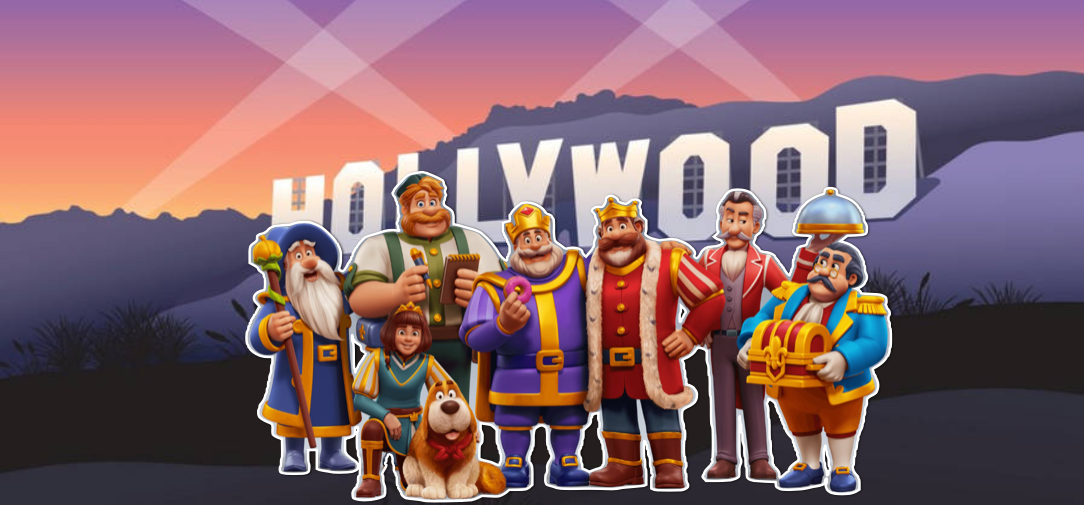
Dream Games’ Gamble on Fame
The recent celebrity-led marketing campaign for the mobile puzzle game Royal Kingdom serves as a case study on the limitations of high-budget traditional advertising in the modern mobile gaming landscape.
- Dream Games launched a massive celebrity marketing campaign for Royal Kingdom featuring ten A-list stars, including LeBron James and Kevin Hart, five months after the game's global launch.
- The celebrity blitz resulted in a 112% increase in downloads, but revenue growth remained stagnant at only 6%.
- The campaign relied on broad, traditional media placements like the NBA playoffs, which the report characterizes as a high-cost, low-precision strategy compared to modern performance marketing.

Mobile Dreams of Hollywood: Inside Royal Kingdom’s Celebrity Blitz
Dream Games recently launched a high-profile celebrity marketing campaign for its mobile title, Royal Kingdom, five months after the game’s official release and following a two-year soft launch period.
- Dream Games' $30 million to $50 million celebrity campaign for Royal Kingdom resulted in a 112% increase in downloads but only a 6% increase in revenue.
- The campaign's reliance on broad-reach television advertising suggests a shift away from efficient, targeted performance marketing toward a strategy that may indicate market saturation.
- The celebrity spots failed to integrate talent into actual game mechanics or events, leading to a disconnect between high brand awareness and long-term user retention.


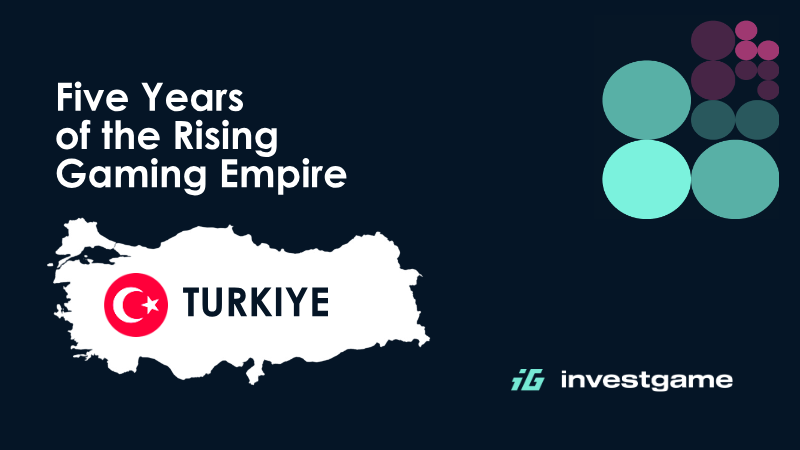
Five Years of the Rising Gaming Empire: Turkiye
Turkiye has emerged as a significant global hub for game development, characterized by a rapid surge in entrepreneurship and capital investment over the last five years.
- Turkiye’s gaming sector generated $2.9 billion in cumulative M&A exit value between 2020 and 2025, driven by major acquisitions like Peak Games ($2.1 billion) and Gram Games ($250 million).
- The ecosystem secured $935 million in private investment across 132 rounds from 2020 to early 2025, representing 5.8% of global gaming venture capital and corporate deal volume.
- Investment activity peaked in 2022 with $441 million raised, establishing a trend of high-value fundraising for mobile-focused studios such as Dream Games.

TWIG #317: Big Dream, Bigger Battlefield, and the Biggest Roblox M&A deal EVER
The gaming industry is currently navigating a period of significant structural recalibration, marked by a shift away from speculative metaverse narratives toward more pragmatic, platform-specific growth strategies.
- The gaming industry is pivoting from speculative metaverse narratives toward pragmatic growth within established ecosystems like Roblox and Epic Games.
- Roblox faces significant financial challenges, specifically low monetization per user and persistent unprofitability when accounting for stock-based compensation.
- Dream Games is seeking a $5 billion valuation, reflecting a broader industry tension between high private valuations and the diminishing availability of lucrative exit opportunities.
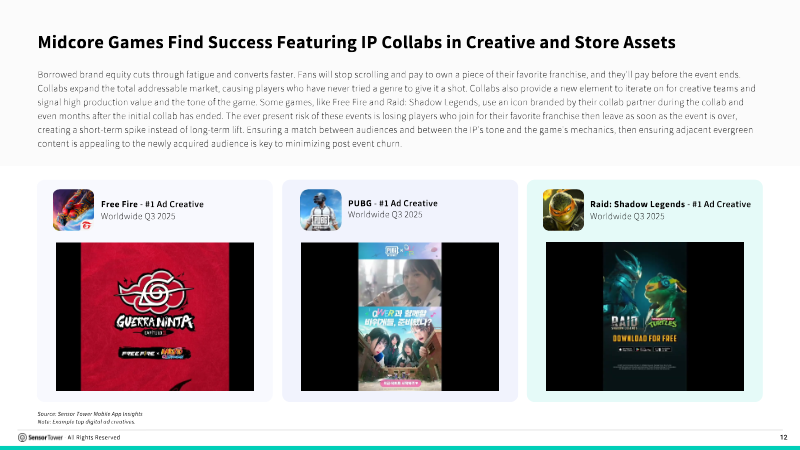
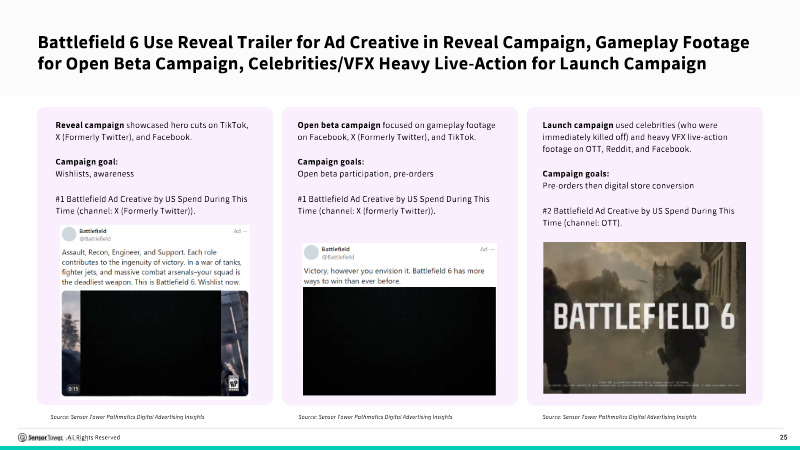
Playing to Win: 2025 Digital Game Advertising Report
The 2025 digital gaming market is defined by a strategic pivot toward user quality and high-velocity creative iteration, with global advertising expenditure reaching $8.7 billion.
- Global digital gaming advertising expenditure reached $8.7 billion in 2025, with major publishers like Microsoft and Dream Games utilizing aggressive spending to maintain market share.
- The industry has shifted its primary success metric from sheer download scale to engagement quality, despite a year-over-year decline in total mobile and PC downloads.
- Roblox continues to bypass traditional external advertising, generating 187 billion visits through organic traffic and internal discovery mechanisms.