VideoDeconstructor of Fun
Dream Games Switching VCs for PE - Here's What it Means...
9 May 202510 min video
Transcript
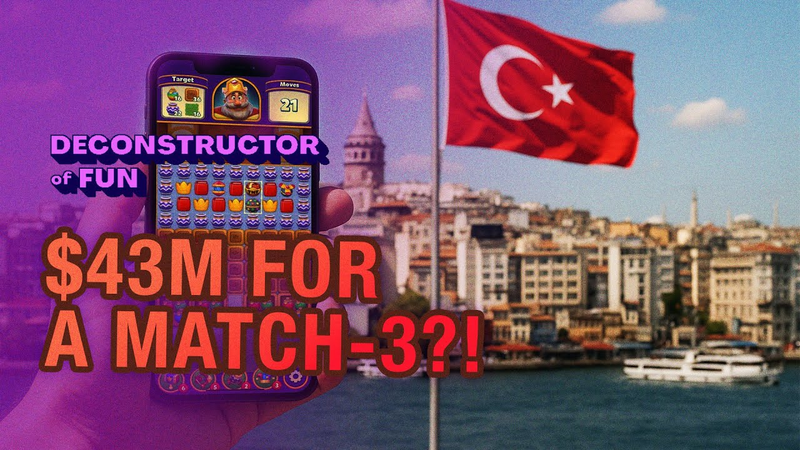
So investments in M&A. Now this deal like I mean we've been talking a lot about this. So this is the investment into Dream Games out of Turkey. So in short the investment combines both equity and depth financing with CVC becoming the sole equity partner of Dream Games. Debt financing was led by the beautiful Blackstone and other investors and the race proceeds will be used to buy out existing investors meaning VCs and angel investors. And the deal represents one of the largest VC exits in mobile gaming history, valuing the company at roughly at 4.5 billion. Now, if you're watching this, you can see that the company has raised funding over five rounds. So, starting in November 19, they got makers fund and Boulderton Capital investing to them. And what you can see there is that in the series A, you got index ventures jumping in Boulderton makers double down. Then you got series B makers Boulderton index double down. And then you got series C Boulderton makers index
double down. So you kind of see that the early investors and this is a great tap table when you look at this. The early investors were seeing the traction were believing and was just doubling down with every investment and through that have probably returned the funds. I would assume that both makers and Boulderton with this single deal probably made enough to return their multiund million funds. And what's interesting about this is again this is an an exit for venture capitalist. It's not for the founders. Founders are still there. They didn't sell anything. It's only the VCs. And I was thinking about like why would they do that? And the thing is if they would keep it as it is, the VCs need an exit. like they need to get their money back because usually those funds are between 5 to 10 years and they are not there to get dividends even though dream is you know highly profitable company most likely they're not for that they need those big returns now one way to return the funds to the investors is of course to IPO and if you
are a founder or a company that changes drastically the way you operate like you become a corporation overnight that's probably not fun then if you sell your company, you know, you get a boss essentially because now the acquirer will be your boss, whoever that is. That could be great. You might have great relationship with the acquirer. There are plenty of companies like Tencent portfolio companies that are perfectly happy to be a part of that family being very autonomous. But it also could get bad because they might be not, you know, the greatest boss or the boss may change. Let's say the CEO of that public company changes and your relationship kind of changes with that. And also you get acquired often by a public company where you face pretty much similar problems that you would have IPOed and there there's always the question of like well how about the money like you could make so much money if you're a founder if you would just sell the company and I think discussing with these very successful founders like one thing that is not thought about is that
usually at this point they've already are financially well off they might have taken secondaries so they might have tens of millions by this time and changing their life, the company that they built, giving it to somebody else and and you know, reporting, getting a boss. It's like everything that they didn't want to do. And for what? To get more money to do what? They're already doing what they wanted. I think what I've heard most from the founders, these successful founders in the recent days is they all reference to the player's model being the dream. is like still owning the company, still being in the weeds, still operating and being well off through the dividends and the success of your company. So I think Dream kind of saw this. They they are X peak. They saw how this could be and chose this sort of a path. But I we covered this before. What I really wanted to kind of hypothesize is like what does this mean for the Turkey ecosystem? Because when we look at the
investments in Turkey, it's still mostly content, mostly game companies. It's still mostly mobile gaming companies. It's still mostly puzzle gaming or hybrid casual puzzle gaming companies. And when I play games coming out of Turkey or even early versions, they kind of start looking the same. Everything looks like Dream made it. Like the art style is is very similar. The aesthetics, the the UI is very similar to Dream Games. And when we look at the investments coming in, it feels like VCs are not investing into content unless that content is made out of Turkey. And you kind of get into these positions where companies might get, you know, overvalued a little bit like we've seen seed rounds like early investments of 55 million with Spike and so forth and new venture capitals are raising like right now Revo Capital has just raised a $86 million fund to invest into Turkish gaming companies. And at the same time, the market has the same problems that it has had, but it's now even more aggravated, meaning that there's insane
competition for talent. There's very little influx of new people in like nobody's moving to Turkey to work in Turkish companies. These companies tend to be just 100% Turkish. They do very little outsourcing and they are also highly competitive, which means that there's not a lot of knowledge sharing. So, it's interesting to see how this evolves. Chris, you were recently in Turkey. Like what's your take? These guys just keep making hit after hit and there's an insatiable demand for puzzle games and they are the best at it, right? Building games for UA arbitrage, right? So they're just a very pragmatic approach to making games and that's what wins, I guess, in this type of market. For me, like this deal is a little interesting in the sense it is kind of a win-win-win. You know, management retains control. I'm sure they got some liquidity in this event. I just can't imagine that they got nothing, right? The VCs desperately need any type of win right now, you know, in to get liquidity. LPS finally may get some of their money back, right, out of this
like debacle that has been gaming over the last three or four years led by A16Z and and Lightseed. So, it makes sense. But what I really don't understand is exactly what's is in it for CBC. And I need someone to call me and and explain to me what CBC's angle is on this. Are they using it for dividends? They expect a a big not IPO, I wouldn't say a big sale later on. That's just not seems to be I don't really understand exactly what they're doing. You the debt holders obviously they're going to get paid back on the on the cash flows. So that's another win there. So all good. Now from a valuation perspective, this seems like a very reasonable valuation to me because it looks like they're like at a $2 billion roughly run rate, let's say. So that's a 2x revenue which is basically the exact two to 2.5 is where I've kind of been thinking that these companies are worth and then 1x for Plarium which seemed like a discount but Pllearium also was a declining asset. This is definitely an increasing asset so they should get some premium to what Plarian got. Yeah. Overall this seems a
very reasonable deal and a good outcome for all involved. I just need to understand exactly what's in it for CBC. Well, well, like having interacted with, you know, we both work with with hedge funds and and others, like they tend to just look at the future earnings. They don't look at the event of an exit or increase in the current revenue projection. Those are always pluses, but they're just like on the dividend train. Oh, really? Okay. Yeah. Yeah. It seems like cuz these are really good businesses. And regarding this, private equity is about good businesses. I kind of started thinking about this and I was like that must be the reason why they ran this insane celebrity campaign just now because no private equity would would green light. They'll be like, "Okay, let's do some back of the napkin calculations before you invest $50 million in this." And so I feel like this is kind of like the last type of a VC move is to just burn some money on a steak and kind of celebrate with celebrities and now they're going to be
just, you know, methodical business machines. So this is basically the last harrah before they have to have financial responsibility. That's what you're going to say. That's the only reason I would find for this type of a company that is so smart, so methodical, so so you know, focus. This is like the fanfare of the exit of the VC. This is just all ego from some marketing guru at Dream. Oh god. Just just just for fun. Just for fun. Just for fun. It's like a It's like you do fireworks, you know, like you basically shoot money into the sky. This to make everybody else happy. This is how I feel. This must been planned for a year or so. Yeah. Like I mean, you make it seem like there was no hope of this ever working. There wasn't. Exactly. There was no absolutely no hope that this would ever work. It has never worked before. It has never worked now. It's not going to work ever. Right. And it doesn't matter. It's It's chunk change for this company. It doesn't matter. They just made four billion. Yeah. The VCs VCs were gonna
shoot some money into the sky. They're like, "Do it." How much downloads? Triple the downloads. Go for it. Oh god. Growth over revenue. That's VC. So, not anymore. Private equity is here. All right. The next one.
Auto-generated captions from YouTube — names and numbers may be misheard.


















Comments