VideoDeconstructor of Fun
Mobile Dreams of Hollywood: Inside Royal Kingdom’s Celebrity Blitz
27 Apr 202522 min video
Transcript
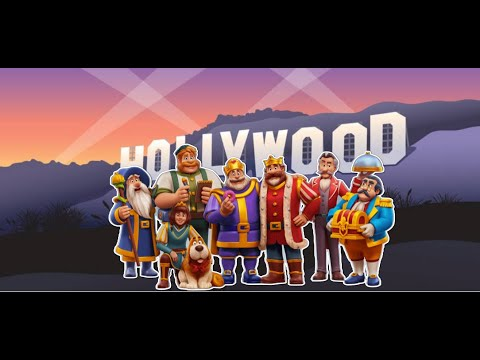
Oh, talking about Hola, should we talk about this little ad campaign? Oh, the Royal Kingdom celebrity ad campaign. So, let me just do a quick setup. Royal Kingdom, which is brother, I think the kings are brothers, brother to Royal Match, just had a massive celebrity ad campaign. It kicked off on April 16th. The game officially launched back in mid-November. So, this is a case of a big marketing push about is that 5 months after the initial launch of the game. The game had been in soft launch for almost 2 years as well, just to give you that context. So, the ad campaign features the 10 celebrities that I've counted, and some of them do multiple creative executions. LeBron has two, Jimmy Fallon has two. So, here are the celebrities: LeBron James, Kevin Hart, Jimmy Fallon, Shakira, Amy Poehler, Sofia Vergara, Courteney Cox and Lisa Kudrow from Friends,
Oh, wow. and Johnny Galecki from Big Bang Theory. I Sorry if I got their name I didn't watch Big Bang Theory. So, all of those have different ad executions. Mainly, a lot of them are on social when I looked them up. Some of them are on TV. Chris, I think I heard you say you saw LeBron's ad on the NBA playoffs. Obviously, that makes a ton of sense from a LeBron standpoint. It makes no sense otherwise, but yes, go ahead. I'll let you get there. One other thing to note is all of the ads were extremely heavy on no ads, no Wi-Fi needed. Yeah. So, really, really interesting. I I hear this all the time. This is why I really want to highlight this. All the celebrities said it. It's emphasized in all their ad creative. We know offline games does actually fairly well on the App Store. This is actually somehow becoming a feature. I was just curious to see them repeated over and over again. People hate ads. Not exactly true, especially for rewarded ads. However, they must have had some research that told them that this was insanely important to this
audience and I would love to see that. I don't know if I've seen research in this space that has shown that. So, anyway, Chris, you go first and then, you know, the rest of us will chime in. I have to give real kudos to these guys that they made an amazing TV campaign {slash} YouTube. Like, it is really truly memorable and definitely hit the zeitgeist. I think achieved probably the objective that they're stating. Great commercials. Obviously, the spokespeople that they were able to capture were amazing. But, they must have spent a fortune on this thing, you know? It's like a marketing team's like fever dream, you know, to be able to do that. And when you see ads about a game like Royal Kingdom on the [ __ ] NBA playoffs, are you [ __ ] joking? Like, how is that What the [ __ ] Are they insane? Like, where is the overlap on audience for a [ __ ] basketball game? This is even I might have went too broad on this, but I don't know. What do I know? So, what do the numbers say, right, so far?
You know, a week after and a week before, like comparing like how they're doing. And they got the downloads. Like, downloads are up like 112% right, roughly. But, revenue is only up 6% right, so that doesn't make it really that meaningful to them from driving like the business per se. And they spent gazillions on this, right? So, we'll keep tracking it and see like if they actually see it, but again, this is not targeting the right audience, right? We need to target audiences that are spenders, not like the broad audience to download the game. That's like the whole point of user acquisition is that you actually target people that are more likely to spend on the game, you know? So, and even if you hit the same demo by the numbers according to Nielsen, right, you're still not capturing the spenders in that demographic, right? The way user acquisition targeting can do, right? And I think part of the problem is there's a lack of call to action on TV spots. It's
really hard to attribute TV spots. Like it is a very impossible thing. So, generally, what I think is that when you run out of the capability of making money on UA spend, then that's when you start looking at TV, you know? And I was hearing at GDC in Turkey, I was hearing that they were doing like 24-month paybacks. 18 to 24-month paybacks on UA spend for some of these games, which is [ __ ] insane. Like we were like three to six back in the day and like six to 12. Like even like social casinos like 12 to 16 or something like that. But man, [ __ ] 18 to 24-month payback, that is nuts. So, I'm not really too dubious about this on like these campaigns on YouTube or TikTok or like some of these new media stuff, but when you do traditional TV ads, I'm always skeptical because I think it means something really seriously wrong with UA that things are not working out on UA that you're going after TV. And that's generally the wrong reason.
And what I also think, and this is a little bit of a dig on you, Jen, not specific to you, but marketing people love [ __ ] TV ads, dude. They are [ __ ] rockstar [ __ ] They absolutely love it. Dude, all they want to do is be nice with all these [ __ ] celebrities, get down in LA, sit there and watch them film, and just be all the ballers, right? Spend millions of dollars doing that. On the flip side of that, they can go out to all the different networks and start like, "Ooh, can we buy 5 million here and 10 million here and 20 million?" Like it's just all a big circle jerk and it's not particularly for [ __ ] mobile. I just don't think it's material. Every single piece of evidence that I've seen out there, whether it's Raid, Evony, Monopoly Go, all this [ __ ] I don't think it really is as material and it doesn't do as much for the game. Machine Zone, remember they had amazing [ __ ] ads. Dude, that was [ __ ] [ __ ] All that was [ __ ] and uh Schwarzenegger
and uh Schwarzenegger, like great ads. [ __ ] on the Super Bowl, dude that's like [ __ ] burning money, you know? Gabe Leydon said that, right? He said like how desperate you must be for me come to me for help when you go to TV. Yeah, exactly. So, this is in some ways it's a sign of desperation or it's a sign that they have way too much money at Dream. Or like some marketing guy got in charge and just started to have a fever dream about doing [ __ ] TV ads, but I don't think this is like A rabbit hole. great. Dream game. Except that it is a great campaign. So, whoever put the great campaign together, how many gazillions of dollars they spent some [ __ ] agency to do this [ __ ] you know? Go My Word Power to them, so that's my take. I want to break down the marketing cuz these are really high-stake bets. And when you look at celebrities, like why would you use celebrities? Well, like one is of course you stand out in this crazy attention economy, which they did. I mean, all those celebrities kind of covered the bases. You increase your UA efficiency, cuz you
stand out, probably your CPIs are lower, your conversion rates are higher. You build trust because like this is not just another game for Kingdom the Match or I forgot even the name of those. I [ __ ] hate those games. I hate them so much. I even hate this game. Like all kudos to them, but I hate playing it. But nevertheless, it builds trust cuz it's like this not another puzzle game, it's the game that Kevin Hart plays. It's the game that LeBron James or, you know, whoever Shakira plays now. And as a Crest would say, you know, CMOs do this for the ego, but I think there's other elements that that maybe are even more important than ego. I think elements like you have a pressure to scale cuz it's has it's been out for a while, hasn't scaled probably quite as they as rapidly as they expected. So, that might be there. There may be some UA plateau. You're not getting the type of a scale through traditional performance marketing. So, you're pulling out the A-listers. There might be element of brand positioning. I don't know much about brand, but maybe that's kind of element
how you want to stand these out with those USPs and tie-ins with celebrities. And then, most importantly, as Chris said, they're probably sitting on a massive amount of money. And when you're sitting on a massive amount of money, what is it, you know, 3 million there on this guy and 3 million there on her and like it doesn't really matter. It's like let's just spend a little bit to have so much fun. But, yeah, I don't know. ROI, at least on this short analysis, it's only a week away, doesn't seem to be there. But, maybe it's a long-term investment. Like Jen, walk us through this. Phil hates when I do this. So, TV is not performance marketing. So, you can't necessarily go and look, you know, exactly at what's going on. And so, going back to Monopoly, since it's been a little bit of time since their campaign, which was in November, I have some charts. So, I pulled US cuz, you know, this is primarily where I think they ran the media for their TV campaigns. This is Monopoly Go again. So, the first one that we are showing is
revenue and downloads. The red line shows when the campaign ran. So, from that highest level perspective, it looks like it's stabilized. It stopped the bleeding. So, if you look at the few months prior, you know, Kress and everybody, what you said is true. Like you're not able, you know, UA is slowing down. You're starting to bleed downloads and revenue. You got to do something. You got to start to change the perception. And once they did the campaign, it looks like it stopped the bleeding a bit. And then, you know, the on the next slide, I channeled Phil and you know, I pulled up Arc DAO and DAU and Arc DAO and DAU was like oof in a freefall. And then after the campaign, and listen, they did other things as well. And this is the most difficult thing with these games and live service. It's hard to know exactly what did it. So, all I can say is after that period of time, you know, DAU looked like it stabilized and Arc DAO looked like it was even going up a little bit. So,
Breathe. Breathe. Meditate. Jen, Jen, they're just hackling you. Don't. Do your thing. They're just hackling. So, let me start by saying I haven't made a TV ad in like 8 years. Like I don't know the last time I made a TV ad myself. When I did it was like what it was at Scopely. It was like on Walking Dead, which was very targeted or WWE, which is very targeted against the exact audience I was trying to get. So, TV in this day and age is really difficult. You can do connected TV, which is like super super expensive. The thing that you're trying to do is get creative that you can run on social and then have it behave, Phil, to your point a little bit more like performance marketing. Or you're trying to tap into the celebrities massive social media audience cuz they're going to post about it cuz usually they're contracted to post about it. And so, I think in this particular campaign, they probably spent about $3 million for each one of the A-listers and maybe
one to two for some of the others. And I don't even know LeBron's like 3 million plus. I mean, that dude, can you imagine? So, just for the celebrities, creating the creative, paying the agency to do that, likely 15 to 20 million dollars. Just not even having spent money to promote that content. Then you add paid media on top of that, you know, getting spots on the NBA finals, that's a lot of money. Right? That's, you know, probably a couple million dollar campaign right there. So, for from a paid media standpoint, on TV, I mean, you're probably looking at 5 to 10 million on paid media on TV. Then, you've got paid media in social and all of the other places. And so, you start to, you know, add up all those numbers and you're at a, you know, 30 to 50 million dollar all-in campaign for this type of stuff. So, you would hope, following their numbers over the next couple of months, you would see something respond to that. We'll see
what happens, too, cuz you have Royal Match and Royal Kingdom. Good thing is they have both. Is there consumer confusion? Do people go and download both? I'm wondering why they didn't do this on Royal Match, which feels more actually broader and appealing than Royal Kingdom. They must see something in the KPIs. They kind of hint about the other game cuz they kind of talk about the two games. This is In one of the Jimmy Fallon's cute spots, he talks about both of them. So, it was a nice kind of co-promotion. Mhm. Like, listen, they have so much money at Dream. Like, it's [ __ ] you money. That's insanely. It's insanely. Like, I don't know why you have 10 celebrities blanketing the world at the same time. The strategy is something that I would have been able to have the balls to push through and hang out with all I wouldn't have had the time, Chris, to hang out with all of those famous people. Picking 10, maybe I would pick one of my, you know, favorite, Jennifer Garner, and go hang out with her. But, you know, like, that's Anyway. You know, Jen, like, Yeah. you describing this actually makes me
more outraged. It's like I mean, first of all, like, Monopoly Go, that result of like staving off the declines, that is not the purpose of [ __ ] marketing. This is not I I am I'm just tell That is like [ __ ] burning money, you know? Like, let's just burn money just for the sake of it. Like, go in the backyard and start burning $100 bills for like the next 20 years, you know? I I don't understand that right at all. But even do it, Eric. Like look at the chart. Like DAU is down, right? So Jen, you showed downloads. Downloads may have been stimied, but DAU is down, so that's the usual riffraff you get from brand is always these low-retentive installs. It always kills your organic numbers cuz they come through as organics when you run these brand campaigns. So it looked even worse. And putting up ARPDAU, ARPDAU goes up when DAU goes down because only the survivors are left. It's the survival bias effect. Like if you look at any match game right now over the long run, you'll see that their ARPDAU goes up. Like even Candy Crush has a really high ARPDAU right now
because they've ripped through so many installs that their DAU is mostly composed of customers at this point cuz they retain longer than users. That's great. You know, they're fine you know, they're getting more customers that spend more money. Isn't that a good thing? Totally, but that's not the purview of the marketing analysis, right? All we're saying here cuz DAU went down and that's why ARPU Where did DAU stabilize? It looks So if we do DAU minus installs, I would think you would see a downward trend cuz I don't know how Sensor Tower is counting installs or whether or not they automatically get a DAU tag, which is sometimes what we see internally in analytic situations. So if you minus installs from DAU, it's a downward-sloping trend. This is also like, you know, the best I can do from the out like I don't have Monopoly's data. They have webshops that I think actually does decent business for Monopoly. So it's difficult to know all of the stats. Put all the Monopoly Go stuff to the side here and I would go back to like listening to you on this podcast, right? And when we continue to cover this stuff when it comes up, right? Like the other versions of this that we've seen have
been like from Supercell, right? Like remember they had Erling Haaland? They did an integration in But he was a character in the game that you could buy, right? We're talking about maximizing the integration down the funnel, right? Is how you get the most bang for your buck out of these integrations, right? Is that I see LeBron James and there's some relationship to LeBron James down to as I would argue as deep as you could get it into the game. And I don't know if they use the collection cards. I had a hard time figuring this out beforehand. I think you might play a little bit more, but remember they have the albums or the collection cards. I'm at the end game. Is LeBron in that? Is any of these celebrities So, why and I understand it's a licensing thing, but get the [ __ ] licensing thing to do all this down funnel stuff. Like it's so disconnected. It's so foreign from the ad. They don't exist beyond this creative. And to your point, like why aren't we use like Anthony Starr? Remember there were some Anthony Starr ads that he did for Last War that came out recently, which were like those cringe mobile ads. Which I just think
it's awesome we can get all these people to bend the knee by the way to us. Like you talk about like Eric going out to Hollywood. I think it's awesome that he gets to bend the knee to us. But like that was like a cheap, maybe shot at home or cheap ad that moved quick. I'm sure they saw whether or not there was a response from Anthony Starr. He's that lead actor on The Boys by the way. Oh, oh, oh, he's Homelander. Oh, I know his name. Oh, my god, I love The Boys. Yes, he was on these He was on these ads. And so what I what I don't understand is like doing things like that that are cheaper and lower quality to me are more consistent with the mobile UA meta, rather than going out and dropping dime. $50 million minimum for this campaign, right? That generates like a 6% uptick in revenue, if that. And we'll see where it goes. Like this is complete nonsense. Like it doesn't even make sense, you know? But I mean it looks pretty. But I think Eric, like when you think about the brand marketing campaigns on a TV, you know, let's add up all the match games in the United States and let's think about what their MAU is. Like what do you think? 30 to 40 Maybe we get to
50 million MAU across match in the United States. You know, that's starting to look like a like kind of like a PCG, you know, Gillette-ish product. You can sell it to 350 million Americans, right? only 3 or 4% are spenders, right? So, really the only the target is much smaller than that, right? Of actual people that spend. We don't give a [ __ ] about MAU. This is not like MAU is not driving returns on the this game. I mean, it's just not, right? Maybe on the ad tech side, but still it's not that as material as the people that are spending. That's the whole beauty behind user acquisition cuz you're actually acquiring spenders, you know? I don't agree like but you're shifting through a mass quantity of people to find those spenders, right? You said it yourself, the quality is so low that those that retain or such a small percentage of those that you're capturing when you are actually capturing them on something that's still disconnected with actually downloading a game. Like you see a TV ad, you're going to go to your phone and go to the App Store, which is a piece of [ __ ] and download that game. There's no call to
action on that. Yeah. Yeah, I know I agree with that. That's the tough part. Anybody that makes the argument that it justifies spending or justifies playing the game, which was the machine zone argument back in the day, Re-activate Wait, what? Because it it's justified. Now that [ __ ] LeBron James plays the game, I should be playing this game and spending on this game. I mean, that that didn't make that didn't pass the logic test, you know, like Yeah, I I am much more motivated like when I hear an ad read in a podcast and they're promoting a product and I trust the podcast Coral Labs, our one of our favorite sponsors. Coral Labs. I'm charged. When Misha Lee reads any any of our ads, I'm like, holy [ __ ] I must I must I must I use this Take all of our money. In my world of brand, one of the goals is like isn't like, "Hey, I want to do this to get them to justify it." But you are trying to give a certain message and I do think word of mouth, especially in this category, is a big deal and they I
think they were trying to create a moment and break through to generate a lot of word of mouth to keep that going. Like I said, I I don't know if I I I am not saying that this was something I would have done and promoted and spent, you know, this much money on. My belief of what works in today's world is influencer campaigns. Like Crush, to your point, it is much easier for you to go, if you're on your PC, you're on your mobile, for me to click and install something on the device that I'm on, and I'm already kind of in that mode to want to engage in that. TV is one of those for me, like an isle of last resort, when you've kind of saturated UA. You've kind of done it all. Yeah, this is the Netflix opportunity, though. This is the Netflix Roku Smart TV opportunity that I think is really interesting is is about connecting this funnel, like Netflix game showed me the QR code on their screensavers. That was like one of the wins they had in distribution. Yeah, we talked about that. Very small win. So, like, give me something in the experience that reminds me to connect it to mobile. Give me a
synced push notification. I like I know the tech stack at Netflix could pull this out. You finished Emily in Paris season 3. Congratulations, Phil. Here's the link to go get it on the App Store. And then, you know, what if you were playing the game and your actions dictated what happened in the show next season, and you got to vote on that? transmedia. Let's not do that. That's not too hard. We need to wrap it up. So, the one thing to wrap up, though, is your point about, like, integration, and where Supercell is crushing it is when they do a celebrity integration with a John Cena or whoever that is. Now, Holland, this one actually, I don't think was as successful, if I think back to when we did the analysis. No. But, if you are going to do something, you should integrate it into an event. It doesn't have to be a viable character or whatever that is, but it should actually make sense when you open the app. And this missed all of that. This campaign didn't do any of that. Supercell and Brawl Stars, like, kudos. They are completely integrated in any of the campaigns and IP integrations that they're doing. Okay.
There we go. Super expensive. What else we got? I think that's it. All right, everyone. See you next week. See you next week. You did it. You made it to the end of the episode. As a fan of the show, it would help us out if you'd subscribe and leave us a review on the podcast service of your choice. Those stars and likes will help us
Auto-generated captions from YouTube — names and numbers may be misheard.






















Comments