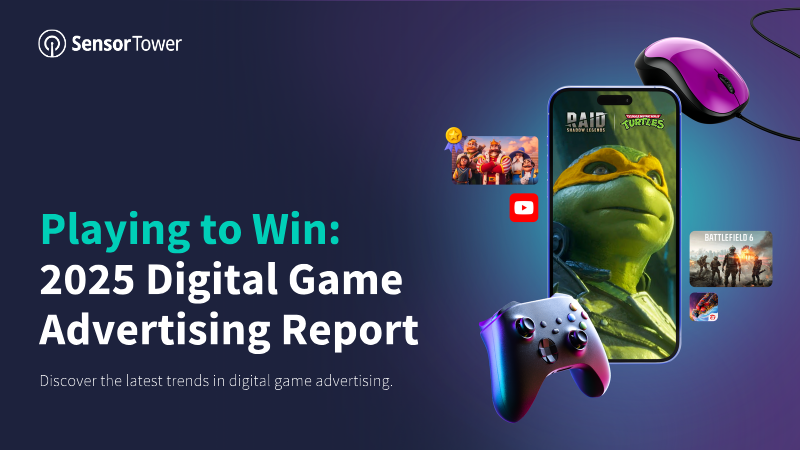
The 2025 digital gaming market is defined by a strategic pivot toward user quality and high-velocity creative iteration, with global advertising expenditure reaching $8.7 billion. Despite a year-over-year decline in total mobile and PC downloads, the industry remains robust through the resurgence of the shooter genre and the continued dominance of 4X Strategy and Casual titles. Geographically, growth is concentrated in North American and Asian markets, fueled by high-profile releases such as Battlefield 6 and Valorant Mobile. This landscape reflects a shift where major publishers like Microsoft and Dream Games utilize aggressive spending to maintain market share in an increasingly competitive environment.
Advertising strategies have evolved to prioritize "instantly legible" gameplay and the rapid deployment of creative assets to combat audience fatigue. Static image ads remain a resilient tool due to their cost-effectiveness, while generative AI is increasingly employed to test and iterate high volumes of creative concepts. Intellectual property collaborations, featuring franchises like Naruto and Teenage Mutant Ninja Turtles, serve as a primary mechanism for lowering acquisition costs. Furthermore, platforms like YouTube have become essential for reaching PC and console audiences, while Apple Search Ads are leveraged tactically to capture competitor keywords and dominate search visibility.
The digital ecosystem also highlights the growing influence of internal discovery and content creators. Roblox maintains a massive web presence with over 187 billion visits, driven largely by organic traffic and internal discovery mechanisms rather than traditional external advertising. Meanwhile, viral indie titles and major releases like Marvel Rivals achieve commercial success by leveraging creator-led marketing. Ultimately, the industry in 2025 is characterized by a sophisticated blend of data-driven acquisition, aggressive platform-specific tactics, and a reliance on established IPs to navigate a market where engagement quality has surpassed sheer scale as the primary metric for success.
Sensor Tower · 2026

Adjust · 2026
Sensor Tower · 2026

Sensor Tower · 2026
Sensor Tower · 2026
Sensor Tower · 2026

Sensor Tower · 2026

Sensor Tower · 2026

Sensor Tower · 2026

Sensor Tower · 2026

Sensor Tower · 2026

Sensor Tower · 2026
GREE
Competition · 2026
Gamesight · 2026

SocialPeta · 2026
SocialPeta · 2026
Anzu · 2026

Raptive · 2026

SocialPeta · 2026
SocialPeta · 2025

SocialPeta · 2025
Sensor Tower · 2025

Sensor Tower · 2025