Atari
CompanyUnited States
Documents about Atari

Can Atari make its retro games strategy profitable?
Atari is currently navigating a strategic pivot toward becoming a leader in the retro gaming sector, focusing on high-quality remasters, remakes, and sequels to classic intellectual properties.
- Atari is executing a strategic pivot to focus on high-quality remasters and remakes of classic intellectual properties, supported by the acquisitions of specialized studios Digital Eclipse and Night Dive Studios.
- To compete with unauthorized emulation, Atari’s business model centers on providing a 'better than free' user experience that justifies premium pricing through technical excellence and authenticity.
- The company maintains a release cadence of approximately four titles per year, balancing high-profile commercial projects with niche, passion-driven releases to mitigate financial risk.

The Real OG Jane Whittaker Unfiltered: 44 years in gaming, Alien vs Predator & Why fun still wins
The evolution of the gaming industry over the past four decades reveals a fundamental tension between technological advancement and the core principles of game design.
- Jane Whittaker co-developed the Atari Jaguar's Alien vs. Predator, which remains Atari's biggest console game, utilizing a core team of only two programmers.
- Whittaker's development philosophy prioritizes gameplay-first design over tech demos, rejecting procedural or generative AI shortcuts in favor of hand-crafted worlds and original AI systems.
- Her upcoming project, Xenomorph, emphasizes survival through tension and stealth, featuring an advanced AI system where creatures communicate and share information about the player's behavior.

TWIG #284 Squad Busters launch talk / Stumble Guys vs. Fall Guys
The global gaming industry is currently defined by a tension between massive launch-day engagement and long-term structural instability.
- Mobile gaming remains the industry's primary revenue driver, accounting for 50% of total consumer spending in 2023 despite ongoing volatility.
- The gaming sector faces significant structural instability, evidenced by over 10,000 industry layoffs in 2024 and ongoing consolidation, such as Nintendo’s acquisition of Shiver Entertainment and Atari’s purchase of the Intellivision brand.
- High-profile launches continue to command massive reach, with Supercell’s Squad Busters securing 40 million pre-registrations and Ubisoft’s XDefiant attracting 8 million unique players in its first week.

'Yar's Rising' and Reimagining Classics for Game Development with James Montagna | 347
The revitalization of classic intellectual property requires a delicate balance between honoring foundational source material and integrating modern gameplay innovations.
- Reimagining legacy IP like the 1982 Atari title 'Yars’ Revenge' requires balancing original source material with modern genre shifts, such as transitioning the game into a side-scrolling metroidvania.
- Developers can modernize retro titles by repurposing classic mechanics into narrative-driven features, such as converting original gameplay elements into interactive hacking terminals for a protagonist.
- Maintaining a nimble, independent studio structure supported by deep institutional knowledge and passion is essential for navigating the volatility of the current gaming market.
Games Are Cheaper* Than They’ve Ever Been | Extra Credits Gaming
Despite the common perception that video games have become increasingly unaffordable, historical data indicates that games are currently at their most accessible price point in the history of the medium.
- When adjusted for inflation, video games are currently at their most accessible price point in history, with historical prices for early cartridge-based games exceeding $100 in today's currency.
- The industry maintained a stagnant $60 price point for years despite ballooning AAA development budgets, which effectively lowered the real cost of games relative to consumer income.
- The recent industry-wide shift to a $70 base price for AAA titles functions as a long-overdue correction to align with inflation rather than a significant increase in real value.
The Art of FAITH: Horror at 192x160 Pixels
The development of the horror game FAITH serves as a case study in how strict aesthetic constraints and low-fidelity visuals can effectively generate dread and compete with high-budget, next-generation horror titles.
- The horror game FAITH achieves atmospheric dread by imposing strict technical constraints, including a 192x160 resolution, a limited color palette, and a 15 frames-per-second cap.
- The developer utilized rotoscoped animations—comprising 75 to 120 hand-traced drawings per sequence—to create an uncanny, lifelike contrast against the low-fidelity pixel environment.
- By leveraging the high level of abstraction inherent in early pixel art, the design successfully exploits the 'fear of the unknown' to compete with high-budget, next-generation horror titles.
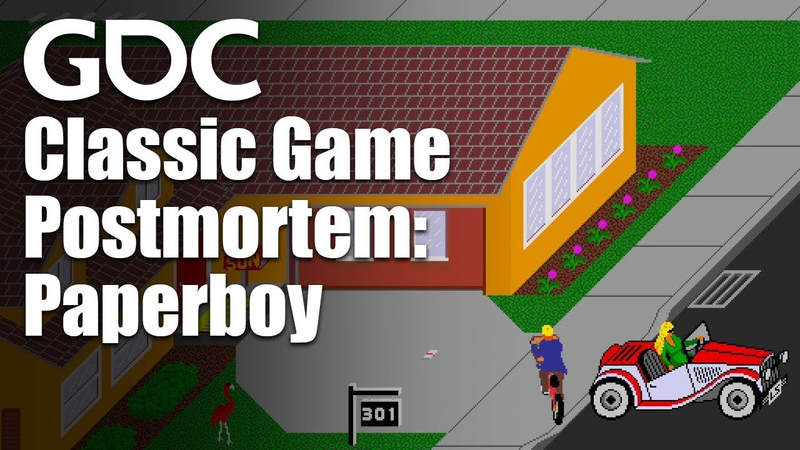
Classic Game Postmortem: Paperboy
The development of the 1985 arcade title Paperboy represents a pivotal shift in Atari’s design philosophy, moving away from traditional vector-based graphics toward a sophisticated, isometric raster-based experience.
- The NES home console port of Paperboy achieved significant commercial success with 2 million copies sold, far outpacing the 3,500 units sold for the original 1985 arcade version.
- Development of the arcade title utilized Atari’s System 2 hardware, featuring a 16-bit processor programmed in BLISS and a custom medium-resolution monitor to surpass the fidelity of 8-bit competitors.
- Gameplay was engineered around tight 30-to-90-second loops to maximize arcade player turnover, a strategy refined after initial focus group failures led to a shift toward a parallel horizontal layout.

Primal Rage II from Heartbreak to Resurrection: The Journey After Cancellation
Primal Rage II represents a significant, albeit ill-fated, attempt by Atari Games to evolve the fighting game genre during the mid-1990s.
- Primal Rage II was a $2.3 million arcade project initiated on March 1, 1995, featuring a team of 20 developers and specialized stop-motion animation that ultimately led to its cancellation on December 5, 1996.
- The game's development was hindered by the high cost and time-intensive nature of stop-motion animation, which made character pre-visualization impossible and prevented the creation of a polished vertical slice.
- The project was effectively lost for nearly two decades due to the use of custom hardware and unorthodox graphics delivery methods that made standard emulation impossible until the game was discovered and leaked by fans.
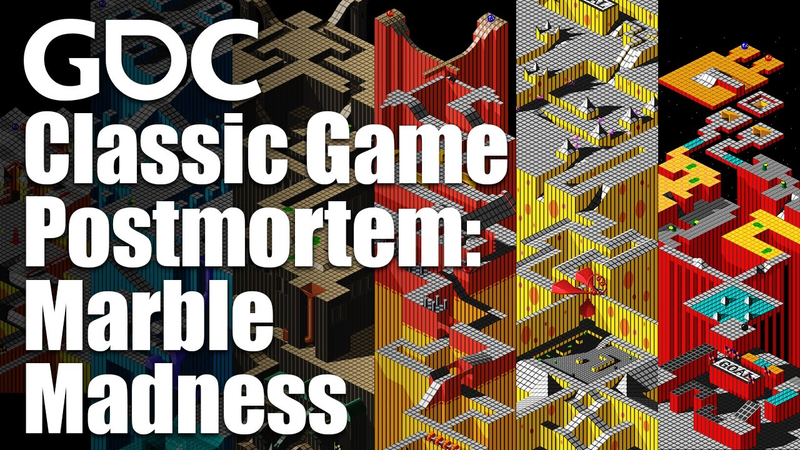
Classic Game Postmortem - Marble Madness
The development of Marble Madness during the mid-1980s arcade industry contraction serves as a case study in balancing technical innovation with the unforgiving economic realities of coin-operated gaming.
- During the 1982-1984 arcade industry crash, sales plummeted by 90%, forcing developers to pivot from custom hardware for every game to a 'system hardware' model where operators bought a base board and swapped out cartridges.
- Atari's development process for Marble Madness involved a high-stakes 'coin drop' testing phase where games were built to 80% completion and placed in arcades; historically, two out of every three games were canceled based on these results.
- Marble Madness achieved commercial success by selling 4,000 units in a depressed market, making it one of the top-selling games of 1984 despite the industry's decline from the 100,000-unit sales peaks of the Pac-Man era.
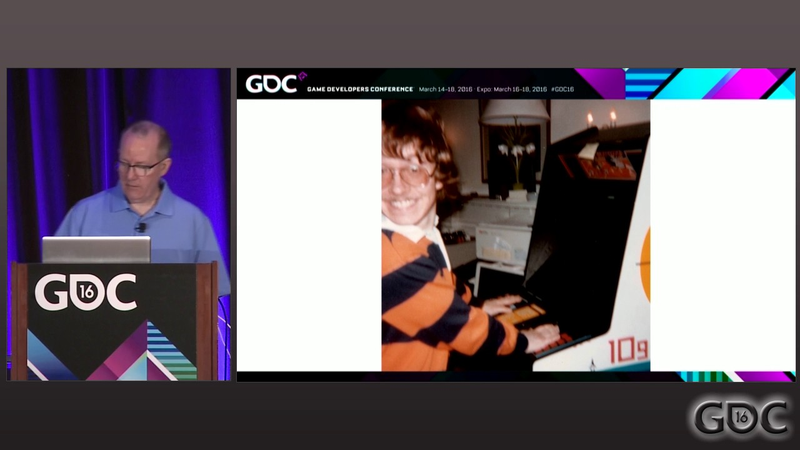
Classic Game Postmortem: Ms. Pac-Man
General Computer Corporation (GCC) emerged in 1981 as a pioneering force in the arcade industry, initially focusing on enhancement kits designed to extend the commercial lifespan of popular titles.
- Ms. Pac-Man was developed by General Computer Corporation (GCC) as a modification kit for the original Pac-Man, utilizing a custom auxiliary circuit board with 10K of ROM to patch the original game code.
- To reverse engineer Pac-Man, the GCC team used a Tektronix 85/50 Z80 emulator to disassemble the original code, allowing them to isolate and modify monster AI behaviors and maze layouts.
- The team implemented anti-copying hardware and a 'bit-swizzle' encryption method on their auxiliary board, which successfully prevented the cloning of Ms. Pac-Man for approximately six months.