2015
Company
Documents about 2015
3 Ways Predictive Analytics Will Change Mobile Games: Part II
Predictive analytics is positioned as a force that will realign mobile game supply with player demand and make commercial success less random.
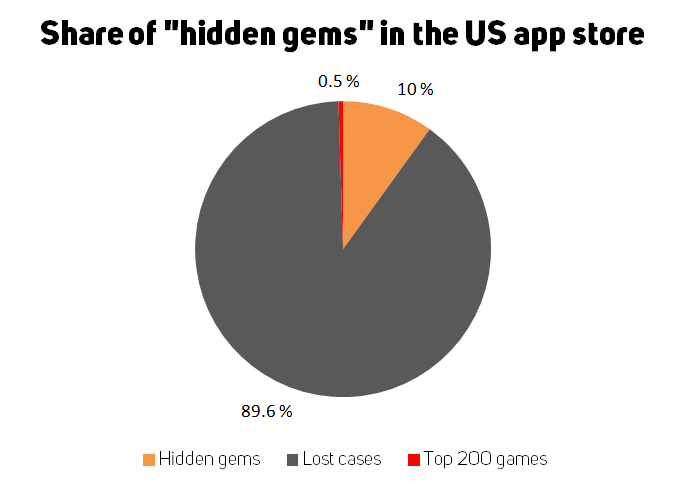
- Predictive analytics can identify 'hidden gems' in the mobile market, with over 10% of the 300,000+ games on the App Store showing high potential that remains undiscovered by many publishers.
- There is a significant misalignment between market supply and player demand: 40% of App Store games rely on sensomotoric skills, yet only 7% of players prefer that gameplay style.
- Consumer interest in RPGs is underserved, as 23% of U.S. players express a preference for the genre, while RPGs represent less than 10% of the current App Store catalog.

3 Things to Know About Session-Length Restriction When Designing a Free2Play Game
Session-length restriction has become a defining feature of free-to-play mobile games, and designers should adopt it thoughtfully rather than reject it on principle.
- Session-length restriction is a standard feature in the vast majority of top-grossing mobile games, making it a critical design element for commercial success.
- Designers should ensure players can enjoy at least a 10-minute session without needing to spend money or in-game currency, as data shows that overly restrictive limits correlate with lower success.
- Energy mechanics are best suited for RPGs, CCGs, and match-3 games with character progression, as they provide a consistent, predictable session length.
3 Ways Predictive Analytics Will Change Mobile Games: Part I
Predictive analytics, already transformative in industries such as e-commerce, streaming, and telecom, is poised to reshape the mobile games industry, according to GameRefinery CEO Markus Råmark in the first installment of a three-part blog series published in February 2015.
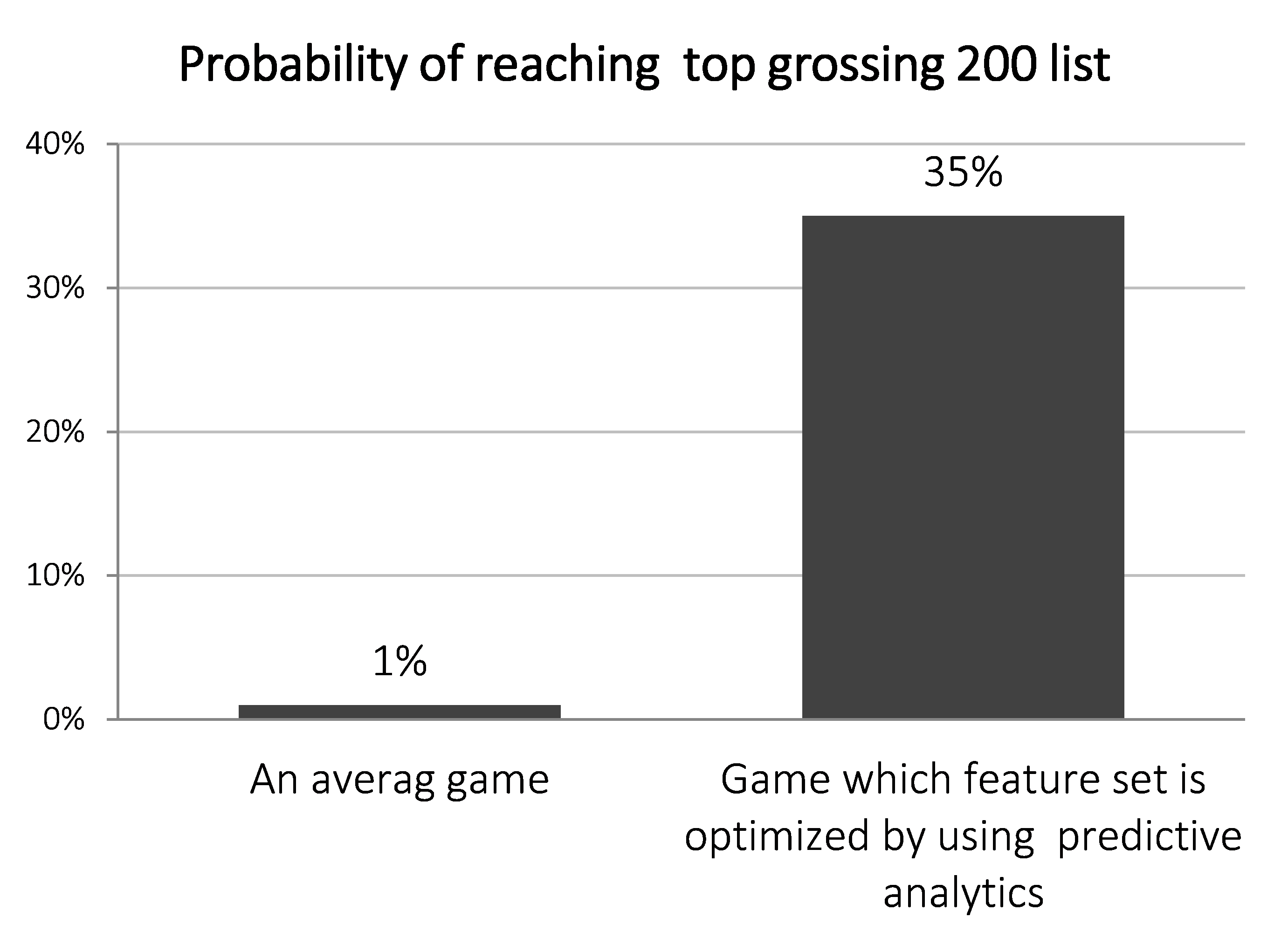
- Predictive analytics can increase the probability of a mobile game reaching the top 200 grossing list to between 10% and 40%.
- By utilizing predictive modeling during the concept phase, developers can potentially reduce the number of projects required to achieve a hit from over 50 games to just 2 or 3.
- Predictive analytics allows developers to optimize game feature sets before soft launch, significantly improving resource efficiency compared to traditional testing methods.
The Future of Match 3: What You Need to Know – Part I
Match 3 puzzlers remain a fixture of mobile top grossing charts, and this February 2015 GameRefinery article by Joel Julkunen, VP of Games, opens a three-part series examining where the genre is heading in western markets.
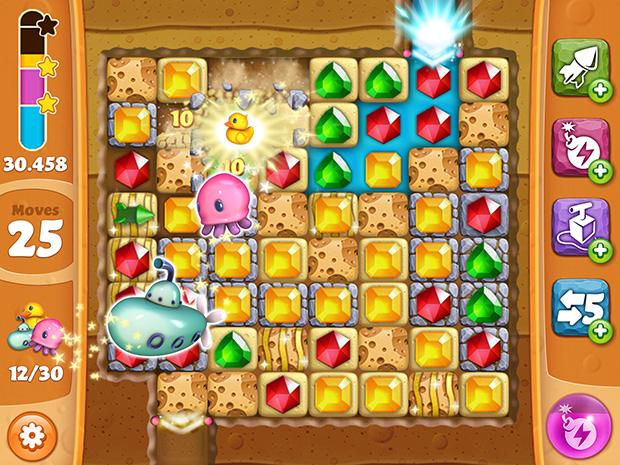
- Match 3 games are categorized into Single-dimensional (SD3) titles, which focus on a single core layer of gameplay, and Multi-dimensional (MD3) titles, which integrate RPG or CCG elements like party management and character development.
- SD3 games, such as Candy Crush Saga and Candy Crush Soda Saga, rely on linear level progression and monetize primarily through consumable boosters, extra moves, and lives.
- MD3 games, such as Puzzle & Dragons and Marvel Puzzle Quest, utilize non-linear progression and monetize through collectibles and party progression in addition to standard consumable items.
Mobile Game Design: Iteration vs. Planning
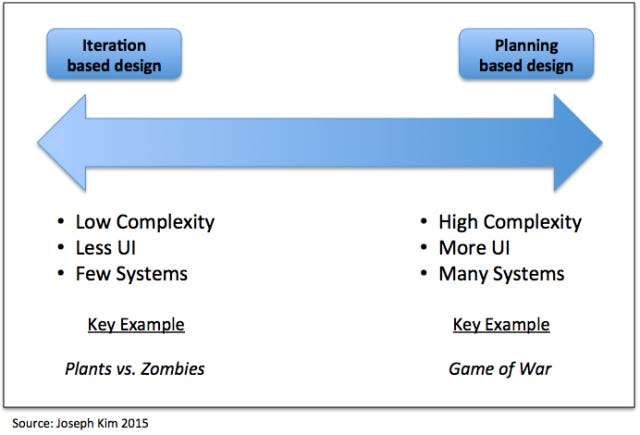
Mobile F2P game design is argued to suffer from an over-reliance on iteration-based methods, and the essay makes the case for substantially more upfront planning.
- Game designers should adopt a 'Maximum Viable Planning' approach to counter the risks of over-relying on Minimum Viable Product (MVP) methodologies, which often lead to wasted resources and developer burnout.
- Game code is relatively inelastic compared to other development assets, meaning that poor initial design choices incur significant, costly technical debt that cannot be easily 'iterated' away.
- Effective pre-production planning must include comprehensive UI wireframing, detailed user flow mapping, and thorough analysis of system impacts on game economy and core loops before development begins.

MCV Around the World 2014 Report
MCV Around the World 2014 is a free digital guide compiled by MCV, the trade publication covering the market for computer and video games, and flagged for readers by the Flemish Games Association (FLEGA) in a short news post published in February 2015.
- The 'MCV Around the World 2014' report provides a digital overview of business information and market data for more than 20 countries, including Switzerland, Norway, Japan, and France.
- The guide is available as a free digital resource for industry professionals seeking international gaming market facts and figures.
- The report includes coverage of the Belgian games market, though the data provided for this specific region is noted as being limited and outdated.

3 Core Specialties for a Mobile User Acquisition Team
Rising and likely permanent mobile advertising costs make in-house user acquisition expertise a competitive necessity, and this 2015 essay argues that a self-sufficient team, one that doesn't depend on outside agencies, requires three core competencies.
- A self-sufficient mobile user acquisition team requires three core competencies: data management and modeling, campaign management, and the exploration of new channels.
- Data management and modeling involves defining business logic, calculating metrics like LTV, and establishing the parameters—such as target bid prices and ROI projections—that guide campaign profitability.
- Campaign management focuses on the operational execution of marketing, including day-to-day optimization, A/B testing of creatives, and budget management.

Portfolio Dynamics for Mobile Games
Eric Seufert's 2015 analysis responds to an App Annie study of three mobile game portfolio strategies: franchise-focused (a single IP across genres, as with Rovio's Angry Birds), genre-focused (a narrow set of genres with flexible IP, as with King's match-3 titles), and diversified (broad IP and genre coverage, as with Zynga).
- A 2014 study of 100 mobile gaming companies by App Annie identified three primary portfolio strategies: franchise-focused (e.g., Rovio), genre-focused (e.g., King), and diversified (e.g., Zynga).
- Empirical data from 2014 indicated that the genre-focused strategy outperformed both franchise-focused and diversified approaches in the mobile gaming market.
- The success of genre-focused leaders like King and Supercell in 2014 was driven by effective cross-promotion tactics, leveraging popular titles to drive traffic to new releases within the same genre.

Was the Clash of Clans Super Bowl Commercial About User Acquisition?
Supercell's Clash of Clans commercial during the 49th NFL Super Bowl in February 2015 is examined to determine whether its primary goal was user acquisition or something else.
- Supercell paid approximately $9 million for a 30-second Super Bowl XLIX ad spot, excluding production costs, based on NBC's rates of $4.4 to $4.5 million per spot.
- Assuming 28 million viewers saw the ad, the cost per viewer was $0.32, and a 1% conversion rate would result in a cost-per-install (CPI) of $32.08 for 281,000 new users.
- While the ad drove an increase in App Store rankings from 38th to 28th, the primary goal of such high-profile television advertising for mature games is likely brand legitimacy and re-engagement rather than pure user acquisition.
Trivia Crack: A Case Study in Virality
Etermax's Trivia Crack, launched globally from Argentina in October 2013, became a sudden US phenomenon in November 2014, and this January 2015 case study examines why it went viral.
- Trivia Crack achieved viral success by leveraging a user-generated content model where players submit, moderate, and take ownership of questions, resulting in a database of 1 million active questions with 2,000 new additions daily.
- The game’s expansion into the US followed a geographic viral pattern, likely facilitated by the US Hispanic community acting as a bridge for the game's initial popularity in Latin America.
- Unlike competitors such as QuizUp, Trivia Crack prioritized cultural relevance and accessibility by localizing questions to specific countries and maintaining a lower barrier to entry for user submissions.

3 User Acquisition Megatrends for 2015
The available text is only a landing page for a slide presentation by Eric Benjamin Seufert, published January 19, 2015 on Mobile Dev Memo.
- The provided source content contains no substantive data, analysis, or text regarding the '3 User Acquisition Megatrends for 2015' beyond the title and publication date.
- The document serves as a placeholder for a presentation delivered at PocketGamer Connects in London on January 13, 2015, but does not include the actual content of the slides.
- No specific metrics, growth rates, or strategic insights are available in the provided text to summarize.

The Winner-Takes-All Nature of the App Economy in One Graphic
The app economy's rewards concentrate heavily among a small set of incumbents, and the post, published in January 2015, makes that case by tracking movement on the US iPhone App Store Top Grossing chart over one year, from December 26, 2013 to December 26, 2014.
- The mobile app economy exhibits a 'winner-takes-all' dynamic, evidenced by the fact that 7 of the top 10 highest-grossing apps on the US iPhone App Store in December 2013 maintained their top 10 positions one year later.
- Only two apps released in 2014, Madden NFL Mobile and Candy Crush Soda Saga, managed to break into the top 10 list by December 26, 2014.
- Apple devices dominated the 2014 holiday season, accounting for more than 50% of all device activations between December 19 and December 25.