
The Game Business
Games industry business news and analysis by Christopher Dring (ex-GamesIndustry.biz).
Documents
Why aren’t more game developers using Kickstarter?
Kickstarter continues to serve as a vital, evolving mechanism for video game development, functioning less as a primary funding source and more as a sophisticated community-building and marketing instrument.
- Kickstarter is shifting from a primary funding source to a strategic marketing tool, with over 440 successful projects raising $26 million in the most recent annual cycle.
- Developers must treat Kickstarter as a community-building instrument, as the platform typically provides only 30 percent of a project's total backer base.
- Activity on the platform is projected to grow by 10 percent in 2025 as developers increasingly use it to secure final-stage capital and improve project visibility.

Watch us chat with British comedian and Taskmaster star Maisie Adam
The comedy and gaming industries share a fundamental structural challenge: the necessity of balancing creative evolution with the preservation of core elements that initially fostered fan loyalty.
- Success in both comedy and gaming requires balancing creative evolution with the preservation of core elements that initially established fan loyalty.
- Iterative development, similar to the software industry's early access model, allows creators to refine material through direct audience feedback before final release.
- Creators must manage the tension between maintaining a unique artistic voice and adapting to the shifting expectations of a diverse, global audience.
Interview with Dispatch developer: We were told comedy games don't sell
The interactive narrative game Dispatch serves as a compelling case study in challenging industry orthodoxy regarding the commercial viability of comedy and narrative-driven titles.
- Dispatch achieved commercial and critical success with over four million sales and nine BAFTA nominations, despite industry skepticism regarding the viability of comedy-focused narrative games.
- The studio successfully utilized an episodic release model to maintain high player engagement and completion rates throughout the product's lifecycle.
- After losing an initial publishing partner, the studio pivoted to self-publishing, using a high-impact trailer at The Game Awards to secure investor confidence and retain creative control.
What’s the truth about Nintendo Switch 2 sales?
The global video game industry is currently navigating a period of intense volatility, characterized by widespread workforce reductions at major firms like Epic Games and Ubisoft alongside a notable contraction in the United Kingdom’s development sector.
- The Nintendo Switch 2 is projected to follow a 3DS-style trajectory of modest, stable growth rather than replicating the mass-market dominance of the original Switch.
- Nintendo is mitigating hardware demand risks by prioritizing backwards compatibility, long-term team stability, and the expansion of intellectual property into film and merchandise.
- The broader video game industry is experiencing significant volatility, marked by widespread workforce reductions at major firms like Epic Games and Ubisoft and a contraction in the UK development sector.

Pokemon Go owner: There’s less of a need for new games
Scopely co-CEO Javier Ferreira provides an analytical overview of the current mobile gaming landscape, emphasizing that while the market has reached unprecedented scale, the requirements for success have shifted significantly.
- The mobile gaming market has shifted from rapid user acquisition to a focus on longevity, with 80% of Scopely’s revenue now generated by players who have engaged with their titles for over a year.
- Scopely has reached $15 billion in lifetime revenue and 2 billion downloads, anchored by six distinct billion-dollar franchises including the recent hit Monopoly Go.
- Market maturity has reduced the demand for new, transient game titles, placing a higher premium on the development of exceptional, long-term player experiences.

Can new age rating rules prevent a video game ban?
The European video game industry is undergoing a significant shift in self-regulation as PEGI introduces a comprehensive age-rating framework designed to address modern gameplay mechanics.
- PEGI is updating its age-rating framework to include labels for loot boxes, social casino elements, NFTs, and retention-focused mechanics like play-by-appointment systems.
- This proactive self-regulation strategy aims to align European standards with German USK requirements and mitigate the risk of government-imposed bans on monetization features.
- Unlike the North American ESRB, which focuses strictly on traditional content, PEGI is integrating non-content features to reflect the realities of modern live-service game design.
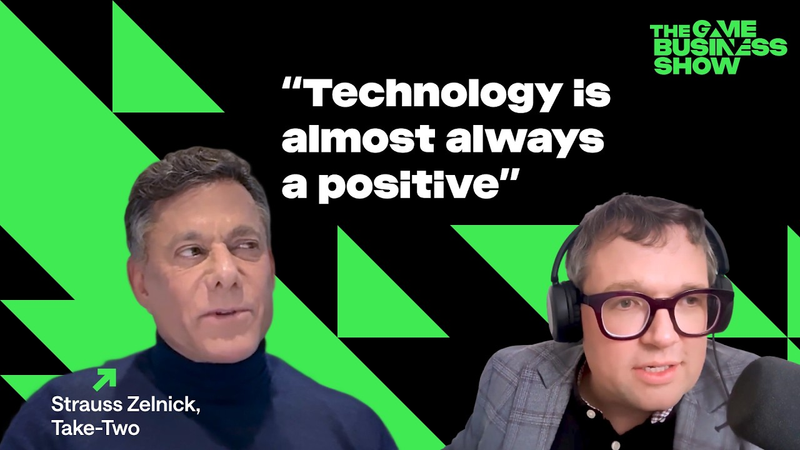
Take-Two CEO Interview: ‘The notion that AI can make GTA is laughable’
Take-Two Interactive CEO Strauss Zelnick asserts that while artificial intelligence offers significant potential for operational efficiency and creative support, it does not pose a threat to the traditional model of high-end interactive entertainment.
- Take-Two Interactive projects a major shift in revenue distribution over the next decade, with the U.S. share expected to drop from approximately 65% to 20–25% as the company expands into India, Africa, the Middle East, and Latin America.
- CEO Strauss Zelnick maintains that AI is a tool for operational efficiency and asset creation rather than a replacement for human creativity, explicitly dismissing the idea that AI can generate blockbuster titles like Grand Theft Auto.
- Take-Two currently utilizes hundreds of AI implementations across its labels to streamline workflows and support the company's core strategy of creativity, innovation, and efficiency.
Whatever happened to Xbox Project Moorcroft?
The gaming industry is currently undergoing a strategic pivot toward hardware unification and cross-platform accessibility, exemplified by the development of Project Helix.
- Microsoft is developing 'Project Helix' to unify Xbox and Windows hardware via custom AMD architecture by 2027, facilitating a 'build-once-ship-everywhere' development model.
- Industry revenue growth through 2028 is increasingly driven by premium pricing strategies rather than expansion in total player engagement.
- Games priced between $30 and $50 have emerged as a market sweet spot, successfully balancing accessibility with perceived premium value.
Peter Moore’s video game stories: “Maybe the console wars were my fault”
The evolution of the modern gaming industry is defined by high-stakes hardware transitions, the necessity of consumer-centric crisis management, and the eventual shift toward digital-first business models.
- Microsoft's $1.15 billion investment to resolve the Xbox 360 hardware failure crisis demonstrated that prioritizing consumer trust and brand reputation over immediate financial loss is essential for long-term sustainability.
- The transformation of FIFA Ultimate Team from a $3 million experiment into a primary revenue driver illustrates the massive potential of digital ecosystems in modern gaming business models.
- The decline of the Sega Dreamcast against the PlayStation 2 highlights the inherent risks of hardware-dependent strategies and the necessity for companies to pivot toward third-party software development.

Resident Evil Requiem's 5m sales: How Capcom did it
The gaming industry is currently navigating a period of significant structural transition, marked by increased regulatory scrutiny of international investments, the failure of live-service models like Highguard, and evolving platform strategies from major publishers.
- Resident Evil Requiem achieved 5 million unit sales in under one week, marking the fastest launch in the franchise's history.
- The title reached a peak of 344,414 concurrent players on Steam, underscoring the critical role of PC and handheld hardware like the Steam Deck in driving high-volume sales.
- Capcom generated significant pre-launch momentum by securing over one million wishlists through a platform-agnostic marketing strategy that avoided exclusive deals.

Capcom Delivered a Marketing Masterclass with Resident Evil Requiem
Capcom achieved a significant commercial milestone with the release of Resident Evil Requiem, which recorded five million sales in under one week.
- Capcom’s 'Resident Evil Requiem' achieved five million sales in under a week, driven by a strategic shift away from PlayStation-exclusive marketing toward multiplatform events like Summer Game Fest to better capture the growing PC audience.
- Google is reducing in-app purchase commission rates from 30% to 20% and decoupling its payment system from the Play Store, with new service fees for developers using Google’s billing system rolling out globally between June 2026 and September 2027.
- The US government is investigating whether Tencent can maintain its ownership and investments in US-based game companies, including stakes in Riot Games and Epic Games.

Why the Mewgenics Developers Never Even Considered a Publisher
The developers of the rogue-like strategy game Mewgenics, Edmund McMillen and Tyler Glaiel, maintain a firm stance against utilizing traditional publishers, prioritizing creative autonomy and financial independence over external support.
- The indie game Mewgenics, developed by Edmund McMillen and Tyler Glaiel, sold one million copies within one week of release.
- The developers intentionally avoided traditional publishers to maintain full creative control, citing that external partners would have likely demanded the removal of the game's unconventional content.
- McMillen and Glaiel managed the majority of their own marketing and PR, leveraging their existing audiences and personal enthusiasm to drive engagement rather than relying on external publishing support.