Transcript
Hello. This week, Xbox talks Project Helix and the return of Xbox. Newu drops its new PC and console gaming report. GDC announces 2027 return and a whole lot more. [music] Hello and welcome to the Game Business Show recorded at the GDC Festival of Gaming. I'm in one of the press rooms to right now and today I will be joined by two interview guests, both of which were recorded here at GDC. The first is Guy Richards, the global director of Idea Xbox. Richards and I have a short chat about indies and their role in Project Helix and the return of Xbox as the company likes to call it. And our second guest is Ben Porter. He's a he's a director at NewU has just dropped its PC and console report. It's really fascinating and we'll dive into that together. But before we get to those two fine chaps, let's go through some of the stories of the last week, shall we? And first up, it's relevant to where I am. GDC will return to San Francisco in
2027. The event will take place March 1st to March 5th. San Francisco has become a hot topic amongst attendees at GDC, where some feel it's too expensive and even dangerous to attend. It doesn't feel too dangerous here myself, but obviously I'm probably not the biggest person under threat to feel uncomfortable at a place like this. Um, I spoke with GDC executive director of innovation and growth Mark Delora earlier this year about the concerns around San Francisco. He actually gave me a good quote about it. He said, "The games industry's heart is in the in the United States is San Francisco." So from that perspective, media is like, "Well, of course we'll be in San Francisco." But there are other questions than where is the heart of the games industry in the US. That influence where we want to be uh where we want to have the event. Every year we have these conversations about would it be better here, would it be better there? San Francisco's been a great partner. We have ongoing conversations with the city and state government about how they support the industry and how they support us and us being there in a big way. But I always welcome the conversation. There's an element I think they are expected to be in San Francisco in 2027. Um I'm sure they are looking at other places whether it's in the US like Seattle or Canada or
places like that. Um but I think for now they have to be in San Francisco, but obviously it's a big topic of conversation here uh amongst GDC. The next story that's on my list of stories to read out for you, EA has made some select changes within the Battlefield team. that means layoffs and the whole thing is to focus on community which is a vague thing to say. The firm says the game Battlefield 6 remains important although it has seen its monthly active users fall quite a bit. So it hit 27.3 million in November. That was around the time they launched their uh uh the sort of free-to-play battle royale mode. But it's down to 9.4 million last month. 9.4 million is obviously still a massive number. That's according to Ampair by the way. but it's had a big big fall and I think um they're probably having to react to that and make sure that they deliver on things. Uh a game that's actually done really well, I'm going to take something a bit more positive is the game Slay the Spire 2. It hit a peak current player number of 574,638 to be exact. That's called the Steam DB. Um this is the indie sequel for Mega Crit and it nearly beat the huge number
achieved by Hollow Night Silkong last year. They had 587,150 pig. There's still loads of people playing Slay the Spire 2. just one of those big breakout indie games. So well done to Mecca Crit there. Um it's a great it's great to see those indie games break through and they say breakthrough it is a sequel and it was expected to do well but it's it's fantastic numbers. Going to slightly more negative news. Uh you may have seen this news. Um the new studio founded by Yukuza creator Toshihiro Nagoshi is facing closure. This is according to Bloomberg and this is after publisher Netis pulled funding for its debut title. Um, the team at Nagoshi were was told last week that Neti plans to cut for funding for the game Gang of Dragon, which very much looks like Yakuza. It was only announced in December at the Game Awards. It's only just been revealed that the money apparently runs out in May and the firm is seeking a new partner to help fund it, whether it's a publisher or an investor. In a slightly more positive news for that part of the world, Ginger Mccami, the legendary game creator responsible for launching Resident Evil and The Evil Within, has a new studio called Unbound Games. Now, Mami left the developer Tanker Gameworks in 2023. That's the Bethesda studio um
that was owned by Microsoft. Obviously, Tango was then shut down by Microsoft 2024. It has been acquired since by Craftton. We knew Mikami had launched a new studio. We knew we didn't have that many details about it, but we do a little bit now. Unbound is currently 50 staff. The studio plans to grow to 150. Is working on an original AAA game that no surprise does. It is fully independent. So, as a fan of Resident Evil and a fan of Makami's games, I'm I look forward to seeing what happens there. Also in slightly more positive independent news, Boss Fight Entertainment has reemerged as an independent outfit called Boss Fight. The developer of Squid Game Unleashed was part of Netflix Games, but they shut down the studio in October last year. Um, Netflix pivoted. It's strategically pivoted. It's it's what it's doing. It's focusing on narrative experiences, party games, and kids projects. They decided that Bossfire Entertainment wasn't part of that vision, so they closed it down. But now the developers returned led by the original leadership team of David Rippy who's the CEO Bill Jackson chief product officer and COO Scott wins it. Uh the new boss fight is working on their unannounced PC and mobile game. So
welcome back guys. Also in slightly more positive news, NCOFT will acquire 70% stake in mobile developer Just Play. They're based in Berlin. It's going to cost them $22 million for that 70% stake. The deal is due to close by the end of April. NCOFT is sort of looking to expand into the casual mobile market. I have to say I don't know if that's the best use of their focus. Casual mobile is a very different skill set than making the sort of live service MMO games that NCOFT are famous for. But uh good luck to them. Um it's certainly a different world for them to move into. Um these next two stories you would have heard of, but yeah, I got to talk about them, haven't I? Um Nintendo of America is suing the United States governments over the tariffs it introduced last year. The firm is seeking a refund on the previously imposed tariffs that were struck down by the Supreme Court last month. You would have heard me talk about this on the micro earlier this week. If you are a paid subscriber, the Switch 2 obviously was impacted by US tariffs imposed on places like Vietnam. Vietnam had a 46% tariff and a lot of switch to units were being manufactured there and China which had multiple different tariffs on China. Over a thousand companies actually saw the US
government over all this. Um since the decision by the Supreme Court, the US government has vowed to impose a new 15% tariff on many global imports. It's already introduced 10% tariff. Um uh but anyway, that's obviously big news amongst the games industry. I'll be interested to see if any of the other console players follow it. And the big story, it's been a big discussion point that sort of happened last week was Epic and Google, KIS Sing, uh making making up and uh they've resolved their dispute over Play Store fees. Google will be reducing its store fees to 20% in most major markets. The firm will also decouple its billing system from the Play Store, allowing developers to use other payment providers. You should have seen this. You probably seen this. Google's 30% cut of most inapp purchases is dropping to 20%. That's the headline. This purchase of new installs, whatever that means, will drop to 15% as long as a developer signs up to Google's games level up program. If a developer uses the Google Play billing system, Google will take 5% in the EU, UK, and US, which is similar to most third party payment providers. There will be market specific rates for other territories outside of those three, which could be quite high is we don't know. The new pricing structure is coming to the EU,
EU, EU, UK, and US by June 30 this year, which is great. Australia by September 30, Korea and Japan by the end of the year, and the rest of the world by September 30th of 2027. Epic obviously welcome the news. They're very happy about it. Um they say Fortnite will return to the Play Store, but it is good news to developers. You can't argue that. Um there's money being made here, but um and it ends that lengthy legal battle and it gets things done sort quicker, but it's not quite the win I think some developers were hoping for. I spoke to Neil Long at Mobile Gamer Mobile Gamer. has been talking to a bunch of developers about it and he said on the surface a flat rate cut of 30% 20% looks good but for developer continues to use Google's native billing system and most will that's another 5% on top so for a lot of developers the real terms cut is from 30% to 25% which is fine but hardly the big victory Epic has been fighting for all these years Neil's also done a big opinion piece on that on his website if you want to read his take on it as well obviously it's not bad news but it's perhaps not the good news everyone was quite hoping for those are the headlines if you enjoyed enjoyed that rundown of the news and like like the
short analysis that came with it. I guess a bit of analysis in there. We do a micro version of our show which is just that but with maybe a smidge more analysis. It comes out every Monday but that's only for paying subscribers. If you want to become a paid subscribers, please do uh if you like the show, are worried about the future of media and want to keep us going forever and ever and ever. Do consider signing up. It does genuinely make a big help. Now, I didn't do all the headlines. I missed one out and it's this one. Xbox has revealed the first details of its next Project Helix video game console. I use the word console u because Xbox very keen for us to use the word console. They're very explicit about the word console. Uh starting with a console is something that they say a lot. I personally don't think it matters whether it's really a PC or a console. I don't think it matters. The machine that plays high-end games, so does it matter? But I appreciate it's an important distinction for fans. Now, the news at GDC wasn't anything around the conso's capabilities or the games or any real details for consumers. It was Jason von Ronald, the vice president um of Xbox
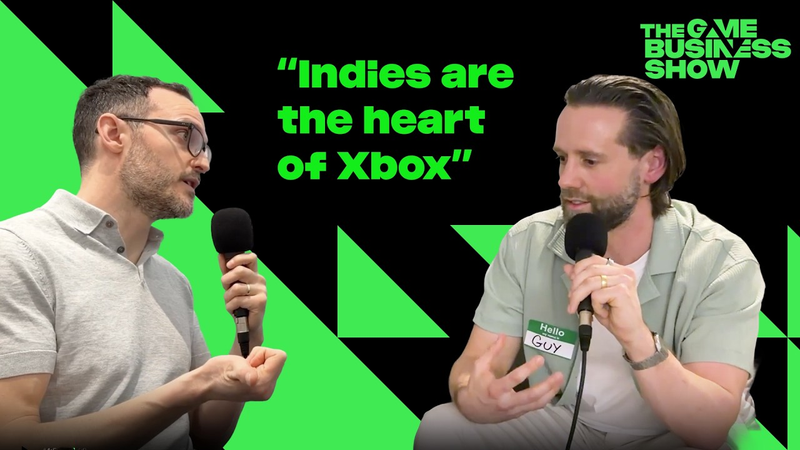
gaming device and ecosystems talking about the vision for the product with the developers of the show. It was a pretty technical presentation. It wasn't particularly earthshattering, but there were a few key takeaways. The new Xbox will use a custom AMD chip uh and have a significant increase in ray tracing performance. It will play Xbox and PC games as previously announced. Ronald said that player behaviors have changed and that the days of people defining themselves as console, PC or mobile gamers simply doesn't exist anymore. Not really. Ronald said that by bringing together Xbox and Windows gaming, Project Helix offers developers a simpler, more unified path to reach more players and reduce development costs. Alpha vers probably the actual news part of it. Alpha versions of the hardware are coming in 2027. So, it's still quite a way away this one. Now, before Jason's talk, which means I couldn't go into all those details, but before his talk, I caught up with Guy Richards, the global director of IDA Xbox to chat about indies because indie a lot of ID Xbox games here today, but also the future of Xbox. He's a lovely man guy. Check out my chat with him now. Hello guy. Welcome to the show.
Hey Chris,
it's lovely to be talking to you. This
is weird because normally we talk sort of just gossipy at events and now this is like professional on on you know topic and
um
or stumbling into each other at the same breakfast place. [laughter]
Yes. Yeah. But okay this is a this is going to be a random question. Okay. Um because I it it's something that came to somebody asked me while I was downstairs.
What happened to project Morcraftoft? I don't know if you remember this. This was a initiative that announced a few years ago and it was about demos on the store to I think it was mostly for indie games. The question I got asked, what what's happened to that? Is that something that's just been sort of it didn't work out or it's sort of Do you even know what even know what I'm talking about?
Yeah. Yeah, I know. I know what you're talking about. Um it was a program where we were experimenting with some ideas for how we would would support support demos on Xbox. Um we've actually been doing a lot of stuff that's slightly different with demos recently. Like we've been doing our own like idea Xbox demo festivals on the store, which is a really great opportunity to get games out for players to try early ahead of release. Um, particularly if you've got a product page up where you can start collecting wish lists on Xbox as well. There's some really nice tips and tricks
that we can work with developers to make sure that somebody that tries their game on Xbox can then really easily wish this them and they get notifications when the game launches or goes into discounts and that kind of stuff. So, um, yeah, demos is an area that we've been really really focusing on but in a slightly different direction to what Warcraft was.
Okay, that answer my question. That's hopefully the developer listens to the the piece gets the answer they want. Um, well, I also been speaking to developers and publishers generally about, and this isn't just an Xbox thing, by the way, but I know I know that the level of sort of financial support available across the industry isn't quite there, but I'm also told that Xbox doesn't, and I'm not quite sure what they're talking about here. I'm sure they're not talking about ID, but they're probably talking Game Pass deals or something like that. There was no, they won't be specific, but is it harder to justify the expense for these sorts of games at the moment within Xbox, or is it Yeah. Is is is it finding harder to sort of you having to work around those sort of those constraints at the moment? Yeah, I think if you look back at the last decade, some of the biggest innovations in new genres or gameplay loops have come from independent teams. So, small teams taking big risks, rogue likes, survivor
likes, survival games, cozy life sims, all those types of things. So, it's an area that we really focus on to make sure that there's continuously new and exciting games and ideas that coming coming to the platform. Um, so I guess from like a develop developers perspective, like we want to make sure that they can have success on Xbox. So we look at a lot of at the numbers and how well well games are doing within within the portfolio. Um so you know last year we had really big hits with Expedition 33, Radio Not Hollow Night Silk Song, all games that support XPA but games that have been like really big successes on on the platform and have managed to break out. Um we also look a lot at like different sales thresholds and milestones as well because making 100K or 200K for a small team can be just as impactful as making 5 million or 50 million for a bigger team. So when we start looking at those thresholds, say 100K for example, um there's just as many developers as ever that are making that amount of money on Xbox. So that that's encouraging. Um and through different promotions and different tactics and changing our discoverability on new releases, you know, we're always
looking at ways that we can push those titles up into um like you know upwards in in in the rankings as as well. Um and then on on the financial side um with Xbox Game Pass uh we've publicly uh announced our goals of having more than 75 day one games in the catalog any given time. If you start looking at all the games that are shipping day one into Game Pass, like a very vast majority of them are coming from ID Xbox partners. So that's a huge opportunity. And then we have more ways that we're financially supporting developers than than ever before. And more developers than ever are seeing the benefits of all the different financial programs that we've got. I guess, and I'm reading between the lines a little bit, even if it means that perhaps the individual deals are a little lower, there's more of them being spread about, which I think is probably good for the video game industry, but I'm making an assumption that
what we do is we look at every game on its own
on its own, right? Um, and um, it's always something that's tailored to to to every game.
Um, so yeah.
Yeah. Okay. Um, I know you're out here talking about I don't if you're
particularly talking out, but Xbox is out here talking about the new Project Helix and that sort of stuff. What are what what is the messages that you're delivering to developers that you can say um about the about it?
Yeah, I mean it's it's really exciting, right? Like what a moment to be like at GDC about to talk to developers about about what what's what's next.
Um, you know, I've worked on multiple console launches throughout my career. Uh it's always one of the most exciting times of of the industry and I'm incredibly excited for for what for what's coming next. But you know what we're building is our next gen next gen console that's also going to play PC games and um yeah really excited to you know for everybody and developers to to hear more about it and learn how they can start building for the future today.
Well, some of the developers I've been speaking to, they really want to see Xbox grows it's it's it hardware business, right? They want to see they want to see that expand and that get bigger because, you know, they want to see more competition. and they want to they want more users and that's kind of what they do. But the strategy seems at least historically seems to have been to be more focused on um it's more more multiplatform which I guess would would
hurt that that f that growth of the the platform. What do what do you what's your message to developers who are who are eager to see growth on the on the on the console side of things?
Yeah, I think um well, you know, with with project with project Helix, it's a nextG console, so really hardware focused. um what we're designing and building for in the future is uh an Xbox platform that's rooted in console. Um but also and also aware um of how players play today, which is across different devices. Like I'm a big RPG player. Like I love the fact that I can be playing Expedition 33 or the Oblivion remaster on my console at home in my office and then if my wife wants to watch TV, I can play on handheld. can play on handhand when when I'm on the go and I don't need to buy the game again because of Xbox play anywhere. I can just pick up where I am in the story with the same character. It just means that I can be playing like more of my favorite games.
Um so I think that's where we see like the real player the player benefit with
the direction that Xbox is going.
Yeah. I I yeah I guess I guess if if I'm on um I guess if I'm a developer I don't know you but and I'm going well can't I do that if I just go on Steam or what is what the advant I mean I know you've got this ecosystem of of products and devices and streaming as well. Is that it? Is that what gives That's why they should be supporting Xbox and targeting Xbox and pushing things on Xbox is because of those those multiple different avenues that you've got rather than just putting their game on a Steam and watching that spread out across all the platforms for Steam machines and Steam Decks and I don't know assumably put a helix and things like that.
We want to make it we want to make it as easy as possible for developers to come to Xbox. Um we're working towards a future where you'll be able to build once and ship everywhere. So it'll come to Xbox quicker. I think if you're a developer as platforms, it increases your audience and it increases the opportunity for
sales across everywhere in the industry. With Xbox, definitely like, you know, we're differentiating and we're making sure players have that ability to make sure that it's as easy as possible for them to carry on playing where wherever they play. Um, but Xbox is is a great home for developers. Um, we've got a really highly engaged, high spending uh audience on the platform. So, it's a it's a great place to to to to bring and and to sell games.
Okay. The the the the one a lovely catch line that's come out of Xbox the last couple of weeks is the return of Xbox. Is that something that applies to ID Xbox? Does that mean anything to to what you do?
Yeah. uh when you look at the return return of Xbox um and making it easier for developers to to build games and simplifying the processes is really what we do like day in day out working with thousands of developers to make sure there's always great games on the platform. uh in uh Ash's opening um you know opening statement to the company and the vision that she's laid out she's also talking about bringing g great games to the platform if you look at the
volume of games or you look at the cultural and unique perspectives that developers are saying with the games that are coming to the platform like idea Xbox is crucial to that whether it's uh more games for the platform that are coming from different places around the world uh or big hits that are coming out as well like we're really focused on making sure that there's more more to But you've always been good with doing the indie stuff, right? I mean, so when you say return of Xbox, I think, oh, it's you you're coming back to something that wasn't there before, but you you've sort of been doing it for 13 years. So it doesn't make doesn't click in my head. What you what are we returning from, you know, if you know what I mean?
Yeah, it's a natural evolution of of what we've been doing. Um, it's building towards a future that's rooted in console. Uh, and making sure that it's um, you know, really really leaning into into the history of Xbox and what our fans want from us. Um, and we'll make sure like as we have done for the last 13 years, the idea of Xbox continues to evolve and and grow with with the direction that Xbox is going.
I guess it's really important because I think you took the first thing in Ashes thing was great games, right? And we
live in an industry where
I don't I don't think great games is actually what is is what's working cuz there's lots of great games that don't work. It's interesting games. It's games that you don't expect. It's that surprising thing, right? It is Clare obscure, right? It is. I know Hollow Night's a sequel, but it is Hollow Night. Um, and there a lot they're still coming from the AAA space. They're still coming from the DA space, but so much of it is coming from the indie space. So, it must be really at the heart actually of of what your
strategy. It's the heart and soul of what Xbox does. Like, I look at the vision, I look at great games, and for me, that's all about um, you know, the the content, the the variety of it, those big hits, making sure that they come to Xbox. When I think about the return of Xbox, it's the process that making it really developer friendly and having developers really focused on, you know, everything that we're doing to make it easier. Um, and that is just it's just core and essential to to what we do with ID Xbox. [clears throat]
How do you see ID Xbox changing? New management will come in so and strategies won't be set yet, but how do
you see this sort of you going from here? Yeah, I think focusing on um how the platform is evolving particularly around giving the developers the ability to um you know build once and ship everywhere. I think that's going to be such a huge change to make it easier to support the entire Xbox ecosystem. Um and really Xbox has always been a home for home for developers and will continue to be. So, it's how I idea Xbox plugs into that. Continue to get feedback from not just our existing partners, but also developers that aren't on Xbox yet, so we can learn what we can be doing differently to to bring to bring them in. Um, we're also doing a lot to make sure that we're meeting developers all around the world to ensure that there are new stories from developers of different backgrounds that are coming to the platform. Just last month, we had a team that were out in India meet meeting Indian developers. Uh, we hosted an event. We met with them onetoone. they were pitching games, we're giving them feedback. Um, so that's just like one example recently of how we're like traveling around the world to to to do that. We also work really closely with
um Xbox Game Studios Game Camp as well. Um, which is a slightly different program, but that's um focusing on um people that want to get into the games industry. They're maybe more grassroots like earlier in career. Some people maybe want to develop their own game. Maybe people want to learn skills and get experience so they could get a job in the industry later on. So that team will bring in experts from different Microsoft first party studios. We partner with them to talk about how we help developers self-publish and what that journey looks like on Xbox. We sometimes bring in some friends from ID Xbox depending on where the um where the game camp is located. We've done some in Africa. We've got one up and coming in uh in Belgium. There was one in Detroit. We've done Ukraine. So they're all they're all like in different places. Um, but it's just another way that we're speaking to developers or people that are interested in the games industry, uh, whatever stage they're at in in their journey.
But a lot of new markets there.
They're not it's not it's not traditional,
they're not the, you know, the traditional game development markets that you're talking about.
Yeah. I mean, the industry continues to
evolve. Um, and I think that speaks to how we're always looking at what we can be doing differently to grow with the grow grow with the industry. Um, and it it's understanding that players in different countries and and different territories have different players, different play styles, right? So, um, you know, I'm an existing console and Xbox gamer have been for a long time. So, for me, things like playing on handheld or playing on cloud more like ways to extend and offering me some slightly different places to play than maybe where I haven't been able to before, you know, traveling to GDC, Fire Stick, I can play can play in my room. um whereas uh we're seeing in in other markets um maybe cloud is actually the only way that people are engaging with Xbox and that's really encouraging and that's through those um partnerships that we have with Samsung, LG, Highense, smart TVs um that means in places like you know Japan, Brazil, India, you don't need the hardware to become an Xbox customer. You could actually engage through through there as well. Um but that's just down to player choice. It's just giving players the choice um and
respecting how they want to be a gamer.
Great. Thank you for joining us.
Thank you Chris. really appreciate it.
Thanks to Guy and Xbox there. Looking forward to hearing more from them in June when they have their uh when they're at Summer Game Fest. I should know at summer game fest they normally are. Um right now our final segment, our big segment is with data firm Newu. The company revealed its 2026 PC and console gaming report. They presented it at GDC and it's a bump of 80 page report. And there was a bunch of interesting takeaways. I'm going to read out some of them and news expects the PC and console game set to grow by 17.4% by the end of 2028. This is a compound annual growth rate of 6.6% for PC and 4.4% for console. News expects PC revenue to surpass console by 2028. However, News says that although PC and console revenue grew 7% in 2025, it actually said playtime dropped marginally by 1%. Dominant genres like shooters, battle royale, and sports titles all showed signs of plateauing last year, and the rise of sandbox games like Roblox are not offsetting those declines fully. which means that this growth that
they're talking about is sort of being driven by monetization and specifically pricing. This was the heart of the news you report. This was the headline. Premium games were key driver for games in 2025. On PC, premium games grew 11.8%. I mean meanwhile on console, premium games drew by 12% yearon year and accounted for around half all the console revenues. So premium is a big big driver at the moment. Um, across western markets, which is a surprise by the way, um, across western markets, the $30, the $50 price tier is the fastest growing premium segment for PC and console games, the 50% plus tier is mostly concentrated on console games, and the growth is starting to flatten. PC prices uh dynamics are different. Um, 26 games priced at below $30 generated over $5 million last year, which is up from 17 in 2024. So, below $30 are doing well on PC. Um, we're going to dive into this in a moment with Ben Porter and but there were a few other stats I liked. Um, twothirds of console revenues are in from the top 20 games, whereas on PC, half of the revenues goes to games outside of the top 20. Minecraft saw a boost from the movie release, which is great, but Roblox actually widened its
lead in the sandbox genre to 58% of the market last year. That's in 2025. Games outside of the top 20 all grew last year. On PC, games outside the top 20 account for 42% of play time. That's a rise of 6% yearonear. On PS5, that number is 38% which is up 3% year on year. On Xbox, 45% of play time is outside of the top 20, which is up 6%. 2. I love this stat. It's kind of hidden in the report. The stat, 79 games accounted for 80% of all play time in 2025 on PC. On PlayStation 4, 74 games accounted for 8% of all play time. So, in a similar ballpark, while on Xbox, 91 games accounted for 8% of all play time last year, which is a big big difference from PC and console. and I think somewhat subscription related, but I'll ask Ben about that in a moment. In fact, enough from me. I had a chat just now with music's Ben Porter about this report. We got into all sorts of conversations around where things are heading and could head. So, check out our conversation. Hello, Ben. Welcome to the show.
Thanks for having me here, Chris. Good to see you again.
It's good to see you again. It's our annual our annual conversation. Now, I've read the report. Uh, did anything surprise you about it when you I guess you you've been living with it for a long for a period of time that it doesn't become surprising. Did anything surprise you when your data came in?
Some elements of it are surprising. I guess one of the pieces was uh what we found with Roblox's growth. I guess it's not really surprising, but it was interesting to see exactly how much it grew.
And then the other piece um perhaps you'll remember is the sub$30 and $30 to $50 segment. How dramatically that grew. I think that was maybe the most surprising element for me.
I was a little surprised by the free-to-play stuff because we saw playtime drop. I know not there was some stats that were up on PC. I think it was um revenue per playing hour was was up on PC, but the um but the other stats were I thought with the current economic climate you might see a sort of movement towards freeto play, but that didn't necessarily come across in the um in the stats.
No. And in fact, it went the opposite
direction, which is
quite interesting. I think that was one of that you're right that was one of the other quite surprising things. There's there's been a almost a restructuring or a new experimentation with paytoplay live service games because that's the important thing when we talk about freeto play. People sometimes think like oh well a freeto play time is going down that means things are shifting towards single player but that's not the case right we had Arc Raiders and Battlefield which are both very significant live service but payto-play games premium games. Yeah.
Yeah. Um why do you think that is then? What's the player motivation that's seeing them heading in this direction? We can talk about the pricing specifically in a moment, but sort of that premium seems to be the thing that uh people are gravitating towards.
I think an element of that is around the novelty of the experiences and [clears throat] and then this is just coinciding with publishers and developers trying to reconcile with launching in freeto play which has been really really hard in the past few years. There have been very few successes there. So I
think it's a combination of you have very good and novel experiences. Right? This is the first battlefield game that we've had in quite some time. Arc Raiders is uh you know this next big step in the extraction shooter space. Um but even LA even the year prior to that we had Hell Divers which was a very sort of novel and um and unique experience. And then at the same time publishers are recognizing that launching these games with a sustainable business model free to play is very difficult. So they happen to put you know a premium component on top of that. So, I was going to ask this because when you have data like this, you go, "Well, that's because this game came out and it was so unique and different and it and it blew things away." Like, how sometimes I wonder, am I seeing a trend or am I just seeing the results of certain games that happen to come out in that area that happen to be very good and unique and and fresh and and sort of uh uh you know, made it has created that sort of maybe that year-long anomaly or that period anomaly. And um not really a
question. Well, there's a question in there which is this a trend, right? And the data we're looking at is from 22, 23, 24, and 25. And what we can see is that from uh 22 and 23 looked a lot more similar to each other in terms of at least spend in the sub30 and the $30 to $50 segment, but from uh 24 and 25, there's definitely a step change from 23 to 24, 24 to 25. But that appears to be at least a local trend in the last couple of years. And so it is driven of course by a few specific titles. But I do think it is signaling that this is a price point that is very um there's a lot of movement there with players.
So this $30 to $50 range, it's this sweet spot tier which seems to have been identified. Um is it are there specific sort of games that are fitting within that? Is it is it these live servicey premium games? Is it things like um uh mafia game that take 2D which is sort of a shorter quicker single player
experiences or is it a variety of different things? Both. So when we look at 2025 we saw that arc raiders is in there but you also have split fiction Oblivion um you had Elden Ring Night Reign is sitting in there. So you can see there's a bit of a mix of live service type games as well as uh single player experiences. And the year prior to that, of course, you would have had Palworld and Hell Divers 2, which would have fit into there as well, which um you know, Hell Divers 2, I think, is very thoroughly in the live service model. I think Pal World
sort of
is one foot in one foot out kind of thing. But uh but yeah, so I think that that it is a mix. The second observation I would say there is that in 2025 specifically the top five games that we saw here in the space were all cross-platform launches. Whereas you know in the sub$30 category I want to say we had Hollow Knight and Hades were crossplatform but you didn't see Schedule One or Peak come to console
yet.
Uh but in that $30 to $50 category all of the top fives are coming out. So this seems to be a kind of a sweet spot for these types of games uh launching crossplatform as well.
Yeah, I think it seems console players are okay spending more. Perhaps they're used to spending more or it's a little more accepting where Steam obviously there's a certain pricing expectation there where um is that's different. Um uh you so you you're talking about growth then you look looking forward you talked about how pricing and monetization is probably going to be the key thing here in order to deliver the growth that you're projecting out for the market to 2028 I think um are we not going to be seeing you're not seeing any signs of player growth or engagement growth or any optimism there
regionally so I we believe we'll continue to see growth from China specifically on PC. Um, we're also noticing that Japan is ramping up in
terms of Steam. So, that's always been a mobile first, console second, PC sort of last type of market, but now PC is making more of a breakout.
Um, so these are some of the spaces that we're seeing a little bit of growth, but we're not seeing a huge inflection point of, hey, we we anticipate another, you know, billion players entering the ecosystem. And actually on that note we do call out that by our estimations about I want to say 63% of the total online population globally is now engaged in gaming in one way shape or form. That's including mobile keep in mind. So if you take mobile and uh PC and console uh I think there's 5.8 8 billion people online in the world and we have around I want to say 3.5 billion of those or 3.3 3.5 that are engaged in games in some way shape or form. Majority of that of course being on mobile.
This isn't something I was planning to ask but something that I talk about a lot on the show and I think it's because of my age. um is that we are getting to
the point though where gamers are getting older where there isn't a generation people that bought bought but you know brought up on consoles maybe in the '90s
who are I mean they're still young but we're probably getting those first cohort of maybe 80s gamers and stuff who might be just just getting towards that retirement point and I'm interested to see what that's going to do to the market. I mean, we're starting to see it a little bit in the data now, the aging up of the games industry, but um I'm interested to see what happens when all the people that were playing World of Warcraft in the um in their teenagers um or in their 20ies and now they're they might be in their 50s. Um what's going to happen in 10 years time when are they going to go back or have they have their play their behaviors completely changed as a result of you know them not having time as adults? I don't know. It's not really a question either, but it's um it makes me wonder if there's another growth moment for the games industry when that happens. I don't know.
I believe there is. There there you're seeing a group of people who especially when you get to that to that time period in your life, you you're if you had kids, they're probably not living at
home anymore.
You know, the economic situation notwithstanding.
Yes.
Um you also now have a lot more time and you likely have free cash flow, right? And you can spend it on these types of hobbies. So I I do believe that you will see that be a very important kind of cohort of gamers in the future.
The types of experiences that will attract them, I think that remains to be seen. Um I'm more bullish on them going back to the sort of nostalgia play, right? And than I am in terms of uh seeing them jump into Roblox or something.
Yeah, I can't see that happening. [laughter] But I do wonder if there might be somewhere in between. Like I was I was talking to St. Sonic at Take 2 recently and I was trying to get across I was trying to ask him basically you're working on a new Bioshock game. Yeah. And when Bioshock, last Bioshock game came out was 13 years ago.
Yeah.
And so people, let's let's say you happen to be 18 when that game came out, which is the age rating in the UK for that title. And um uh you're now 32, right? And I'm like, if you're making a new barshop game for an audience of people who are now 32, do you need to be
thinking about that in terms I don't think they do, but it's it's a Anyway, sorry, I'm this isn't what I'm talking about. [laughter] They're talking about your report and actually a stat [clears throat] that stood out for me. I love this. The top 74 games on PlayStation accounted for 8% of play time, which I thought was great. The top 79 games on PC accounted for 8% of play time. Similar in similar ballpark, you know, a little bit more on PC.
Top 91 games on Xbox accounted for 8% of play time, which I'm guessing that's a Game Pass thing. That's that just shows the um the popularity of of subscriptions on that platform. And you just said yes, you've answered my question.
No, absolutely. I think it's it's very clear that Game Pass gives people the ability to sort of float between experiences a lot more easily, less friction, and as a result, you see play time that's spread out more widely. Um, the other thing that's interesting there about uh off the top of my head, I know this for for PC for certain, and I believe it's true for PlayStation. Um, that's a big jump actually, the last couple of years, we saw that it was down more uh around in the mid-50s, and we saw that it jumped quite dramatically.
And part of that we attribute to having um just such a rich release slate in this last uh this last year and you saw a little bit of softening in like we talked about the freeto play side of things. So people really showed up for other games uh outside of the sort of top 10 or 20.
Obviously anecdotally you can hear see on social media there seems to be um a growing apathy or disinterest in the in amongst a certain group of gamers. You can't judge social media to say anything, but you start going, I wonder if there is a movement, albeit a small one, back to hey, I'd like to play more few few more and fewer games than no more smaller games rather than um um just those big big sort of time sucks of titles. And you you see things like Tik Tok and stuff becoming so popular which allows people to go through loads of different types of videos and clips and stuff. Do actually I don't know. I have no idea. Um it's but it is something that I find.
Yeah. Well, we I was actually having this conversation with one of my colleagues, Ronin, the other day, and
I think it's way too early to call any kind of structural decline in free-to-play experiences. Uh, but I do believe that the games industry has become so big and so varied that it is inherently filled with contradictions. And so, like we just discussed, you have people that you're catering to who are maybe in their 60s, but you also have people that you're catering to who are maybe 5 to 9 years old. And the differences between these cohorts of players like sometimes they will intersect and then other times they will diverge. And so, it is really uh it is a really interesting industry in that regard. And it's very difficult to really call out truisms at a macro level for that reason. It's something I've been saying for a while. There was a time when the games industry was pretty simple. It was kids and teenagers in their bedrooms, right? And you sit there and go, "What's the audience doing?" Because that's the audience we're talking about. And we're talking about the whole in world. They all they're all playing in different places, in different ways, different types of games, and that it requires so many different thoughts. Interesting. I was
just having breakfast with NCOFT. And they were talking about how, oh, you know, everyone today they they want quicker short form stuff and they, you know, talking about Tik Tok and all that short form experiences. And I'm like, well, explain why so many people watched the Stranger Things finale that was 2 and a half hours long or why Avatar was the biggest movie of the year was 3 hours long. There, as you pointed out, there's all these contradictions. The reality is long works, short works, live service works, indie works. Doesn't it it works, don't me wrong, it often doesn't as well. But but it's uh but there isn't there isn't really a hard and fast rule. The only only rule I tend to say is, you know, if there's a trend, you know, you don't you about to say don't follow trends but also if you want to follow a trend
sometimes that also works it's uh yeah
it makes it make you feel a bit redundant as a data [laughter] at times but but really I think what we can do is we can we can pull out uh some of those trends and just see for example these sub 30 or 30 to$50 segments that doesn't mean that over 50 is dead right
there's going to be a game at some point that's going to come out that's going to be $80 challenging the you know the ceiling rate base model I mean $80 that's Well, we already had one of course with Nintendo, but I mean beyond that, we're going to see that proliferate eventually. I think
uh but in the same breath, you are also going to find games that are sub 30 that are absolutely going to smash it. So, it is both are going to be true.
It just it's about applying it to your partic the data and to your particular thing rather than using it to make a decisions make decisions before you do it is to Yeah. It's when you're a little bit further down the line. I always find and whenever you do these reports how interesting how different the PC and console audience
Yes. is because you get we often talk about them in the same group because the games you know they cross those two different divides a little bit but was it um I was just looking at some of the stats at top you know there's no sports games in the top PC games top 20 PC titles meanwhile there's no sign of of for some of the some of the reasons cuz they're not on them but Counterstrike or League of Legends or Dota or Valerant or Tarov or Genchin Impact right on the PC side of things um there's clearly such a
different cohort between the two and what makes me worried there is when we start seeing playtime drop on console That suggests to me therefore we're losing players. Not not that they're might grating to PC or anything like that. It's it's actually overall those those are exiting the business and PC [snorts] might be bringing in more new people faster.
Um unless you've got is that have I read that right or I don't think we're losing players on PlayStation or on on console. I think so. One of the things when we saw playtime decline on on PlayStation, a big part of that story is actually around Fortnite. And again, before we say anything about Fortnite structurally declining, this is a year-over-year comparison. And remember that at the very end of 2023,
we had uh Fortnite OG and Lego Fortnite, which launched, which meant that most of that playtime bump was actually captured in 2024. And so then when you compare 2024 to 2025, you have more of a return to a baseline. So I think the the decline that we saw in play time around
PlayStation is more of a year-over-year kind of comparison than it is a structural decline on console. That would be how I would read that. Uh
yeah,
more yeah, more than any kind of uh sort of like a negative attribute, I think. Well, [clears throat] you obviously you talk about um a new phase of expansion for PC and console, but we had Matthew B on a couple weeks ago and he was saying that um um a lot of the console growth in terms of revenue is coming from subscription um rather than games specifically, which obviously is great news for PlayStation and and Xbox, but it's not necessarily I mean some of that money will be going back into developers and publishers, but not a lot not as much of it necessarily. Um is is that is that what you're seeing as well?
We have seen that subscriptions have have risen quite a bit over the last uh 18 months really for PlayStation and Xbox specifically. Um
a lot of that is around increasing of prices and then also introducing the tiering of of pricing like you know pricing options within the subscription as well. So that that is absolutely something that we're seeing. You know, whether or not that's detrimental for the rest of the industry. I I I don't know. I think it will I think it's just going to be a piece of the industry and there's going to be a piece of the odds and we're not seeing the audience expand. So I guess that's the I would take it back to this. We're seeing that the audience that uh that is on the subscriptions, they're willing to pay more. they're willing to to take price increases there, but we're not seeing necessarily a dramatic uptick in the amount of players who are opting for that over, you know, not having a subscription on one of these platforms. Going back to the Xbox stat, I guess what subscription might be doing is in encouraging players to play more variety of games, which
would be a positive in theory to the industry if people are less Yeah. Like,
yeah, I guess.
But I guess that also depends then on what what deal did you sign with with Xbox. Um, you know, if you have a breakout hit, I have no insight into this, but if you were PAL World, you know, we know from the year before our report the year before that PAL World was one of the most played games. I think it was the most played new release on on Xbox.
I hope they had really good covenants for, you know, windfall metrics or whatever in in their deal with with Xbox, but we don't we don't know that. But what you can also imagine is that that play time and all of that sort of verality and buzz that came from Xbox also probably helped to fuel some of the u the verality that you would then see extended across on to other other you saw that with Rocket League back when that came into the PlayStation Plus thing. You see that I I'm sure Expedition 33 had a benefit there as well cuz that was a game pass thing as well. Um uh talking about you talking about shooters because we had these two big shooters come out back to back and both of them did Battlefield Boomed and then it's dropped a little bit but it's still you know [laughter] still not it's
numbers wise I would still be quite happy with that if I was anyone but yeah Art Raiders obviously just kept gone month for month growth it's been phenomenal. Um did that cause an increase in in the shooter genre or are they all just coming from other shooter games? Yeah, irony strikes a critical blow here because we saw year-over-year there was a little bit of a decrease in play time on shooters
and we also saw that uh battle royale which is again predominantly made up of shooters that had a significant uh decline as well. So it does seem like there's been a bit of a reshuffleling of of of play time. Um, there were some clear winners within shooters. Obviously, Battlefield, Battlefield, and Arc. Um, we saw Counterstrike also grew dramatically.
Yes, I saw that. Hell Divers 2 did well after Xbox as well for that period of time as well, didn't it? Yeah.
And um um wait, and did I say Marvel Rivals? I can't remember.
You didn't say Marvel.
Marvel Rivals also uh because again that was a very late 2024. So most of that play time was captured in 2025. So there
was a lot of sort of reshuffleling of play time um which Marvel Rivals was able to capture specifically during the early part of the year as well.
Yeah. Interesting. Um I wonder if cuz Arc Raiders and Battle was relatively fourth quarter maybe have a we'll have a delayed impact um this year. Um well going back a little bit to talk about pricing and monetization. What do you think? This is a this is again nothing in your report about this, but what do you think of advertising as a viable? This is a random question for your point of [laughter] view. Do you think advertising in PC and console might be a another avenue is I would be shocked if people are not speaking about that in a meaningful way. how you integrate that into these platforms without frustrating gamers. I think that's going to be the real critical question here because this is a group of people particularly if you look you know consoles always being a little bit later to the game when it
comes to new forms of monetization and you know new forms of you business model changes. So, I can imagine that might be a tougher threshold to get over, especially because they have a bit more of a premium and a prestige element.
I think if you've paid for it, it's hard to do that.
Yeah.
PC uh and when we talk about freeto play, those types of experiences. I can imagine that there's a bit more opportunity there. U you can imagine while you're waiting for a match to deploy, you could have an ad playing. Do players want that? Will players actually um you know, I guess want to engage in in in in that type of experience? That's a big question. I I don't have a good view on that at this point. We haven't seen a lot of that. We Well, actually, and we did see I think a few, correct me if I'm wrong, but about a year ago, there were a few uh I think they were called accidents or something. I want to say it was either it was either Call of Duty or it was one of the FIFA games where they were playing ads in between games.
Oh, were they?
Do you remember this? I remember there
being something on the stores. I always think [clears throat] the example that was given to me was like if you're watching Bridget you can in the Netflix ad models you can press pause now right and you press pause and then suddenly an ad might come up for I don't know watching Bridgetton I don't know clothes whatever it is um and and could we do that in games you know we could sell any space but I I think I think it's going to be hard to do in if you're charging someone $60 $70 $40 $30 right I think saying oh here's a bunch of ads in it but I thought maybe if it was part of a a cheaper subscription ion tier or if there's a maybe it's
I could see that for sure if you just had a subscription tier that was just ad supported like you have with Netflix. I think the other thing that's really interesting about this though is if you think about other places where we engage with ads
um often times your attention is not ex exclusively there. So you have a lot of people who will be watching a TV show but then there's the whole concept of the second screen where you have your phone out and you're sort of flipping through something. And I guess with games, depending on where you catch
people while they're playing, they're going to be they can be very fully immersed in a game. And then these ads can be very immersionbreaking.
That's true.
And and that I could see being a struggle that you would have to get over. And again, that's going to be different from experience to experience. If you throw ads into something like EFC,
I think that's going to be a lot less disruptive because
if it's like a if it's like placed on the pitch in a way that are if it's authentic that I um I bought the uh the watch that Grace wears in Resident Evil Recquum.
Oh, very cool.
Yeah. So um I've been I've been product placed um [laughter] is the uh
I think that's a good way to do it actually. That's a fantastic way. What do you what so ask a general question to what sort of not necessary wrap things up but maybe um what trends from what you've seen now the uh are exciting you are uh
right well so this isn't in the presentation sorry this isn't in the report it is a part of a presentation that I'll be giving later today at GDC I walk through just a few different trends that are taking place um I'm I really am
interested in this friend slop
type of experience the name.
It's a Yeah, the [laughter] name sounds um very
derogatory.
Derogatory, right? But I mean, these are excellent experiences. I I like what's going on there with with the emergent gameplay side of things.
Uh there's a bit of a throughine with that Roblox and cozy games, I think, where you have these experiences. If you if you look at sort of friends as a category, you have these experiences which are, you know, often times they're much shorter to make these experiences. often times people don't necessarily need to engage in them like they're a live service and so you can they're a bit more ephemeral in that regard and you combine that with what you see in Roblox to some extent and then with the cozy game element I think it's it's also interesting because you have um audiences that are being catered to that are sometimes left behind by more I don't know mainstream or traditional development in games which makes sense but you see that also in Roblox right when one of the pieces of research we
have is that Roblox is actually a little bit more gender gender neutral in terms of the people that are engaging with it because you can find all sorts of different experiences within Roblox. And then I wrap that all up into combined with a bunch of other games that we've seen recently into a very big trend of co-op where we're just returning to playing together uh not necessarily adversarily. And if you look at the amount of co-op experiences, some of which are in places you wouldn't necessarily expect if you take something like, you know, Balders's Gate 3, which I think a lot of people associate with just being a, you know, a huge single player experience that you dive into, but you can play through the whole campaign with other people, right? That's a part of this whole co-op trend that you can see. And you compare co-op experiences in aggregate with the amount of PVP experiences that are breaking through. And I think I think co-op is uh has major tailwinds right now or at least it has in the past couple of years and I hope we continue to see that. Personally, I like co-op experiences as a as a form of gaming.
Yeah, I always think it's surprising me that
not even though I guess they have in
their own way, but not many people followed Split Fiction and Haze Lights, the sort of which is you have to play co-op, you know, those are co-op only games. Um and they've done phenomenal numbers and they continue to do so.
Um that's really cool. Um, what I'm going to big question though is when when it comes down to it when um and you got to do your data analysis, Xbox the next Xbox Project Helix, is it going to fit into your console data or your PC data? [laughter] It's
a fantastic question. Well, according to the the release that we just received uh what was it last week? It sounds like it's going to be straddling both, but maybe we have to make a whole new category.
New category. [laughter]
Um, but I think I've covered a lot of the report. I haven't covered everything in the report. people should go and read it and uh and and there's a lot in there. Um but I think I've covered a lot of the the top stuff. Do you think I missed anything? Anything?
No, I think we I think we covered a lot of the uh the main talking points. What did we get through? We got through through pricing. We got through Roblox. We got through growth overall.
Uh I think these are these are some of
the biggest ones. We talked a little bit about shooters.
Yeah.
Yeah. It's been an interesting it's been an interesting year the last year. Lots of lots of tough stories, but actually some really interesting uh successes as well, I think. Well, thank you so much for your time. Good luck with your talk. Um, by the time this has aired, it would have happened. So, uh, but, uh, but, um, but yeah, good luck with it and thank you for joining us.
Thank you for having me.
Thank you, Ben. The news report is available now to download. There will be a link in our newsletter. So, if you want to read the full report, get to our newsletter and click on the link. And that's it for today's episode of the Game Business Show from recorded here at the GDC Festival of Gaming. Thank you to Guy and to Ben for joining us. We'll be back next week with our micro, our big interview, and it's a big one next week. And we will have more from GDC next Thursday, too. To make sure you don't miss a thing, you don't want to miss any of those, head to the game.com and subscribe to our newsletter. You can also become a paid subscriber if that's something that interests you, too. Until next time, thank you for tuning in.
Auto-generated captions from YouTube — names and numbers may be misheard.
















Comments