VideoThe Game Business
Peter Moore’s video game stories: “Maybe the console wars were my fault”
10 Mar 202648 min video
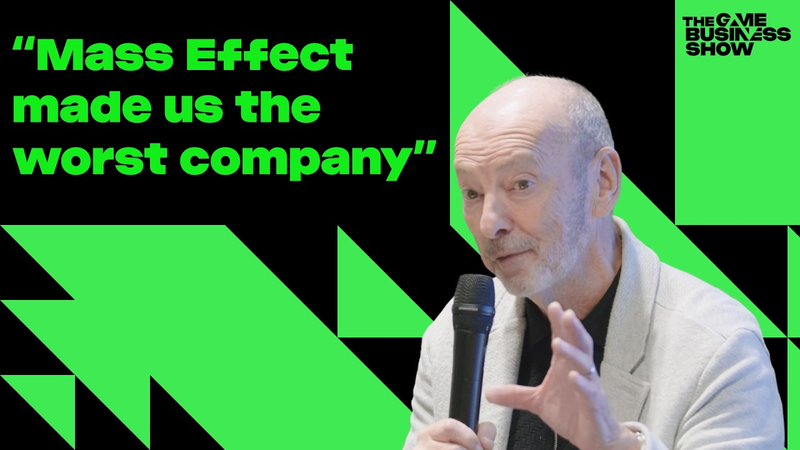
We knew the PlayStation 3 was coming along, so it was critical to get to a competitive advantage on price and timing. And my belief, and I said this in interviews, first to 10 million wins. BP is polluting the Gulf of Mexico. Uh sorry, the Gulf of America. Bank of America has brought down the global economy with subprime mortgages, but Colonel Shepard dies in Mass Effect 3, and that makes us the worst company in America. I will not lie when the cameras [music] panned, as they often do, to the director's box in Liverpool to see the king and Rushie and Robbie Fowler and that, and it panned and I caught a glimpse of where my seat was. [music] That was hard. Hello and welcome to the Game Business Show. We are here at London Comic Con to record an episode of our show in front of a live audience, and we're doing that with video game legend Peter Moore. From Sega to Xbox, EA to Liverpool Football Club with an appearance in on South Park in between. He's recounting all of this
in his new autobiography, Game Changer. I've read it. I'm primed with questions. Let's check it out. So, please welcome Peter Moore.
[applause]
Thank you, Chris. Now, Peter, I'm going to I'm going to I'm going to start right at the start. I'm going to jump to the video game bit uh of your book. Um But, you've been I can't believe you got let go from Reebok twice, which seems like an unusual situation. If you know me, that uh shouldn't surprise anybody, but from the perspective Yeah, we were um I went very much from the uh sneaker wars to the console wars, but I joined Reebok 1992. Um previously, I was selling Patrick football boots. Anybody remember Patrick's? Hands up, please. Thank you. It's an old crowd. Uh
[laughter]
Um and then uh moved to Boston with Reebok and was right in the middle and helped actually uh get um MLS get going, Major League Soccer. But,
yeah, I got let go as Nike was absolutely rampant in the '90s and we were struggling to keep up. And [snorts] then uh long story in the book, but went up to see the chairman and the founder uh Paul Fireman, told him uh goodbye, and he said, "Where are you going?" "Well, you fired me." "No, I didn't." It was like the argument room in Monty Python. Um and yeah, and I went back then and I got let go again. And many of us, thousands of us, were being let go. It was a a shakeout. And ultimately, as often careers take these long winding paths, it was one of the best things that ever happened to me. Sega came calling, but you weren't a fan at that point, were you? No, I mean, I got a call from um an executive recruiter, headhunter, as we call them in the United States. This is late '98. I am in outplacement in Boston, and if you don't know what outplacement is, if you've ever watched the episode of The Walking Dead, it's people who are have been let go, and this is well before the internet, and you go to this one place
and you're all been fired, and you're they help you with your CV, and you're cold calling companies. Um as we would say in Liverpool, give us a job. Uh but nobody was was biting, but I got a call uh I always remember, guy called Rick Edwards, and said, "What do you know about video games?" And the only thing I did know is I bought my son Tyler a Sega Saturn for $499. And went back the following year to buy games, and they said, "No, they've discontinued it. They're not making games for it anymore." So, it was I felt slightly burned, and that was my only experience, and then it was very Well, funny you mention Sega, and um you know, kind of the rest is history from there. I love the story of you meeting the Japanese um Sega executives and sort of seeing Yoko Ono, which seemed a bit Yeah, one of the things when you work for a Japanese company, they want to see I'm and rightly so. So, my the guy who believed in me, Bernie Stolar, the the then the president of of Sega of America, said, "We've got to go to Tokyo, and they want to look you in the face cuz you're a shoe guy. And what do
you know about video games?" And the the interesting thing was the Venn diagram of the demographics in those days between sneakers, if I can use the American term trainers, and video games, it was boys in their bedrooms. It was teenage boys. Our not progressed yet to what it is today. And so, if you can sell sneakers, you can sell video games, but they needed to see me, and so I I flew over. Um this would be in January of '99, and um a phalanx of Japanese executives grilling me, and said, "Tell us what about yourself." And I said, "Well, I'm from originally from Liverpool." And as soon as I said Liverpool, a woman in a we're in the Imperial Palace restaurant, I always remember this, turned around and looked at me, and it was Yoko Ono, and she she heard the word Liverpool, looked, smiled, turned around again, and it was one of those interactions that lasted 3 seconds that you'll never forget for the rest of your life. You must have been quite distracted for the rest of that meeting. Yeah, well, I'm a Scouser, so I could keep going and um
talk my way through anything and talk my way out of anything. But, yeah, it was it was an issue I just some I can see her now, and and something you never forget. Just one of those little incidents in life. So, you went to work on the the launching the Sega Dreamcast. And the Sega Dreamcast for me is a remarkable machine because it's very good. The games are very good. Um it was had ideas in that machine that would go on to define the industry going forward. So, whereas I look at games consoles that have sort of failed in the past, I can see why. With that one, I I always struggled with it. What Where Where in your mind where did it go wrong? Was it you just didn't have the firepower to compete with Sony, or was it you know, it was the first through the door, don't be the first through the door sort of situation? It was a combination of everything you just said and then worse. We we needed to get ahead. So, the Sega Dreamcast, if you've never played it, was the first online, albeit dial-up, online console. So, we were trying to get ahead. It had been launched in Japan and had a relatively flat launch in Japan. We were
operating in the teeth of the impending launch of the PlayStation 2. And what they were doing so well uh was fudding us, FUD, fear, uncertainty, and doubt. And so, they were all going, "Yeah, you can buy a Dreamcast, but the moment the PlayStation 2 comes out in March of the following year, 2000, you're going to put your PlayStation in the cupboard or go sell it second hand or give it to your little brother because you want the real uh thing, the emotion engine." And and they were using imagery, as they did later on, which we'll talk about with the Xbox 360 and the PlayStation 3, that quite frankly was But, it it painted a picture that they never were able to live up to, but the concept of in the world of marketing, it it it it now we're talking already billions of dollars if you get it right within a console launch cycle. Um the emotion engine, whatever that was. Um you know, they were they were pushing graphics out there with CGI and not
in-engine graphics, and and at Sega, we'd had such a difficult time. The Sega Genesis was amazing, but the Saturn was a complete flop, and all of the the Master System and Sega CDs and all of the things that came that had been such a financial drain. The one thing that we had was we had a benefactor, uh Okawa-san, who owned the biggest contact center in Japan that loved Sega. Just loved it. And he was the chairman of the holding company, and he was putting his personal fortune, which was in the many hundreds of millions, into Sega to keep them afloat. And so, um unfortunately, he passed away. But, and then gave all of his Sega stock back to the company, which is the only reason they stayed alive uh during that time. So, that's 2000-2001. But, we had we had pioneered, and often technology is ahead of its time, and you need the resources to get it. And this was online gaming. We built not only um through a 56K board modem. I mean, I think here in
the UK, it was 33. Um but, we managed to get games running at 30 frames a second. And we built out our sports line, 2K, which is now Take-Two, but we were 2K. And there's a story behind that as well. Um but, great games. You think about that launch lineup. Um if any of you recall it, Ready 2 Rumble, Hydro Thunder, uh Trick Style, uh obviously the Crazy Taxi, Sonic Adventure. For me, still the best launch lineup of brand new intellectual property ever on a console, and it will never be beaten. If you think about what happens today, which is the sixth iteration of existing IP. So, that launch lineup was incredible. Um we had the support of at least one game, maybe two, from all of the players then, Midway, Acclaim, Activision. But, we just didn't have the resources to take on Sony, who We launched on 9/9/99. And we went big. Our advertising
um Foote, Cone & Belding out of San Francisco did all of my work with me. We sponsored the Video Music Awards, MTV VMAs, which was big time then. Everything had to be in television. There was no digital advertising. It was all magazines and television. But, we went big. We went hard. Uh we went irreverent. Um and it was the first time I think anybody was uh referring to artificial intelligence. Our tagline was, "It's thinking." So, there was this I don't know if I remember Anybody remembers It's thinking, but we developed this concept that the more you played the game, that the operating system, which was Windows CE, would remember who you were, what you were playing, how you played, and um you know, it it And I'm not sure whether this was true, but it would have some level of artificial intelligence, machine learning, about your um idiosyncrasies and what have you. So, all of our TV, certainly in the US, was about It's thinking. It's also we did these 15-second spots and we did half a
dozen of them. Um that that felt like the console was taking over your life. So this was revolutionary stuff. And what it was it was I think the moment then it we were getting video games out of the bedroom and starting to make it a little bit more mainstream and doing marketing and and advertising in particular that appealed to later teens, early 20s. And what you do in any industry as it develops as you try to develop the demographic and widen the demographic. And once you've got technology, because gaming today is where technology and entertainment meet. It was not that when I joined it. It was still very much a toy. Our launches were in Toys "R" Us. That that was our biggest retailer. And so from that perspective, I felt and I'm an I'm a shoe guy, right? So what do I know? But I I felt we needed to get our get our industry out of the bedroom, get our industry away from 15-year-old nerdy boys.
Uh I and I'll talk a little bit about getting our industry respect when I testified in front of the Senate hearings. But from the perspective of as an outsider coming in, I got a real good feel for what Sega was about. We had in the US and I don't know whether it was prevalent here the the Sega scream, Sega. And so that we brought back and then the old days of Sega does what Nintendo don't. And so this concept of and maybe it's all my fault developing the console wars and getting in in each other's faces. Gamers loved it. And it became and and these are the lessons I learned from the sneaker wars of of Reebok versus Nike versus Adidas versus Puma. And so you create this sense of competition and the consumer loves it because they think they're soldiers in a battle. I'm a PlayStation guy. I'm an Xbox guy. I'm a Sega guy. Or girl. It's yeah, that's not so great these days.
That environment but it was definitely fun back back in those days. It obviously you were a sneaker guy at the time but you've now you went you went through then you know Xbox and EA. If you were to go back and launch the Dreamcast now, would you do anything differently? Do you feel there's anything you could have done differently? Uh well, I needed another couple of hundred million dollars and I would have done a lot differently. But but I don't know. I mean we people still will stop me. Um if I hang around here long enough, somebody's going to come up to me and say I've still got my Dreamcast. I do. Yeah. And and it still works. Uh I don't get that from the Xbox 360 all the time but but uh the Dreamcast, it's just was rock solid particularly when we then developed a broadband adapter because then um you go from that 56K dial-up which I always joke was great until your mom picked up the phone in the other room and there goes your connection to the internet. Um we got the broadband adapter and all of a sudden then you can play Twitch games like Quake and Doom and Counter-Strike. And and that changed the demographic again. We were very much
in a time when 90% of the people in this world were accessing the internet via telephone wires. And this was prior to you know obviously and and during that time um broadband started to come on but it was still a very small part of the population. It was expensive and not many people had access in their homes to broadband. That after that Sega decided to go third party and and you did you played a role in turn and help with that but it led to quite a fiery conversation with uh the Sonic creator Yuji Naka. It was many fiery conversations. I mean we we the Japanese pushed me and said you tell them we're getting out of the hardware business which I did on January the 31st in in 2001 where we we've been we we run out of money. We couldn't continue to um when you sell consoles, uh you're usually losing about 100 150 dollars a piece of hardware because the cost of of manufacturing, shipping, marketing way out uh they unless your attach rate was
so good with software. It's all about selling the games. Hardware is a loss leader and we just weren't selling the games. We'd fallen uh right into the teeth of the PlayStation 2 launch. Um so we had created myself and my team at Sega of America were desperately going back into I mean I always remember these days every 2 weeks from San Francisco to Tokyo to pretty much argue that we needed to westernize. That we were seeing as the graphic capabilities of consoles was getting better, you're getting more mature content. And but the nine studios run by the primadonnas and the head of every studio all great guys but the Yu Suzukis, the the Negishis, all of these the the the they to a subsidiary like Sega of America, they didn't trust us, they didn't listen to us. They wanted to create content that they felt would be applicable to a Japanese audience. And remember you're dealing with a company that in its roots is an arcade
company and probably still is. And so the the Dreamcast actually the Naomi motherboard was embedded in the Dreamcast which came out of the arcade machine. So you still had it was great because you had the Crazy Taxis of this world. But you were you're banging your head against a brick wall ultimately and you know you're the gaijin, you're the foreigner that's coming in and and having the audacity to tell these Japanese developers what the world is all about and what they should do. And we were begging for more western, more mature content that that ultimately you know all of a sudden Grand Theft Auto 3 comes out and then Vice City little further on comes out and and unfortunately proved us right. So um I did what many of you do in the room, a focus group to try to figure out how you present this in a way that seems somewhat independent. If you're not going to listen to me, are going to are you going to listen to gamers talk about Sega? So um we do a focus group which behind the two-way glass mirror in San Francisco. And when you do a focus group, you you try to pose a question
that's easy to answer and these were Tina articulate San Franciscan high school seniors that were gamers that have the ability to articulate what they think. So the question I suggested was if a game publisher was was a person, who would they be? And so first company guy comes out EA and it oh it's the quarterback. He's cocky, 6'4, gets the cheerleader. Everybody hates him but you know it's just EA, right? Take-Two Rockstar. Well, they're they're your drunken uncle that shows up from Vegas every 2 months with a woman of ill repute on their arm and and and you know and everybody has a good time then they disappear and then you don't see them again for 2 3 months. Sure. Sega. It's your granddad. He used to be cool but even he can't remember why anymore. Well, so that you have them taking a video form and you think okay, we're going to present this to the um to the
developers to try and say look, if you're not going to listen to us, we we we as a company I mean this is going to be a multi-hundred billion dollar industry and if we don't change what we're creating, to whom we're creating, how we create it and get away from this real tight pocket of not only Tokyo but Haneda. Uh and they never traveled, they never went into markets and look what we're selling. So I presented this video um and the creator of Sonic uh Yuji Naka was there and and we always had a contentious relationship anyway. So I present this and um Naka-san says, "Well, that's not right." I said, "Well, what do you mean? You've just seen the video." He says, "Everybody loves Sega. Th- This can't be right." And his red mist Liverpool accent "You've manipulated the video." And scouts said that I am he's calling me a liar. And and I go and and pardon my language but verbatim, I look at my translator Oguchi-san, I said, "Tell him to go
himself." And Oguchi-san says, "I uh Mo-san, uh there is no word in the I said, "I know there's a word in the Japanese language." And and and that was it and I left Haneda uh and I never came back. I got a call uh a few weeks later from Robbie Bach and and can you come and see Steve Ballmer in Seattle. Never went back. Well, you did make your way to Xbox and I was fascinated reading your book about how uh the lengths that you sort of you went the company went to to keep Xbox and Microsoft separate. You know you didn't have Microsoft email addresses, it was Xbox email addresses. You weren't in the exact same location. Why was that important? If you think about Microsoft in the When I arrived, uh the US government the Department of Justice had was operating and Microsoft was operating under what is called consent decree. The US government was allowing them to operate as a company with an investigation of a monopoly. I I don't know if you remember but they tried to break up Microsoft. Seems ridiculous now between Windows and Internet Explorer because of this
bundling and the US government said it's a monopoly. Um and and bizarrely and ironically to to counter that, Bill went out and bought 10% of Apple for 150 million dollars which sounds ridiculous now but we needed to keep Apple in business so that from an operating system perspective that we had a competitor. Um but we so it was nerdy, right? It was Bill. It was Steve. It was it was if you watch the video, developers this is this is nerd central there and I move up there and I have lunch with Steve Ballmer and he says his words were, "We don't have people like you." He had seen me on stage for Sega and kind of throwing punches. I loved being a challenger brand and and and giving Sony all kinds of abuse, irreverent abuse. One of my best print ads was a little red-headed ginger kid going like this and Sega wishes Sony all the best with their their
hardware shortages. I mean, we were just mocking each other all the time. This is how the console war started. And so, but what Steve said, "Look, we're going to take them on." And then when I met with Bill, he said, "I am concerned that Sony is going to own the living room and that we will be forever relegated to being a computer on the desk in an office and that's not what we want. And we need to be part as broadband starts to democratize your access to the internet and entertainment will start flowing through there. We need to be in the living room. And the best way to be in the living room, I see, says Bill, is video games. And he saw what we eventually built in the Xbox 360, which was previously Xenon, is not just a game machine, but but an entertainment machine. And the tagline we came up with, which every Xbox employee at that time can can still tell we were a living entertainment experience powered by human energy. That was our line and that's what we built. So, but Steve said, "I need somebody to
throw punches." And we're we're a bunch of nerds, his words, and we needed to revamp. And so, one of the things I said, and they were already on a separate campus away from what's known as the Borg, which is which is this massive city that is Microsoft in Redmond, Washington. We we flew the Jolly Roger flag over the millennium and we were just a bunch of renegades, but we needed our own environment. And in a key meeting with Bill, I said, "Look, you're going to see the Dreamcast the sorry, the Xbox 360 packaging. You're not going to see Microsoft anywhere near. We're going to create a brand that is Xbox. Now, people will know that it's owned by Microsoft, but we need to segment ourselves away from Excel freaking PowerPoint Windows NT servers. It needs to be different. And and Bill, to his credit, said, "Absolutely. Use me as you wish or not at all, but I recognize that that we're fighting our own battles with the DOJ right now and
you don't need to be embroiled in that. And so, we created an Xbox brand that it's a lot happened to it in those succeeding years, but sits today as one of the top 100 brands in the world. And and I'm very proud that our team was able to do that in those early days. You talk about being fighting and fighting battles and against your competitors, but also fighting on behalf of a competitor as well. You was in in terms of to the to Congress and into the government. I remember one of the stories in the book is around the ads that got banned, which I know is nothing to do with that, the standoff ad. And there's actually a bit of history of Xbox ads getting banned. So, I guess Xbox is always pushing boundaries a little bit.
yeah. Yes, the uh yeah. But you but it wasn't regulators just weren't treating it video games in as a grown-up pursuit, right? Yeah, it was it was seen that that there was this movement toward mature content and that concerned all the way up to Senate hearings, which I attended
on behalf of the video game industry. I had only been in the industry 15 months and somehow I am representing the entire It's me on behalf of the industry as I became president of Sega pretty quickly after I joined. Strauss Zelnick, who we all know and know runs Take-Two, but he was at BMG Music. And Joe Valenti, the head of the legendary figure, the head of the Motion Picture Association. This was a woman called Tipper Gore that was driving this, Al Gore's wife, in which there was real concerns as the internet was starting to become faster, hard drives were getting bigger, the content was now flowing through that was a little bit more mature than the politicians liked. And so, we would fight, we the industry, both ourselves and certainly music and movies, but we were at the cutting edge of this because we were interactive and we were appealing to a younger generation. Our devs, our creatives around the world saying, "You've got to give us the rights to do what we want." And this is how the the rating system came out of this meeting. So, I I spoke to
to the Senate, John McCain and Joe Lieberman, a bipartisan group looking at content. And the other issue was M-rated games were starting to come out and and the magazines and TV were were showing M-rated games and we had no way of controlling who saw that advertising. So, a lot came out of those hearings. Um Also, I felt we needed to get more respect from mainstream media. And particularly here in the UK, um you know, the rags, the tabloids, one I'll never talk about and then things like the Daily Mirror and what have you. You know, I always remember headline and I think it was the Daily Mail, you know, PlayStation killer. Called it Judy killer. Somehow everybody wanted if there was the tragedy of a shooting to somehow quickly tie it back to video games and to blame gaming. And as we all know, I mean, research
strongly shows that there is no correlation between that. We had the tragedy in the US of Columbine. And unfortunately, those cold-blooded killers played Quake. And and so, whether that was No, it was not related at all, but but the linkage that the media would make all the time was, "How do we link this back to video games?" And so, we as an industry, and at this point I am very involved with what was known as IDSA, then became the ESA. You know, I said we we need to mount our own lobbying. We need people Doug Lowenstein was was chairman and a professional lobbyist and very good at it. We need to get respect and we need to get facts and figures that show zero linkage to real violence and video game violence. Otherwise, we're constantly going to be segmented away from broad streaming entertainment. Yeah. Well, you were fighting that fight, but another fight that I think you were expecting to have that didn't happen was around the red ring of death when you
went in to see Steve
expecting it, but it did happen. But you were expecting an internal fight. You went to see Steve Ballmer and asked for asked for one point 1.5 billion dollars and and he was he didn't raise his voice. He was The red rings of death were were So, the the background on this as we were developing the Xbox 360 and there was an accelerated timeline for the hardware development and very talented crew, but we were not a hardware company at that time. We're we're a software company. And so, we're learning as we're going along and you know, we we needed to be out in November. We knew the PlayStation 3 was coming along. So, it was critical, we felt, to get to to a competitive advantage on price and timing. And my belief, and I said this in interviews, first to 10 million wins. So, history had told us that an install base of 10 million pieces of hardware first indicates who's going to win the the entire life cycle of that. Um
but I I don't think corners were cut. I don't think QA was negligent in any way, but we're about I don't know, 6 months in and we start to get a lot of calls from from retailers that were getting a lot of returns. And the term red rings of death, if you've seen an Xbox 360, is very much it's all hunky-dory when those rings are green on that power button and everything's working well, but all of a sudden those red rings would connect and that would indicate you've got a bricked console. Now, one of the interesting little workarounds was wrapping a towel around it. Yeah. And and so, that would give some indication that somehow by creating internal heat, which feels like the opposite of what you should be doing, we saw that maybe whatever was going on and and bone yards were growing in the tens of thousands of units in warehouses, at the Best Buys, the Walmarts, the Targets of this world, that that maybe it was resoldering and we think a lot of
it was down to actually EU mandate of lead-free solder on some of the motherboards. I'm still not sure to this day what it was all about, but we had to figure out what I called at that time a Tylenol moment. Tylenol is the US equivalent of paracetamol. More famous in the last few weeks cuz it's an acetaminophen. And so, we won't go political and and yes, I can pronounce it, but from the perspective of you know, what was going on then, if you remember, and you won't remember, but tragic night in Chicago when some unbelievable human being um put cyanide in Tylenols on a on a drugstore shelf and the people who took Tylenol that night died. Person's never been found. The reason you have safety seals on drugs now is because of that night. The reason I called it a Tylenol moment is Johnson & Johnson, the maker of
Tylenol, went out of business within 2 hours and said, "Take every piece of our product off the shelf and destroy it. And and we're going to figure out what's going on here." And I always looked at that as a marketer as this emphatic, we're not going to make excuses, we're not going to dilly-dally, we're going to actually make good for the consumer immediately. And so, I called red rings of death a Tylenol moment. And we calculated that we what we needed to do is for every impacted gamer, we would FedEx overnight courier a box with a return label that would be overnight as well, a custom-made box that you put your Xbox 360 in, keep your face plate if you wanted to. And we would then fix it or send you a new one by a FedEx again. So we were trying to accelerate the time period from when you were down. The other thing, no secret, every day that you didn't have a working Xbox 360, your engagement
monetization was going down. So we had done some calculations on how much What is the not the LTV, lifetime value, daytime value of an Xbox 360 and then I figured out that we needed to get these things working again. And so yeah, and we rounded all that up and it was 1.15 billion and I had to go and see Steve and say, "Look, this brand will die if we don't do this. And I think we have a huge opportunity to make this one of the great entertainment brands and Microsoft badly needs this." And he said, "What's it going to cost?" I said, "Well, fixing it, warehousing, replacing FedEx, always remember was $247 million that we felt overnight currying, custom packaging, all of that." And I said, "It's going to be 1.15 billion." He said, "Do it." Well, and there was no conversation other than do it. I'm aware of the time. We haven't even got to EA. The uh The EA segment of your book is obviously you were part of the launch of Ultimate Team. And what was remarkable was it cost $3 million.
Did you have any idea what that was going to be?
No. And and I had no idea where we were going to get $3 million from either. So um It's a great story and it just shows you the innovation, the creativity of development teams. As I was So this will be I think 2008 going up to Vancouver, which I did on a very regular basis with EAC, EA Canada up there. Wonderful campus and unbelievably talented dev team and and FIFA was at this somewhat at this moment where it was still neck to neck with with Pro Evo. And and we were about to make, which is always a drastic, hold-your-breath moment, an a game engine change. And we knew I think the the Pro Evo game engine was was the Fox engine. And they had a better playing game, there's no doubt about it. But we knew that that we would have a down year. When you when you change engines, you can't get all of your features back into the game, it takes usually two cycles. Um so I would we're up there and we're having a tough year with FIFA and go into one of the cubes
talking to the team, "What are we up to? What's going on? It's going to be fine. I know we can get through this." And group of the guys said, "We've got an idea." And the idea is instead of adhering to the regular licenses, and we were building up a massive license portfolio within FIFA, which we thought and was and proved to be the killer app, just have authentic licenses. Um What about if you actually build your own team? And this was taking a cue from fantasy football. And I'm going, "Yeah, well, I don't think Manchester United's going to like it if Steven Gerrard is playing in a Man United kit or Wayne Rooney is playing in a Liverpool kit. I don't know how the I don't know the licensees and the licensors going to work about this." And all the way up to FIFA, UEFA, Premier League, Bundesliga, La Liga, Serie A, Eredivisie. I mean, we need to work with all of these leagues to allow them to break up their teams and to feel
comfortable with that. And I always remember the the the cost of this to build it into FIFA. This would be maybe FIFA 08, FIFA 09. It's going to be $3 million. I'm going, "I have no idea where we're going to get $3 million from." Because it required building a um a marketplace and an auction engine in there. But we figured out we could do it. Um the first year we couldn't get it until March of the following year. We actually charged you for the mode, which was silly. And I said, "Look, this is like charging for parking at the mall. You don't charge for parking at the mall because it becomes counter to bringing people in to buy at the mall." And then the following year um we made it free and I don't know what they do now, they don't break it out, but I think it's about 1 and 1/2 billion. Yeah. You did I I was at a point when you were at EA, you ended up on South Park. How did you feel about that? Well, how did I feel? I had no idea they were doing this. And so
I don't know if anybody's seen the episode. It is classic South Park. It is Crack Baby Basketball Association. So the the theory being that the boys had figured out that there were This is so South Park that all of these babies born on crack cocaine have more energy than they know what to do with. And so the boys figured out we can make basketball teams out of them. But the first thing we need to fund this is a video game license. So off they trek to EA headquarters and see Mr. Peters, who's got this Alabama, Mississippi accent. I think their lawyers said, "You can't give him a mid-Atlantic scouse, whatever I have, which I'm not sure anymore." But it's me. It's very clearly me with the exception of the cigar and the whiskey, neither of which I partake in. But and I'm about as vile as they come. And if you haven't seen the clip, I basically tell the boys to, you know, go pound sand. And yeah, we at EA take all the money. And uh
So we And then the classic, which every now and again somebody will come up to me and say, "Well, that's part with that good old EA said, 'Get the out of my building.'" So I had no idea that and this aired I am I always remember I was in New Hampshire. I'm I was on the board of Timberland. I'm still a shoe dog and and I'm a board member at Timberland, one of my favorite boot companies. I know Tim's were popular and probably still are over here in the UK. So I loved My son Tyler calls me. It's 3:00 a.m. on the East Coast. He goes, I go, "What what what's going on?" And he goes, "You were just on South Park." And it was a time when when the South Park creators, Matt and Trey, were skewering Tiger Woods. And and by extension EA Sports. I said, "When you say me uh you mean EA Sports?" He said, "No, you." And and it it it's very much me. And so the tragedy of the whole thing is that, you know, career that I've had and
I've been so blessed, people remember is that South Park guy and that's all they remember. So And the tattoos. And tattoos, yes. Well, you you've got to read the book for the tattoo story.
Yeah, there there's a lot actually in this book. I wanted to talk about running running out of time. Wanted to talk about having to go on CNN and explain why Tiger Woods is on your box and having to sort of answer things to Electronic Games Monthly about Red Ring of Death when you couldn't tell them what you wanted to tell them. You had to sort of pull pull pull the company line, which must have been difficult. But Well, we couldn't One of the things we decided, Microsoft very conservative company, you can't even admit it until you figure out what the solution is. And so we we kind of pussyfooted around a lot and and said, "Look, we're working on it. We're aware of you know, you come out with we're aware of failure rates in the small low digits. Every piece of consumer electronics has failure rates, whatever." Meanwhile, in in the background we are desperately trying to figure out what to do. Yeah. Um you eventually got the call for that dream job at Liverpool.
And I'm interested, did you bring much into Liverpool from video games? Yeah, so by this time this is the summer of 2016. I am chief operating officer where at EA. I'm in my 10th year at the company. And we're successfully transitioned from being, you know, a company that sells millions of discs to retailers to a company that takes full advantage of high-speed broadband, big hard drives and was going direct to consumer. That was a rocky period as we moved towards this digital future that that John Riccitiello, my boss, had laid out. Um and um So I got a call again from from a headhunter and and I These moments you remember in your life. I'm in my office in San Francisco, glorious California day. EA's rocking. And Spencer Stuart here in London calls me and said, um "Would you ever consider moving back to the UK?" And I I always remember looking out the window and no. And by this time How would I do
that? By this time, you know, I I'd been in America probably 35 years at this point. I came back a lot here to go watch Liverpool play and see my family in Wrexham and and what have you. And the next sentence was "Well, what if it was to be the CEO of Liverpool Football Club?" Pause. And there was For me, there was a lot to think about there. I said, "Well, let Let me think about that and I'll get back to you." And then it was a lot of conversations, not easy. I loved EA, still love EA. And a lot of money on the table in in unvested equity that was was going. So you got to walk away from that. I hadn't lived in the UK uh since 1981. And so moving back um my partner at the time, now wife, Debbie, got to quit her job at Fitbit. And and you know, we have six kids between us. So not easy. As much as a lad who first
went to Anfield in 1959 with his dad to see Liverpool beat Leyton Orient 4-3 and has bled red ever since, it it literally was and is and became the job of a lifetime. But it wasn't as easy as saying, "Oh, hell yeah." There was a lot to work out. And um you know, as it turned out, was it the right decision? Absolutely. Was it the best financial decision? Absolutely not. But is it one of those moments in life where you go, this is a full circle of life and I've done well at EA and I did okay at Microsoft. And do I need more money in relation to what I could do to serve a football club that had given me so much joy over the previous by that time 55-60 years. You bet. Before Jamie throws something at me to get off the stage. Um the um uh you Um We started late. We um we I just just very quick, did was there anything from video games that you brought into Liverpool?
Yeah, I I a lot. Uh fan engagement, very controversial. So when EA
um I jumped on Twitter when we were voted 2 years in a row a row the worst company in America Mhm. because of the ending of Mass Effect. And I that I mean seriously, this is when BP is polluting the uh the Gulf of Mexico, uh sorry, the Gulf of America, then that is uh back Bank of America has brought down the global economy with subprime mortgages, but Colonel Shepard dies in Mass Effect 3 and that makes us the worst company in America. So we went through that. At that point I jumped on Twitter, and many of you might remember that. So I started engaging with with gamers and and all of all of the baggage that comes through that. But I felt it was the best way to to to start figuring out how we could humanize the face of EA, you know, we we were and probably still are get criticized and look what's just happened in the last few weeks with EA, but from the perspective of I felt we need to humanize. I took that lesson of being the face and and and the ability to
engage with gamers this to football. And you know, gamers are volatile, football fans are volatile, and I felt that not being cold and distant, which the football club was with absentee American owners, that this was the way to go. Um suffice it to say my American owners did not agree. Um did not like the fact that I engaged with fans on social media, felt it um I talk a lot about it in the book on statesman like. Um sometimes I was my own worst enemy, I must admit. 99% of the time was very much thank you for traveling, thank you for coming to Brentford, Chelsea, Arsenal, Spurs. Thank you for this is the company's position on trademarks, furloughs, all the controversial things that were going on. But um in our year that we were going to win the the Premier League for the first time every game was crucial and particularly watching Man City results. And one Saturday afternoon uh Norwich City of
all teams beats Man City. And you just knew it was one of those moments you start doing the math on the league tables. And you just knew that and that was a huge shock that that was one of these turning points. And foolishly I tweeted a canary. So if you know Norwich City, they're the Canaries, and uh within 15 seconds I'm watching like 3,000 likes, 4,000 likes. And and that should, as it did, all of a sudden go, "Mhm, maybe I shouldn't have done that." And I shouldn't have. And WhatsApp, my phone lights up, it's Boston. Take it down. All right, so my boss is in Boston, rightly so. It was stupid, it was unstatesman like, unpresidential, all the words that my performance review reflected that year. But but from the perspective of what it was and look, the fans loved it, but I shouldn't have done that. But I did a lot of stuff like that. Because I felt that the club, particularly Liverpool and as a Liverpudlian that walked and lived in Liverpool and walked the streets of Liverpool and infamously was
attacked one night when Spurs beat us 5-1 and I was stupid enough to show my face in the city again. It's a it's a good segment in the book. Um I I I learned and I continue to do it because engaging with the fans at EA did in games. Managing technology, one of the things we spent a ton of money on and I was front and center was a thing called Project Fan Connect, which was no different. I had developed the strategy called Fan First, which was a direct rip off of what we did at EA, which is Game First. Decisions you were making, financial decisions, put the gamer at the center. At Liverpool financial decisions you're making, I said let's put the fan, the supporter at the center. That was completely um not ripped off, that was that was transported from my experience in games. And so much of what we were learning, building out mobile apps, driving microtransactions, YouTube subscriptions, everything to engage this massive global audience of 300 million Liverpool fans, 99% of whom would never
get to Liverpool and watch the team live, was built on my experience of engaging gamers. Amazing. Um I think I'm out of time, Jamie. Do you have time for question? I don't know if anyone wants to ask Peter a question. Mr. Lindsey. Hi Peter. Um Yes. Um You clearly still have a great love of the games industry. That came through from the the first part of your interview. I'm just wondering after your experience with Liverpool, has it tainted your feelings towards the club or the sport? Uh I wouldn't say tainted. There's an expression, never get to meet your heroes. So when you learn exactly what goes on at a football club and the politics um the individuals, the drama, the disastefulness sometimes in football because it's big business. Um Has it changed? No. I What I what I and
I actually don't really think I talk about this, but I talk about this to Debbie, my wife, a lot. This concept of of disengagement syndrome where one minute I am the CEO of Liverpool Football Club and I know everything's going on that day and I know every moment at Anfield from the moment the turnstiles open and and to me sitting in my seat in the front of the director's box and greeting Sir Alex Ferguson and and making a speech, very again, very I felt Liverpudlian that I don't think was well respected. So when I say that everybody would gather in the board room, which is almost as big as this room, and the visiting executives. And when I went as a fan, I was a board remember, said, "Why does why does nobody say anything? We're Liverpool. We're Scousers. Why don't somebody Ian and my predecessor, why why don't why why doesn't Ian get on the microphone and welcome them?" So one of the things I did for 3 years, 20 minutes before kickoff Hi, I'm Peter Moore. It's my privilege
and honor to be chief executive of Liverpool Football Club and it's a great privilege as always to welcome Manchester United and Sir Alex Ferguson and Sir Bobby Charlton and David Gill and blah blah you know, not Sir, but Dennis Law. And these were the days when we were doing this and I felt that was the thing to do. But you learned a lot. And you know, in the end um I overstayed my welcome a little bit. My contract was up and and uh it wasn't renewed as I talk about in the book. Um and so it was a it was a big shock. I'd still be there now if they wanted me, but they didn't. Um so from my perspective, I found it that next season afterwards where I'm sat at home in Santa Barbara, California just watching on my own or or with Debbie, um that was hard. You know, cuz you know everything's going on, but somebody else is sat in your seat. And the good news is my successor, Billy Hogan, is great. But it was I I I will not lie when the
cameras panned as they often do to the director's box in Liverpool to see the king and Rushie and Robbie Fowler and that and it panned and I caught a glimpse of where my seat was. That was hard. I think we're out of time. Are we out of time, Jamie?
Yeah. Yeah. Uh uh Game Changer, thank you, Peter. Wonderful to have you. And Game Changer is available now from all good book shops, so do check that out. And if you enjoyed this chat, please consider subscribing to The Game Business at the gamebusiness.com. Just sticking your email address. Uh thank you all for coming along and for listening. And
Thank you for actually finding the room.
Yeah, thank you. Yeah, congratulations.
That that was the first challenge and you all passed. Thank you. Um and I hope you enjoyed the rest of the show.
Thanks, you guys.
Thank you. That's it for today's episode of The Game Business Show. If you want to hear more stories from Peter, do check out his book. Peter's a very, very good read. We will be back with more news, analysis, and interviews in the days and weeks to come. Until next time, thank you for tuning in.
Auto-generated captions from YouTube — names and numbers may be misheard.
The evolution of the modern gaming industry is defined by high-stakes hardware transitions, the necessity of consumer-centric crisis management, and the eventual shift toward digital-first business models. During the early 2000s, the console market faced intense competition, exemplified by the Dreamcast’s struggle to maintain relevance against the PlayStation 2. This period underscored the limitations of hardware-dependent business strategies and the eventual necessity for companies to pivot toward third-party software development to ensure long-term sustainability. As the industry matured, it encountered significant external pressures, including political scrutiny over mature content, which necessitated the establishment of formal rating systems and organized lobbying efforts to protect the medium’s creative freedom.
Strategic leadership during this era required balancing corporate interests with the preservation of consumer trust. A defining moment in this trajectory occurred with the Xbox 360’s hardware failure crisis, which required a massive $1.15 billion investment to rectify. By prioritizing rapid hardware replacement over immediate financial losses, leadership successfully safeguarded the brand’s reputation. This period also saw the emergence of highly profitable digital ecosystems, such as the development of FIFA Ultimate Team, which transformed from a modest $3 million experiment into a cornerstone of the industry’s revenue model.
These experiences in digital transformation and fan engagement eventually transcended the gaming sector, influencing the modernization of traditional sports organizations like Liverpool Football Club. By applying lessons in direct fan communication and executive transparency, leaders successfully bridged the gap between corporate management and global supporter bases. Despite the psychological challenges associated with the eventual disengagement from such high-profile roles, the transition highlights the enduring impact of data-driven, consumer-focused strategies on both digital entertainment and professional sports management.

The Game Business · 2026

The Game Business · 2026

The Game Business · 2026

The Game Business · 2026

The Game Business · 2026

The Game Business · 2026

The Game Business · 2026

The Game Business · 2026

The Game Business · 2026

The Game Business · 2026

The Game Business · 2026

The Game Business · 2026

Deconstructor of Fun · 2026

CD Projekt · 2026

CD Projekt · 2026
The Game Business · 2026

Deconstructor of Fun · 2026

The Game Business · 2026

The Game Business · 2026

Deconstructor of Fun · 2026
The Game Business · 2026
The Game Business · 2026

Deconstructor of Fun · 2026
The Game Business · 2026
Comments