
GameMakers
F2P product management, game design, and monetization strategy by Joseph Kim.
Documents

HR Reality Check: Hiring, Layoffs, and the Path Forward for Game Devs
The global gaming industry is currently undergoing a significant contraction following a post-pandemic investment surge, characterized by widespread studio closures and a thinning of development pipelines.
- Large studios like Sony and Xbox have significantly reduced staff and face thin release pipelines, creating a projected industry uptick in the next 12 to 24 months as they seek to fill content gaps through acquisitions or external publishing partnerships.
- Traditional resume screening is increasingly automated by AI, making it essential for candidates to use AI tools to map their specific skills against a company's future strategic needs rather than forcing a generic fit.
- To bypass automated filters and stand out, candidates should build a digital footprint or portfolio that demonstrates tangible work, as recruiters now prioritize 'slope of the curve'—an individual's growth potential and learning speed—over static experience.
The End of Companies As We Know It: AI and the "Organizational Meta"
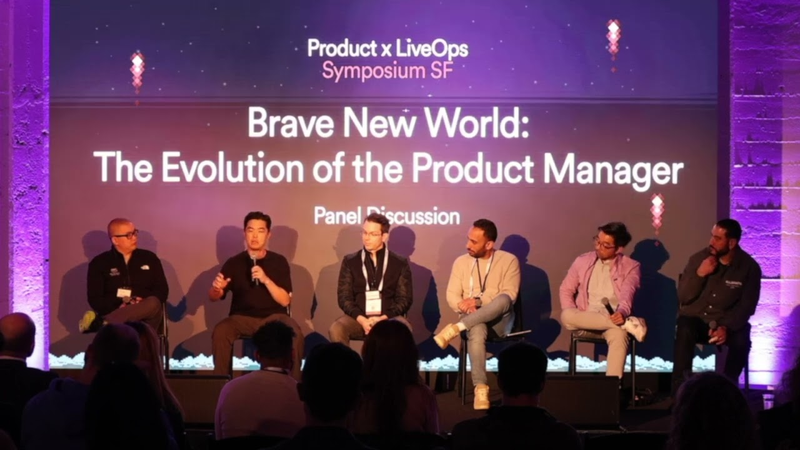
Artificial intelligence is fundamentally altering the landscape of corporate structure, necessitating a shift away from rigid, traditional hierarchies toward more fluid, adaptive models.
- Traditional organizational structures with rigid, vertical hierarchies and fixed roles will lose competitive advantage to more fluid, adaptive models.
- AI will subsume both low-level repetitive tasks and high-level complex functions, leading to the compression of traditional roles like product management, engineering, and art.
- The 'Organizational Meta' concept suggests that companies must constantly evolve their team structures, capabilities, and workflows to remain maximally effective, similar to how game metas shift.

Why Data Is The New Superpower In Gaming!
The mobile gaming industry has entered a complex era where traditional tracking identifiers are no longer sufficient for growth.
- Prioritize ATT (App Tracking Transparency) consent as the primary growth strategy, as effective pre-prompt messaging can increase opt-in rates from 10–15% to as high as 40–50%.
- Adopt a holistic measurement stack by combining SKAN 4.0, web-to-app flows, and Marketing Mix Modeling (MMM) rather than relying on any single attribution method.
- Implement Conversions API (CAPI) to send server-side signals like hashed emails and phone numbers to ad platforms, which improves matching rates and targeting efficiency, particularly for PC and console games moving to mobile.

Web Shops: From 10% to 50% Revenue – The Playbook Top Games Don't Want You to Know
Mobile game developers are increasingly adopting direct-to-consumer web shops to circumvent the 30% platform fees imposed by Apple and Google, which often consume over 40% of gross revenue.
- Transitioning to direct-to-consumer web shops allows developers to reduce transaction costs from the standard 30% platform fee to between 5% and 10%, increasing net margins by 25% or more.
- Top-performing studios are leveraging reclaimed revenue to increase player lifetime value and outbid competitors in user acquisition auctions, aiming to capture 40% to 50% of total revenue through web channels.
- Successful web shops function as community hubs rather than simple payment portals, integrating loyalty programs, progression incentives, and social tools to drive repeat traffic and higher average order values.
Evolution of the Gaming Product Manager in 2025 + AI
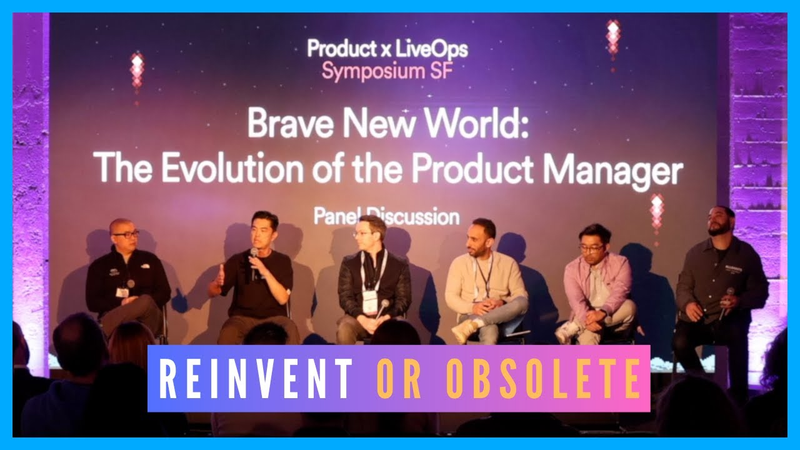
The gaming industry is currently undergoing a structural transformation driven by an increasingly competitive attention economy and the necessity for high-frequency content updates.
- Product velocity is the new North Star metric for gaming product managers, as the industry shifts toward rapid, data-driven iteration to compete in a crowded attention economy.
- AI investment should be evaluated using Gartner’s '3 Returns' framework: Return on Employee (efficiency gains), Return on Investment (KPI and bottom-line impact), and Return on Future (creating new business models and capabilities).
- The role of the Product Manager is evolving into an 'agentic' function, where the primary responsibility is orchestrating and deploying AI agents to automate tasks and optimize live service operations.

Unity's $81 BILLION Opportunity: The Mobile Gaming War Nobody's Talking About 🎮
Unity is currently undergoing a strategic pivot to stabilize its financial position by prioritizing operational efficiency and scaling its advertising monetization segment.
- Unity is pivoting its business model to prioritize the 'Grow' division, aiming to transform its core engine business into a strategic loss leader that fuels a high-margin advertising platform.
- Unity is directly challenging AppLovin’s near-monopolistic dominance in mobile ad-tech by leveraging its massive market share and proprietary engine-level data to improve user acquisition and in-app purchase targeting.
- The company is integrating first-party engine data with advanced tools like its Vector technology to provide developers with more effective, data-driven monetization solutions.

HTML5 Gaming: From Graveyard to Gold Rush
HTML5 gaming is undergoing a significant transformation, evolving from a niche technology into a primary driver of industry growth.
- HTML5 gaming is projected to account for more than 50% of all new game development within the next five years.
- Advancements in 5G connectivity and GPU performance now allow browser-based games to match the quality of native applications.
- HTML5 enables developers to bypass traditional app store ecosystems, allowing for decentralized distribution and more flexible monetization strategies.

The BILLION User Goldmine: Gaming with AI + Telegram (DEEP DIVE)
Telegram has emerged as a high-growth distribution frontier for the gaming industry, mirroring the viral potential of early social media platforms.
- Telegram serves as a high-growth distribution channel that bypasses traditional app store friction by utilizing HTML5-based architecture and the TON ecosystem for crypto-native transactions.
- AI-native operational models allow studios to accelerate development cycles by five to ten times compared to legacy production methods.
- Messenger-based gaming platforms leverage social mechanics like referral loops and collaborative leaderboards to bridge the gap between Web3 infrastructure and mainstream user accessibility.

Why Most New Games Still Face-Plant — and How Player Insight Can Flip the Script
High-budget game development frequently falters due to a reliance on late-stage quantitative data and a fundamental disconnect between internal creative visions and actual player experiences.
- Many modern game launches fail despite development and marketing costs exceeding $200 million, primarily due to a lack of consistent player feedback and validation during the development cycle.
- LiveAware addresses the 'echo-chamber' development problem by providing a platform that captures, analyzes, and organizes player feedback from sources like Discord, YouTube, and surveys into actionable insights.
- The platform utilizes AI to surface specific player comments and gameplay issues, automatically routing them to relevant departments like art, design, or engineering via Jira integration.
Halo Founder Thinks Fortnite UEFN is the Future of Gaming!
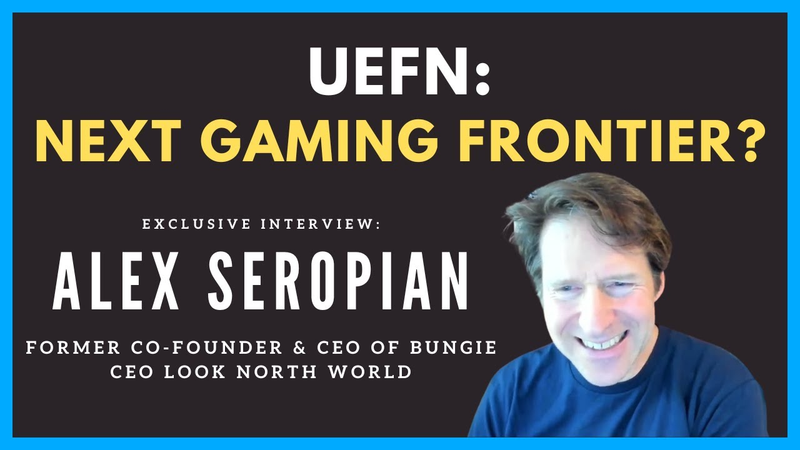
The Unreal Editor for Fortnite (UEFN) represents a transformative shift in game development, offering a viable alternative to the escalating costs and competitive saturation of the traditional AAA market.
- The UEFN platform currently lacks essential commercial infrastructure, such as robust deep linking, user attribution, and merchandising tools, which are standard on mature platforms like Roblox.
- Epic Games has not yet fully committed to transforming UEFN into a professional-grade commercial ecosystem, leaving developers in a 'wait and see' position regarding long-term business viability.
- New game releases are struggling for market share, as 70% of total gameplay time is currently spent in titles that are seven years or older, such as Fortnite and Roblox.

Applovin vs Unity: How Applovin Destroyed the Competition!
The mobile user acquisition landscape is currently defined by a stark divergence in performance between AppLovin and Unity.
- AppLovin has achieved a dominant market position with its MAX mediation platform, which currently holds an estimated 80% market share.
- AppLovin’s competitive advantage is driven by its proprietary Axon 2 algorithm, which utilizes vast first-party data to provide superior performance for ad-revenue-driven games.
- Unity has failed to effectively leverage its ironSource acquisition and engine-level reach due to internal cultural conflicts, technical inefficiencies, and execution failures.

Why Traditional Game Dev is Already Obsolete
The game development industry is undergoing a fundamental transition toward AI-native production, a shift that prioritizes emergent gameplay and dynamic, rulings-based systems over rigid, pre-programmed architecture.
- AI-native game development enables emergent gameplay where systems dynamically generate content—such as narrative events, items, and interactions—that were not explicitly programmed by developers.
- The integration of AI into development workflows is shifting the industry toward an 'organizational meta,' where traditional roles like engineers and product managers compress into hybrid positions like 'product engineers' due to increased individual capability.
- AI allows for a shift in production cycles from years to minutes, enabling developers to respond to real-time cultural trends and memes, fundamentally changing the relationship between producers and consumers.