
European Conference on Games Based Learning (ECGBL)
Annual European conference on game-based learning and serious games; its proceedings are published open access (CC BY) by Academic Conferences International.
Documents
Playing With Play Moods in Movement-Based Design
This paper examines how play practices and play moods can shape movement-based design, arguing that play is not merely a tool for generating design insights but a meaningful practice with intrinsic value.
- The paper argues that play is not merely a tool for generating design insights but a meaningful practice with intrinsic value, and proposes that the generative phase of movement-based design can be understood as a playful practice of moods.
- Building on Helle Skovbjerg's triad of play (play media, play practices, and play moods), the authors identify sliding and exceeding as play practices, and devotion and euphoria as play moods, associated with sustained engagement, improvisation, and new meaning-making.
- The study is grounded in constructive design research and two movement-based design workshops at a Danish university: one with students and playground company designers on outdoor playful fitness equipment, and one hybrid session on movement-based STEAM-X learning games with on-site and online participants.
Toward a Learning Game on Computational Thinking Driven by Competencies
This paper examines whether learning games can help French teachers deliver computational thinking (CT) instruction in primary school, a task for which many educators lack pre-service and in-service training.
- French primary teachers often lack training in computational thinking and guidance on building sessions or choosing tools, even though they understand the official competencies; the paper proposes a competency-structured learning game to fill this gap.
- The study is grounded in the PIAF framework, which organizes computational thinking for elementary education into six competencies broken into 26 sub-competencies.
- Of 48 identified computational thinking games, three were analysed: Blockly Maze covered 17 of 26 PIAF sub-competencies, Kodu covered 16, and Compute-it covered only 4.
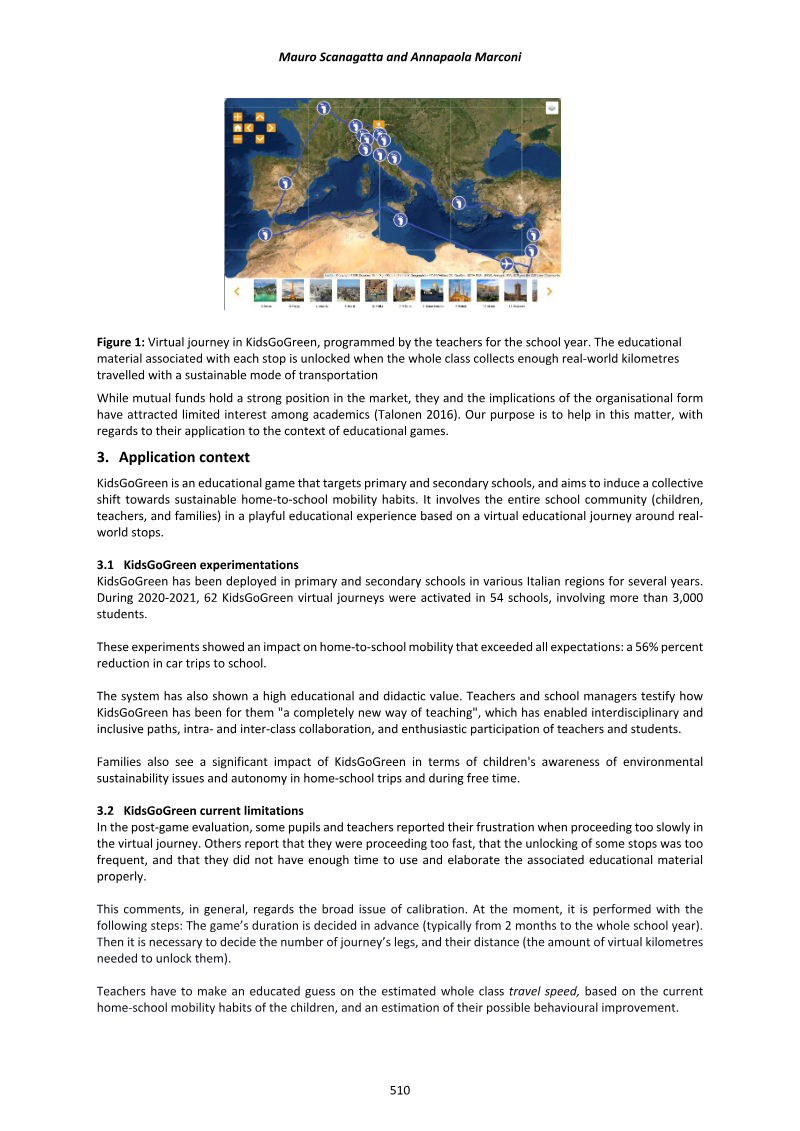
Automatic Calibration for a Mutual Insurance System in a Multi-Player Serious Game
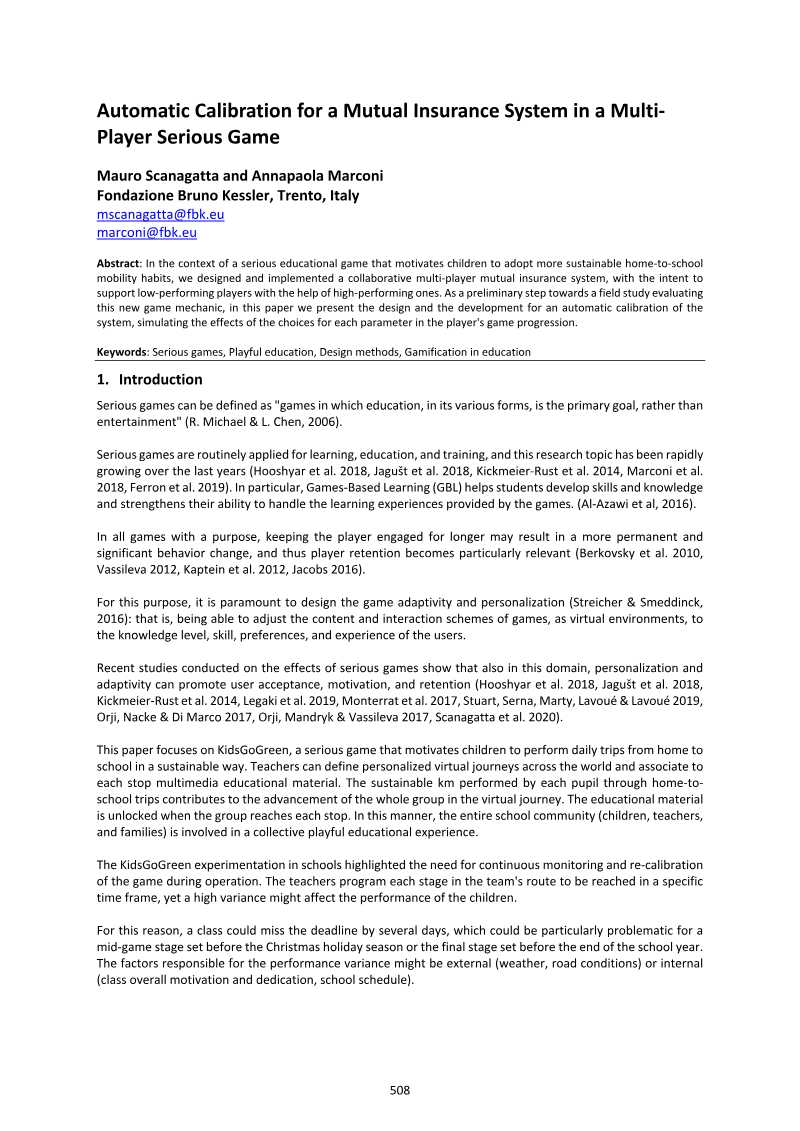
This paper presents the design, development, and preliminary calibration of a collaborative multi-player mutual insurance mechanic for KidsGoGreen, a serious game that encourages primary and secondary school children to adopt sustainable home-to-school mobility.
- The mechanic lets high-performing classes donate surplus virtual kilometres to a shared fund that low-performing classes can draw on, aiming to reduce the variance in team progress that teachers struggled to manage manually in the KidsGoGreen serious game.
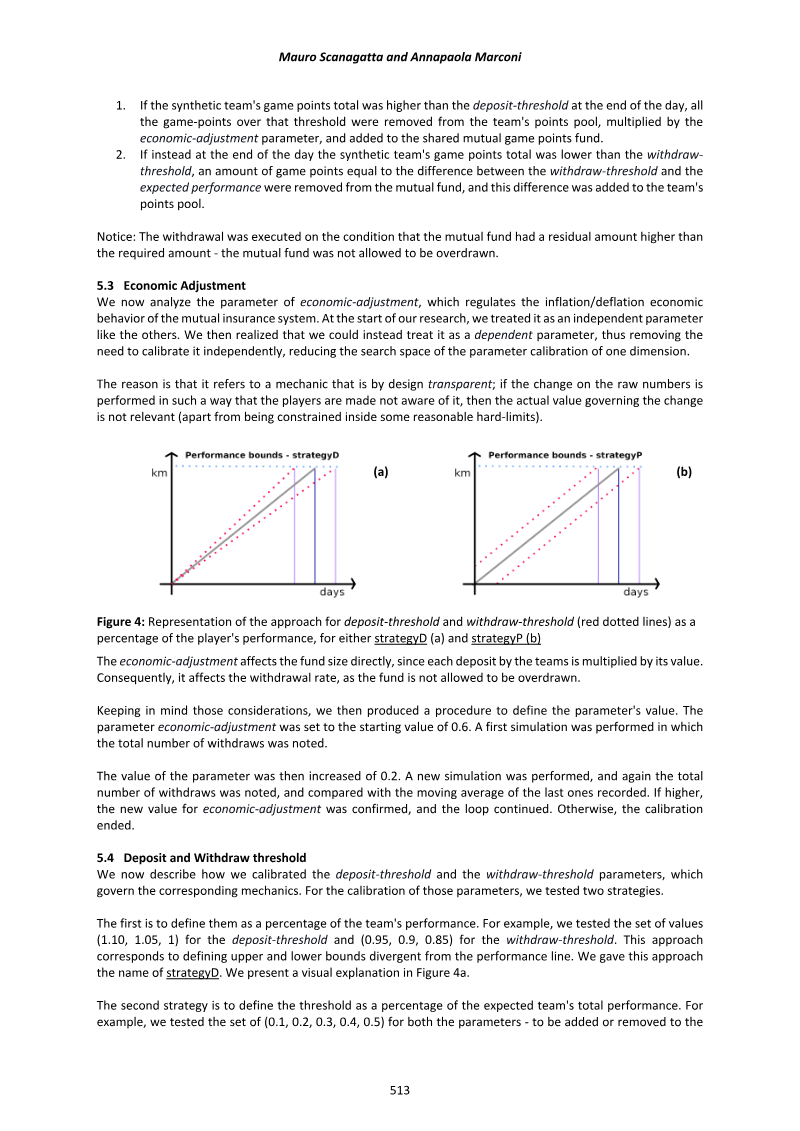
- Calibration used a Monte Carlo-style simulation built from data on 69 previous classes, sampling 40 synthetic teams per run over a 365-day horizon, governed by a deposit threshold, a withdraw threshold, and an economic adjustment factor.
- Percentage-based threshold bounds produced heavily skewed withdrawal distributions averaging a median of about 7.5 withdraws, whereas bounds defined in days of expected progress spread withdrawals more evenly across the game but with higher variance.
Facilitating Social Inclusion of Migrant Students through Digital Games: Design Principles and Pitfalls in Wanderers
This paper presents the design of Wanderers, a collaborative puzzle game created to foster low-stakes social interaction and cultural exchange between high school students with and without migrant backgrounds in Norway.
- A central finding is that well-intended design choices produced problematic outcomes: "safe topics" can displace harder conversations about migration, trauma, and racism, and may partly shield designers and teachers from uncomfortable realities.
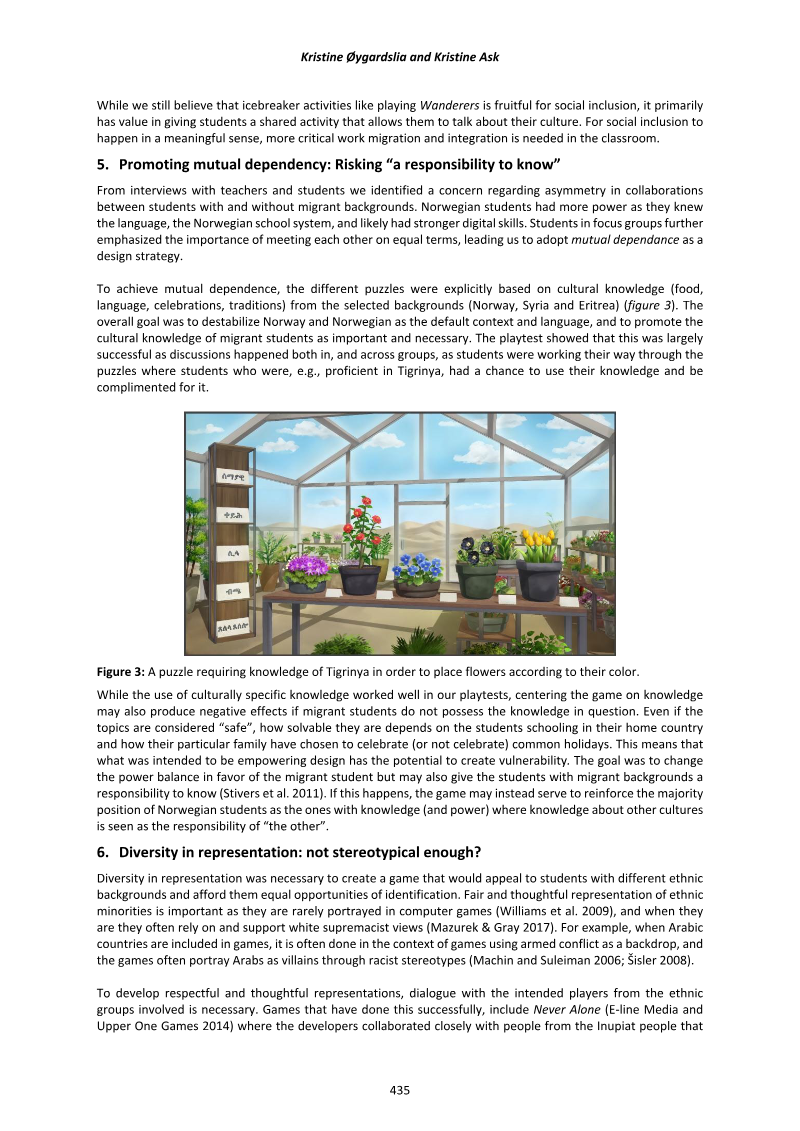
- Culturally specific puzzles were empowering in playtests but risked placing a "responsibility to know" on migrant students whose schooling and family traditions varied.
- Efforts at representation created tension between authenticity and stereotyping, and an extensive narrative proved less accessible to students still learning Norwegian.
Seven Spells and Peer Tutoring: A Collaborative Mathematics Game Experience
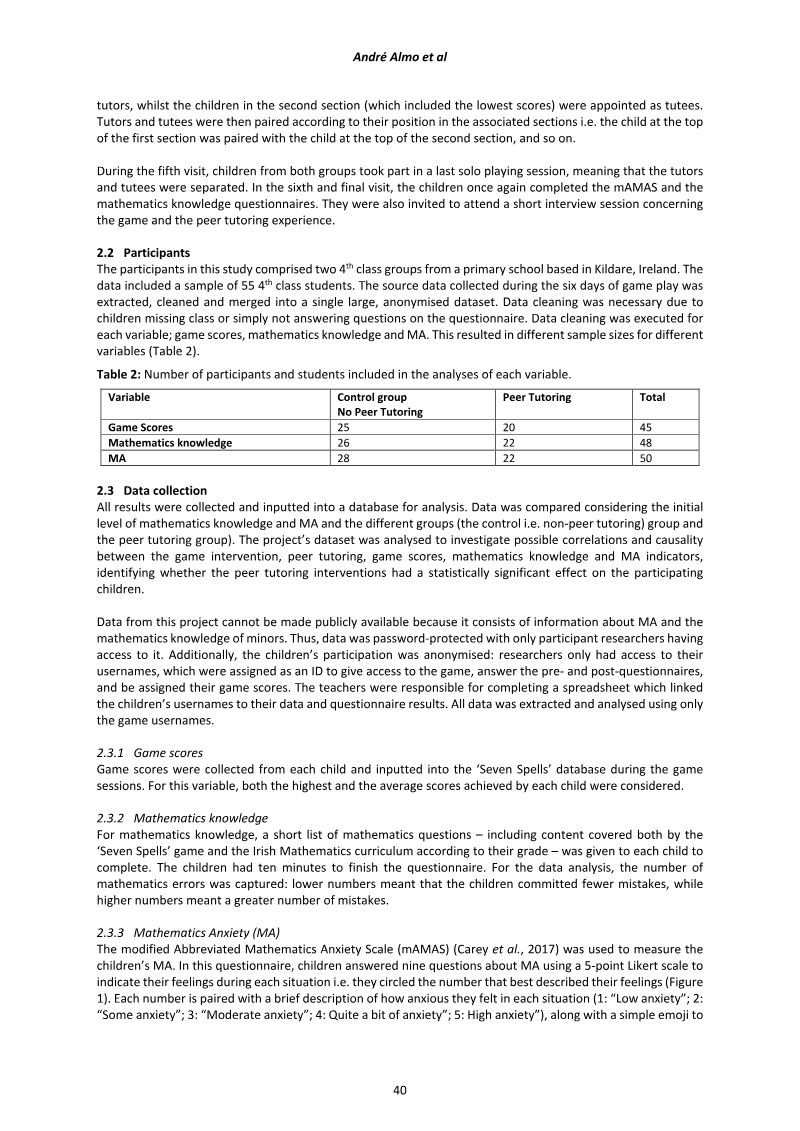
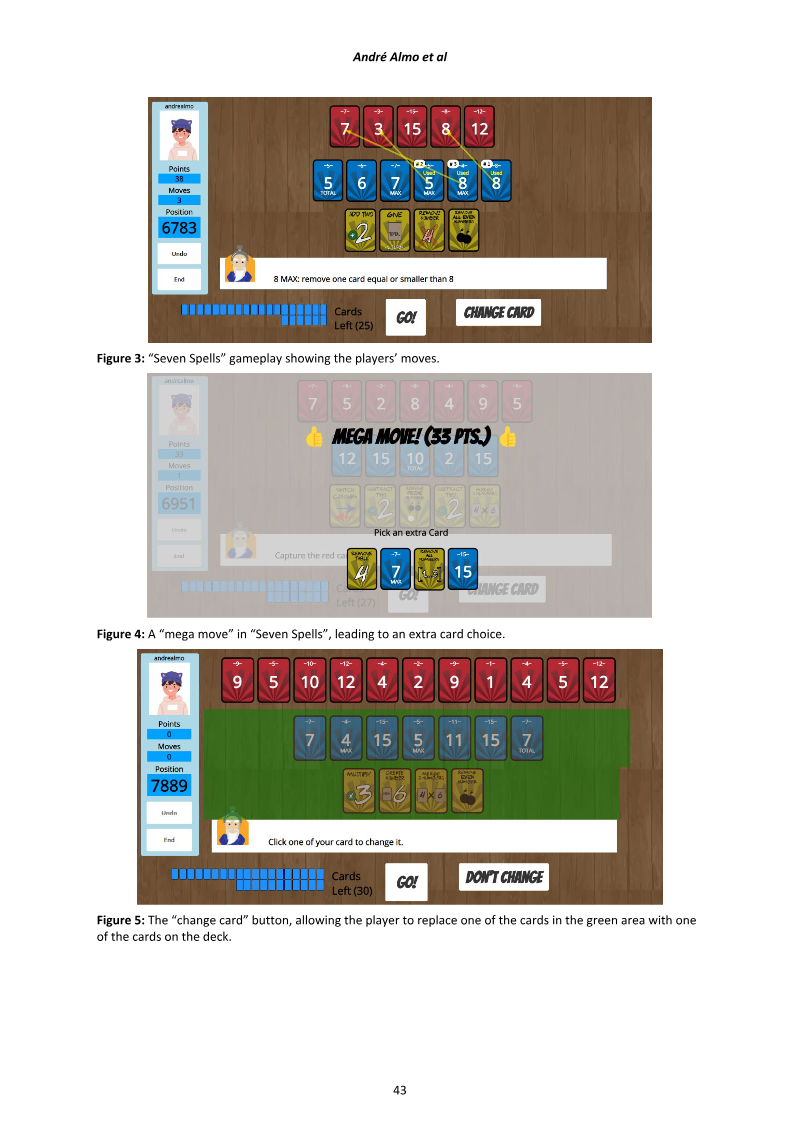
A study of the digital maths game "Seven Spells," played with or without peer tutoring, examined whether the game could reduce mathematics anxiety and improve learning among fourth-class pupils in an Irish primary school.
- Average game scores rose significantly for all children regardless of condition, showing the Seven Spells game itself produced measurable gains in performance.
- Mathematics anxiety decreased significantly only in the group that played without peer tutoring, while the peer-tutoring group showed no significant anxiety reduction.
- Across both conditions, no statistically significant differences emerged on game scores, maths errors, or anxiety levels, leading the authors to conclude peer tutoring was not effective in this context.
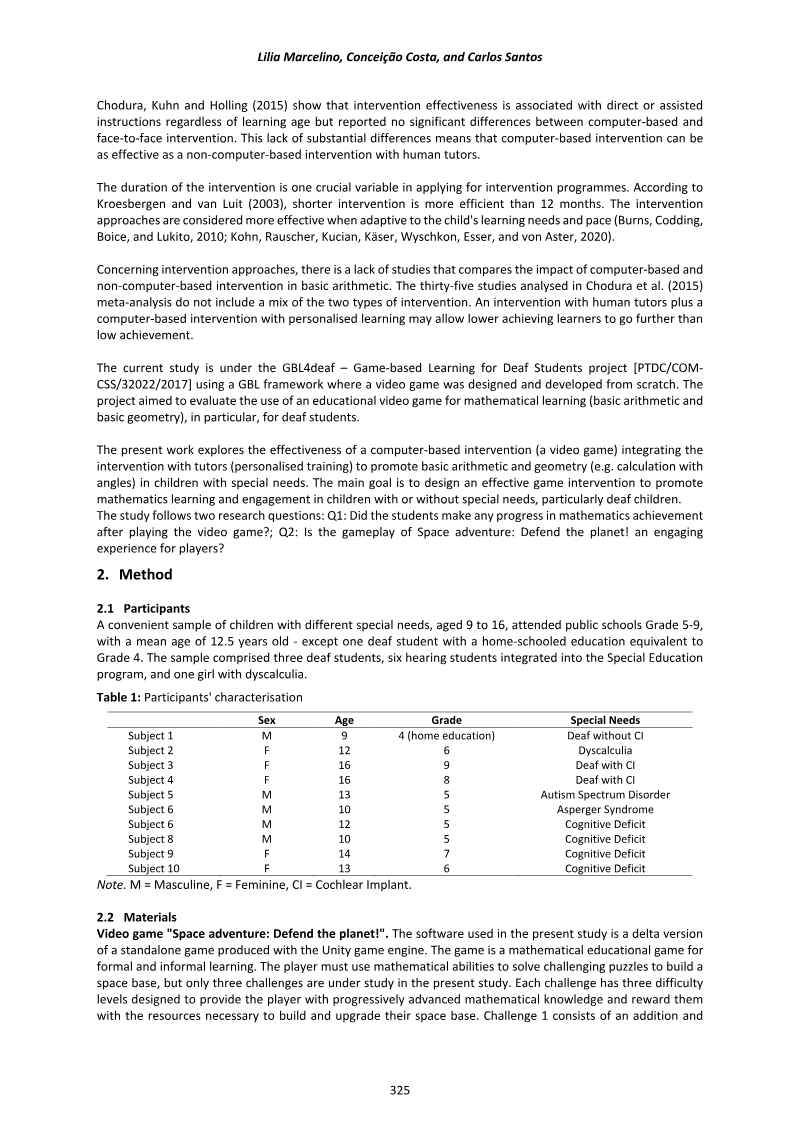
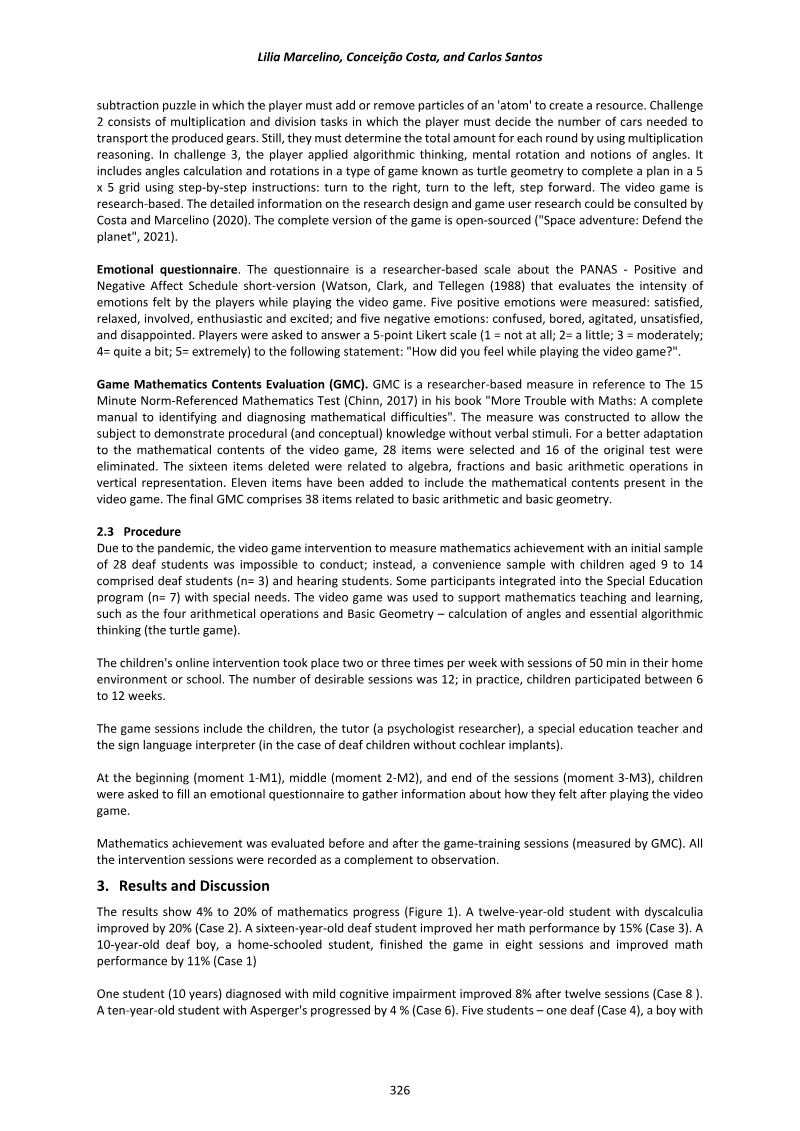
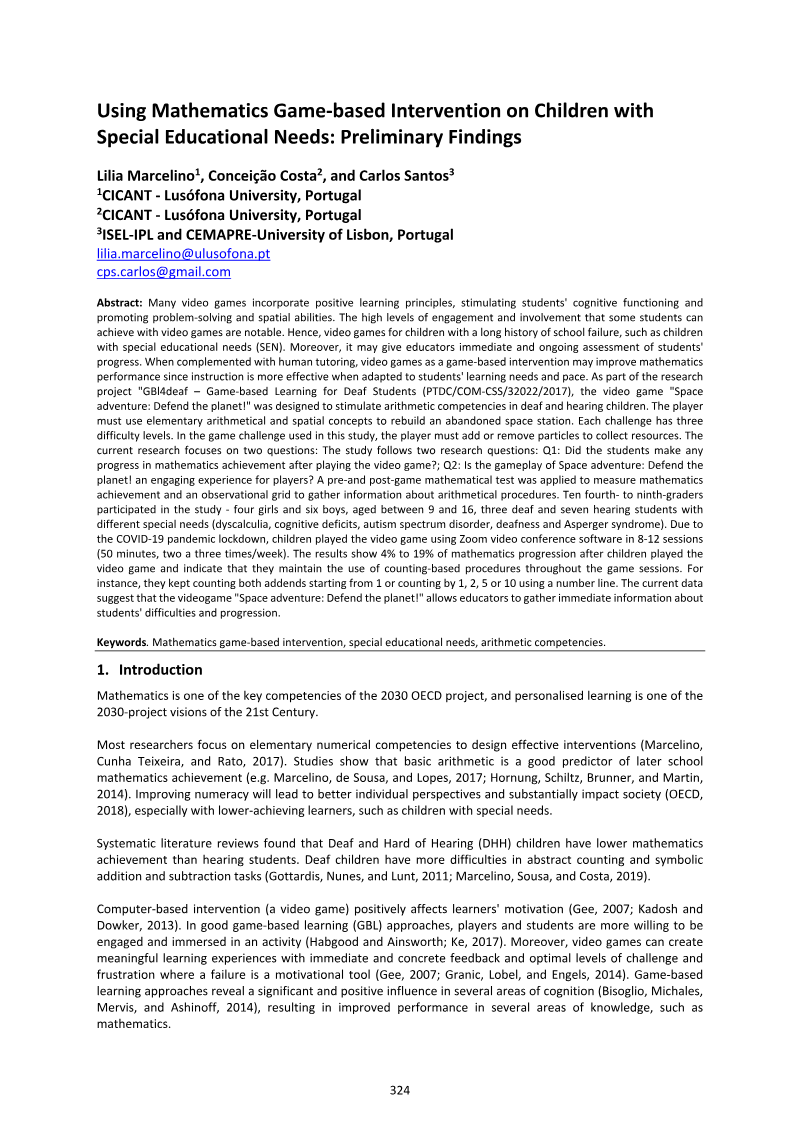
Using Mathematics Game-Based Intervention on Children with Special Educational Needs: Preliminary Findings
This preliminary study examines whether a custom-built mathematics video game, "Space adventure: Defend the planet!", can improve arithmetic and basic geometry performance and sustain engagement among children with special educational needs, including deaf and hearing students with conditions such as dyscalculia, autism…
- A preliminary study of 10 children aged 9 to 16 (3 deaf, 7 hearing) in Portuguese public schools tested a custom math game, 'Space adventure: Defend the planet!', covering addition, subtraction, multiplication, division, and turtle geometry.
- Mathematics achievement gains ranged from 4% to 20%, with the largest improvements seen in a student with dyscalculia and a deaf student, while five of the ten participants showed no measurable improvement.
- Because of COVID-19, all sessions were delivered online via Zoom, typically two or three times weekly for 50 minutes over six to twelve weeks, with personalised tutoring paired with the game.
Pre-service Teachers' Player Types and Their Relation to Self-Efficacy With Digital Media
This study examines the gamification player types of 75 German pre-service teachers, drawing on Marczewski's player typology and the HEXAD scale, and explores how these types relate to self-efficacy with digital media.
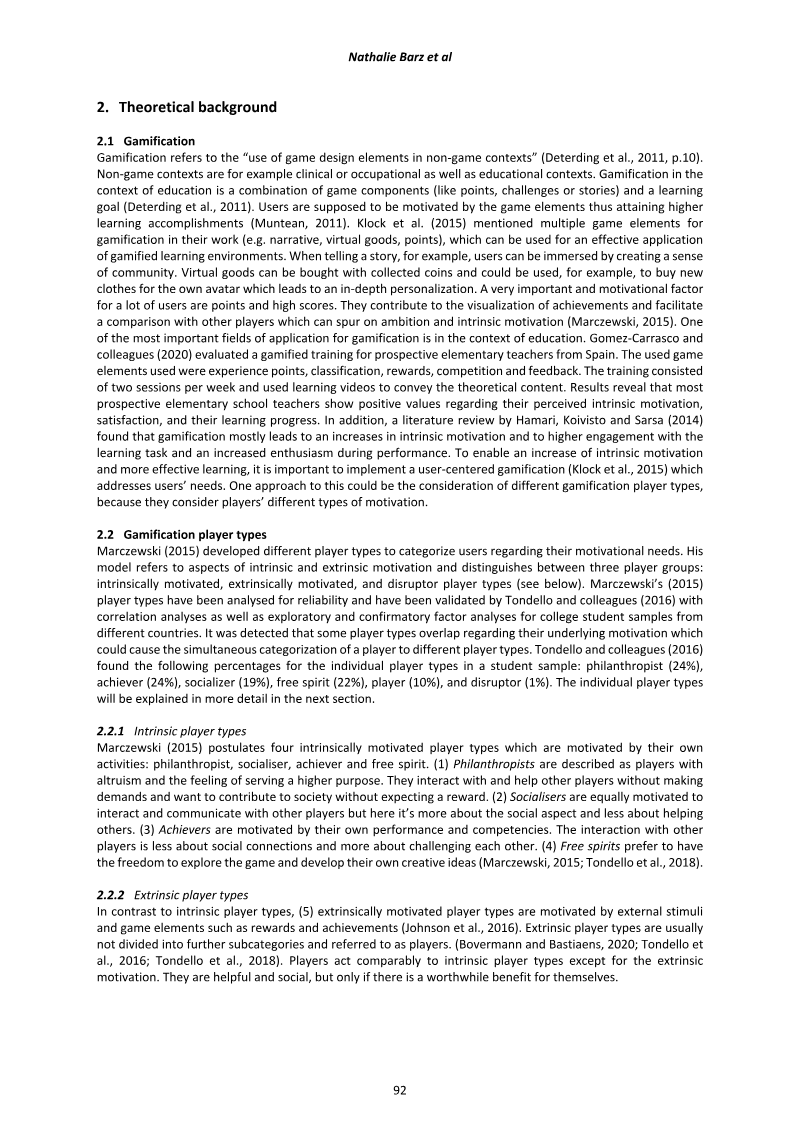
- Pre-service teachers' player types differed significantly from the distribution previously reported for college students by Tondello and colleagues (2016), with philanthropists strongly overrepresented (54 of 101 player-type expressions) while achievers, free spirits, and players were underrepresented and disruptors were nearly absent (one case).
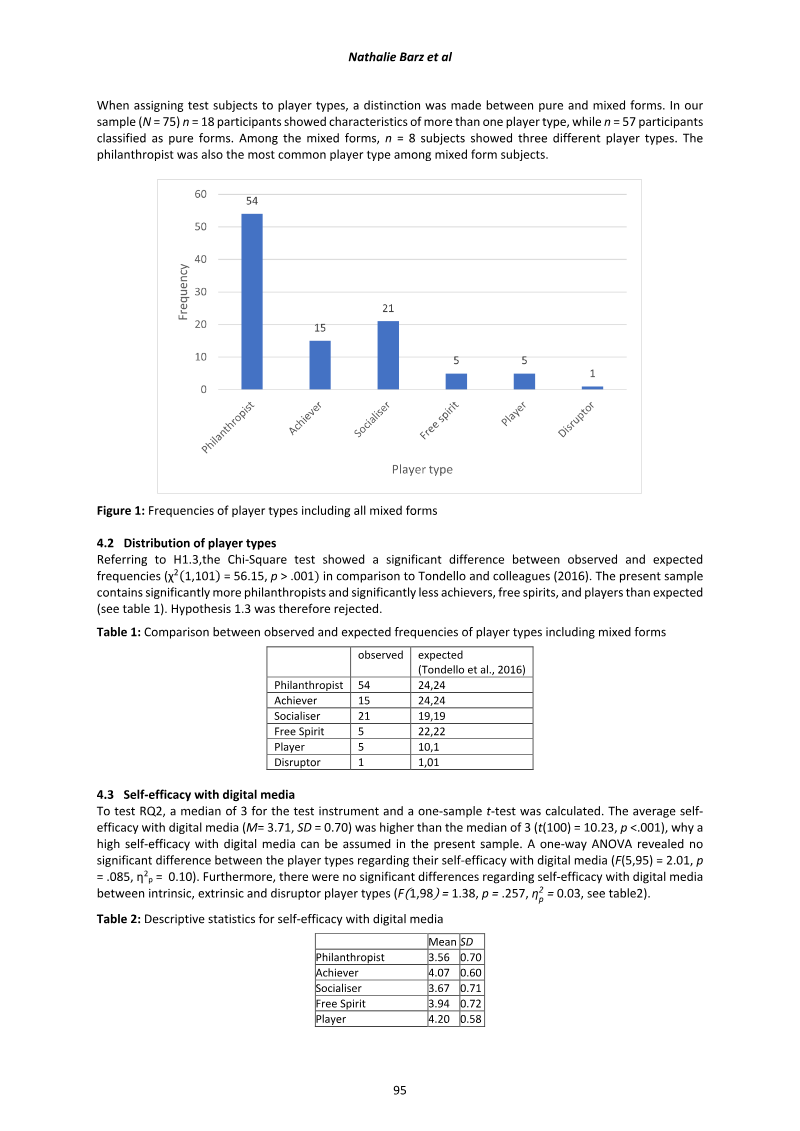
- Participants reported high self-efficacy with digital media (mean 3.71 on a 5-point scale), which the authors partly attribute to the sample's relative youth (about 24 years on average) and the mastery experiences of trainee teachers.
- No significant differences in self-efficacy with digital media were found across player types, whether compared individually or grouped as intrinsic, extrinsic, and disruptor types.
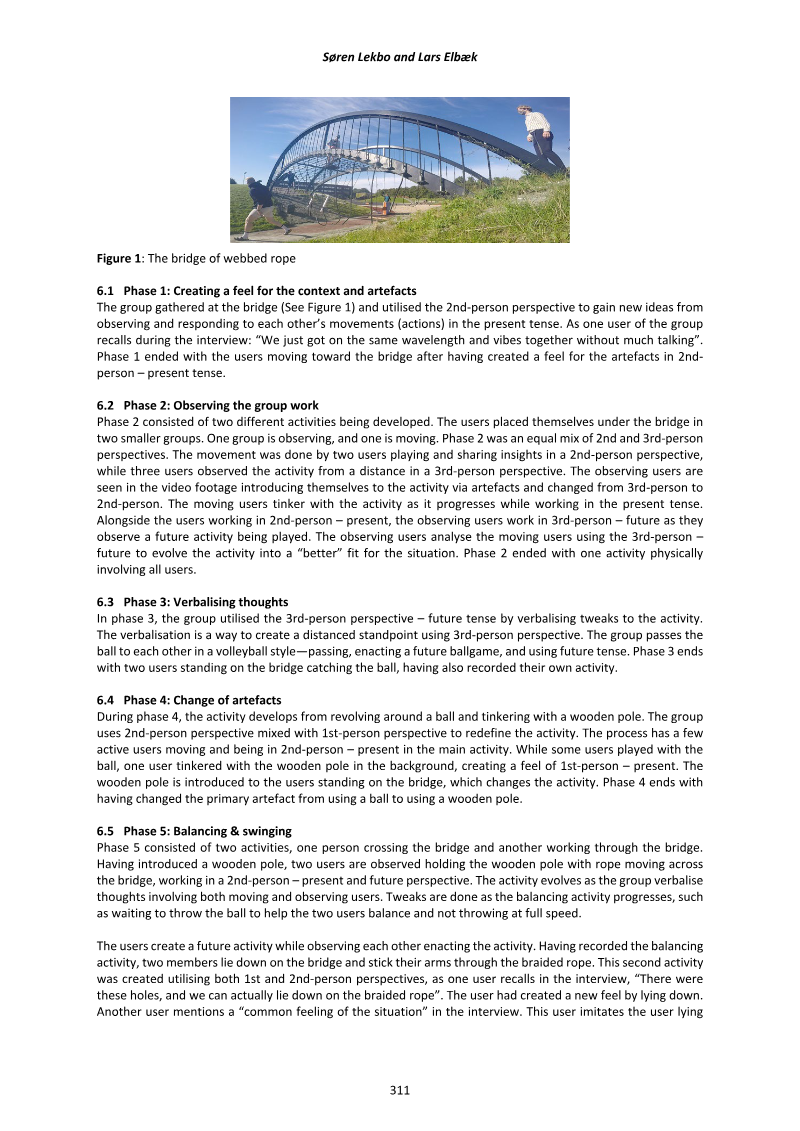
Exploring the Combination of Point-of-View and Tenses in Movement-based Design Processes
This study by Lekbo and Elbæk applies Svanæs and Barkhuus's framework of point-of-view and verb tense to movement-based design processes, arguing that the moving body should sit at the centre of designing technologies such as exertion games and fitness solutions.
- The study argues the moving body should be central to designing exertion games and fitness technologies, combining Svanæs and Barkhuus's point-of-view and verb-tense framework with embodied interaction and phenomenology.
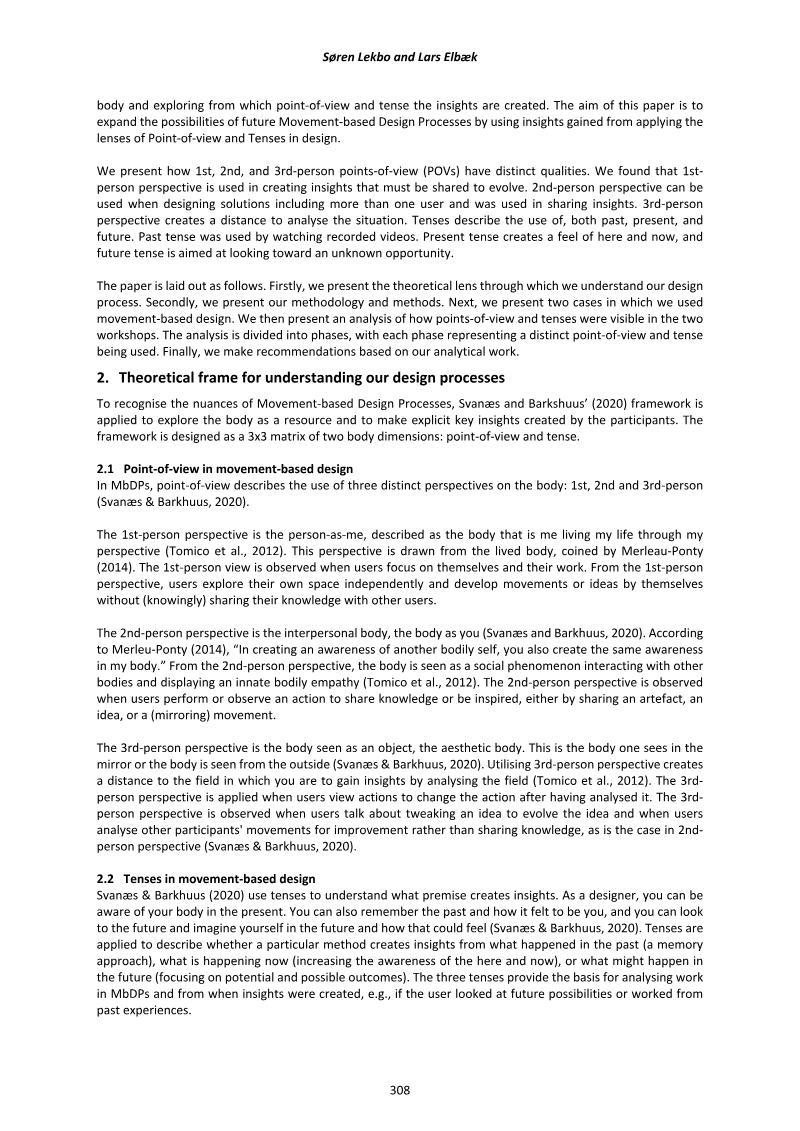
- Within the framework, first-person perspective generates insights to be shared, second-person supports collaboration between users, and third-person offers analytical distance, while past, present, and future tenses correspond to reviewing recordings, here-and-now awareness, and forward-looking ideation.
- Evidence comes from two workshops, one with KOMPAN on outdoor fitness equipment (25 participants) and one on technology-based exercise games at ECGBL 2020 (20 participants), supplemented by video observation and five user interviews.
Marie's ChemLab: A Mobile Augmented Reality Game to Teach Basic Chemistry to Children
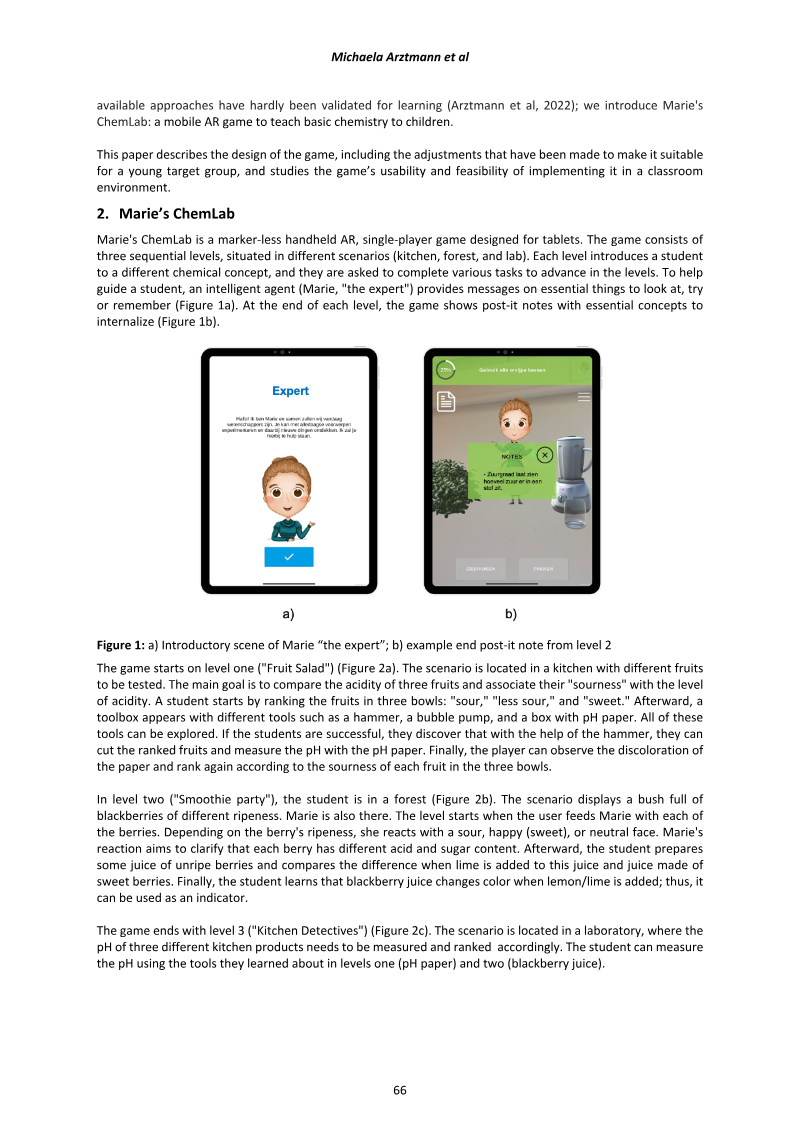
Marie's ChemLab is a marker-less handheld augmented reality game designed to teach basic acidity and pH concepts to early secondary school students.
- Marie's ChemLab is a marker-less handheld AR game teaching basic acidity and pH to early secondary students, built as three sequential levels set in a kitchen, a forest, and a laboratory, with each level based on an existing classroom lesson plan to ease curricular integration.
- In a feasibility study, 239 Dutch students aged roughly 11 to 15 played the game on iPads during a single 30-minute science lesson; most finished within 20 minutes, no hardware comfort problems were reported, and all could play simultaneously with only occasional researcher help for technical issues.
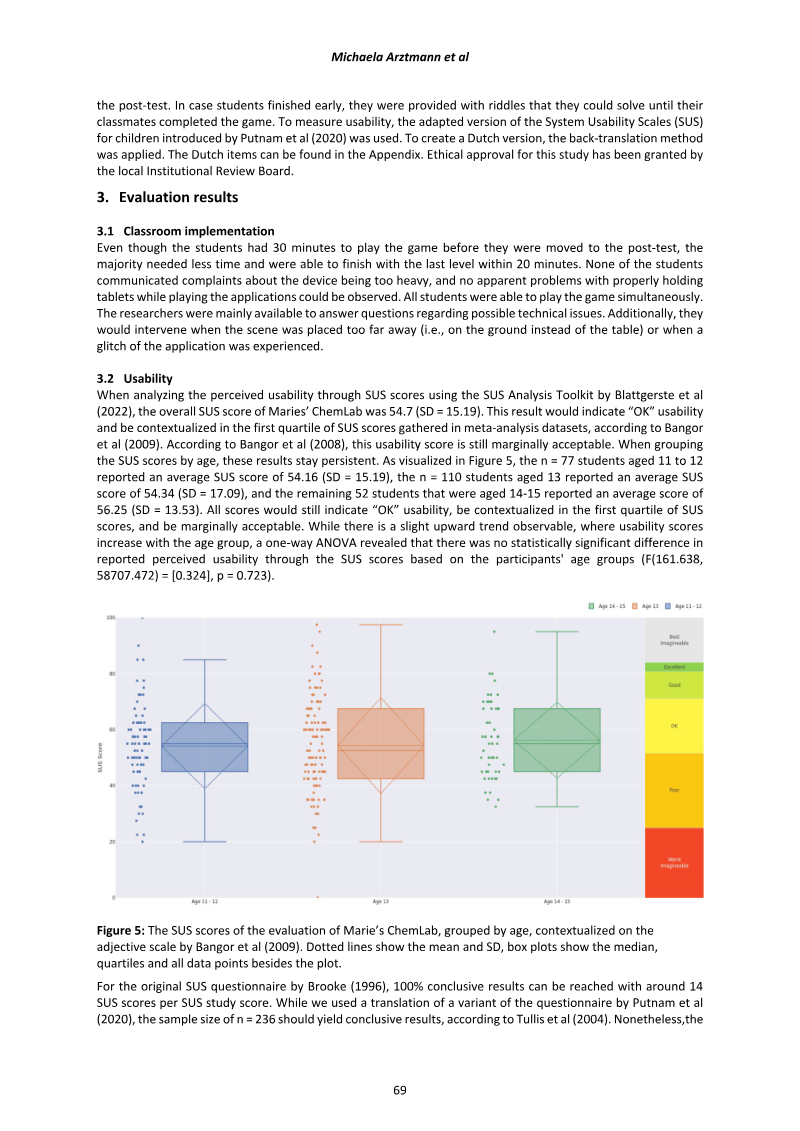
- Usability on an adapted children's System Usability Scale averaged 54.7 (SD = 15.19), a marginally acceptable "OK" rating, with no significant differences across age groups.
Designing a Mobile Game for Introducing Learners to a Soap Making Process
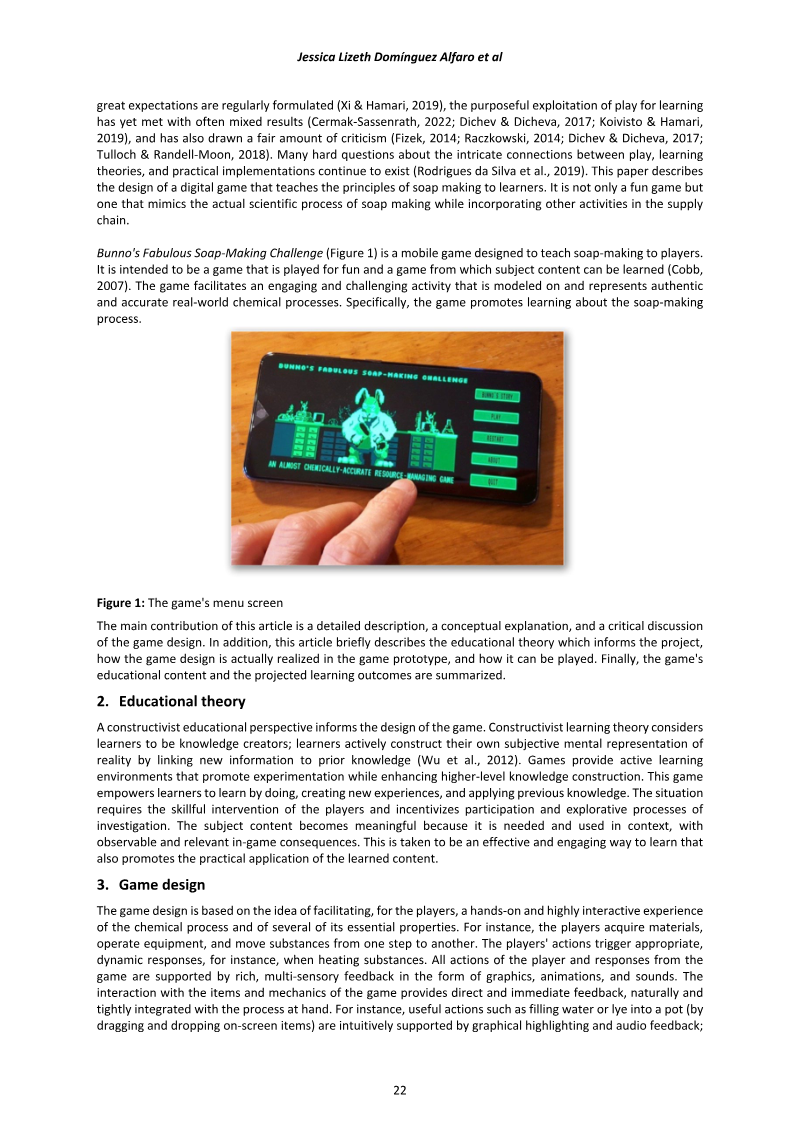
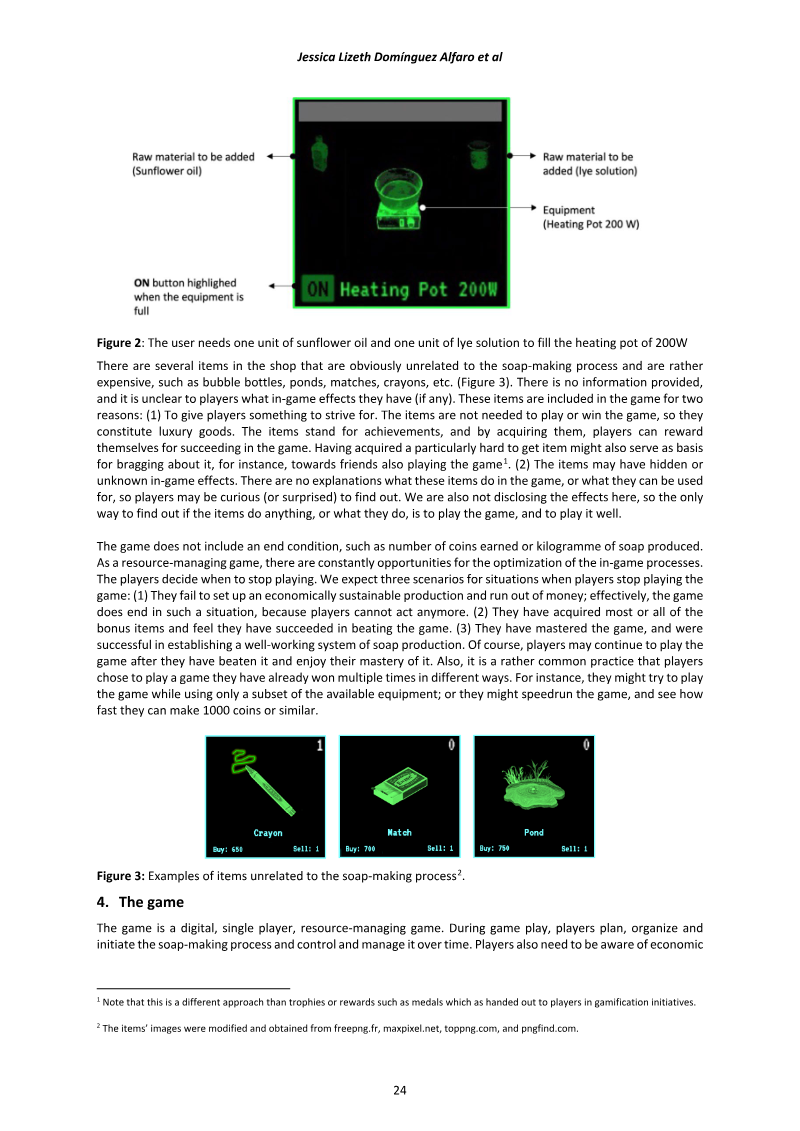
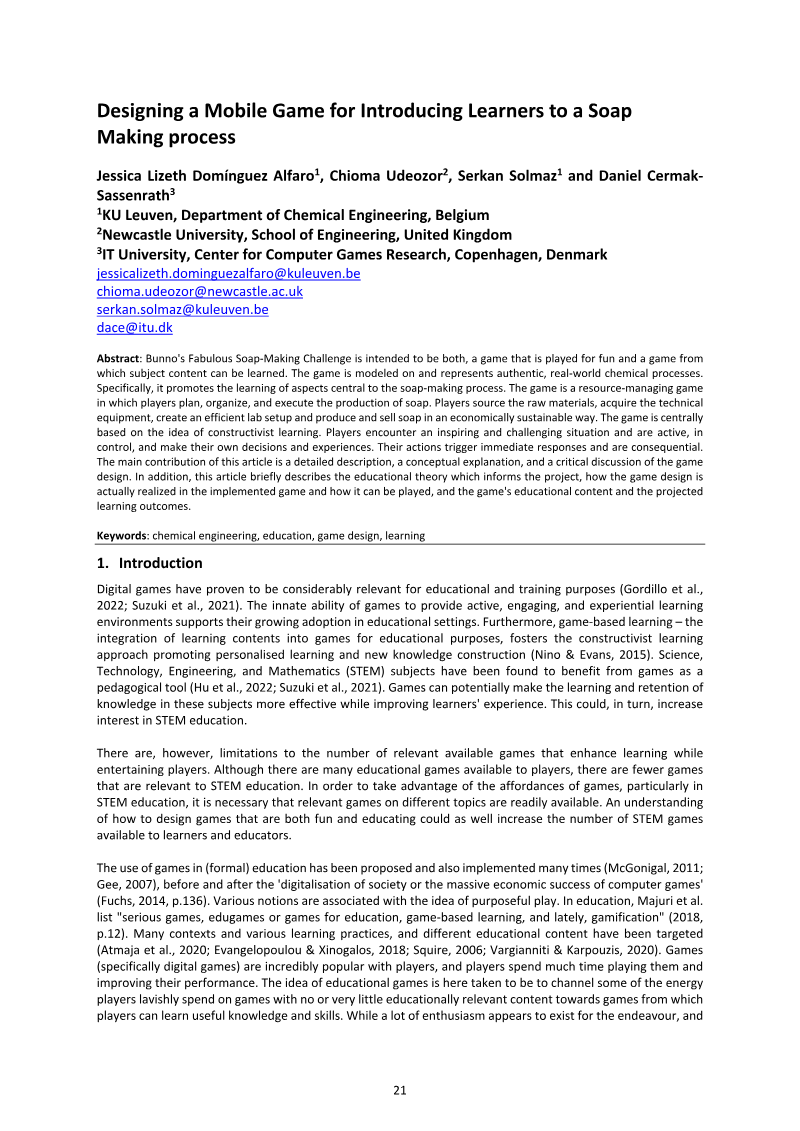
This paper presents the design of Bunno's Fabulous Soap-Making Challenge, a single-player mobile resource-management game intended both for entertainment and for teaching the kettle process of soap making.
- The paper presents the design of Bunno's Fabulous Soap-Making Challenge, a single-player mobile resource-management game that serves both entertainment and teaching of the kettle soap-making process, grounded in constructivist learning theory.
- The game deliberately trades chemical accuracy for playability by modeling only one soap-making method, limiting equipment and materials, and abstracting item properties such as removing fuel requirements and speeding up reactions.
- Known inconsistencies, such as the intermediate product 'trace' being unavailable for purchase, are acknowledged by the authors and accepted as tolerable for the sake of design.

How to Evaluate Serious Games Concepts: A Systematic Prototyping and Testing Approach
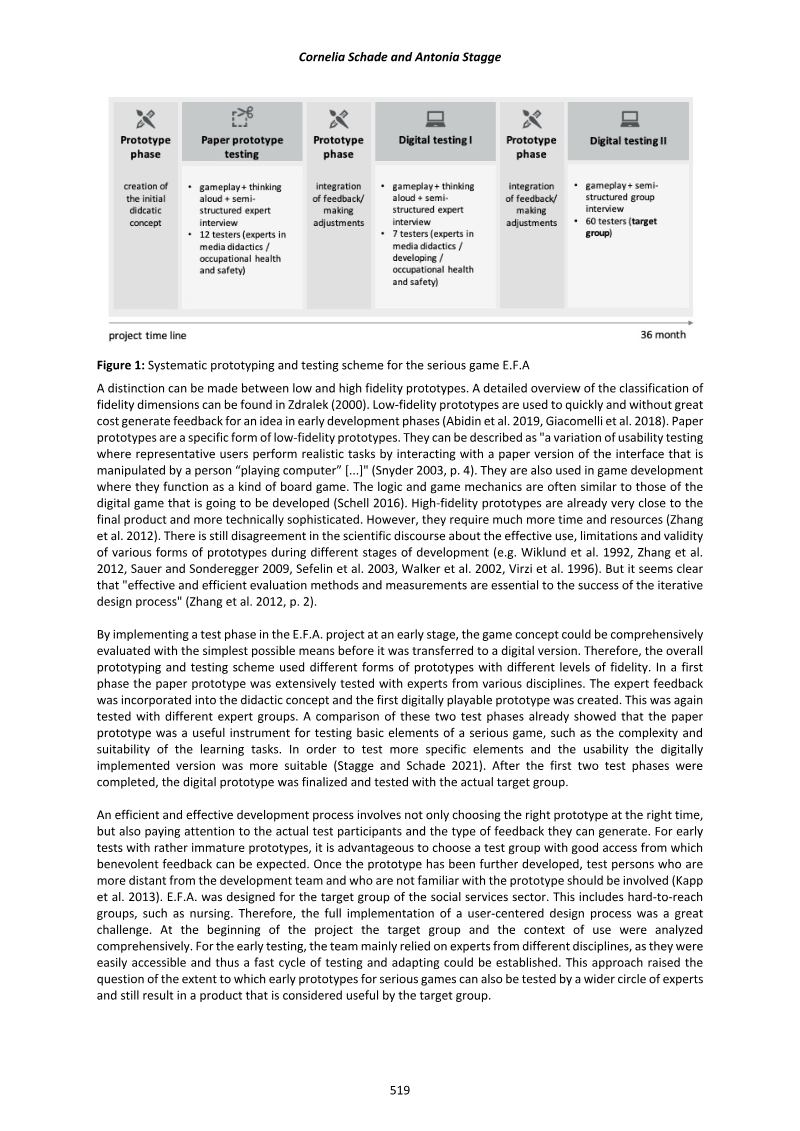
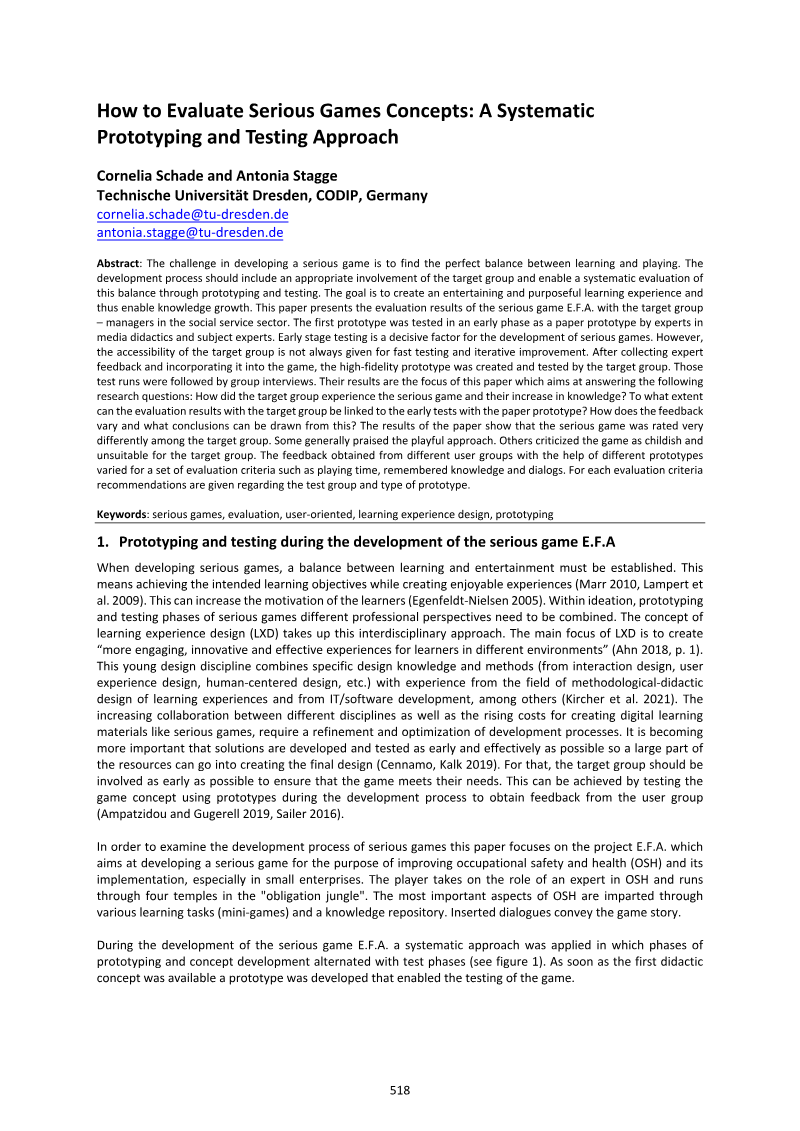
This paper examines how a systematic, multi-stage prototyping and testing approach can balance learning and entertainment in serious game development, using the case of E.F.A., a game teaching occupational safety and health to managers in the social service sector.
- Serious game prototypes were tested in two stages: paper prototypes with 11 media didactics experts and one occupational safety expert, then a digital prototype with 60 members of the target group (managers in the social service sector) in online sessions followed by group interviews.
- Target group reactions to the game were sharply divided, with some praising the playful approach, jungle setting, clear content presentation, and knowledge repository, while others found it childish and criticized long dialogs, awkward controls, poor orientation, and an inappropriate metaphor for fatal accidents.
- Using deductive content analysis across 15 predefined evaluation categories, feedback diverged most on first impressions, playing time, remembered knowledge, dialogs, and transfer of learning into the workplace, while mini-games and certain task aspects aligned more closely with expert findings.
Is a Board Game Suitable for Teaching Complex Natural Systems?
The document examines whether the Estonian board game "End of the World Begins in Kurtna" can effectively teach ecosystem services, which are difficult to convey through conventional text because they operate through nonlinear, interconnected relationships.
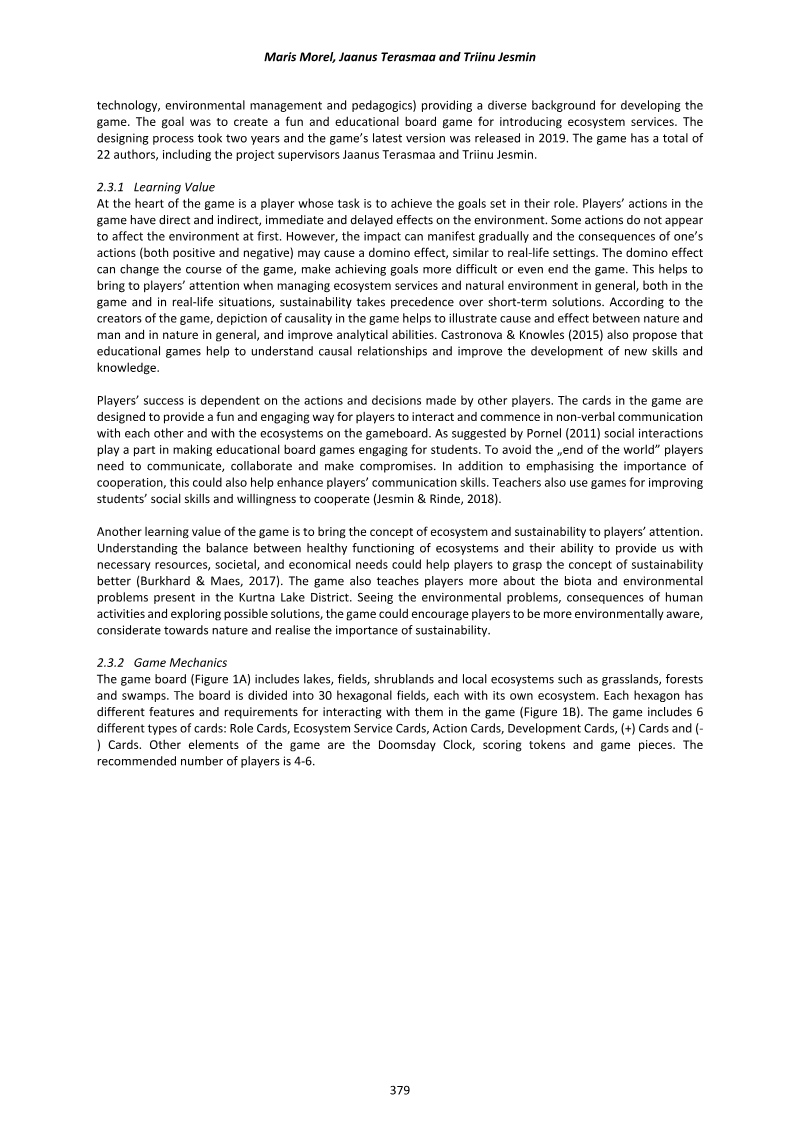
- The board game "End of the World Begins in Kurtna" uses role cards, development and ecosystem service cards, and a Doomsday Clock tracking ecosystem health to teach causality, cooperation, and sustainability, using the Kurtna Lake District as a real-world case of human-nature conflict.
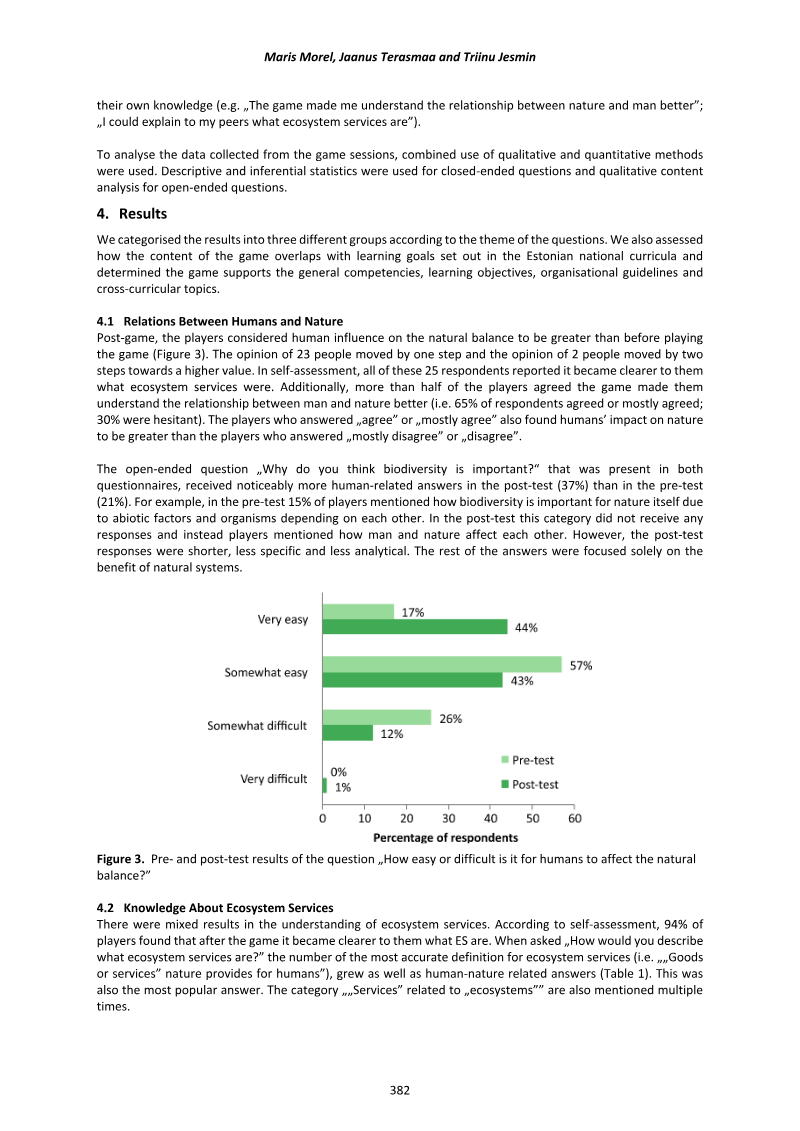
- A mixed-methods study of 84 participants aged 12 to 26 found high engagement, with 80% finding the game interesting and 78% finding it engaging, and most reporting a clearer grasp of human-nature relationships and ecosystem services.
- Despite engagement, post-game explanations were shorter and less analytical than pre-game responses, and only 19% of players felt confident explaining ecosystem services to peers.