1 free read left. Create a free account for unlimited reading + AI research.
Create free accountWhitepaper European Conference on Games Based Learning (ECGBL)
1 free read left. Create a free account for unlimited reading + AI research.
Create free accountWhitepaperEuropean Conference on Games Based Learning (ECGBL)
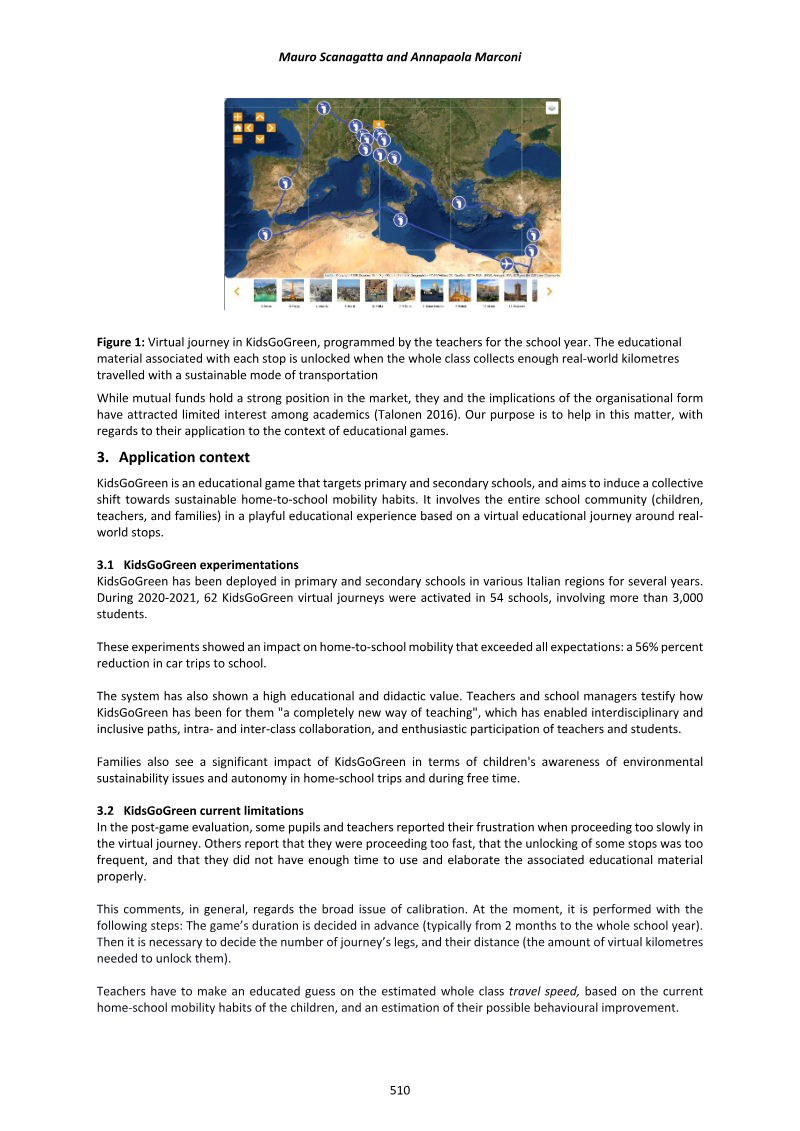
KidsGoGreen encourages children to adopt sustainable home-to-school mobility.
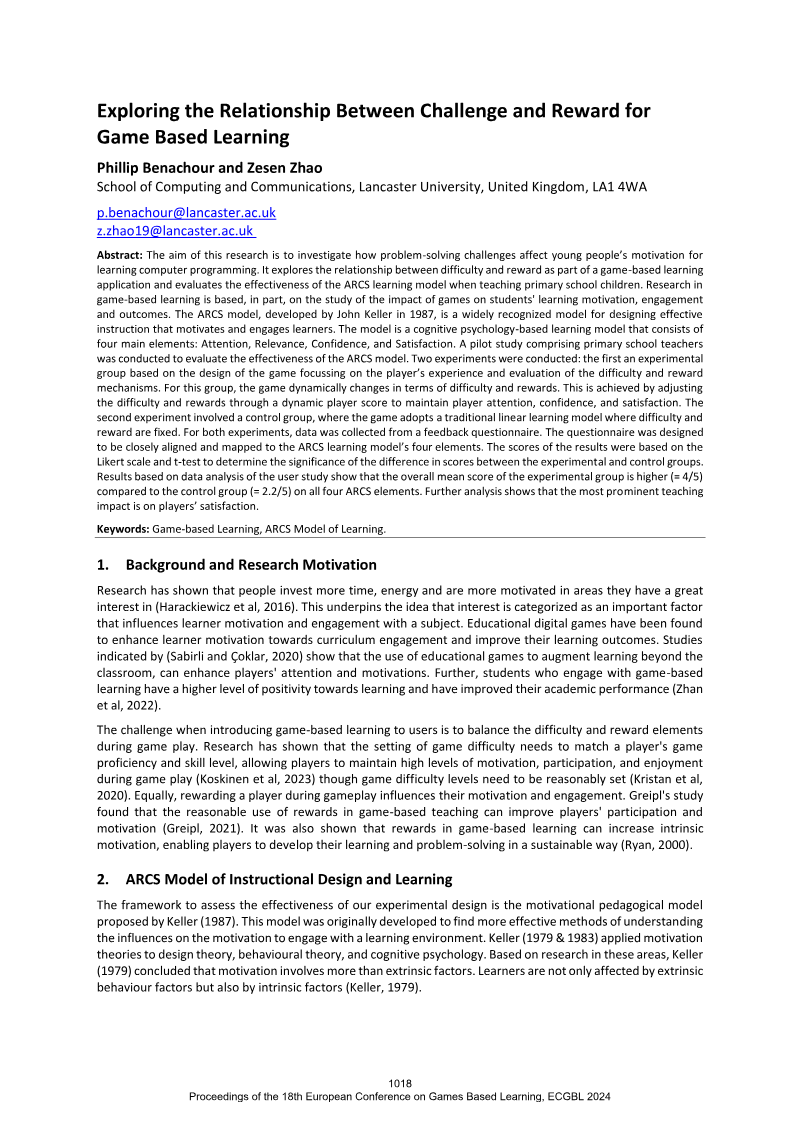
This paper presents the design, development, and preliminary calibration of a collaborative multi-player mutual insurance mechanic for KidsGoGreen, a serious game that encourages primary and secondary school children to adopt sustainable home-to-school mobility. The mechanic lets high-performing classes donate surplus virtual kilometres to a shared fund that low-performing classes can draw on, with the goal of reducing the variance in team progress that teachers struggled to manage manually. The authors position this as a preliminary step toward a field study and note that, to their knowledge, the application of mutual fund dynamics, including inflation and deflation, to educational games has not been previously explored.
The calibration relies on a Monte Carlo-style simulation built from real-world data drawn from 69 previous classes, with 40 synthetic teams sampled per run over a 365-day horizon. Three parameters govern the system: the deposit threshold, the withdraw threshold, and an economic adjustment factor that scales deposits to produce inflation or deflation. Two threshold strategies were compared. Percentage-based bounds produced heavily skewed withdrawal distributions, averaging a median of about 7.5 withdraws, while bounds defined in days of expected progress spread withdrawals more evenly across the game, though with higher variance. The economic adjustment was treated as a dependent parameter, computed from the thresholds, and the simulations consistently required values above 1, indicating that inflation was needed to keep the fund solvent.
The pivot analyses show that raising either threshold reduces withdrawal frequency and widens the delay distribution, while the required inflation rises when deposits and withdrawals are rarer. The authors note that the mechanic is designed to be transparent to players, a choice motivated by prior findings that visible adjustments can harm self-esteem. The planned field study will assess the mechanic's effect on student motivation, its ability to reduce progression variance, and its educational value in teaching mutualism and cooperation.
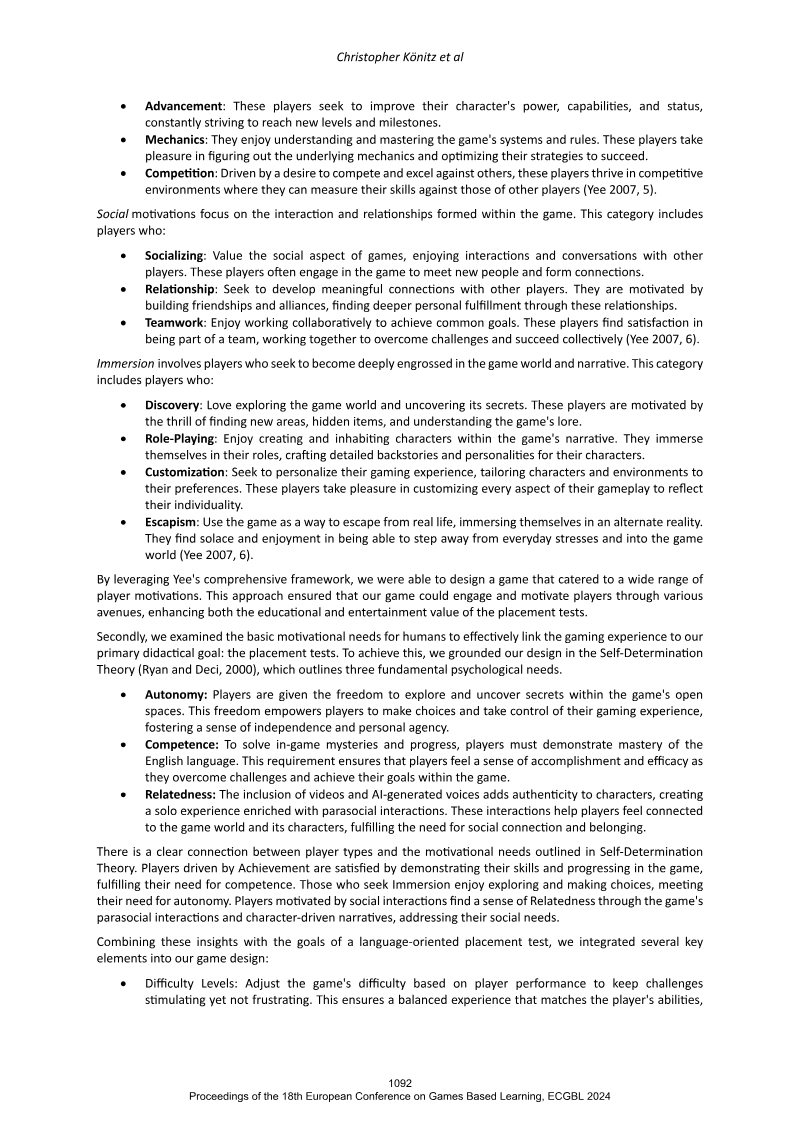
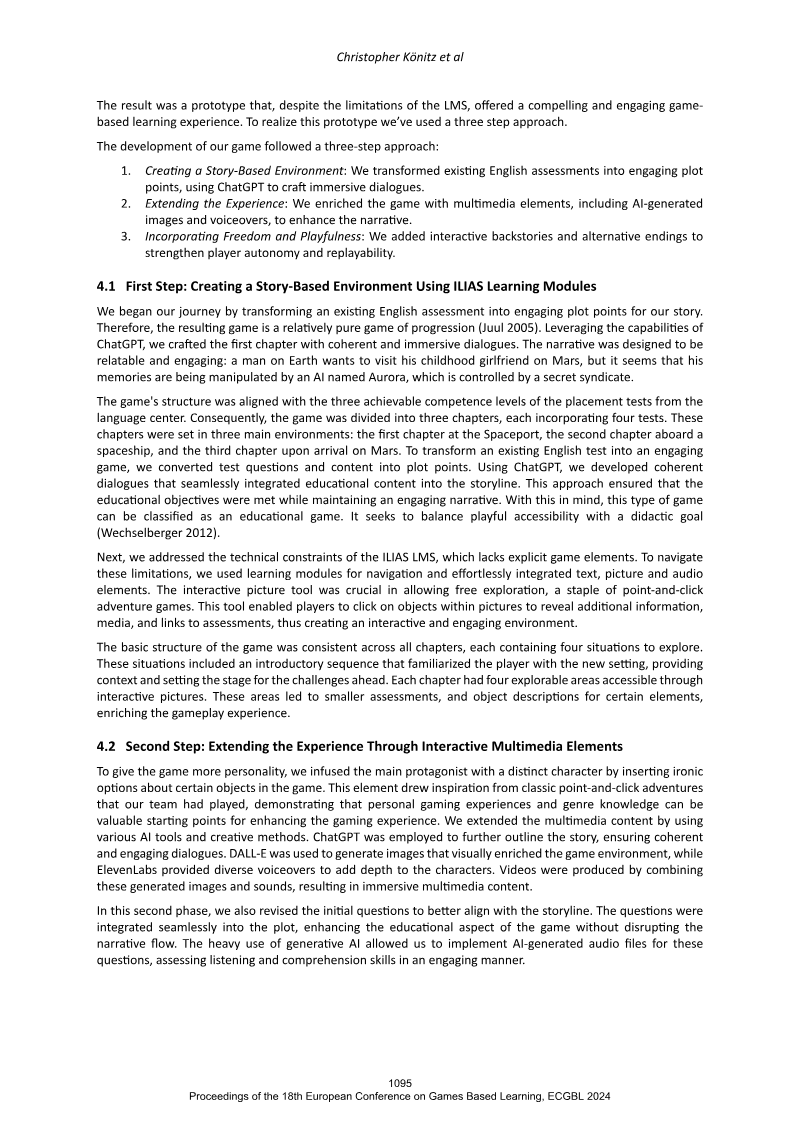
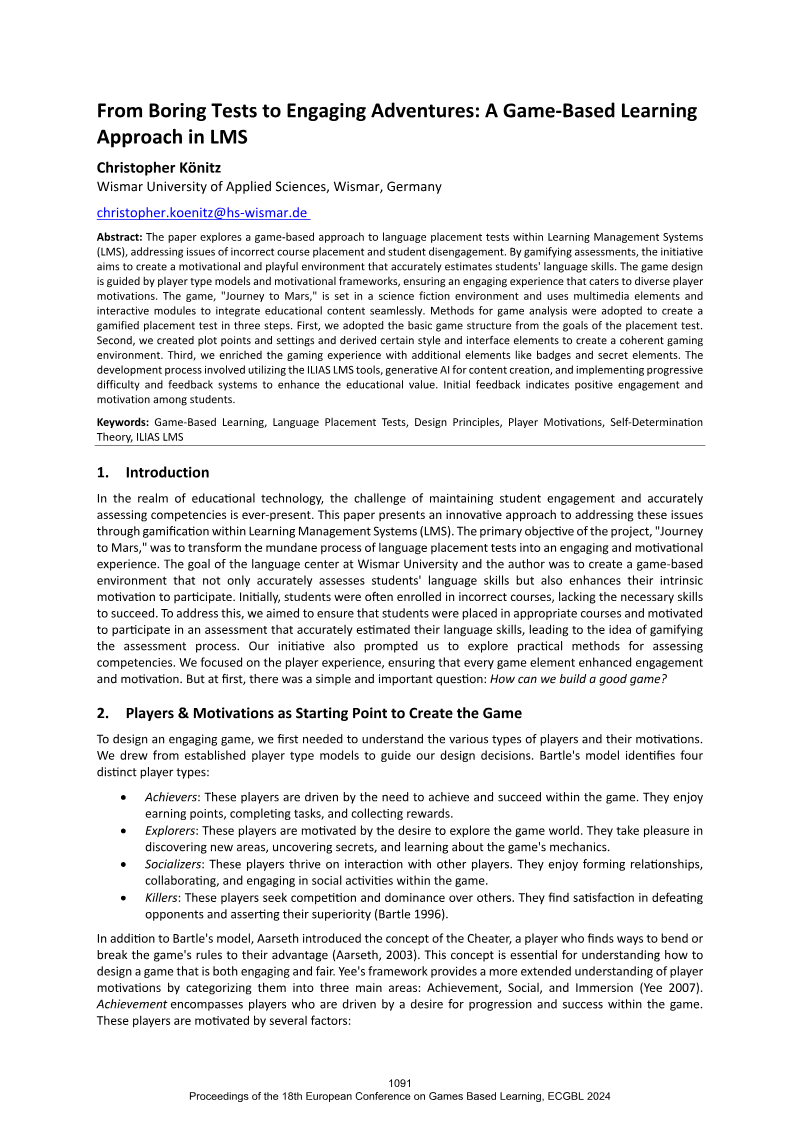
European Conference on Games Based Learning (ECGBL) · 2024
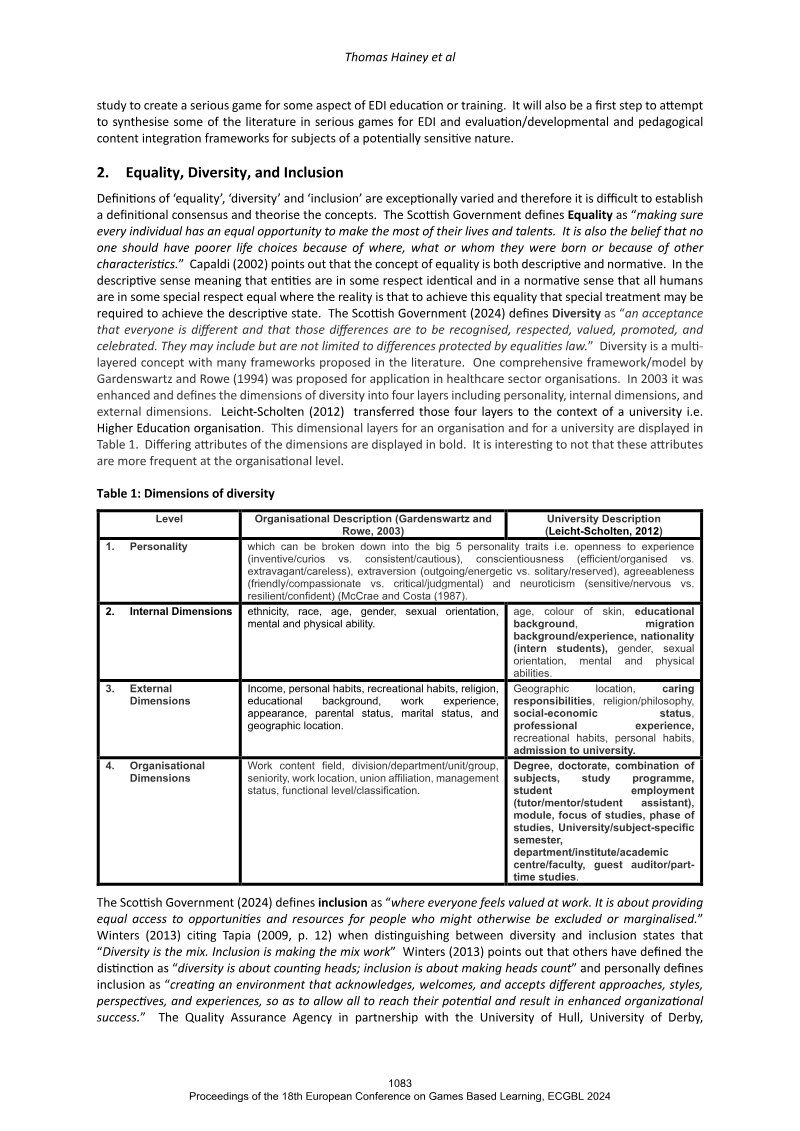
European Conference on Games Based Learning (ECGBL) · 2024
European Conference on Games Based Learning (ECGBL) · 2024
European Conference on Games Based Learning (ECGBL) · 2024
European Conference on Games Based Learning (ECGBL) · 2024
European Conference on Games Based Learning (ECGBL) · 2024
European Conference on Games Based Learning (ECGBL) · 2024
European Conference on Games Based Learning (ECGBL) · 2024
European Conference on Games Based Learning (ECGBL) · 2024
European Conference on Games Based Learning (ECGBL) · 2024
European Conference on Games Based Learning (ECGBL) · 2024
European Conference on Games Based Learning (ECGBL) · 2024
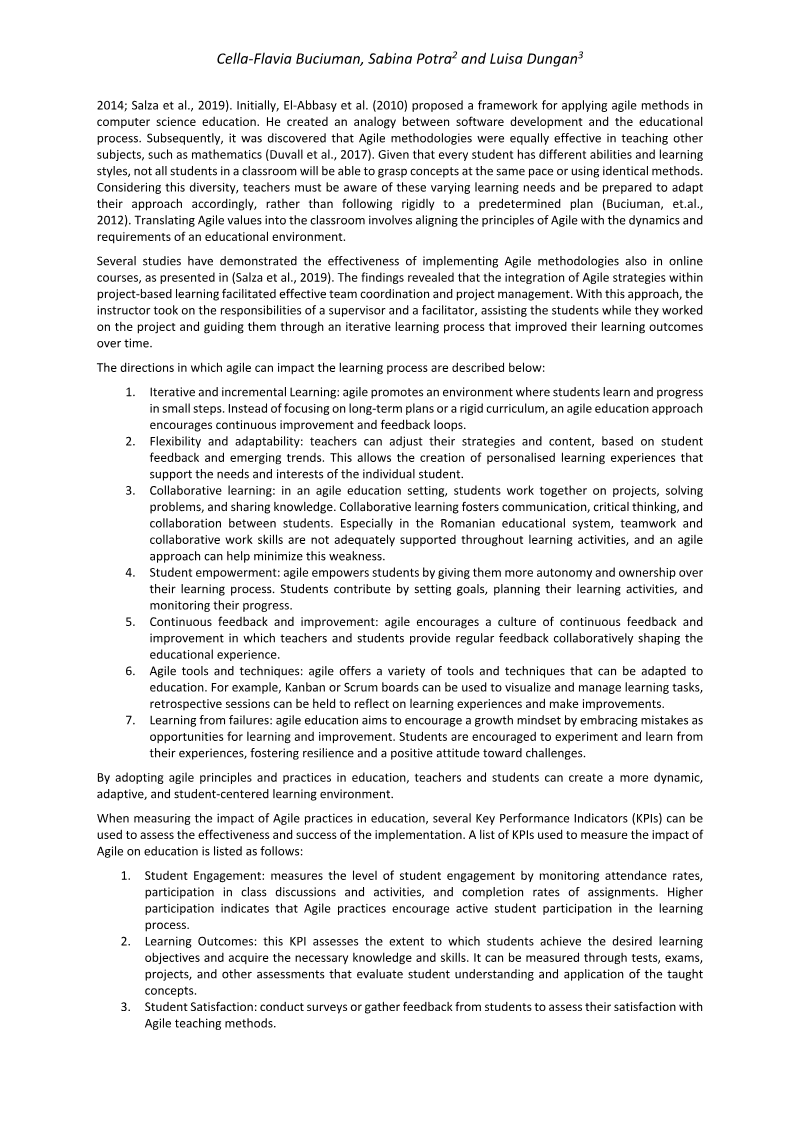
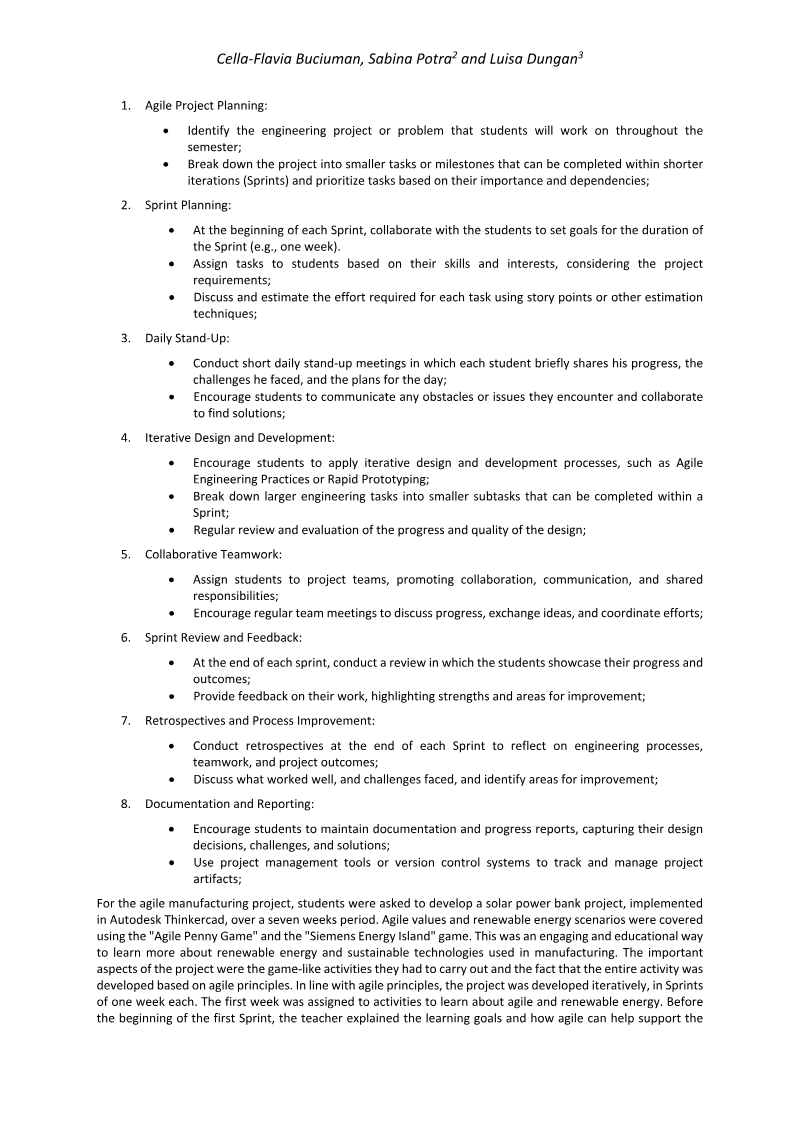
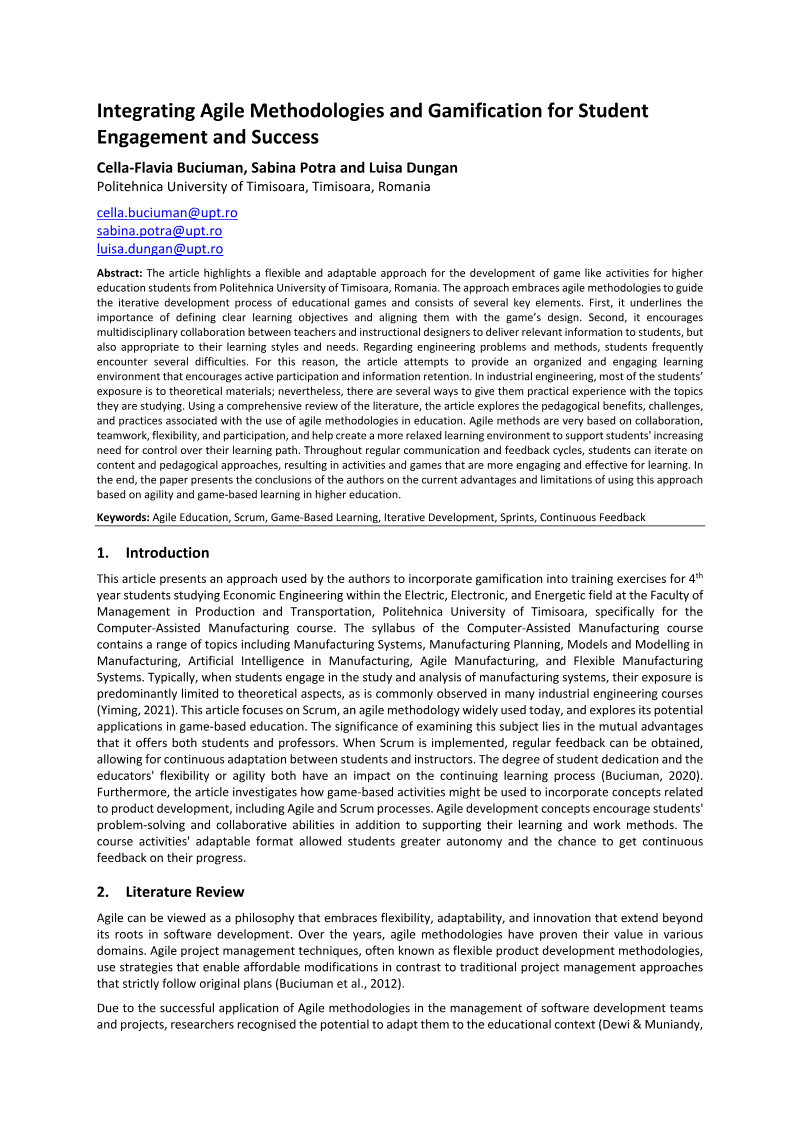
European Conference on Games Based Learning (ECGBL) · 2024
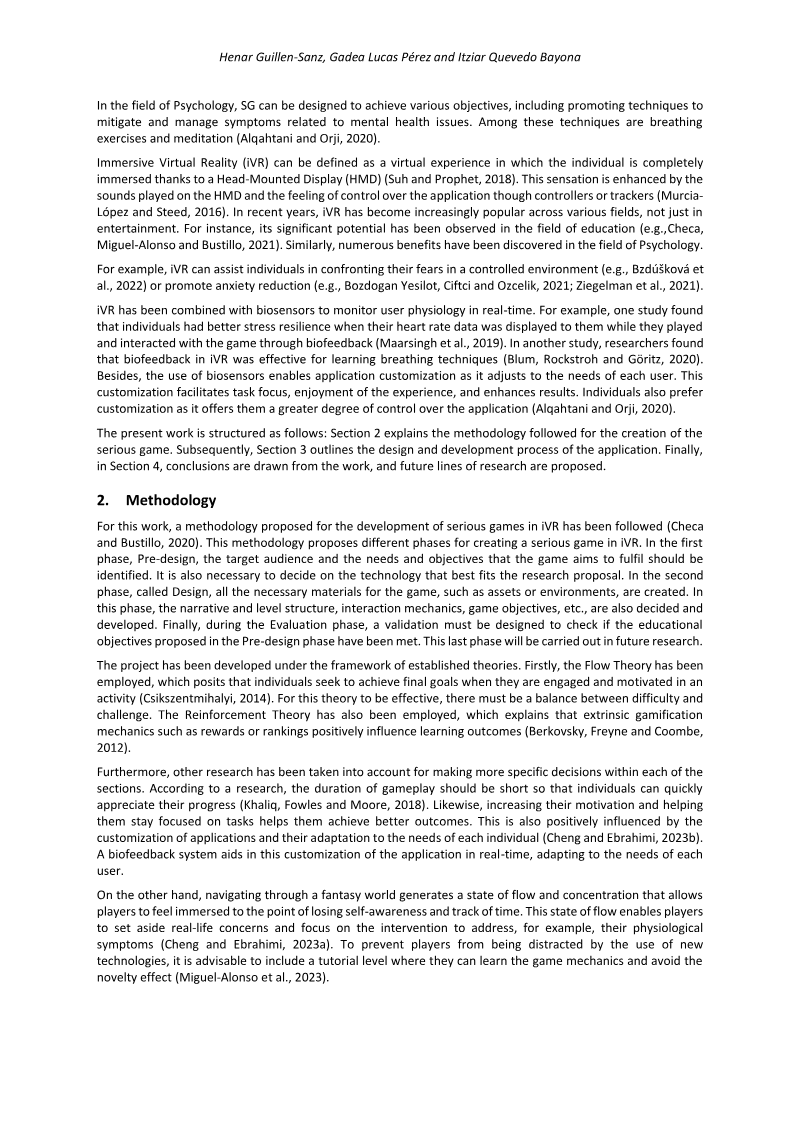
European Conference on Games Based Learning (ECGBL) · 2024
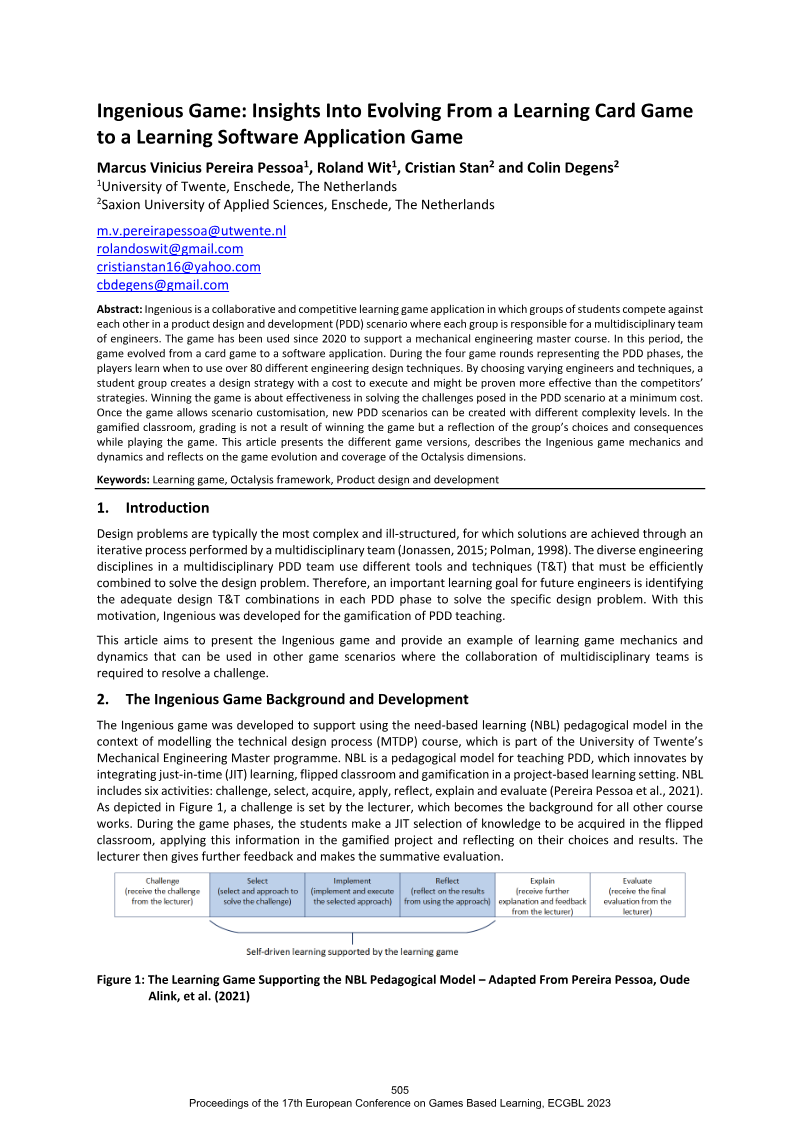
European Conference on Games Based Learning (ECGBL) · 2023