
European Conference on Games Based Learning (ECGBL)
Annual European conference on game-based learning and serious games; its proceedings are published open access (CC BY) by Academic Conferences International.
Documents
When Games Get in the Way: Gamification Approach for Teaching Maths: A Case Study with Undergraduate Tourism Students
This case study examines whether non-digital, game-based learning can increase motivation and engagement in mathematics among first-year undergraduate students in a Portuguese tourism and restaurant management program.
- The study tested non-digital game-based learning in nine of 22 two-hour first-year maths classes for 12 enrolled undergraduate tourism and restaurant management students at a Portuguese university, using five games including Fractions Dominoes, Math Twins, Problem Basket, StatPictionary, and SuperTmatik.
- Only 9 of 12 students responded to the end-of-semester online questionnaire, all aged 18 to 21, and the convenience sample makes the findings severely limited in generalizability.
- Students rated statements about interest, interactivity, stimulation, involvement, and motivation between 3.8 and 4.4 on a five-point scale, and no respondent disliked the games or failed to recommend their use.
Bridging Theory and Practice in Military Education Through Advanced Technologies
This paper describes the development of a VR and AR simulator designed to teach joint fire support principles to artillery students at the University of Defence in Brno, developed in collaboration with the private firm YORD.
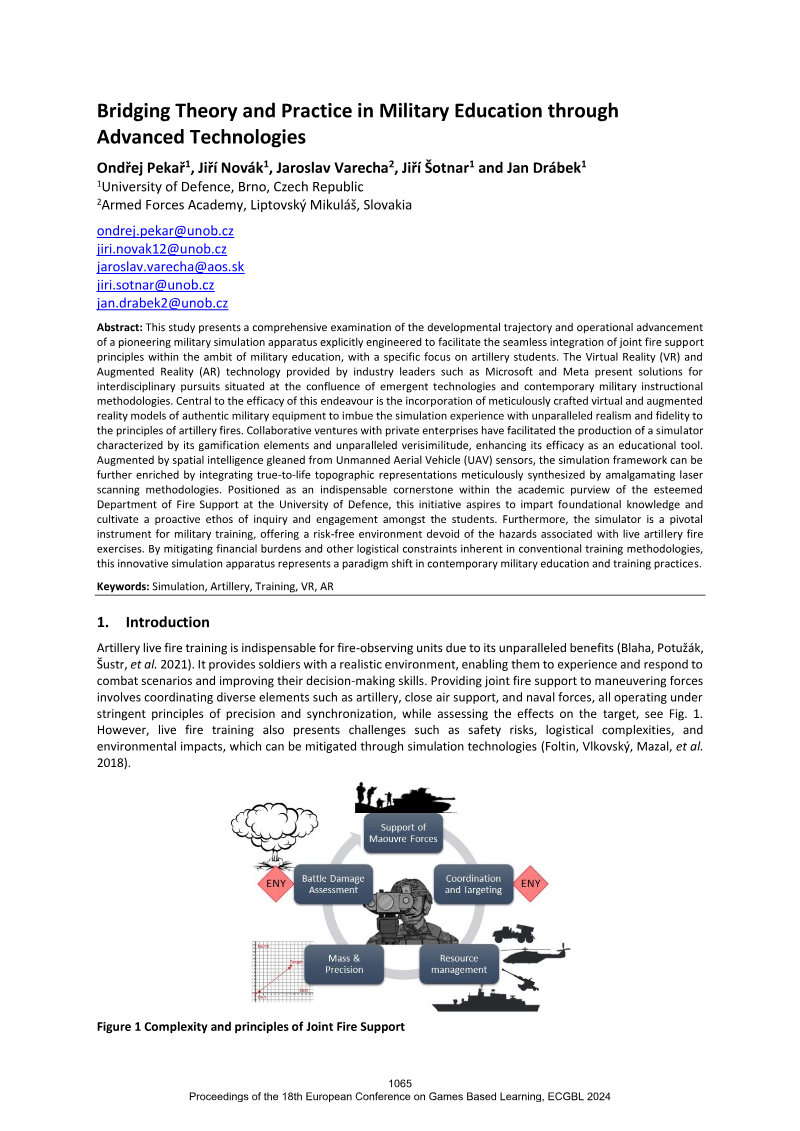
- A VR/AR artillery training simulator for joint fire support, developed at the University of Defence in Brno with the private firm YORD, is positioned as a safer, lower-cost alternative to live-fire exercises that carry safety, logistical, and environmental burdens.
- The system uses a Windows control module for scenario loading, target definition, and real-time tracking of field users, paired with a mobile and headset AR field module, supported by a Node.js/Express backend and Socket.IO networking.
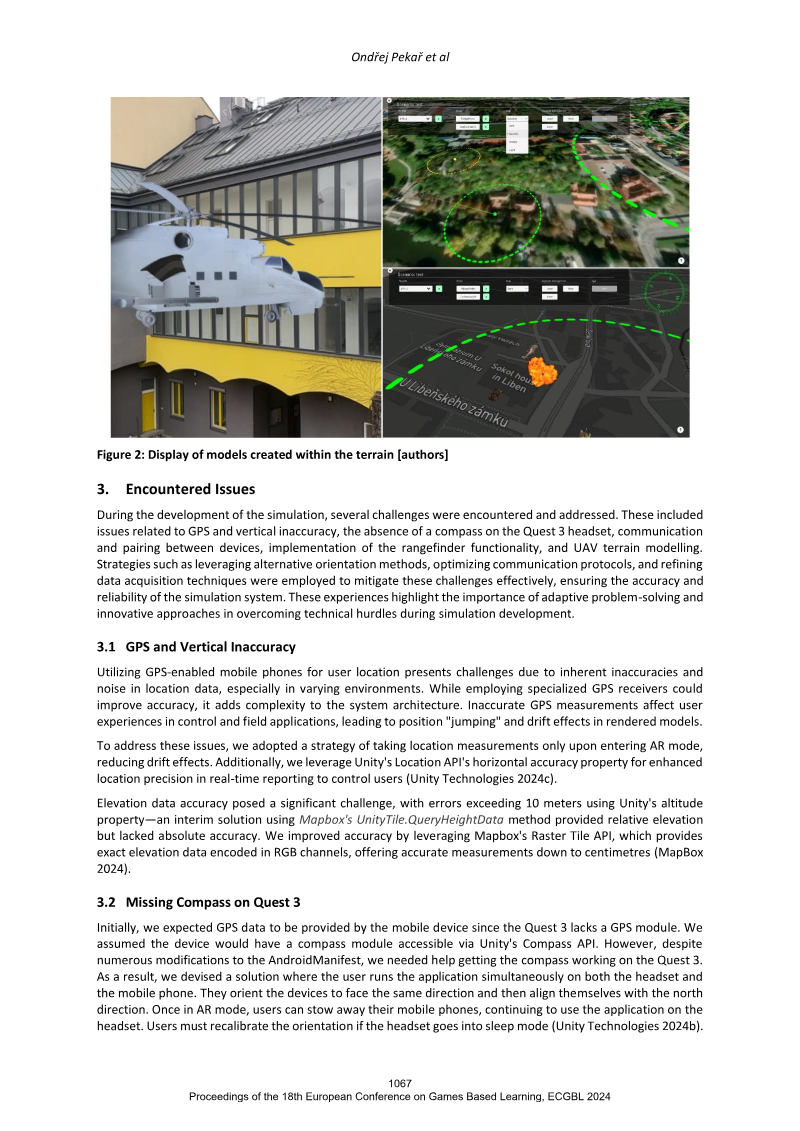
- Terrain realism is built from UAV-acquired LiDAR point clouds captured with a DJI M300 RTK platform and Zenmuse L1 sensor, and elevation accuracy was improved to centimetre-level precision by using Mapbox's Raster Tiles API instead of Unity's altitude data, which had errors exceeding 10 meters.
The Circular Game: The Impact of Gaming on Sustainable Behaviour
The Circular Game is a competitive strategy board game designed to teach sustainability, raise environmental awareness, and train participants to apply circular economy strategies to business models.
- The Circular Game is a competitive board game for two to six players that teaches circular economy strategies across five product lifecycle stages: eco-design, raw materials, production, use and lifetime, and waste management.
- The winner is the player who completes two circular strategies per stage with the fewest CO2 emissions, combining strategic competition with sustainability learning.
- The study's central aim is to test whether playing the game changes participants' sustainability knowledge, environmental awareness, and behaviour, and whether the emotions generated during play shape future sustainable conduct.
Boardcraft: Learning the Art of Strategic Decision-Making Card by Card
Boardcraft is a card-based, role-playing game developed at the Universidad de Burgos to teach strategic management within an undergraduate Business Administration degree.
- Boardcraft is a card-based role-playing game developed at the Universidad de Burgos to teach strategic management within an undergraduate Business Administration degree, addressing the lack of opportunities for practice in continuous decision-making found in lectures, texts, and case studies.
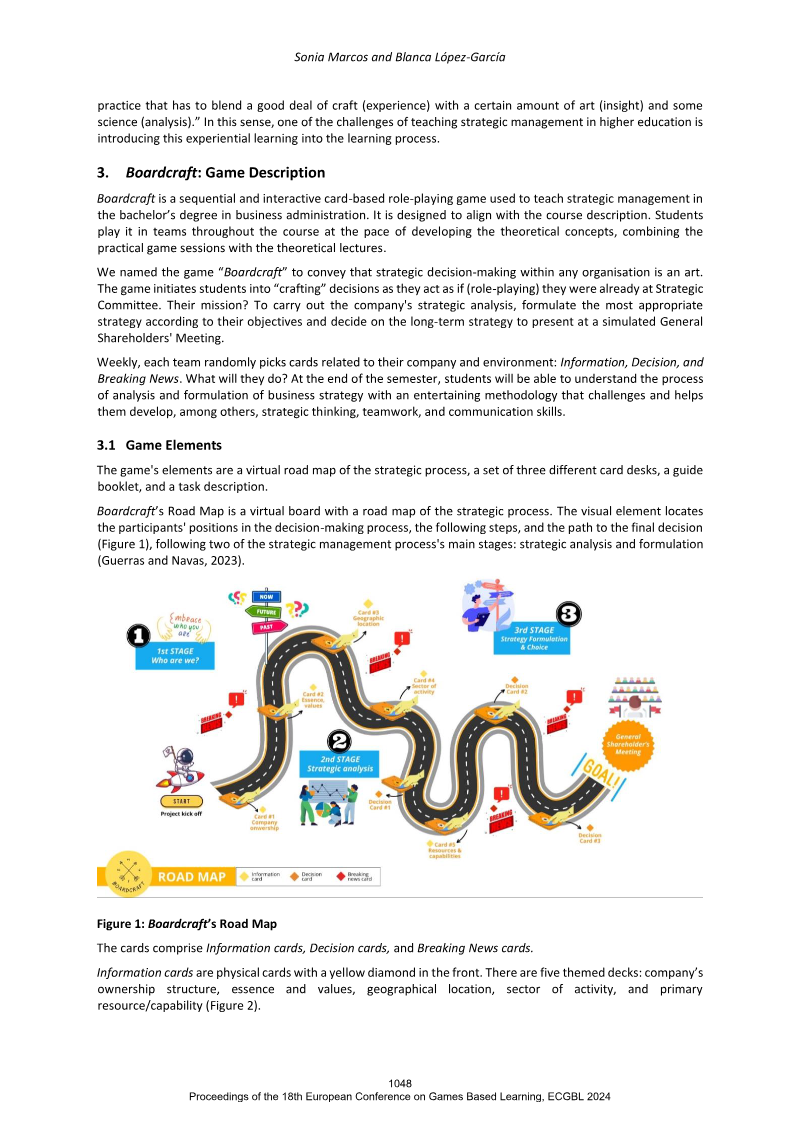
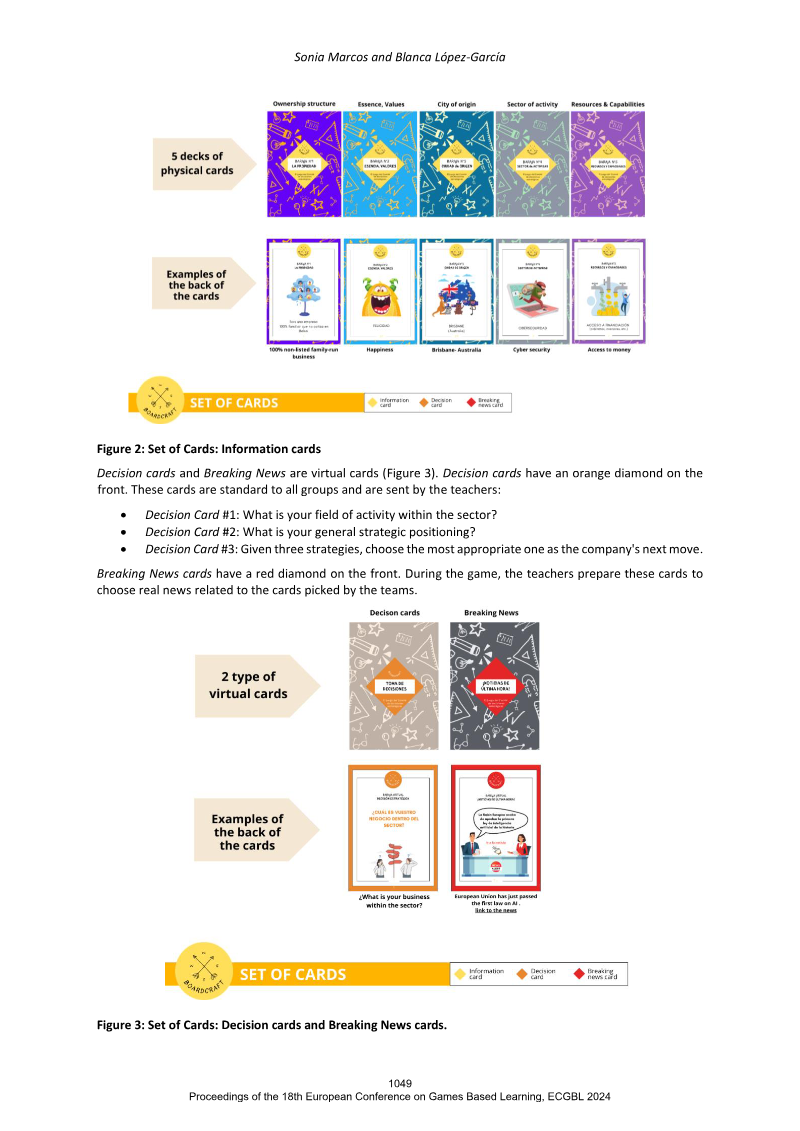
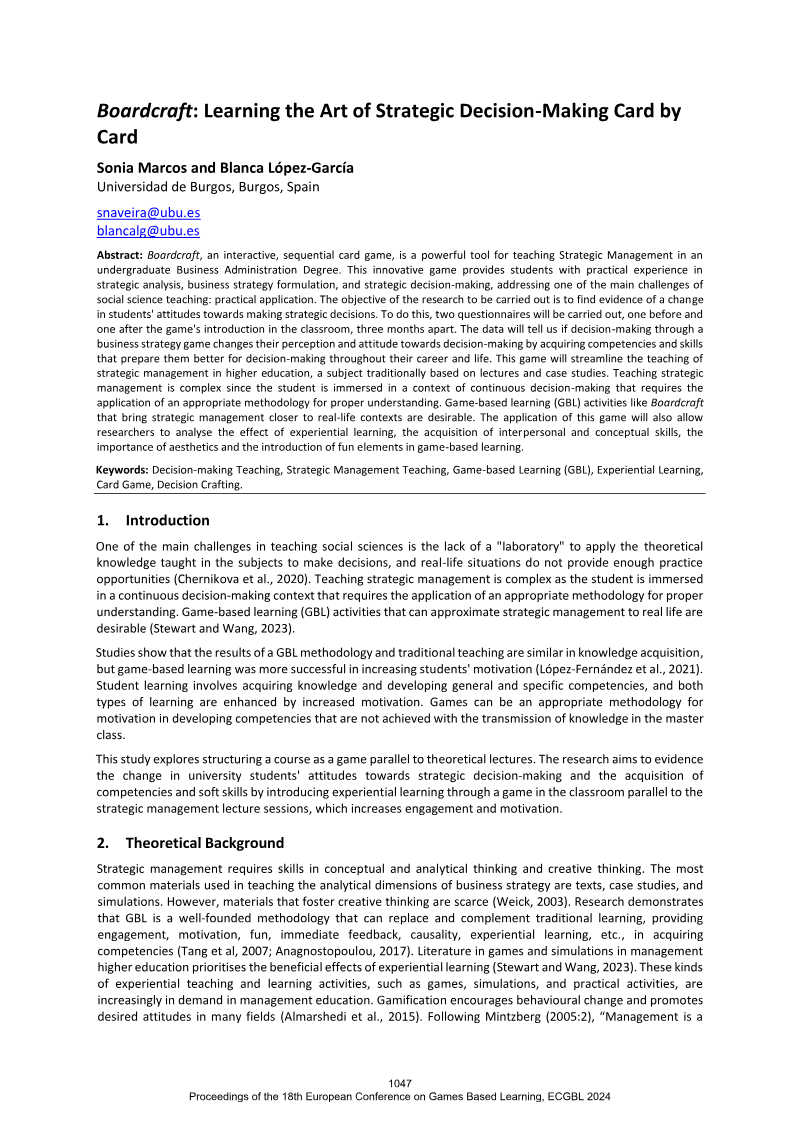
- Student teams act as a company's Strategic Committee, progressing through three stages (Who are we?, Strategic Analysis, and Strategic Choice) using Information, Decision, and Breaking News cards, and prepare a final presentation for a simulated shareholders' meeting.
- The paper reports no outcome data; it describes a planned pretest-posttest study with 50 to 60 students over one semester, combining an ad hoc questionnaire with a qualitative discussion group.
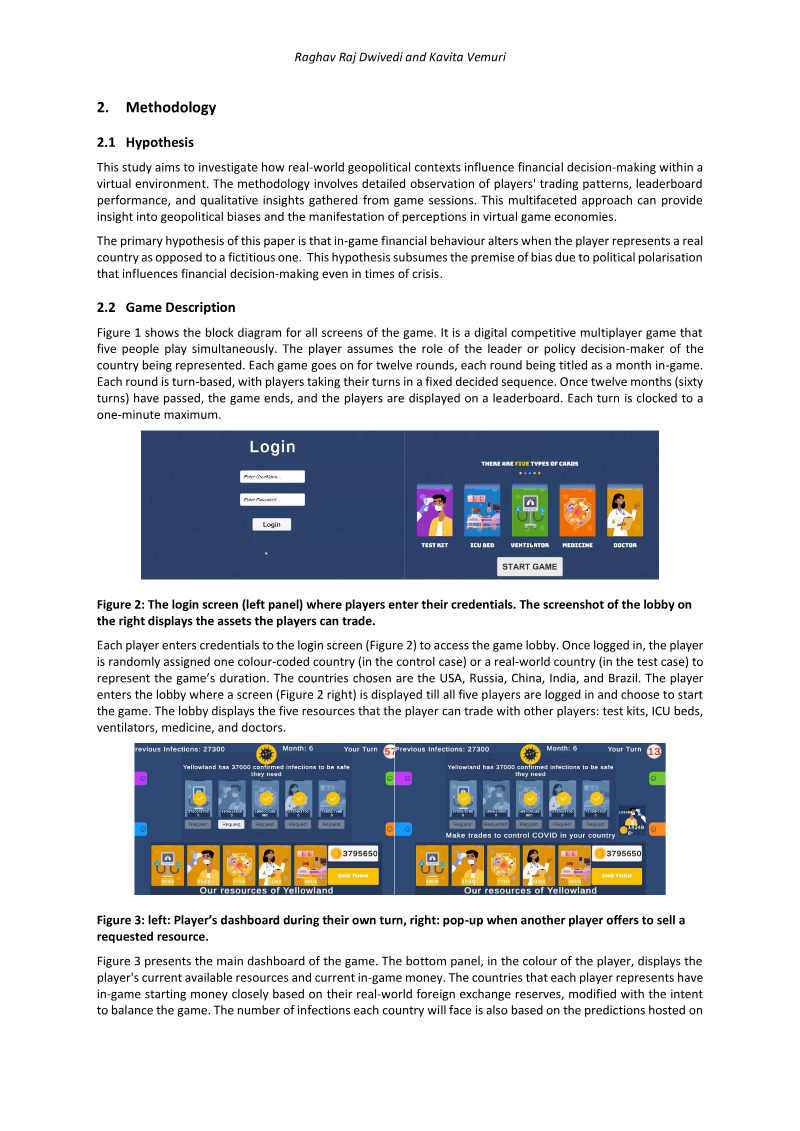
Real-World Geopolitical Influences on In-Game Financial Behaviour
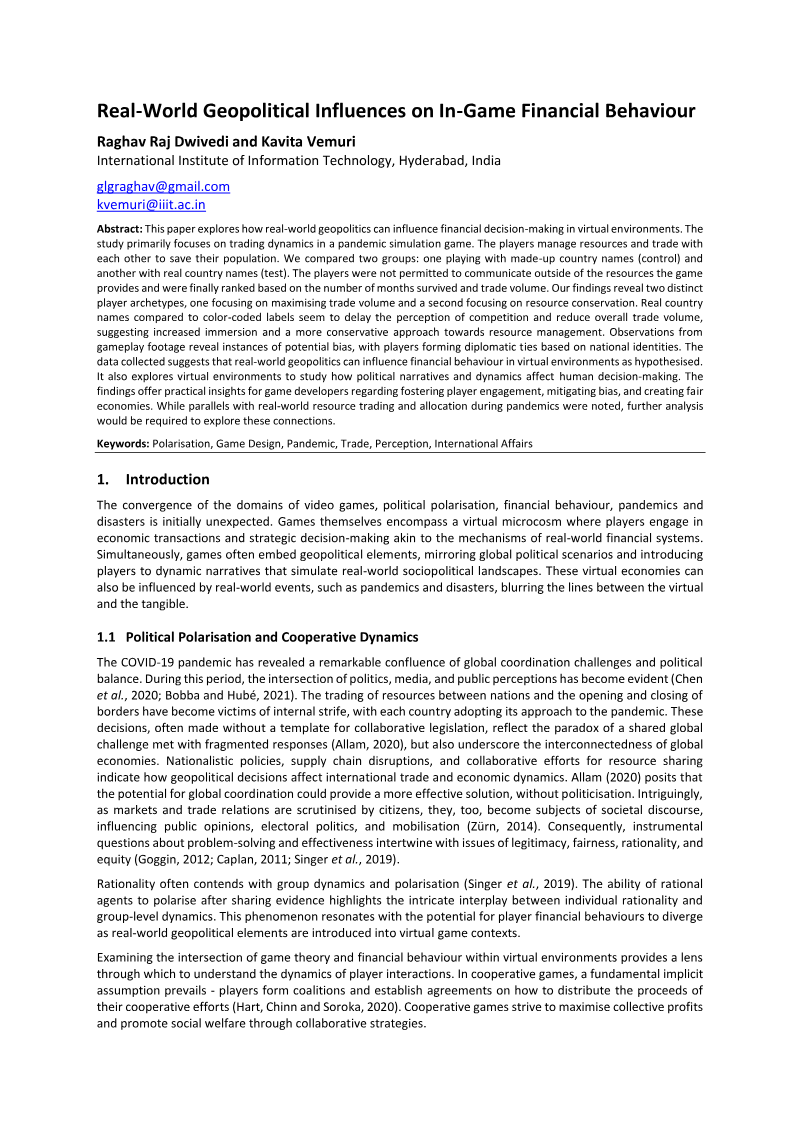
This study examines whether real-world geopolitical framing alters financial decision-making within a pandemic trading simulation game.
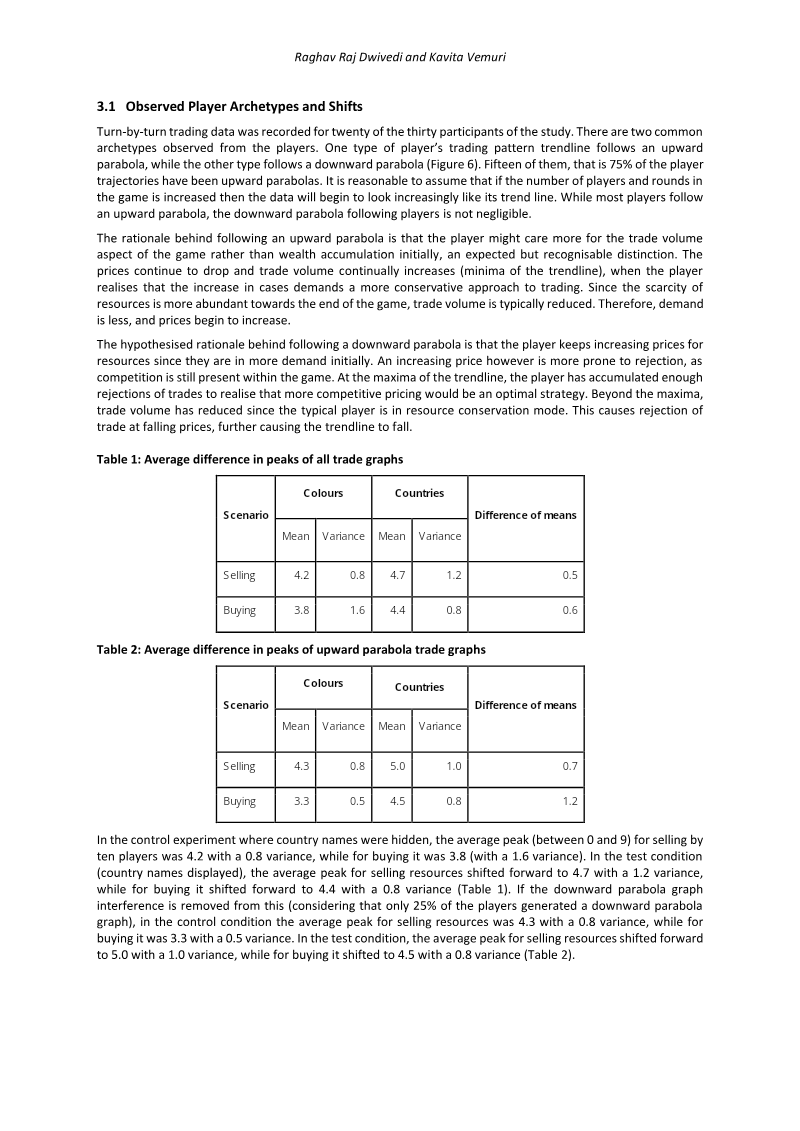
- Country framing appears to alter in-game trading: the study compares a control condition using fictitious country names against a test condition using real country names, and argues that real-country labels actively influence trading decisions.
- In a study of 30 Indian undergraduates (20 analysable), 75 percent followed an upward parabolic trading trajectory, and peaks in trading activity were delayed under the real-country condition.
- The authors attribute the delayed trading peaks to heightened immersion and players' perceived factual differences between nations, though this remains an interpretation rather than a confirmed mechanism.
Design Framework for VR Games in the Police Domain
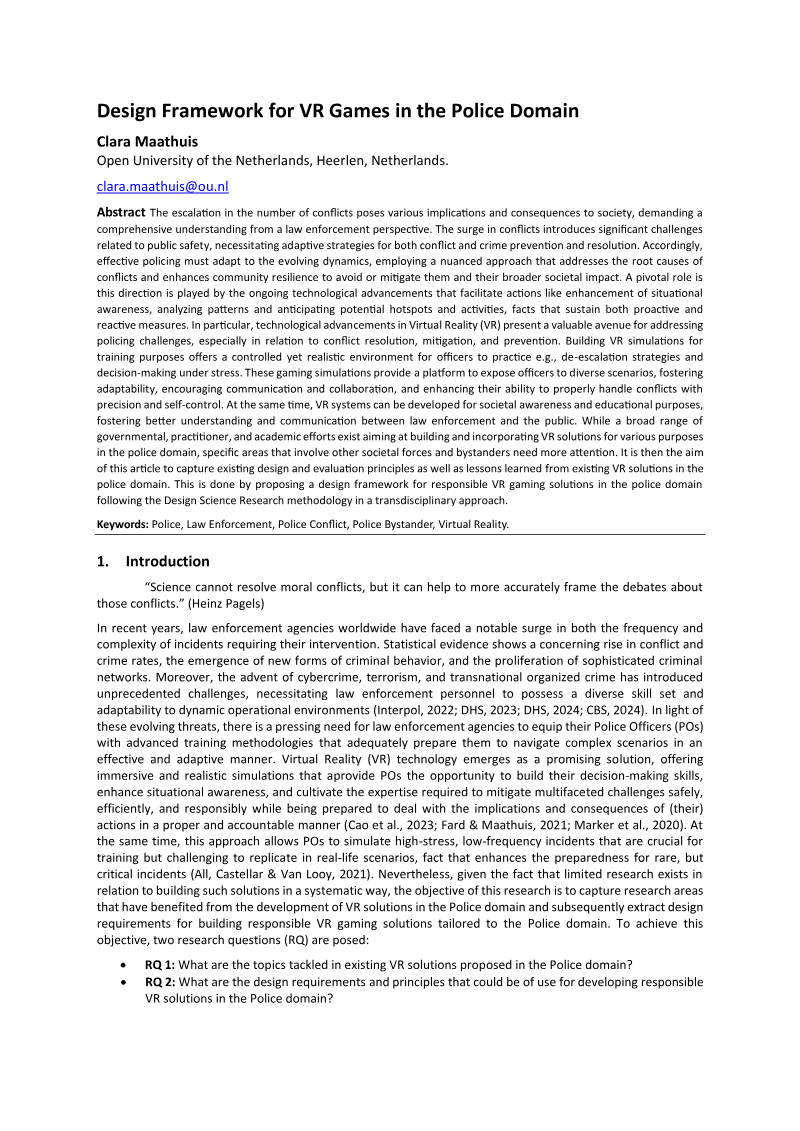
The document "Design Framework for VR Games in the Police Domain" aims to establish responsible design principles for virtual reality training games used in police contexts.
- The framework is motivated by rising conflict and crime and by the need for adaptive officer training that can rehearse realistic policing situations safely, with the central thesis that VR offers flexible, repeatable training with after-action review if design follows defined requirements rather than ad hoc development.
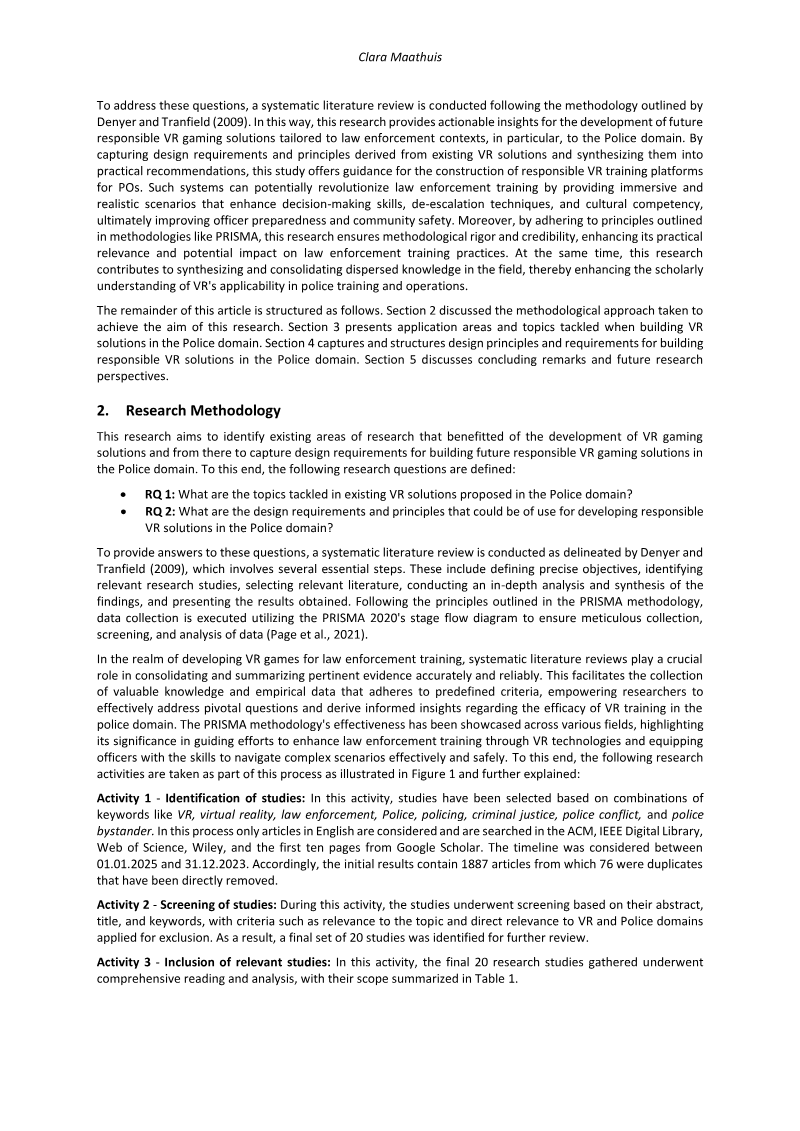
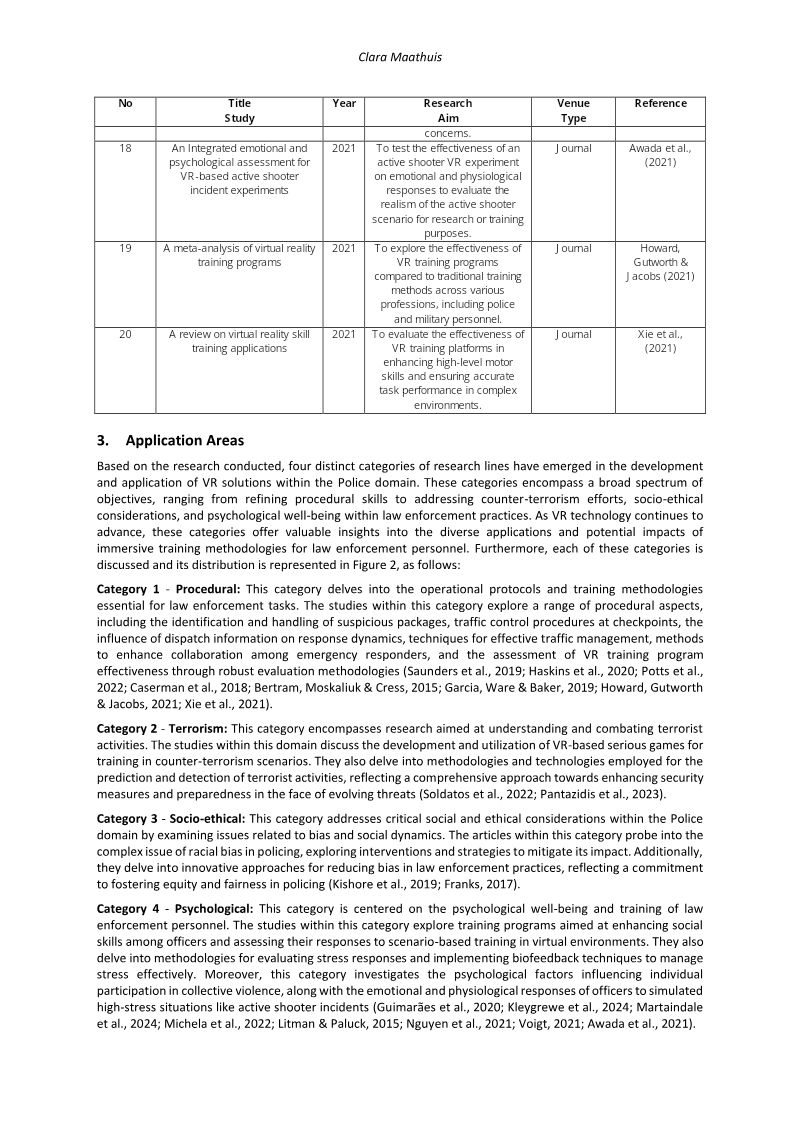
- The evidence base is a PRISMA-guided systematic review that screened 1,887 records (after removing 76 duplicates), narrowing to 20 included English-language studies drawn from ACM, IEEE, Web of Science, Wiley, and Google Scholar.
- The reviewed police VR literature is organized into four categories: procedural skills, counter-terrorism, socio-ethical issues, and officer psychological well-being.
Cultural Game Jam Model: A Quadruple Helix Intervention
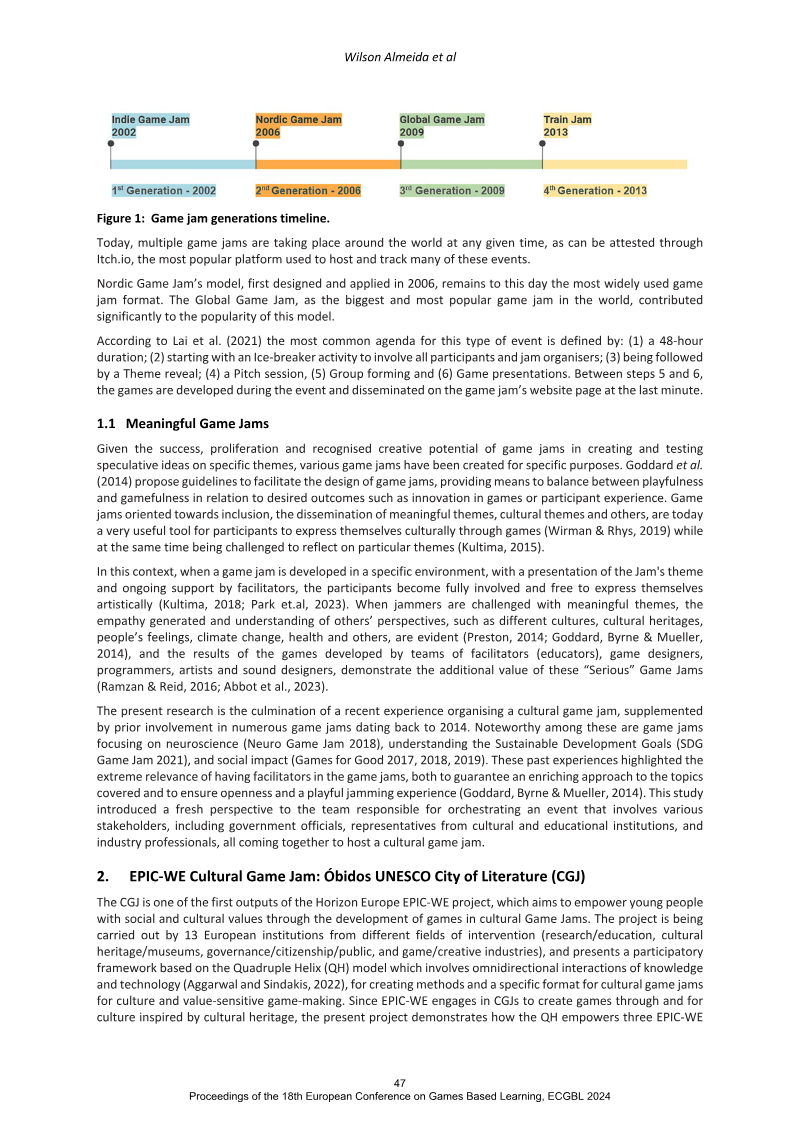
The Cultural Game Jam Model presents an intervention developed under the EPIC-WE project, a Horizon Europe initiative that applies a Quadruple Helix framework linking a municipality, a games company, university researchers, and youth participants.
- The Cultural Game Jam Model is an intervention under the EPIC-WE Horizon Europe project that applies a Quadruple Helix framework linking a municipality, a games company, university researchers, and youth participants, testing whether a locally cultural game jam can produce culturally meaningful games while sustaining engagement.
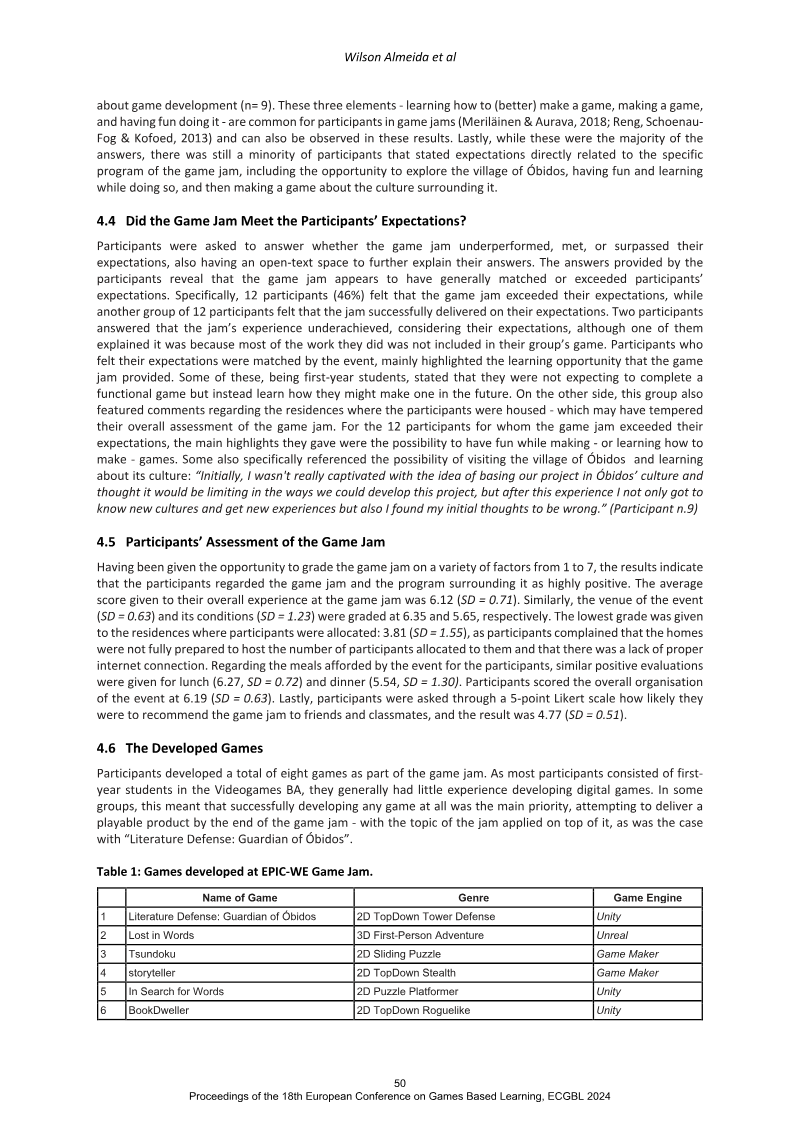
- The first pilot in Óbidos, Portugal drew more than 26 participants, mostly first-year Videogames students motivated by portfolio building, novelty, and interest in local culture, and produced eight games, several drawing directly on the village's physical setting.
- Participants rated the overall experience highly at 6.12 out of 7, with venue and organization also scoring well, but accommodations scored lowest at 3.81 out of 7 due to poor preparation and unreliable internet access.
Leveling Up Learning: Game Based Learning Initiatives in Canadian Higher Education
Game-based learning (GBL) and gamification are increasingly visible in Canadian higher education, yet the field remains uneven and under-structured.
- Of 108 accredited Canadian universities surveyed, 75 reported some form of game-based learning (GBL) initiative, though none are located in the three territories, and adoption varies sharply by province.
- Activity is concentrated in Alberta, British Columbia, and Ontario, which lead in curricular, co-curricular, and research engagement; British Columbia and Alberta each report curricular integration at 66.67 percent of institutions, and undergraduate engagement reaches 77.78 percent in Alberta.
- Nova Scotia, Saskatchewan, and Manitoba show limited institution-wide adoption, and several institutions in Quebec, New Brunswick, and Nova Scotia offer no GBL programming at all.
The Open Data Newsroom: A Game Approach for Developing Open Data Competencies in Elementary School
"The Open Data Newsroom" presents a role-playing game in which students act as data journalists, working through three phases of getting, understanding, and delivering open data to solve a mystery.
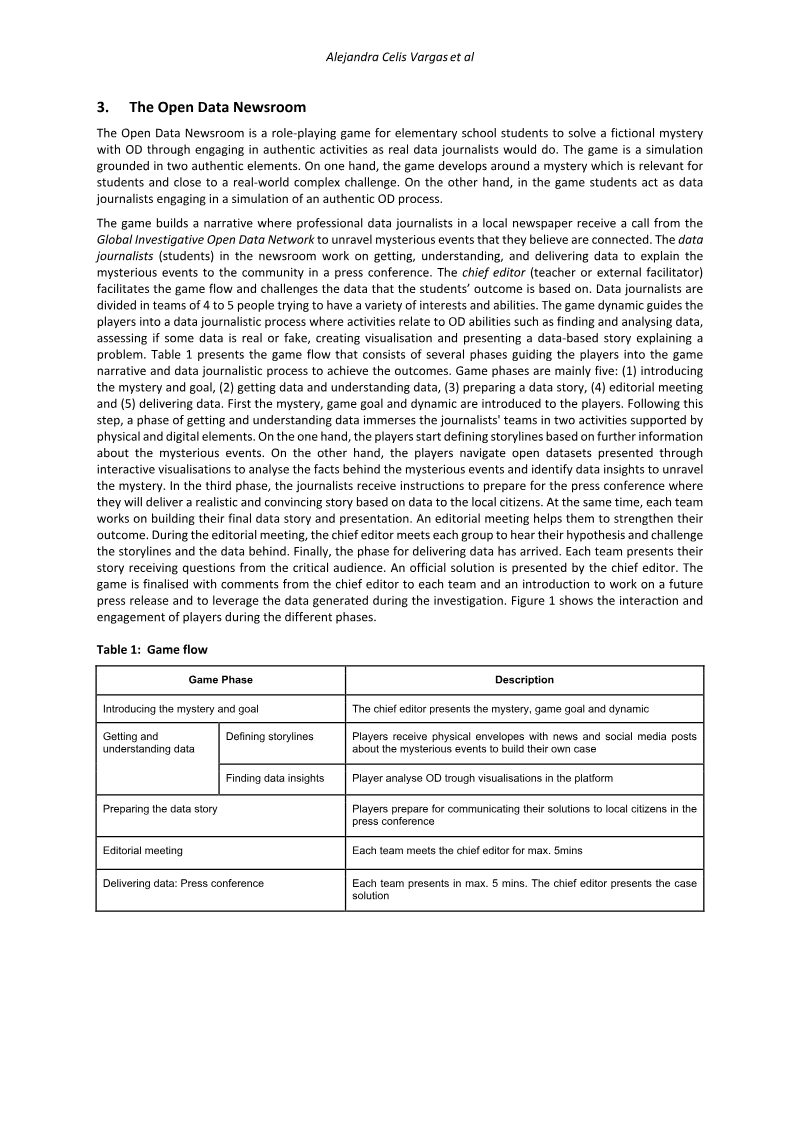
- The Open Data Newsroom is a role-playing game in which students act as data journalists across three phases (getting, understanding, and delivering open data) to solve a mystery, aimed at building open data literacy in elementary-age learners.
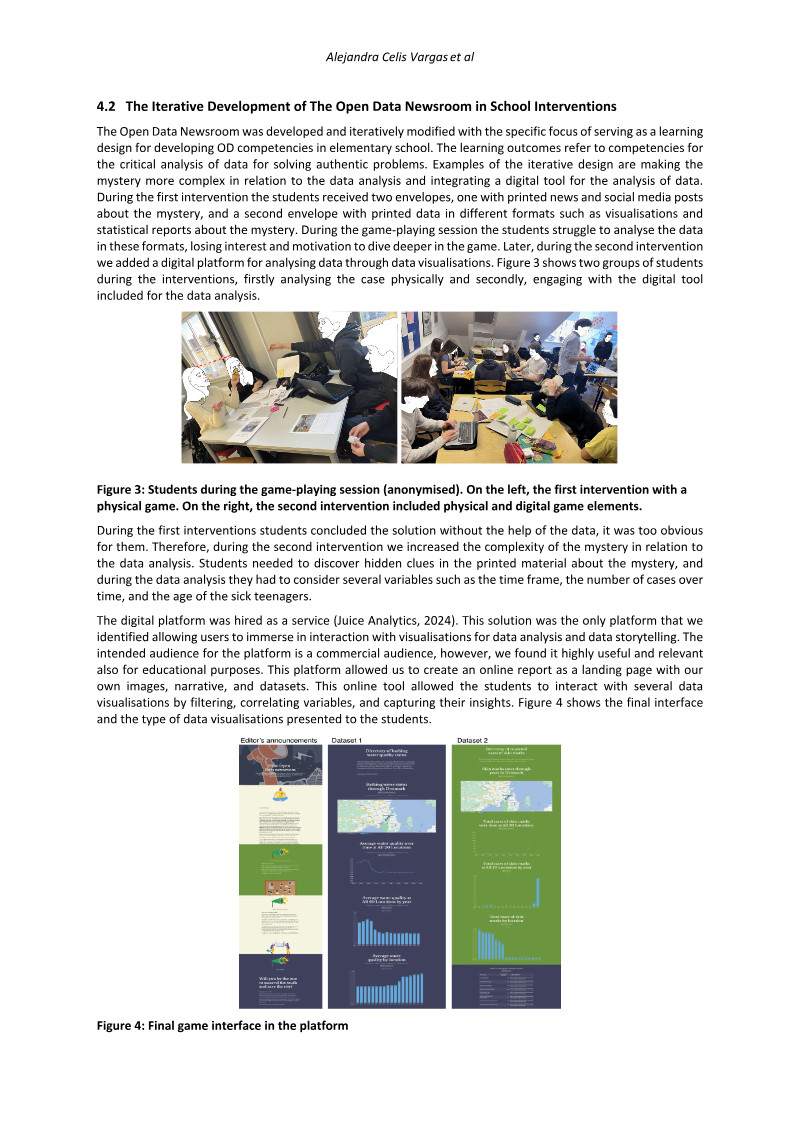
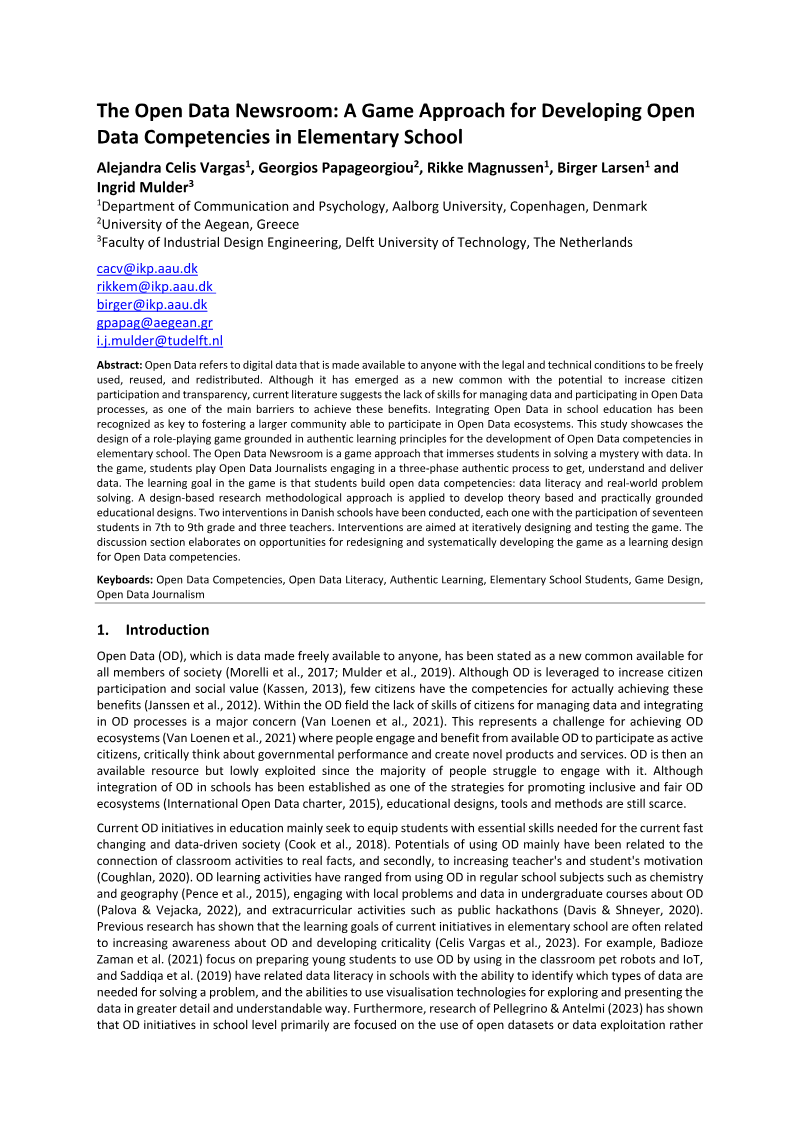
- Development used design-based research with iterative test cycles; the first intervention (physical elements only) yielded simplistic solutions, limited data use, and declining engagement during analysis, which led to adding a digital visualization platform and a more complex mystery.
- The second intervention, with students aged 14 to 16 in Danish schools, showed stronger outcomes: deeper analytical reasoning, scrutiny of dataset validity (e.g., spotting 2024 bathing-water data before the season had begun), and independent searches for additional open data sources.
Investigating the Role of Adaptivity in Video Games for Attitude Change
This paper proposes and plans an empirical test of whether video games can change players' attitudes more effectively when their persuasive content is adapted to each player's initial attitudes.
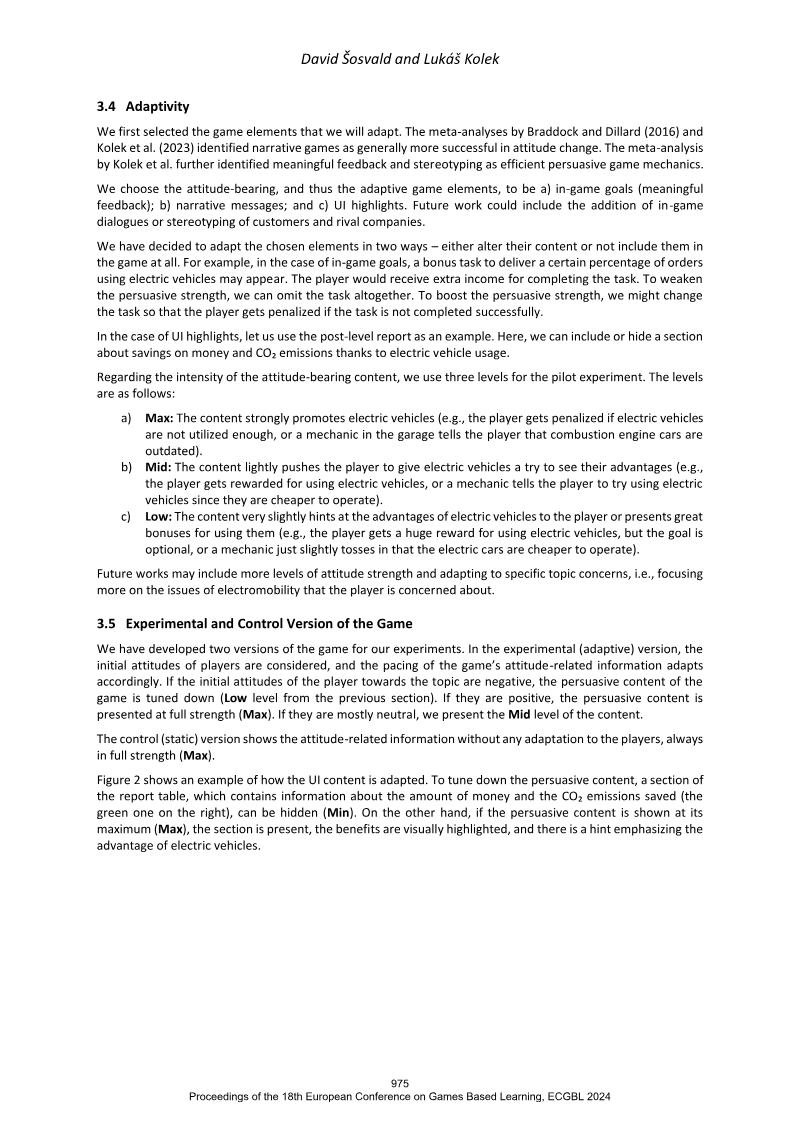
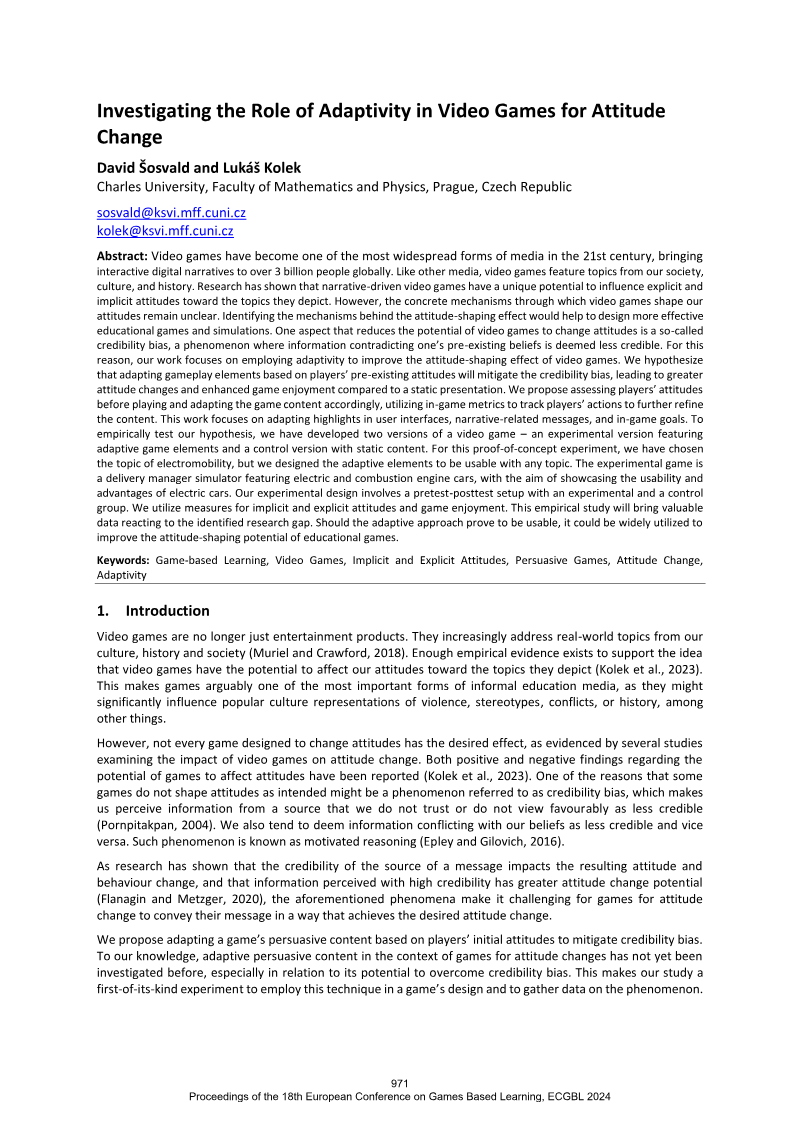
- The paper is a proposal for an empirical test of whether games can change player attitudes more effectively when persuasive intensity is tailored to each player's initial attitudes, reducing resistance from players who hold negative views; no results are reported yet.
- The core premise is that credibility bias and motivated reasoning lead negatively disposed players to discount persuasion, so softening content for them while delivering full-strength content to favorable players may reduce that resistance.
- The authors position this as a research gap: prior adaptive game work adjusted difficulty or personality-based persuasion but did not adapt to initial attitudes, and the study is framed within the APE dual-process model of explicit and implicit attitudes.
Children's Expressed Emotions During Playful Learning Games
This study investigates whether young children experience academic emotions such as confusion, frustration, and boredom during playful learning games, and whether their emotional transitions follow the model of affect dynamics established for university students engaged in complex learning.
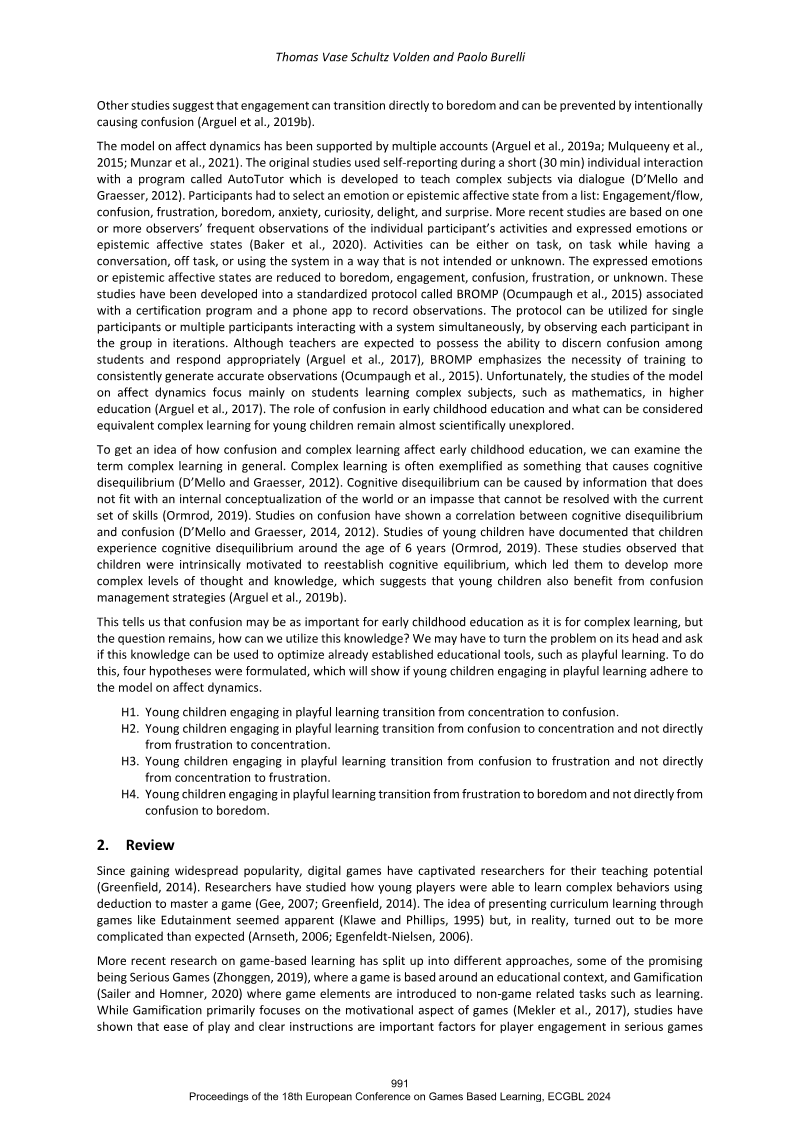
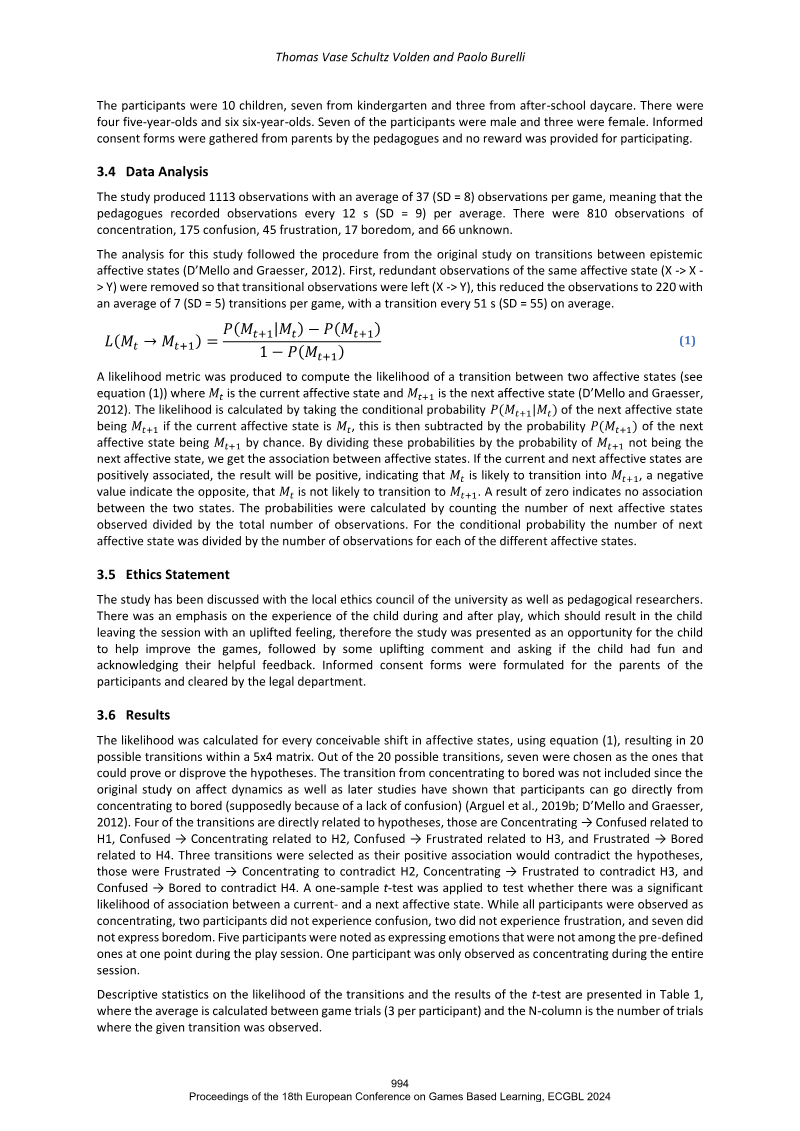
- The study recorded 1,113 expressed-emotion observations of ten 5- to 6-year-olds playing three kindergarten tile-based games, with concentration dominating at 810 observations, followed by confusion (175), frustration (45), boredom (17), and unknown states (66).
- Children moved significantly from concentration to confusion, supporting the first hypothesis, which fits the idea that confusion can be beneficial for learning when properly managed.
- A significant direct transition from concentration to frustration contradicted the expected affect-dynamics sequence, and evidence for transitions involving boredom was too sparse to draw firm conclusions.
Enhancing Team Cohesion Through a Custom MOBA Game: Development, Implementation & Impact
This paper presents the development and evaluation of UBMG (Untitled Belbin MOBA Game), a simplified multiplayer online battle arena designed to strengthen team cohesion.
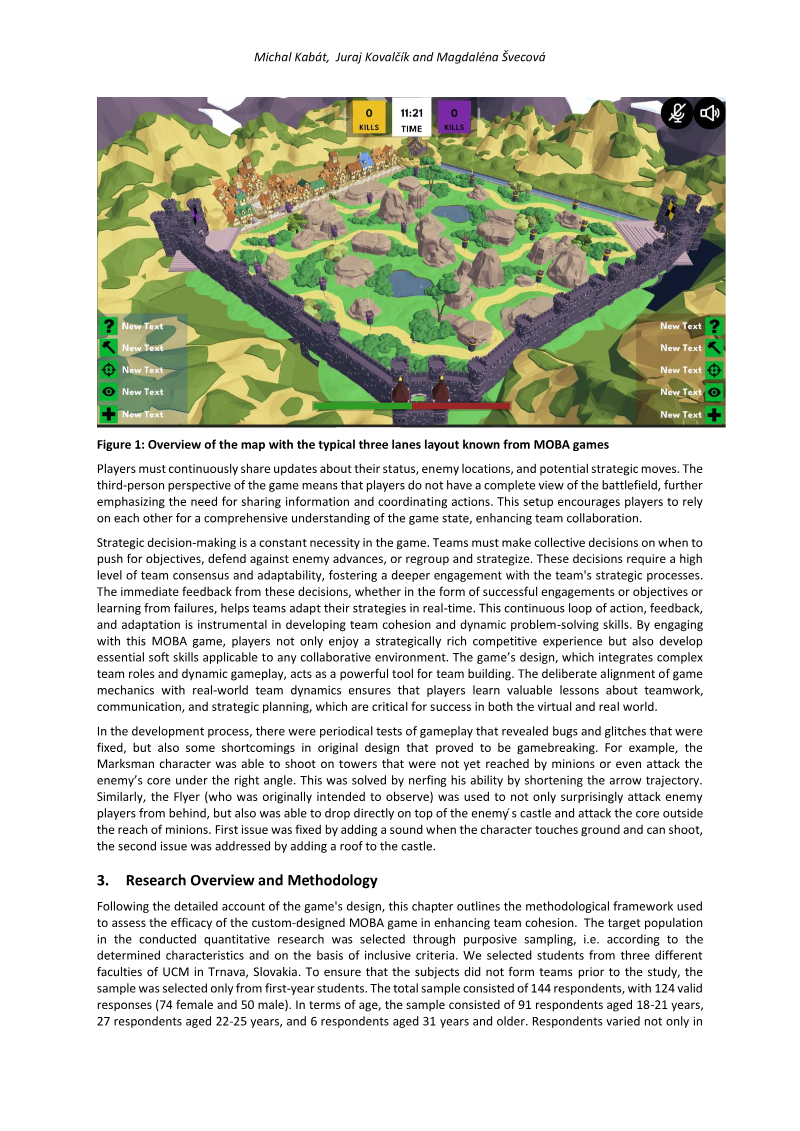
- The study introduced UBMG, a simplified MOBA that maps five fixed character roles (Healer, Flyer, Marksman, Bruiser, Jungler) onto Belbin team roles and prioritizes voice communication and shared objectives over individual mechanical skill.
- In a study of 124 valid first-year university students split into experimental and control groups, the experimental group showed significant gains in task cohesion, three dimensions of social inclusion, and four dimensions of achievement motivation after playing UBMG.
- The four achievement motivation dimensions that improved were confidence in success, flexibility, internality, and competitiveness.