1 free read left. Create a free account for unlimited reading + AI research.
Create free accountWhitepaper European Conference on Games Based Learning (ECGBL)
1 free read left. Create a free account for unlimited reading + AI research.
Create free accountWhitepaperEuropean Conference on Games Based Learning (ECGBL)
The framework is motivated by rising conflict and crime and by the need for adaptive officer training.
The document "Design Framework for VR Games in the Police Domain" aims to establish responsible design principles for virtual reality training games used in police contexts. Its motivation rests on rising conflict and crime, alongside the need for adaptive officer training that can rehearse realistic policing situations safely. The central thesis holds that VR can offer flexible, repeatable training with after-action review, provided that design is systematically guided by defined requirements rather than ad hoc development.
The work is grounded in a PRISMA-guided systematic review that screened 1,887 records, after removing 76 duplicates, down to 20 included studies published in English. Searches drew on ACM, IEEE, Web of Science, Wiley, and Google Scholar. From this literature, the author organizes police VR research into four categories: procedural skills, counter-terrorism, socio-ethical issues, and officer psychological well-being. The synthesis is qualitative and reports no new quantitative data of its own.
From these categories, the paper proposes six clusters of design requirements: scenario, hardware, training, data and AI, ethics, and evaluation. The conclusions point toward a research agenda in which these requirements are captured systematically, with possible use of large language models and multimodal data to model conflict de-escalation and the ethical and legal dimensions that accompany it. The scope is thus a literature-based framework oriented toward police training applications, with its evidentiary basis drawn from the 20 selected studies rather than from primary empirical testing.
Each row is a game or company this document names, each column a document, oldest first. A mark means that document names it. Select a row to see those documents.
European Conference on Games Based Learning (ECGBL) · 2025
European Conference on Games Based Learning (ECGBL) · 2025
European Conference on Games Based Learning (ECGBL) · 2025
European Conference on Games Based Learning (ECGBL) · 2025
European Conference on Games Based Learning (ECGBL) · 2025
European Conference on Games Based Learning (ECGBL) · 2025
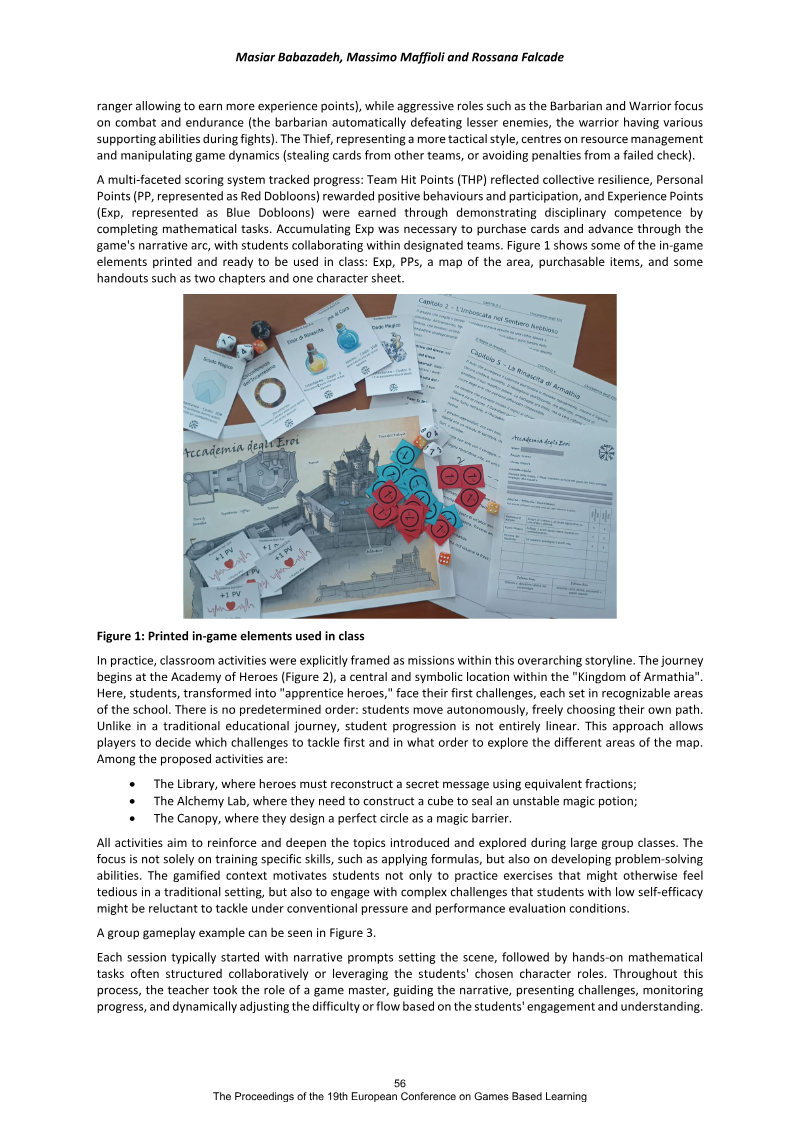
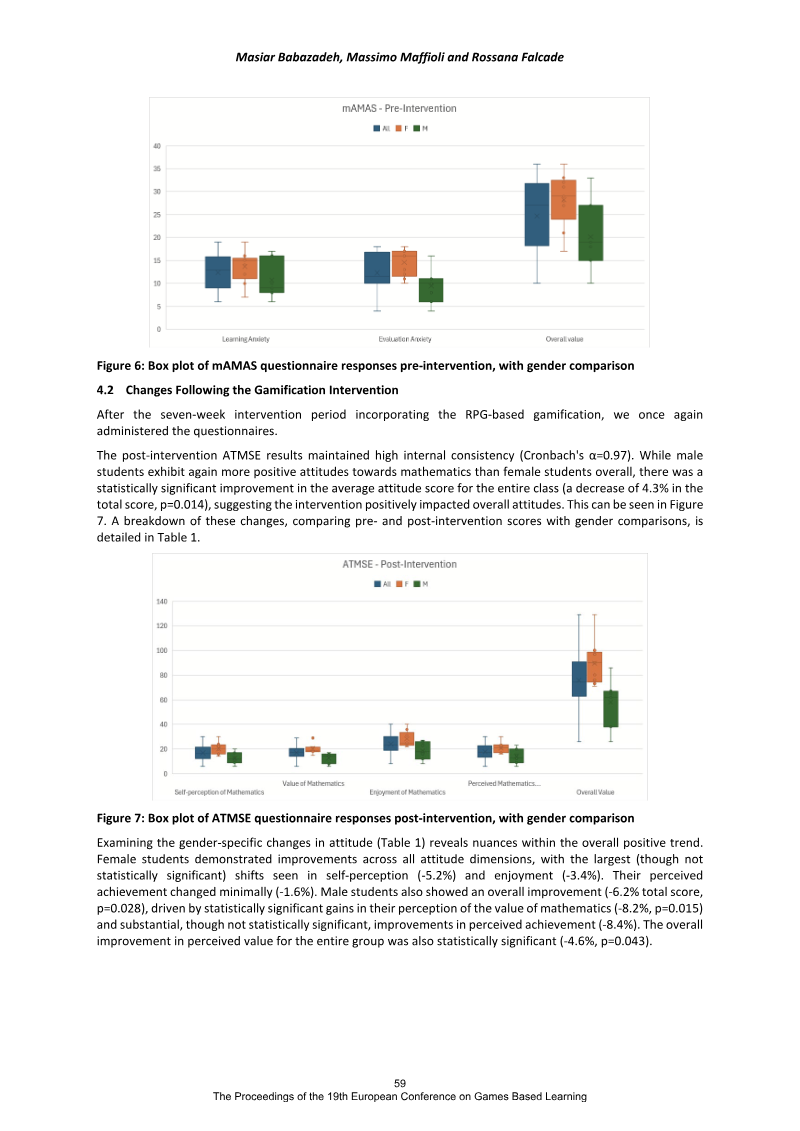
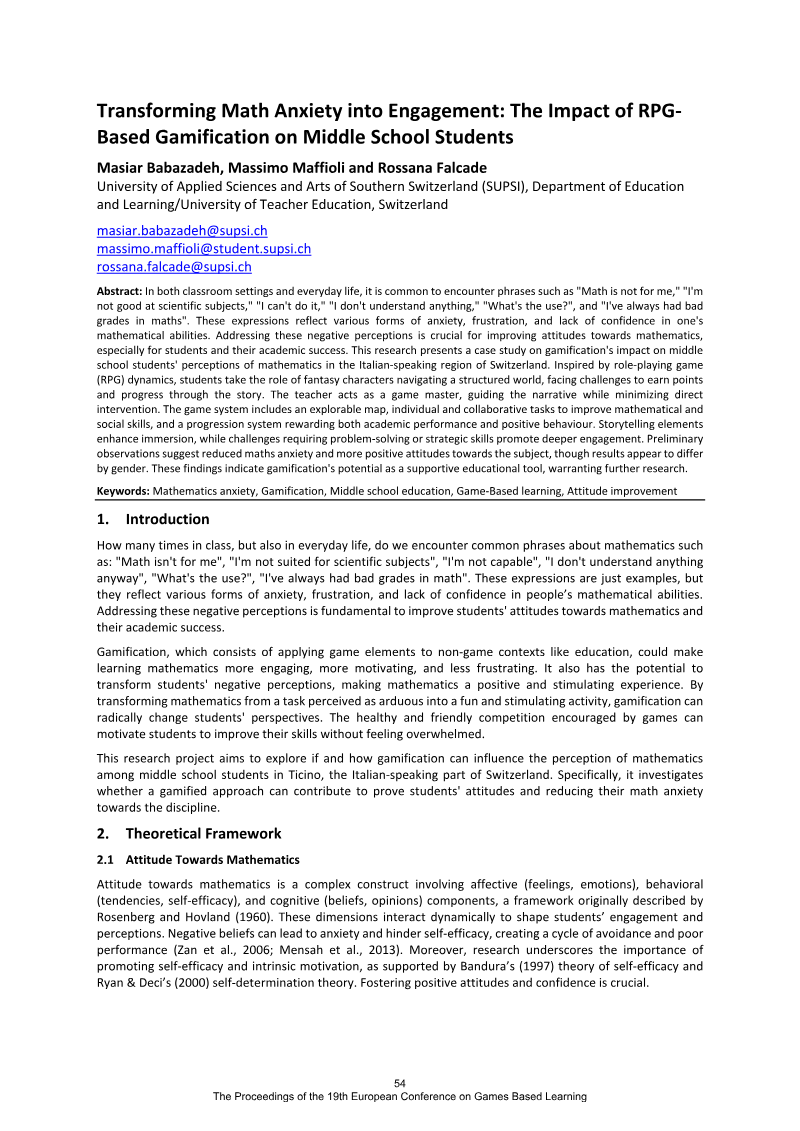
European Conference on Games Based Learning (ECGBL) · 2025
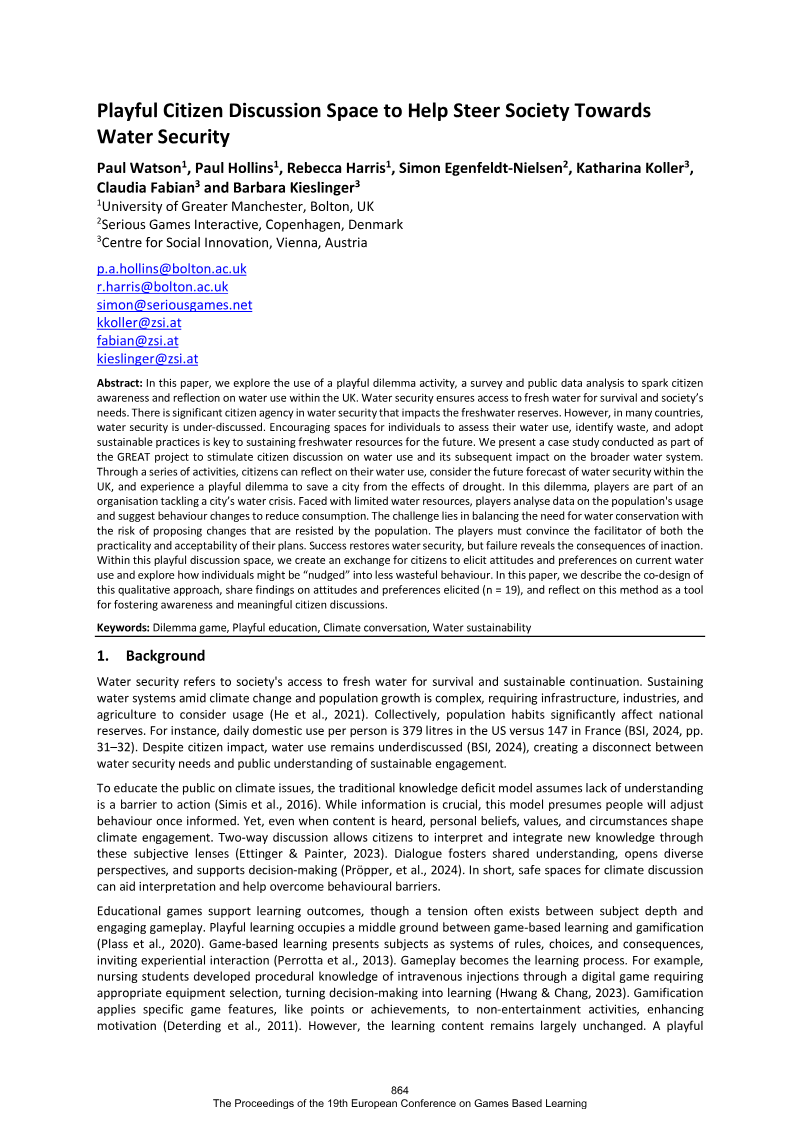
European Conference on Games Based Learning (ECGBL) · 2025
European Conference on Games Based Learning (ECGBL) · 2025
European Conference on Games Based Learning (ECGBL) · 2025
European Conference on Games Based Learning (ECGBL) · 2025
European Conference on Games Based Learning (ECGBL) · 2025
European Conference on Games Based Learning (ECGBL) · 2024