
European Conference on Games Based Learning (ECGBL)
Annual European conference on game-based learning and serious games; its proceedings are published open access (CC BY) by Academic Conferences International.
Documents
Game Lab Innovations in Education: Insights from a Board Game Design Project
This paper examines how game development can serve as a pedagogical method for teachers, drawing on a year-long international project called Let's Play, which paired a Norwegian university game development program with practicing teachers from Poland.
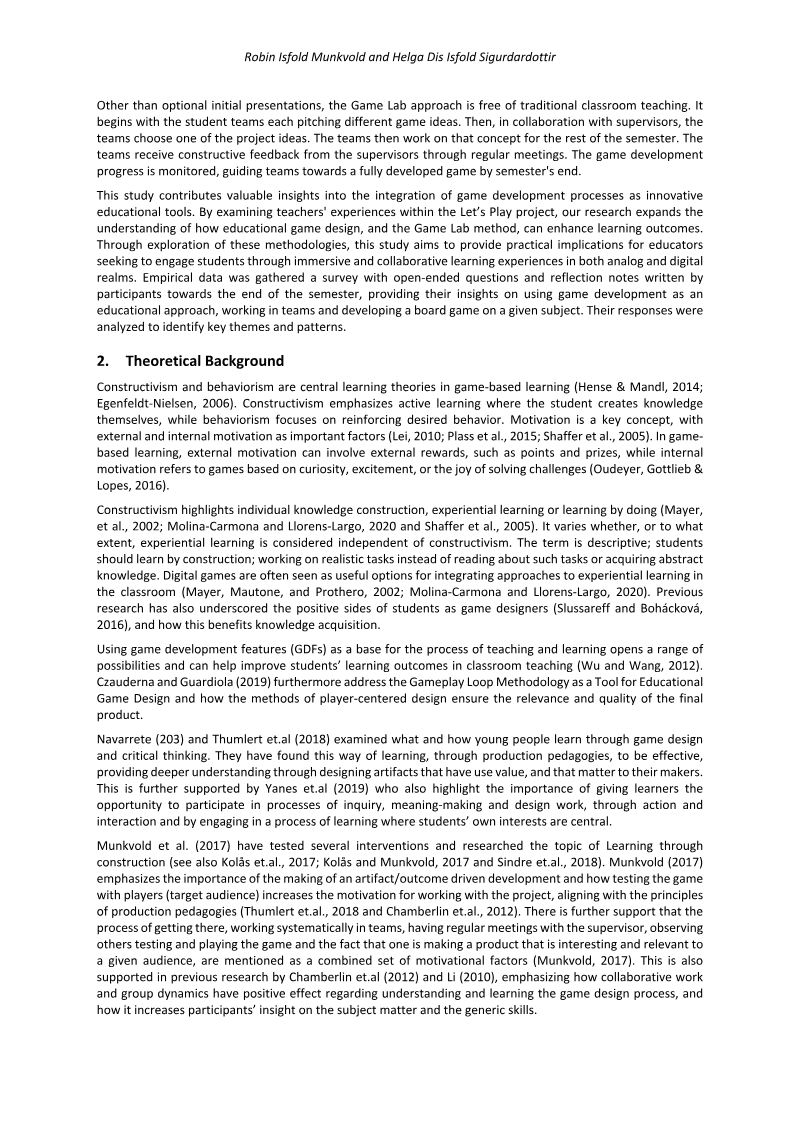
- A year-long international project called Let's Play paired a Norwegian university game development program with twelve practicing teachers from Poland, who completed a two-day seminar and then built analog board games in teams with bi-weekly feedback.
- The Game Lab model organizes development around student teams operating as small game companies, with supervisors acting as clients, and the study examined it as a way to support teacher professional development.
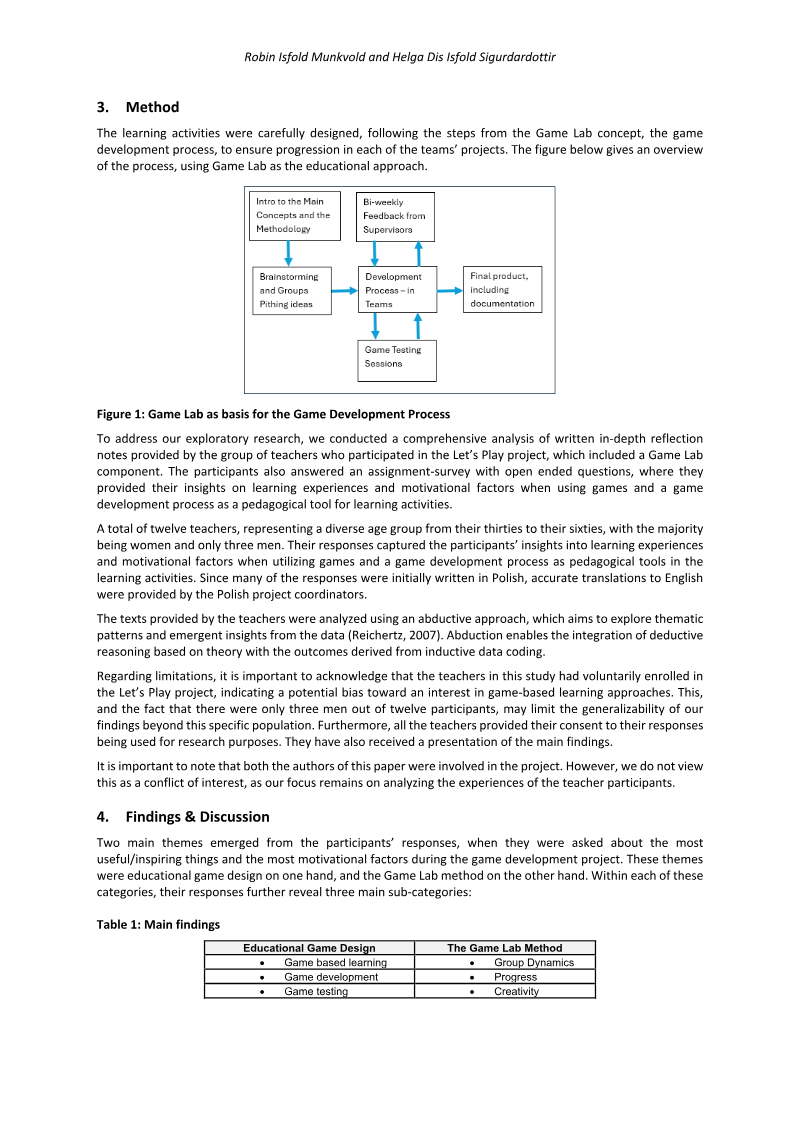
- Analysis of written reflections and open-ended surveys from the twelve teachers (ages roughly thirties to sixties, preschool through upper secondary) yielded two themes: educational game design (game-based learning, game development, game testing) and the Game Lab method (group dynamics, progress, creativity).
Gamification for Sustainable Management Education: Prosper Management Edition's Role in South Africa's Climate Policy Engagement
"Prosper Management Edition" is a gamified educational tool developed under the GREAT project at North-West University in South Africa, designed to strengthen sustainability literacy and strategic thinking among university students and young professionals.
- Prosper Management Edition is a gamified sustainability-education tool developed under the GREAT project at North-West University in South Africa, aimed at university students and young professionals.
- The game's central argument is that active, game-based learning can deepen engagement with complex sustainability issues more effectively than traditional instruction.
- The game is built around problem cards representing SDG-linked global issues, which players match with solution cards through collaborative discussion and justification.
Unified Effort: Developing a Mixed Reality Serious Game for Collaborative Crisis Management Training
"Unified Effort" presents the design rationale and development process for a mixed reality serious game intended to train municipal and county crisis management staff in Norway.
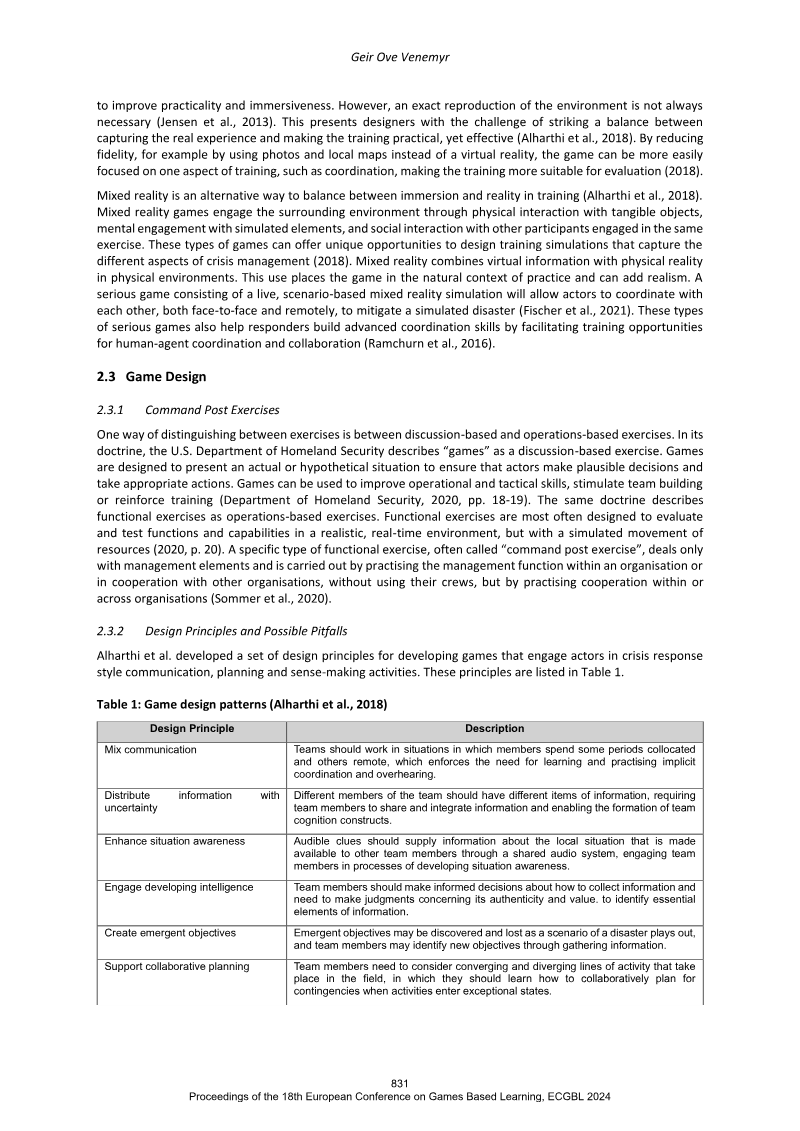
- The game targets collaboration failures in crisis response, aiming to break down organizational silos through cross-organizational learning among Norwegian municipal and county crisis management staff.
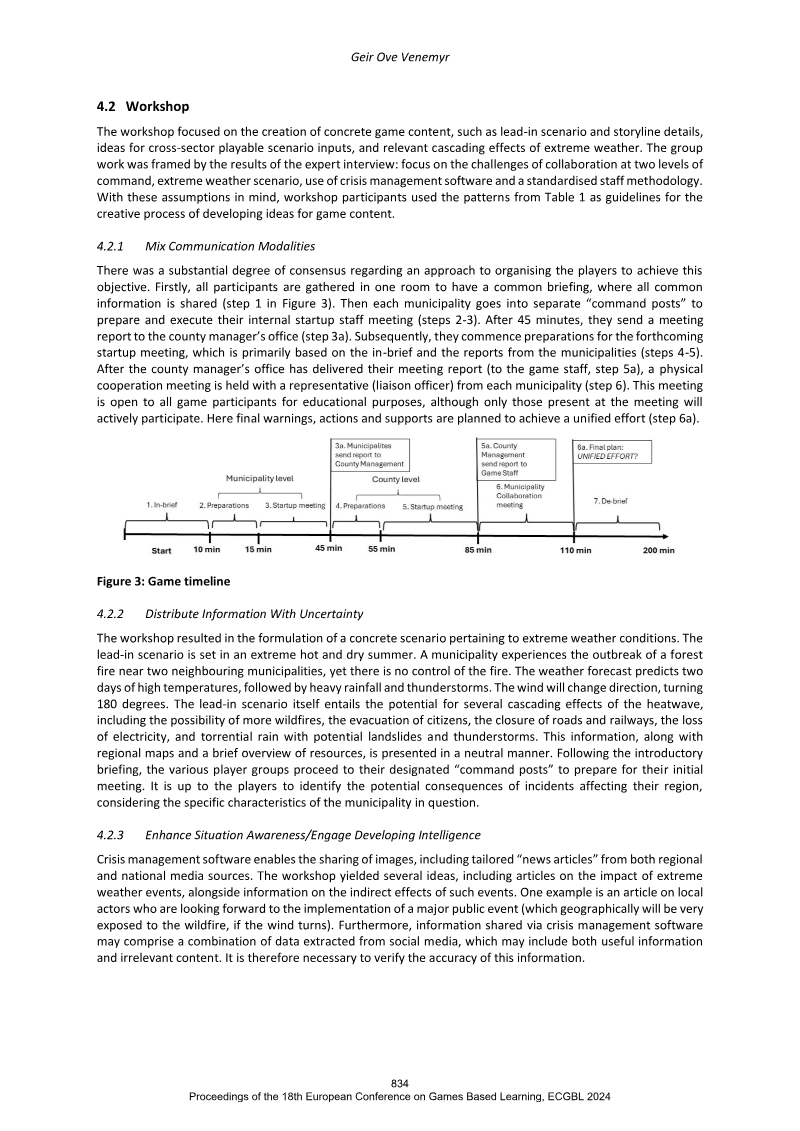
- Design was grounded in expert interviews and an eight-participant workshop of emergency-service professionals with 11 to 20 years of experience, converging on an extreme-weather scenario and a Proactive Staff methodology with a standardized startup-meeting agenda.
- The scenario timeline combines joint briefings, separate municipal command posts, and a cross-municipal coordination meeting to exercise two-level crisis coordination.
Sustainable Sip: Learning Concepts of Business Sustainability Through a Hybrid Game
"Sustainable Sip" presents the design and early validation of a hybrid analogue-digital multiplayer game intended to teach university students systems thinking and the economic, social, and ecological dimensions of business sustainability.
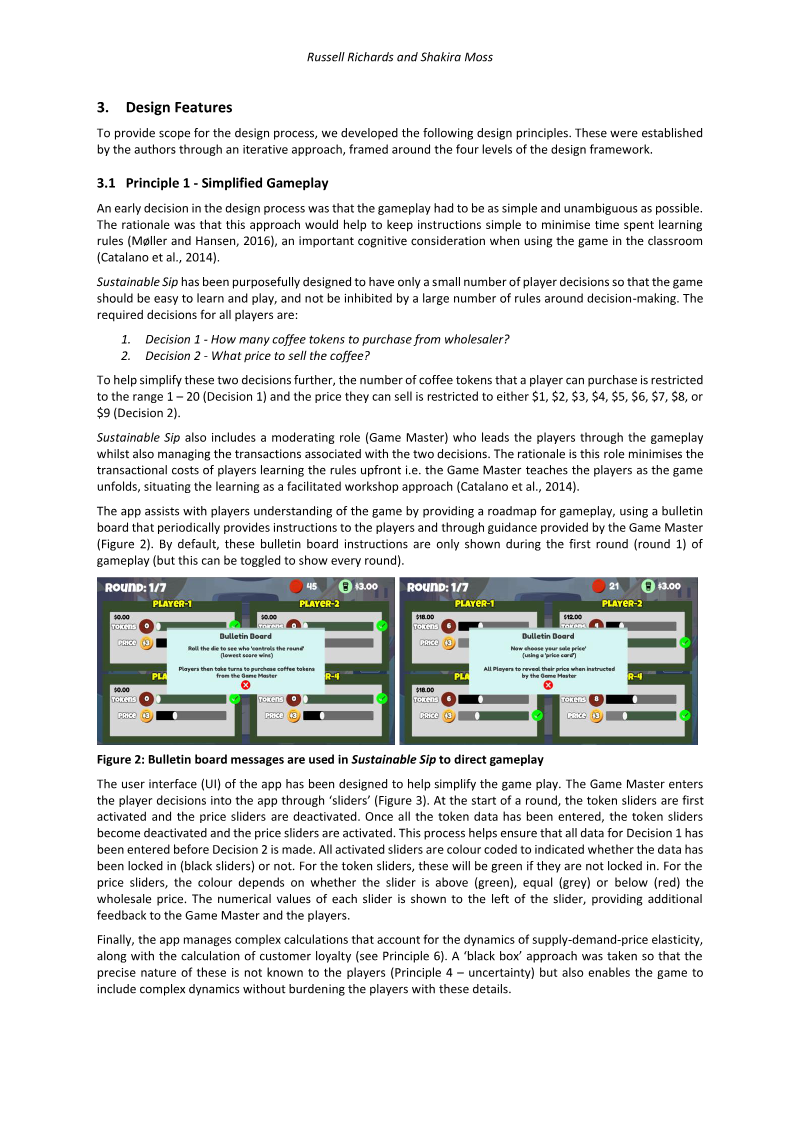
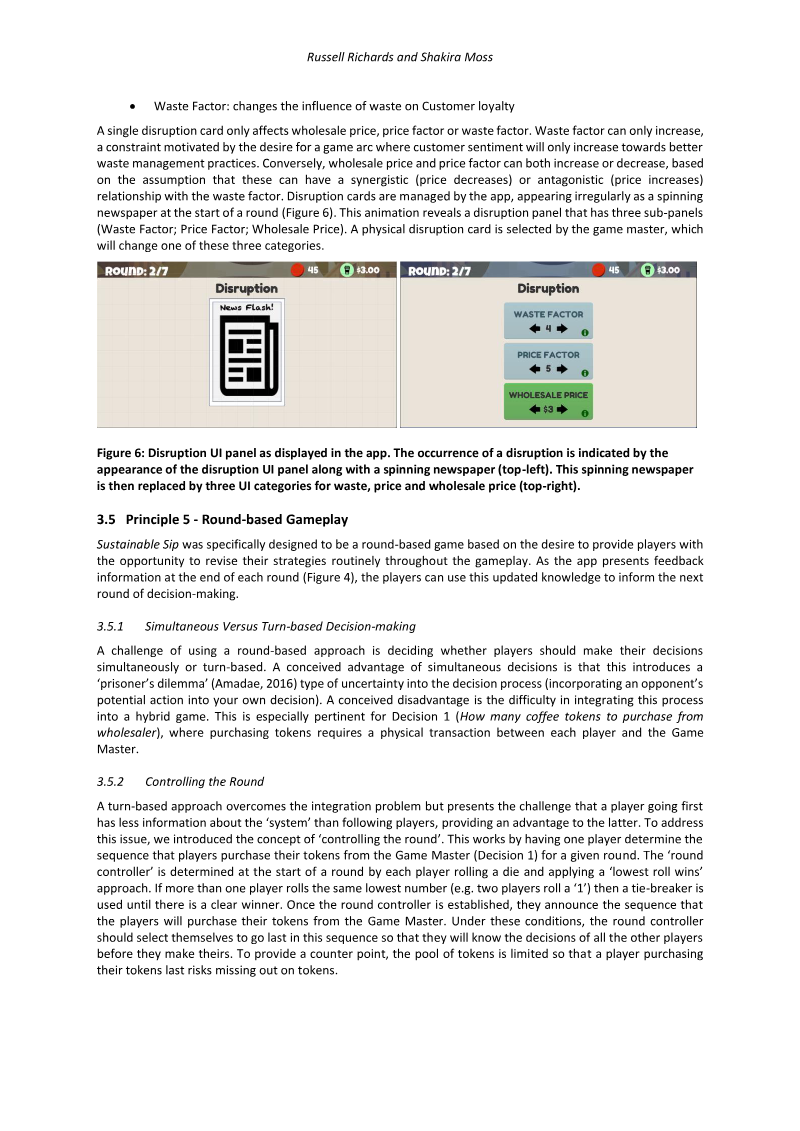
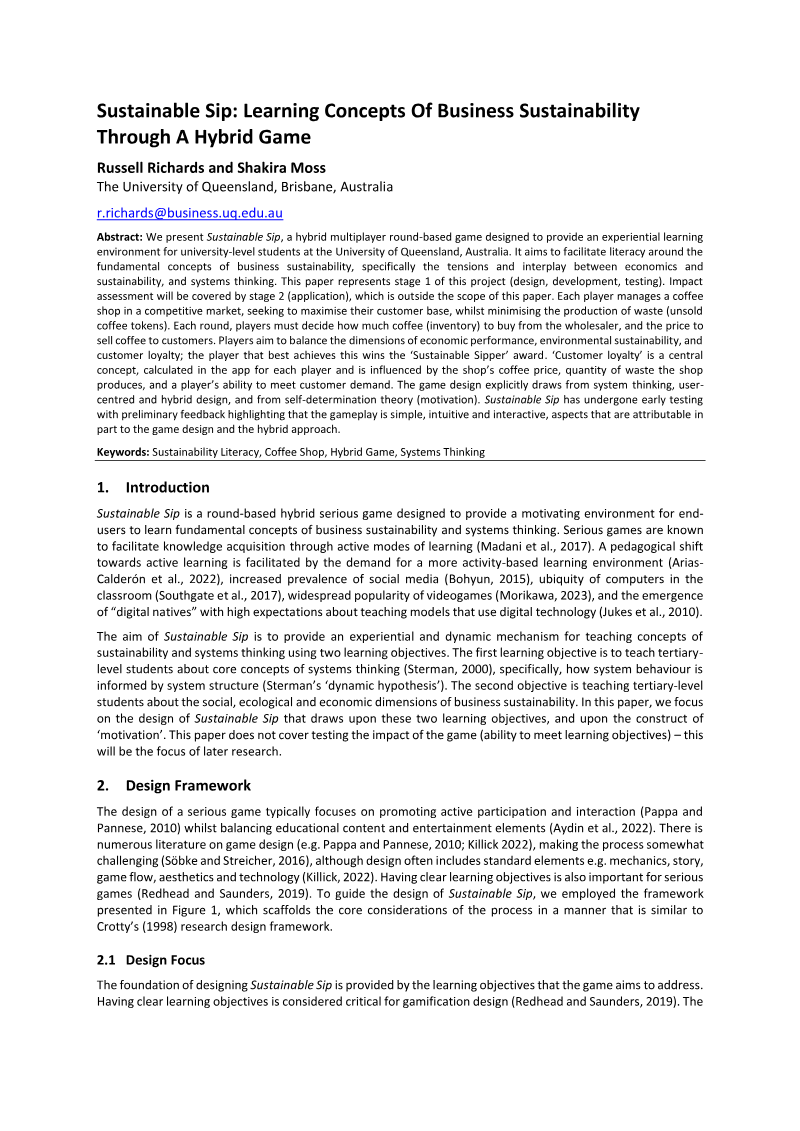
- "Sustainable Sip" is a hybrid analogue-digital multiplayer board game that teaches university students systems thinking and the economic, social, and ecological dimensions of business sustainability through a coffee shop simulation balancing profit, waste reduction, and customer loyalty.
- The work reports only design and beta testing; its impact on learning outcomes is explicitly deferred to a later stage, so claims of educational effectiveness remain untested.
- Beta testing with 77 students across eight tables (39 questionnaire responses) found the gameplay simple and intuitive, which led to removing physical money and reducing awards to a single cumulative "Sustainable Sipper" prize.
Board Games and Entrepreneurial Skills Acquisition: Efficacy of the EntreComp Framework in Higher Education
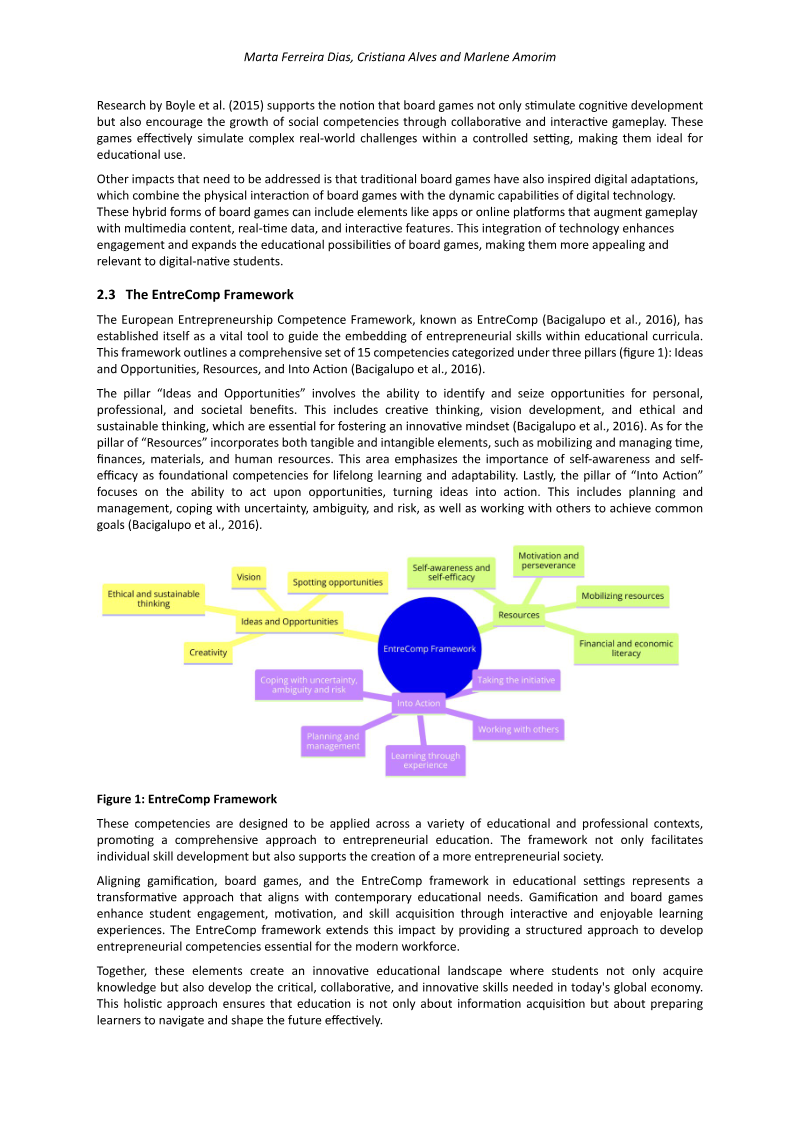
This study examines whether board games can serve as an effective vehicle for teaching entrepreneurial competencies in higher education, using the European Entrepreneurship Competence Framework (EntreComp) as its organizing structure.
- The study tests whether board games can teach entrepreneurial competencies in higher education, using the EntreComp framework as its organizing structure and the 'Game It Away!' project at the University of Aveiro as its basis.
- Two pilot studies were run in a university makerspace, with targets of 25 participants each, but the first drew a diverse mix of undergraduate, master's, and doctoral students while the second had only 11 Portuguese undergraduates.
- Both pilots followed a five-phase method (icebreaker, EntreComp and game-design theory, theme selection, prototype creation, pitch), with learning journals as the main source of reflective data.
Reflecting on Current State and Future Research of Empathy Assessment and Development within the Game-Based Learning Community
This position paper argues that empathy research within the game-based learning (GBL) community has grown rapidly across many fields, but lacks a shared vocabulary, which risks confusion and weakens interdisciplinary collaboration.
- Empathy research across the game-based learning community has grown rapidly but lacks a shared vocabulary, risking confusion and weakening interdisciplinary collaboration; the author calls for joint clarification of how empathy should be defined, measured, and used in educational games.
- Definitions of empathy are fragmented: earlier work identified 43 distinct definitions, and a systematic review of empathy and games found 18 definitions in use, often applied loosely without grounding in psychology research.
- Psychology offers two main lines of definition: empathy as an umbrella construct with affective, cognitive, and behavioral components, and empathy as a feeling that may not always drive prosocial action, distinguished from compassion.
Game-based Learning Assessment: Quantifying Educational Efficacy of the EDURINO App
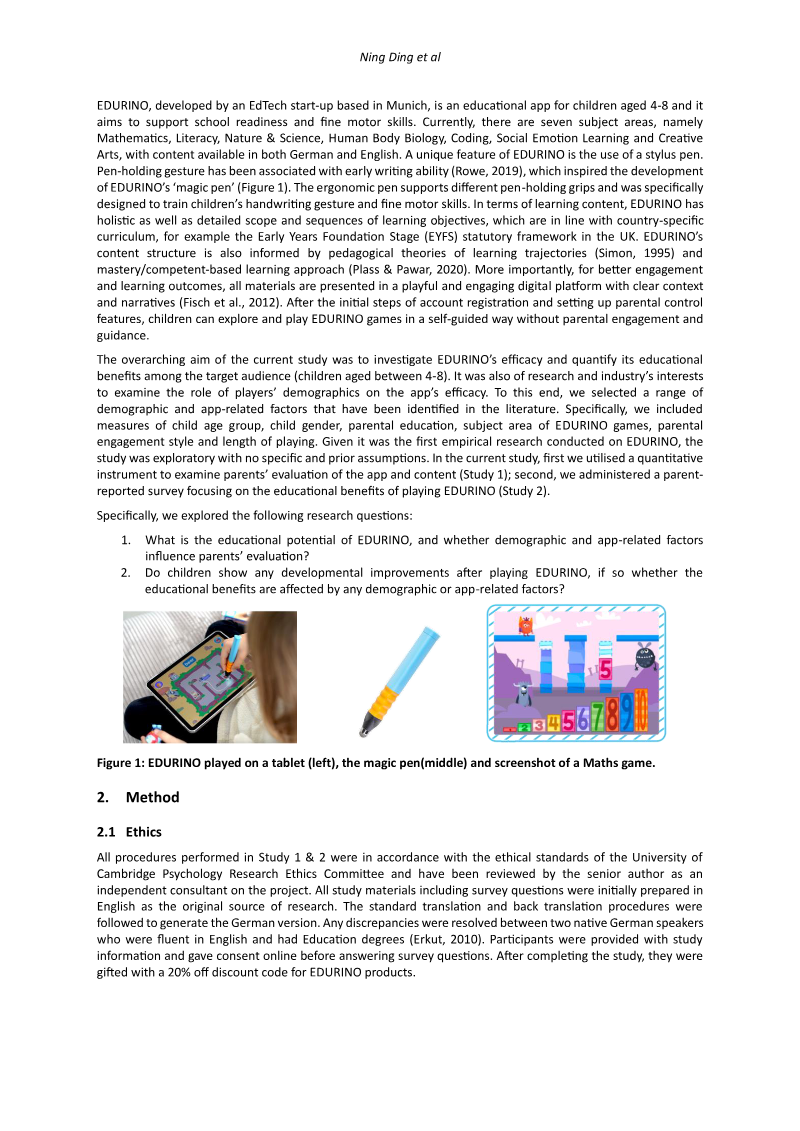
This study evaluates EDURINO, a game-based learning app for children aged 4 to 8 that covers seven subject areas and pairs with an ergonomic stylus intended to support fine motor development.
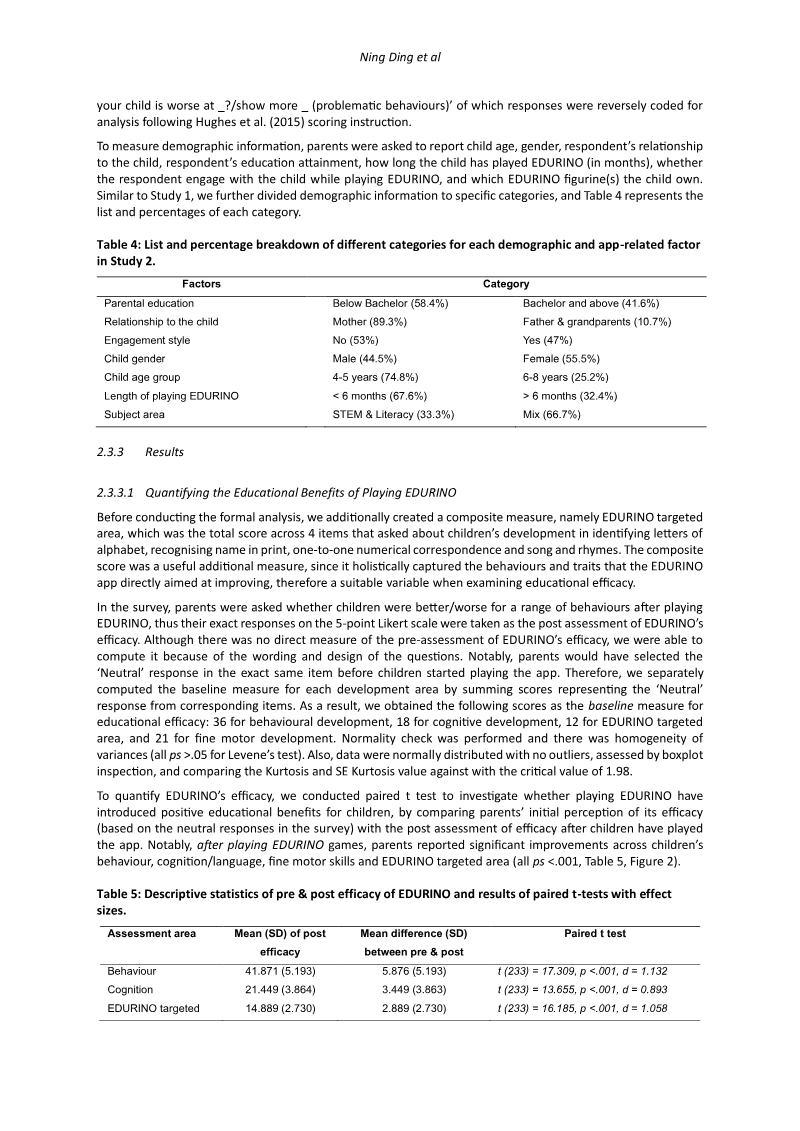
- The EDURINO evaluation rests on two studies: a 45-parent rating of the app's educational potential using a validated 10-item index, and a 235-parent German survey of perceived child changes after use.
- In the 235-parent survey, parents reported significant improvements in behavioural adjustment, cognition and language, fine motor skills, and app-targeted skills, with large paired t-test effect sizes (Cohen's d 0.89 to 1.13) against a neutral-response baseline.
- Parents rated meaningful learning and social interactions highly but rated adjustable content weakly, and ratings for learning content were lower among parents with higher educational attainment.
Gamified Networked Learning Environments in Higher Education: A Study on Student Engagement and Value Creation in Computer Science
The study examines "Answers," a gamified question-and-answer platform developed for computer science students at TU Delft, built on the open-source Qpixel system and grounded in Wenger's value creation framework.
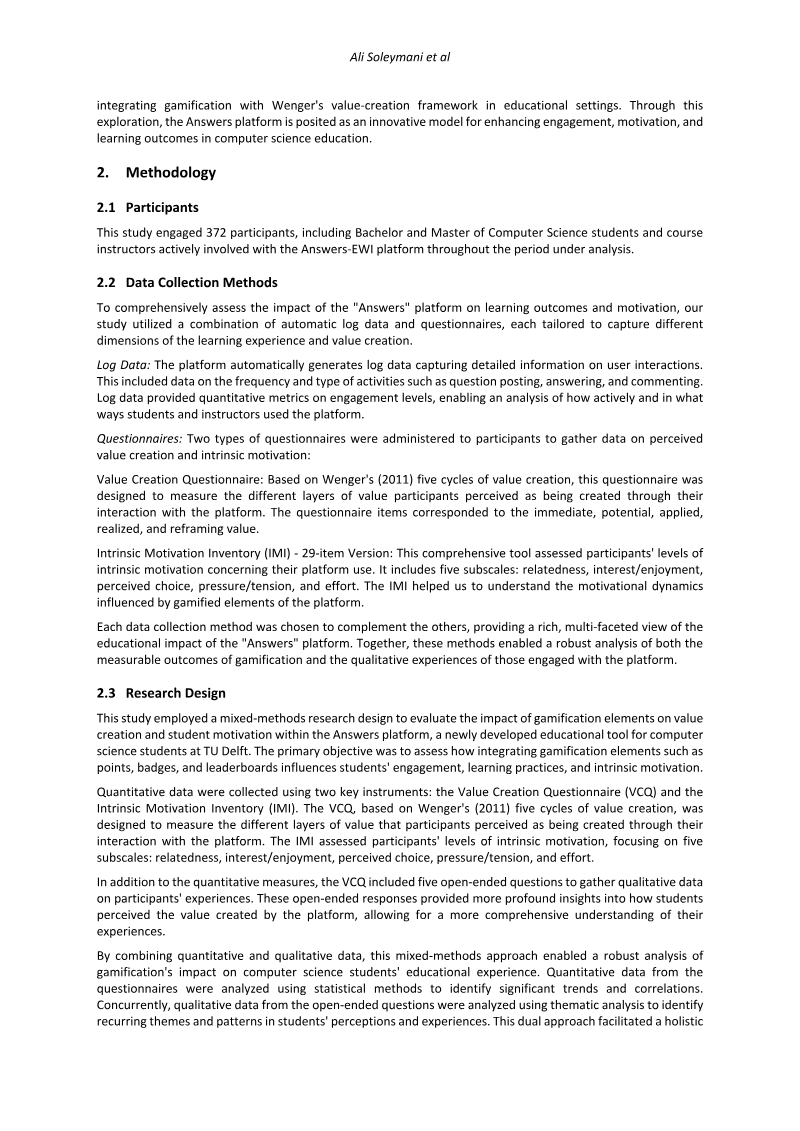
- The study evaluated 'Answers,' a gamified Q&A platform for computer science students at TU Delft built on the open-source Qpixel system and grounded in Wenger's value creation framework, with 372 participants in a mixed-methods evaluation.
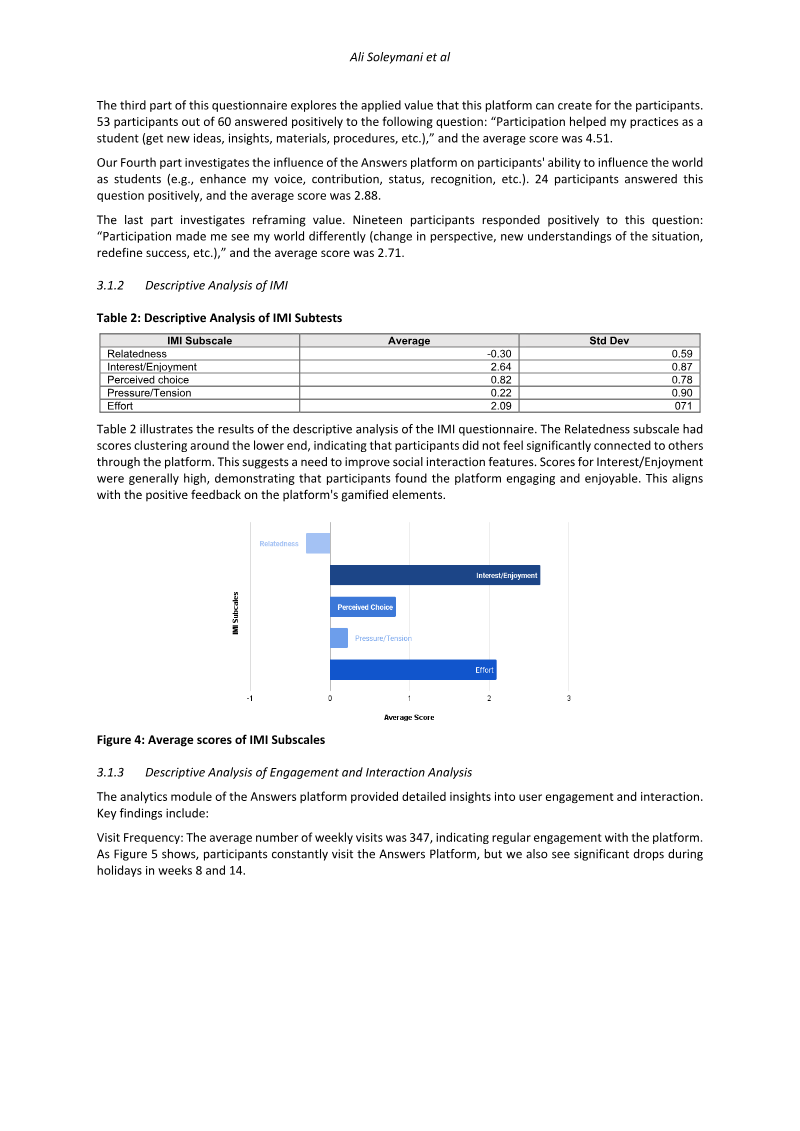
- Students reported strong perceived applied value: 53 of 60 survey respondents reported positive effects, with a mean rating of 4.51.
- Platform usage averaged 347 weekly visits and 428 badges earned, peaking during exam weeks, suggesting alignment with assessment-driven study cycles.
Game at School? Italian Teachers' Perceptions of the Introduction of Games in the Classroom
This study examines how Italian teachers perceive their own competence in using games for teaching, motivated by the gap between broad appreciation of games in Italian schools and their limited application in classrooms.
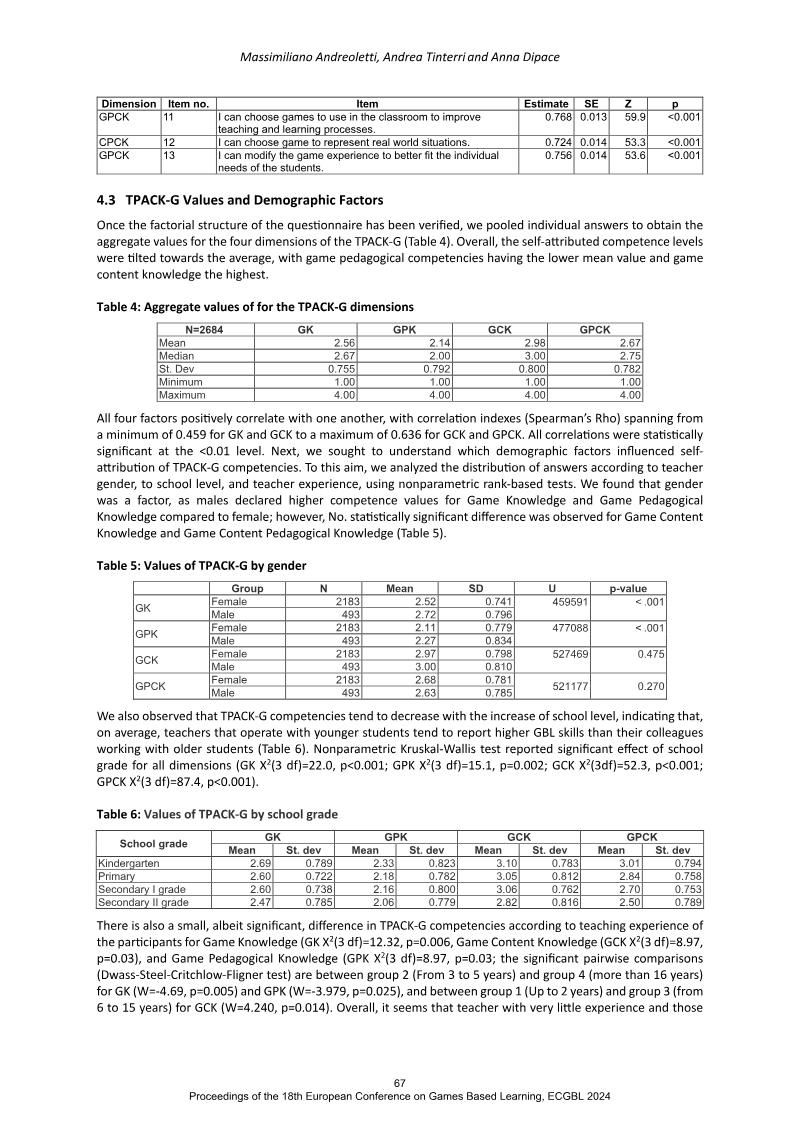
- Italian teachers rated their own competence in game-based learning as moderate across dimensions, based on a survey of 2,752 teachers (2,684 in-service analysed), with self-report data as the main source.
- Game pedagogical knowledge was the weakest self-rated area (mean 2.14), while game content knowledge was the strongest (mean 2.98), pointing to a gap in translating game knowledge into classroom practice.
- Male teachers reported higher game and game pedagogical knowledge than female teachers, and perceived competence declined at higher school levels.
Game-based Learning for History: Student Perceptions and Preferences
This study examines how university students in Sweden perceive gaming and which games they believe can support learning in history.
- A 2024 study of 35 respondents (about 73% of 48 active students across five general history course groups at Mid Sweden University) found that 33 of 35 believe games can teach history.
- Computer strategy games were the most frequently named genre for teaching history (25 mentions), with Europa Universalis, Civilization, Crusader Kings, and Age of Empires cited most often; role-playing games came second (10 mentions), led by the Assassin's Creed series.
- Students saw games as offering distinct learning affordances: motivation and entry into the subject, basic factual knowledge such as historical geography and chronology, insight into cause-and-effect and structural processes, and immersive experience that fosters historical empathy.
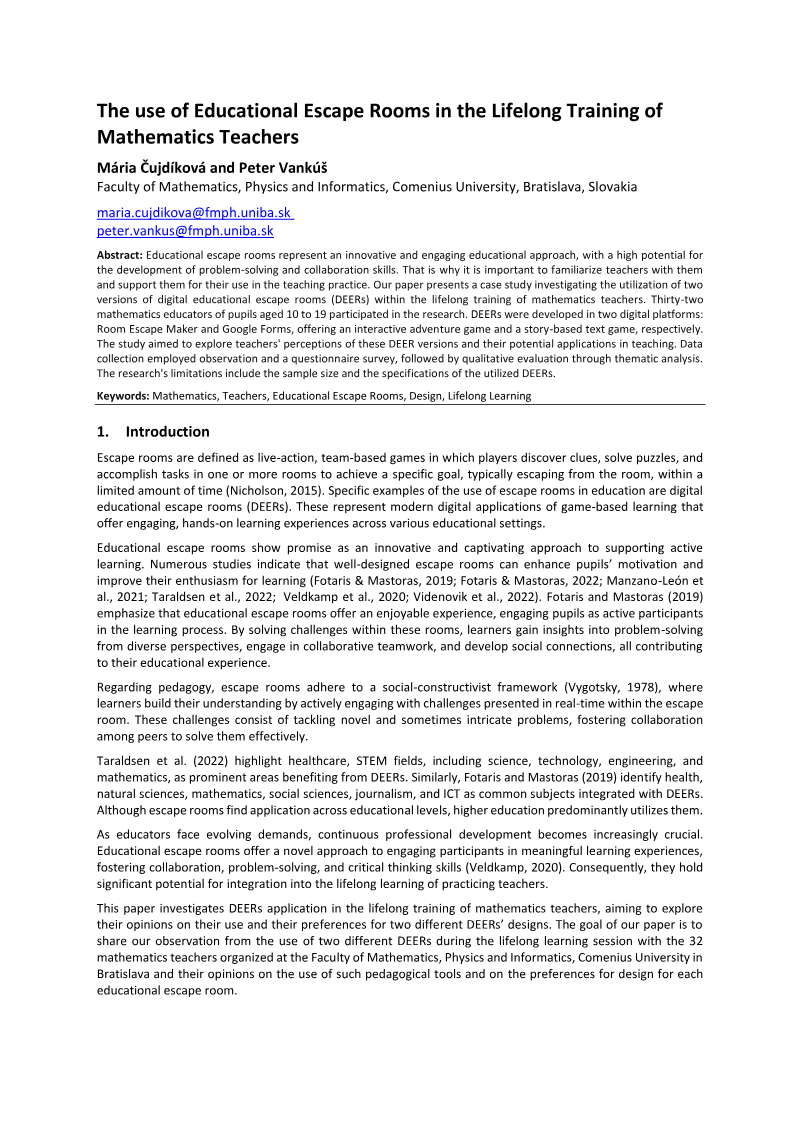
The Use of Educational Escape Rooms in the Lifelong Training of Mathematics Teachers
A case study by Čujdíková and Vankúš examines how two digital educational escape rooms (DEERs) were received by 32 in-service mathematics teachers during a lifelong learning session at Comenius University in Bratislava, Slovakia.
- A study of 32 in-service mathematics teachers at Comenius University in Bratislava, Slovakia, evaluated two digital educational escape rooms (DEERs) built in Google Forms and Room Escape Maker, using observation, online questionnaires, and qualitative content analysis.
- The text-based "Escape from the Castle" room was received very positively, with 89.5% of groups rating it 9 or 10 for both enjoyment and suitability for pupils, and it ran smoothly for all groups.
- The interactive "Students' DEER" generated enthusiasm but more divided ratings: about 53% of groups scored it 9 or 10 for liking, while about 17% gave low scores, with frustration arising when groups got stuck.
The Ludo-Learning Matrix: A Framework for Understanding Learning in Games
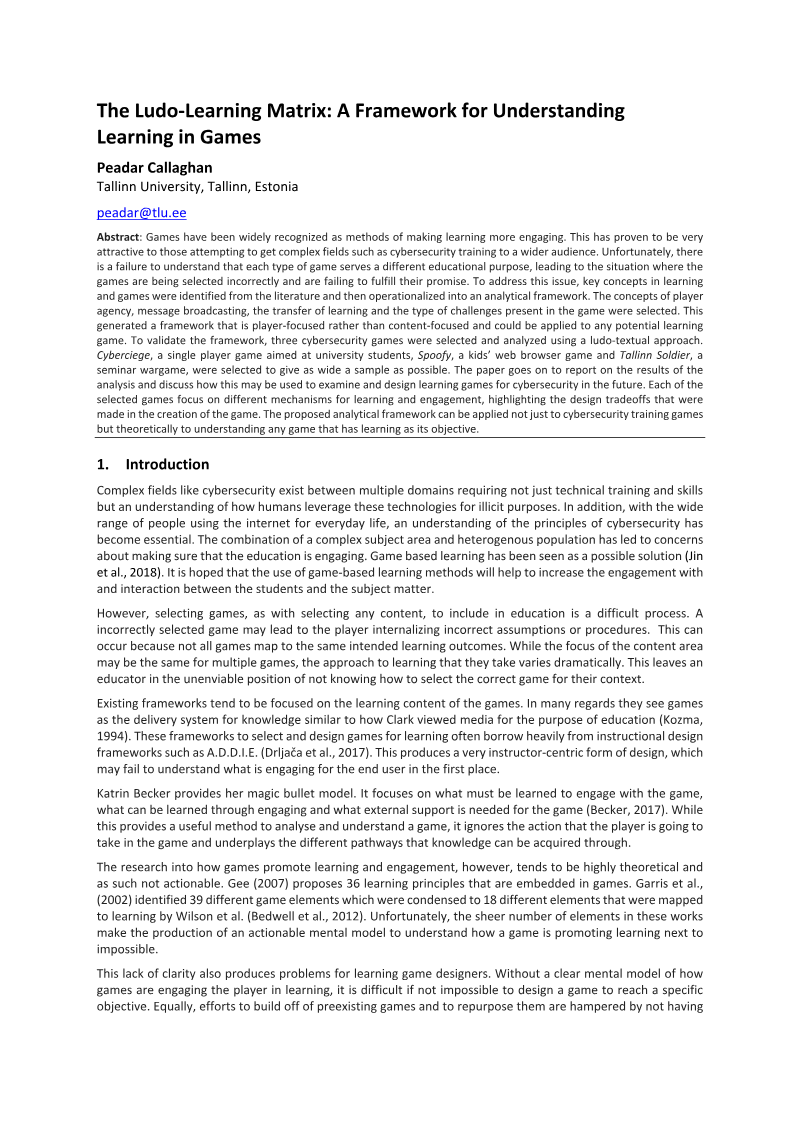
Peadar Callaghan's paper proposes the Ludo-Learning Matrix, an analytical framework for understanding and selecting learning games, with a focus on cybersecurity education.
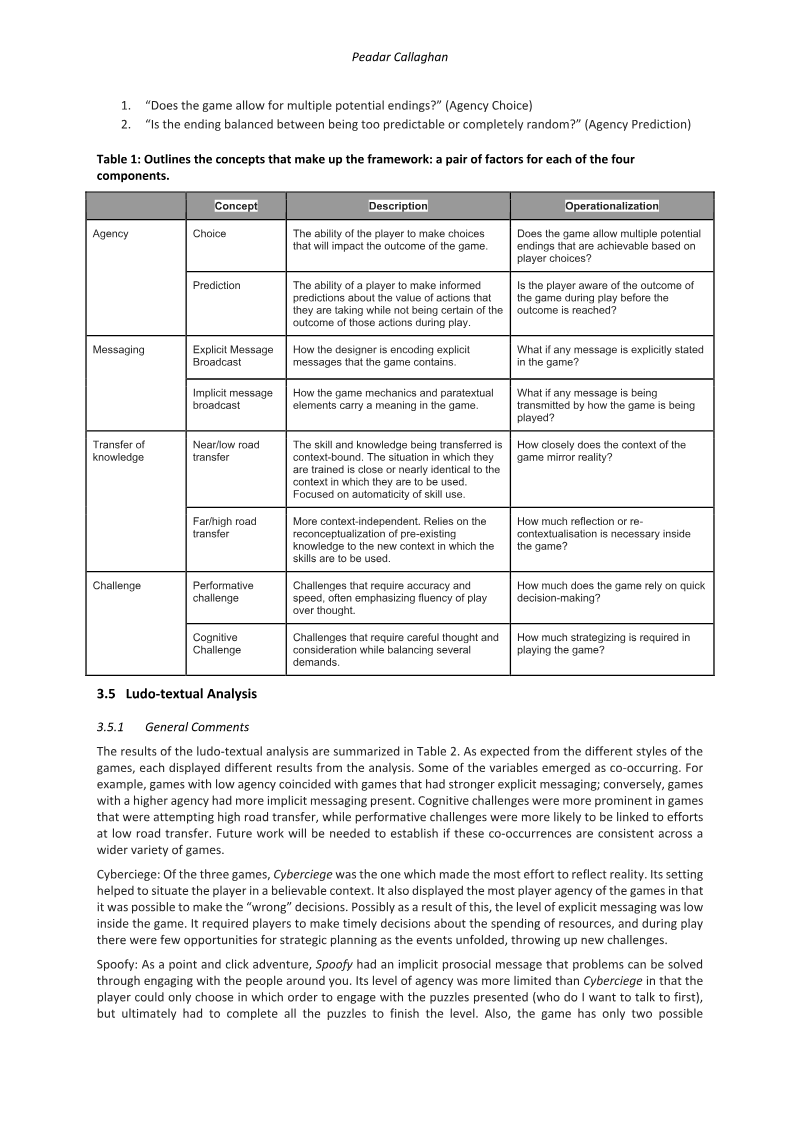
- The Ludo-Learning Matrix is an analytical framework for understanding and selecting learning games, distilling four concepts (transfer of knowledge, challenge, messaging, and agency) into eight operationalized questions, each addressed by a pair of sub-components.
- The author argues existing frameworks focus on instructional content and instructor-driven design, while theoretical models of game-based learning with dozens of principles or elements are too numerous to apply in practice, so the matrix is player-focused rather than content-focused.
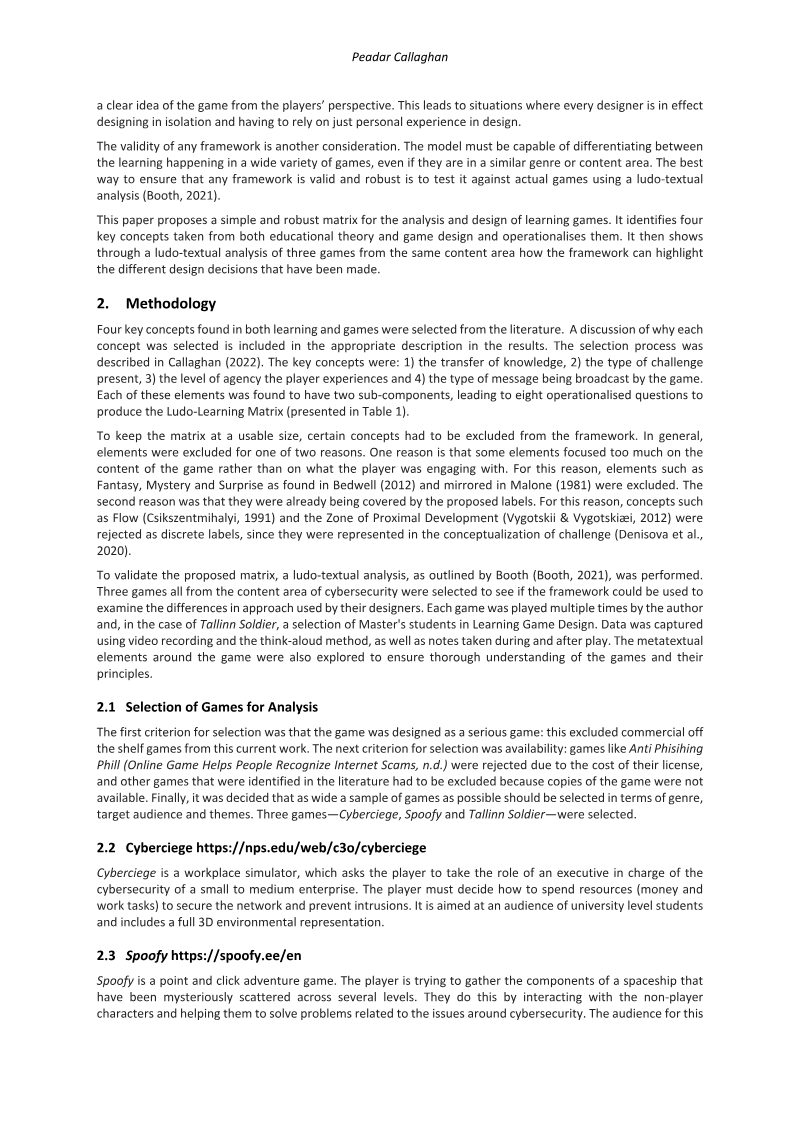
- The framework was validated through ludo-textual analysis of three cybersecurity serious games: Cyberciege (a single-player workplace simulator for university students), Spoofy (a point-and-click adventure for primary school children), and Tallinn Soldier (an analog seminar wargame based on the 2007 Estonian Bronze Night cyberattacks).