1 free read left. Create a free account for unlimited reading + AI research.
Create free accountWhitepaper European Conference on Games Based Learning (ECGBL)
1 free read left. Create a free account for unlimited reading + AI research.
Create free accountWhitepaperEuropean Conference on Games Based Learning (ECGBL)
The Circular Game is a competitive strategy board game for two to six players. Players move around a circular board divided into five product lifecycle stages.
The Circular Game is a competitive strategy board game designed to teach sustainability, raise environmental awareness, and train participants to apply circular economy strategies to business models. Players, in groups of two to six, move around a circular board divided into five stages of a product lifecycle (eco-design, raw materials, production, use and lifetime, and waste management), earning greencoins, acquiring circular strategy cards, and accumulating CO2 emission tokens, with the winner being the player who completes two strategies per stage with the fewest emissions. The paper positions the game within game-based learning and experiential learning theory, drawing on self-determination, planned behaviour, and social cognitive theories, and argues that the affective dimension of learning is central to education for sustainable development.
The study's central aim is to assess whether playing the game changes participants' sustainability knowledge, environmental awareness, and behaviour, and whether the emotions generated during play can shape future sustainable conduct. The proposed research design uses pre- and post-game questionnaires administered to a planned sample of 50 to 60 second-year management undergraduates at the Universidad de Burgos, Spain, measuring sociodemographic factors, circular economy knowledge, and sustainable behaviour. The gamified experience itself is to be evaluated with the six-subscale GAMEX scale, validated in Spanish. The paper presents these as anticipated methods and expected outcomes rather than reporting completed results.
The authors also outline future research directions, including comparing gamified learning against traditional classroom instruction on circular economy topics, examining differences across student backgrounds, and adapting the game for secondary education, workplace training, and corporate employee engagement, with comparisons between educational and professional settings.
European Conference on Games Based Learning (ECGBL) · 2025
European Conference on Games Based Learning (ECGBL) · 2025
European Conference on Games Based Learning (ECGBL) · 2025
European Conference on Games Based Learning (ECGBL) · 2025
European Conference on Games Based Learning (ECGBL) · 2025
European Conference on Games Based Learning (ECGBL) · 2025
European Conference on Games Based Learning (ECGBL) · 2025
European Conference on Games Based Learning (ECGBL) · 2025
European Conference on Games Based Learning (ECGBL) · 2025
European Conference on Games Based Learning (ECGBL) · 2025
European Conference on Games Based Learning (ECGBL) · 2025
European Conference on Games Based Learning (ECGBL) · 2025
European Conference on Games Based Learning (ECGBL) · 2025
European Conference on Games Based Learning (ECGBL) · 2024
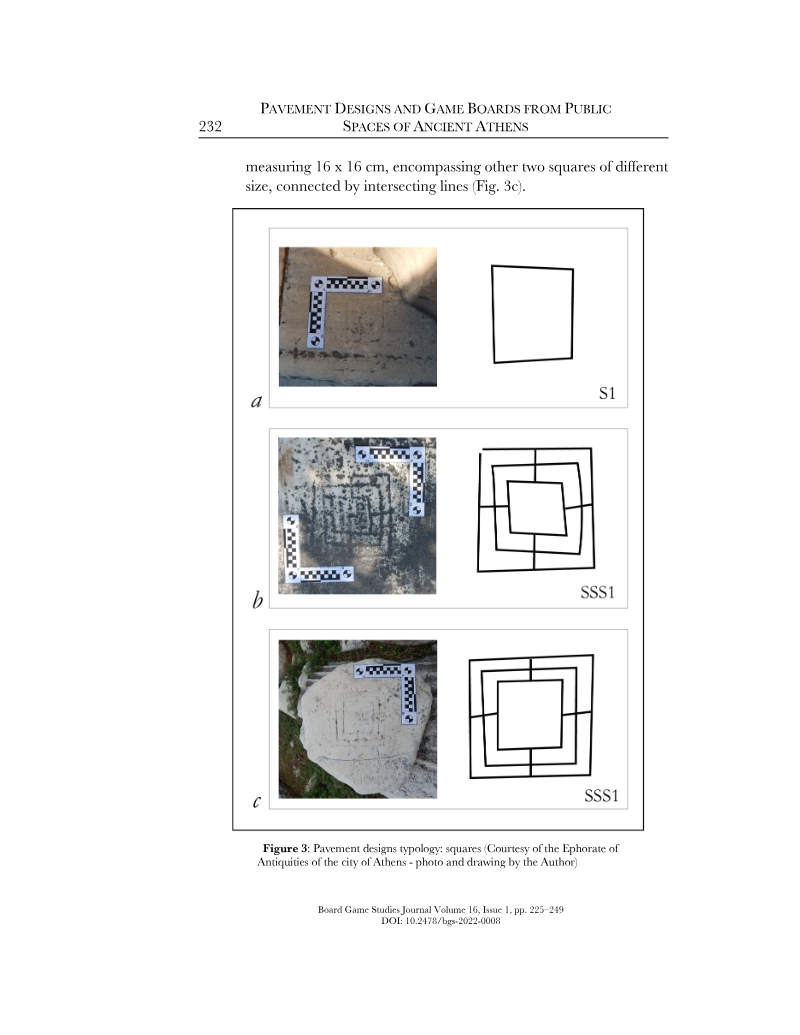
Board Game Studies Journal · 2022