
DiGRA
The Digital Games Research Association: the international association of academics and professionals who study digital games. Its Digital Library holds the proceedings of the DiGRA conferences since 2002.
Documents
Information Behavior and the Formation and Maintenance of Peer Cultures in Massive Multiplayer Online Role-Playing Games: A Case Study of City of Heroes
This paper offers a conceptual framework for a planned study of how players in Massive Multiplayer Online Role-Playing Games (MMORPGs) form and sustain small peer groups such as guilds, clans, and teams, using the massively multiplayer game City of Heroes as its case.
- The paper is an early-stage conceptual framework for a planned study, not a report of empirical results; its claims rest mainly on existing literature rather than new data.
- It proposes that play theory and information behavior theory (especially meaning-making) together can explain how MMORPG players form and sustain guilds, clans, and teams with their own rules and mores despite anonymity and missing offline social cues.
- The framework treats MMORPGs three ways: as games, as 'virtual sandbox' play spaces, and as cultures where knowledge, behavior, and artifacts are learned and negotiated.
Addressing Social Dilemmas and Fostering Cooperation Through Computer Games
This paper examines how the concept of social dilemmas, situations where individual self-interest conflicts with collective benefit, can be addressed through computer games, with particular attention to identity formation and cooperation.
- The paper's central thesis is that cooperation in games is best fostered by increasing trust and by making individuals explicitly aware of their choices, and that in-game communities should develop their own norms rather than have them imposed from outside.
- A prior three-researcher study using a custom Neverwinter Nights module with pre- and post-gameplay surveys found that players experimented with alternative strategies, but this did not measurably change their real-life choices in a hypothetical social dilemma, though it did prompt deeper reflection on real-world situations.
- The earlier study's authors attributed the null behavioral result to the game's limited depth and the absence of interaction with other real people, and concluded that identity is more complex than anticipated, shaped by individual differences.
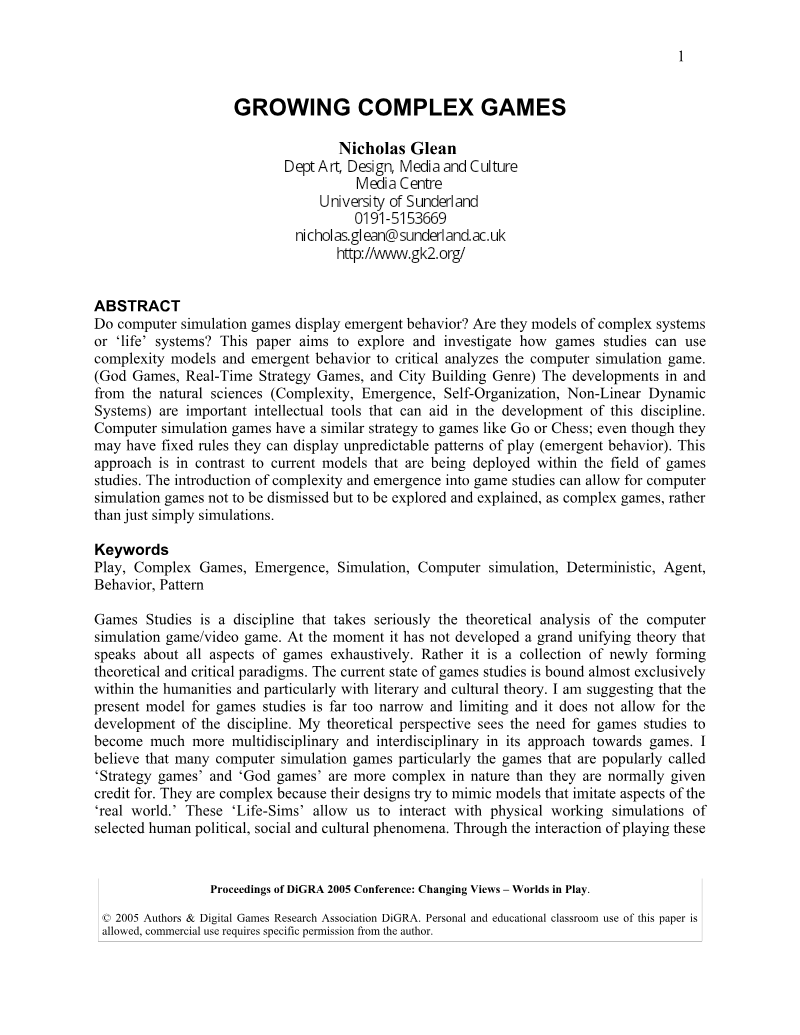
Growing Complex Games
Growing Complex Games, a 2005 DiGRA conference paper by Nicholas Glean, argues that strategy and "God" simulation games such as SimCity, Civilization, Children of the Nile, and Rome: Total War should be analyzed as complex systems using concepts drawn from complexity science.
- Glean's 2005 DiGRA paper argues that strategy and 'God' simulation games such as SimCity, Civilization, Children of the Nile, and Rome: Total War should be analyzed as complex systems using concepts from complexity science.
- Although fully deterministic, these games generate emergent, unpredictable, and novel play patterns arising from interacting agents and player decisions.
- The paper frames such games not as accurate predictive models of real-world phenomena but as 'transitional objects' that enable experimentation and reflection.
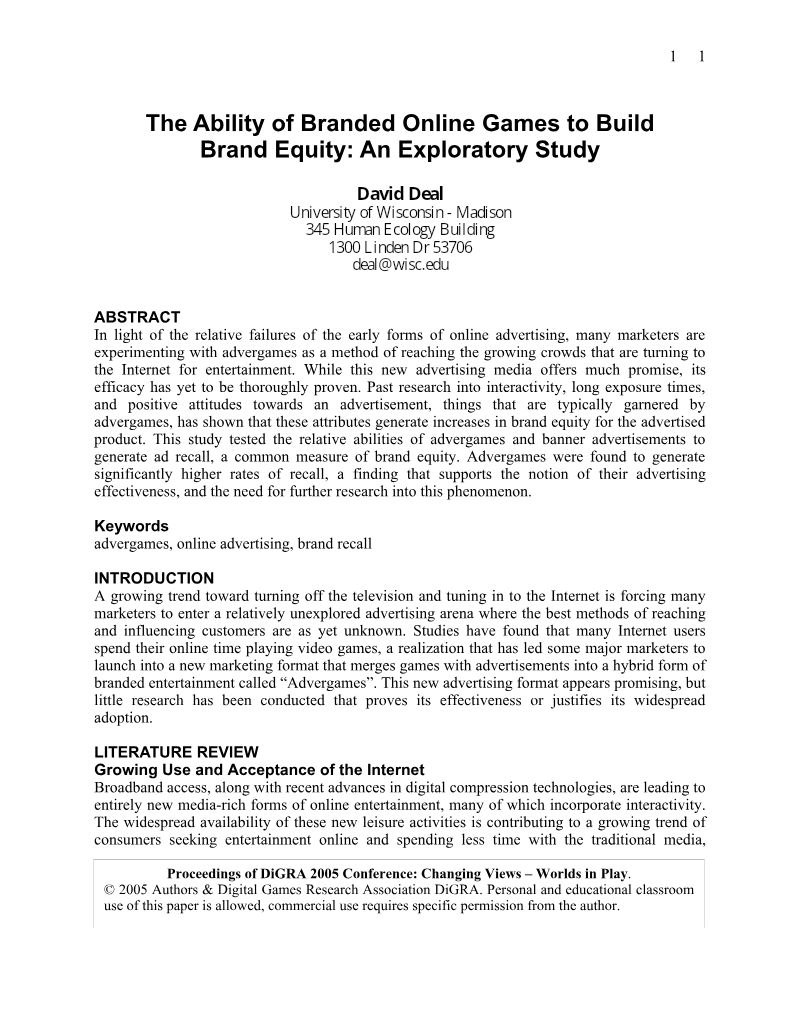
The Ability of Branded Online Games to Build Brand Equity: An Exploratory Study
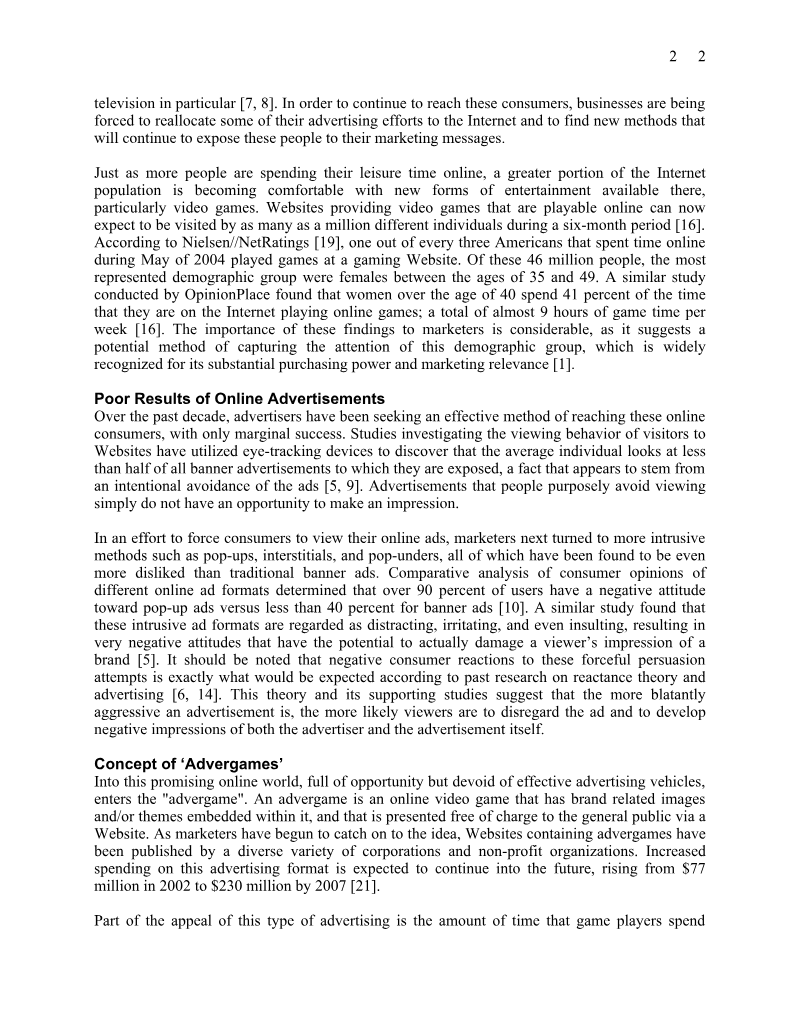
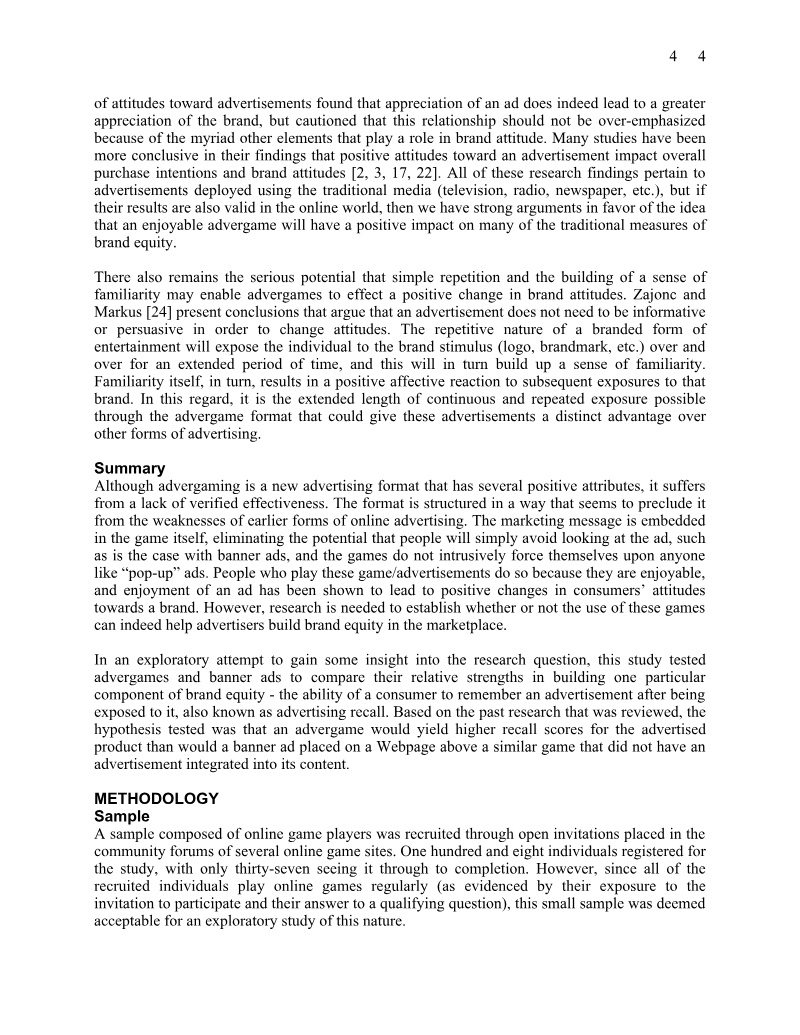
This exploratory study examines whether advergames, online video games embedded with brand imagery, can build brand equity more effectively than banner advertisements.
- An M&M's advergame achieved 32% unaided recall and 57% aided recognition, versus 3% and 14% for a banner ad, with 68% combined recall compared with 16% for the banner.
- In a paired comparison, the advergame produced significantly higher brand recall than the banner ad (t=4.53, p=0.0009), supporting the view that advergames can outperform banners in building brand awareness.
- The study's sample was small and non-representative: 37 completed responses out of 108 registrants, recruited from online game community forums.
Wherever Hardware, There'll Be Games: The Evolution of Hardware and Shifting Industrial Leadership in the Gaming Industry
The document argues that the video game industry's growth has been driven less by convergence than by successive platform diversification, with each new hardware generation, from arcade cabinets and pinball machines to consoles, handhelds, personal computers, and networked play, opening new customer segments and widening the…
- Growth in the video game industry has been driven mainly by successive platform diversification, with each new hardware generation (arcades, pinball, consoles, handhelds, PCs, networked play) opening new customer segments rather than by convergence.
- Hardware transitions are treated as the central engine of industrial change, repeatedly reshaping which firms held leadership, drawing on Young's and Schumpeter's frameworks.
- Atari's pinball division failed despite technical innovation due to manufacturing disadvantages and lost talent, and the traditional pinball industry's market share collapsed from 80 percent in 1975 to 5 percent in 1984 under digital competition and rising costs.
Immersion in Game Atmospheres for the Video Game Heritage Preservation
This paper proposes a method for preserving the atmospheres in which video games are played, arguing that while virtual museums and emulators now preserve game software, copies, screenshots, and commentary, the physical environment of play, its lighting, furniture, sounds, and social context, remains largely unarchived despite…
- The report argues that the physical atmosphere of play (lighting, furniture, sounds, social context) is largely unarchived even though players often remember it as one of their strongest experiences, while software preservation through emulators and virtual museums is comparatively well developed.
- The author positions video games as a major cultural form, noting the industry has surpassed cinema economically and has existed for more than thirty years, yet physical game exhibitions remain rare because hardware and software are fragile and scarce.
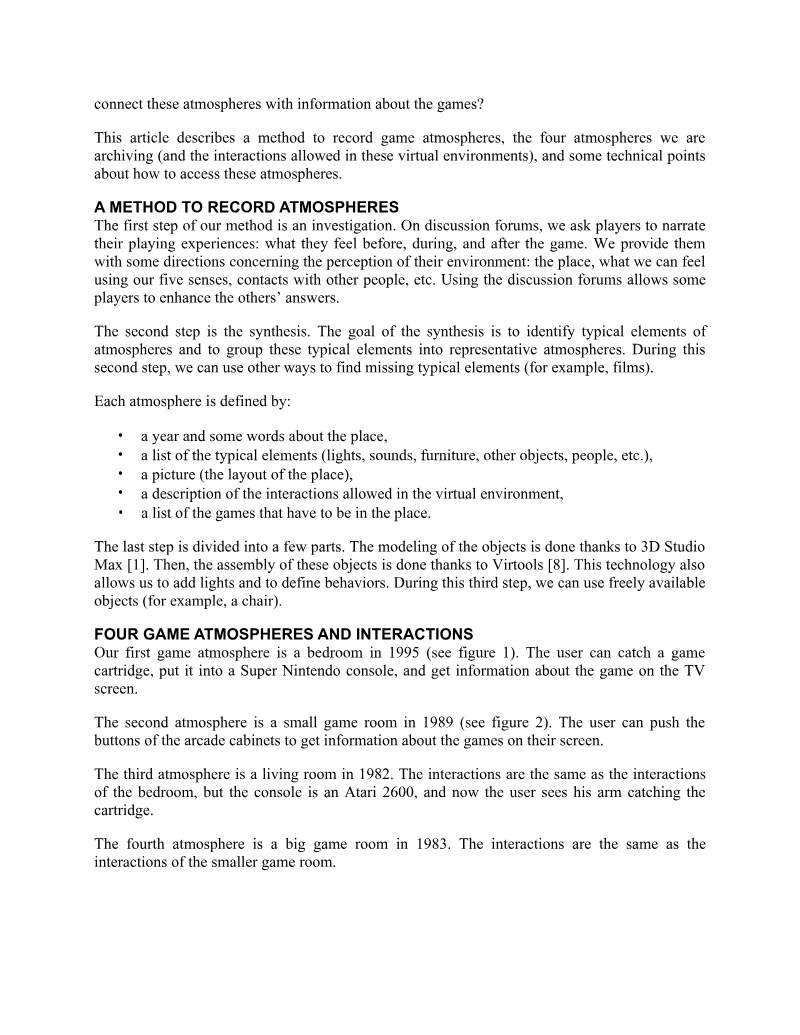
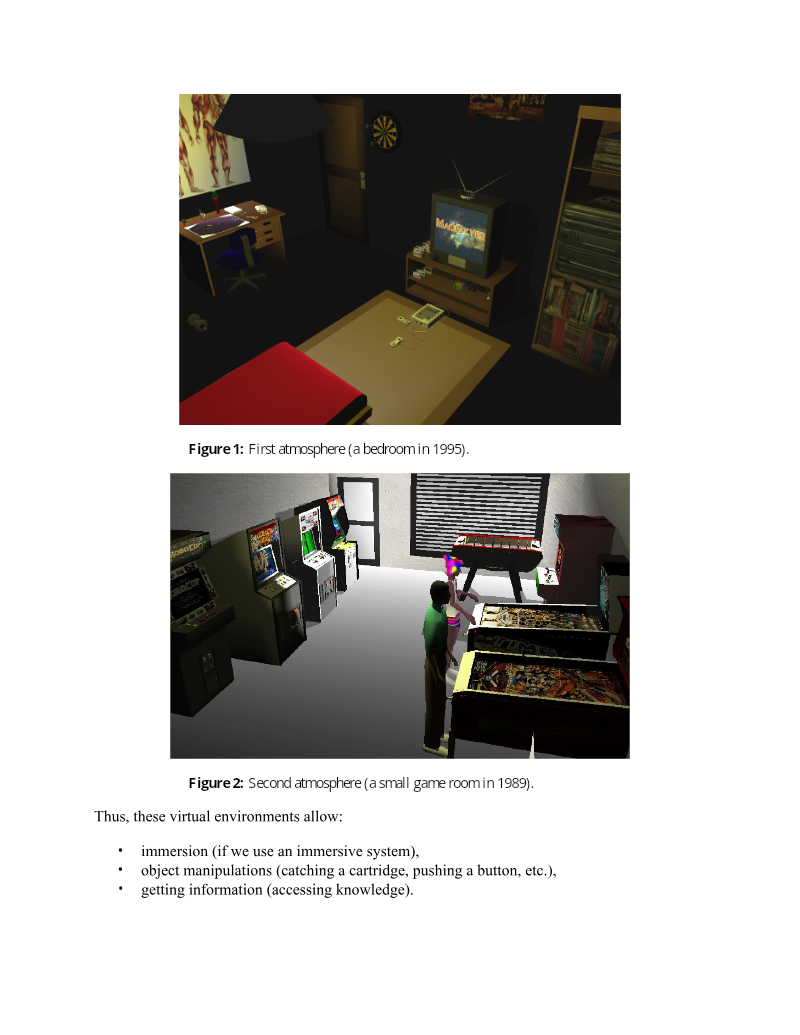
- The proposed method has three stages: forum-based player narratives about place and sensory perception, synthesis of recurring elements (lights, sounds, furniture, people) into representative atmospheres, and documentation of each atmosphere with date, description, element list, layout picture, permitted interactions, and associated games.
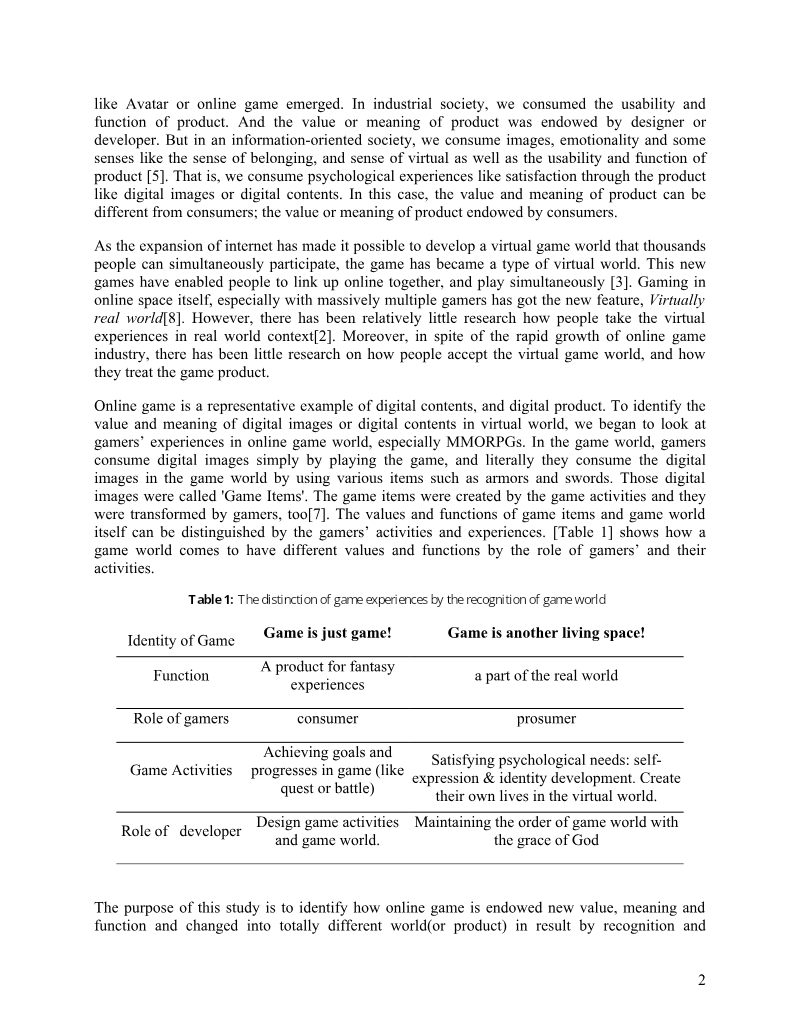
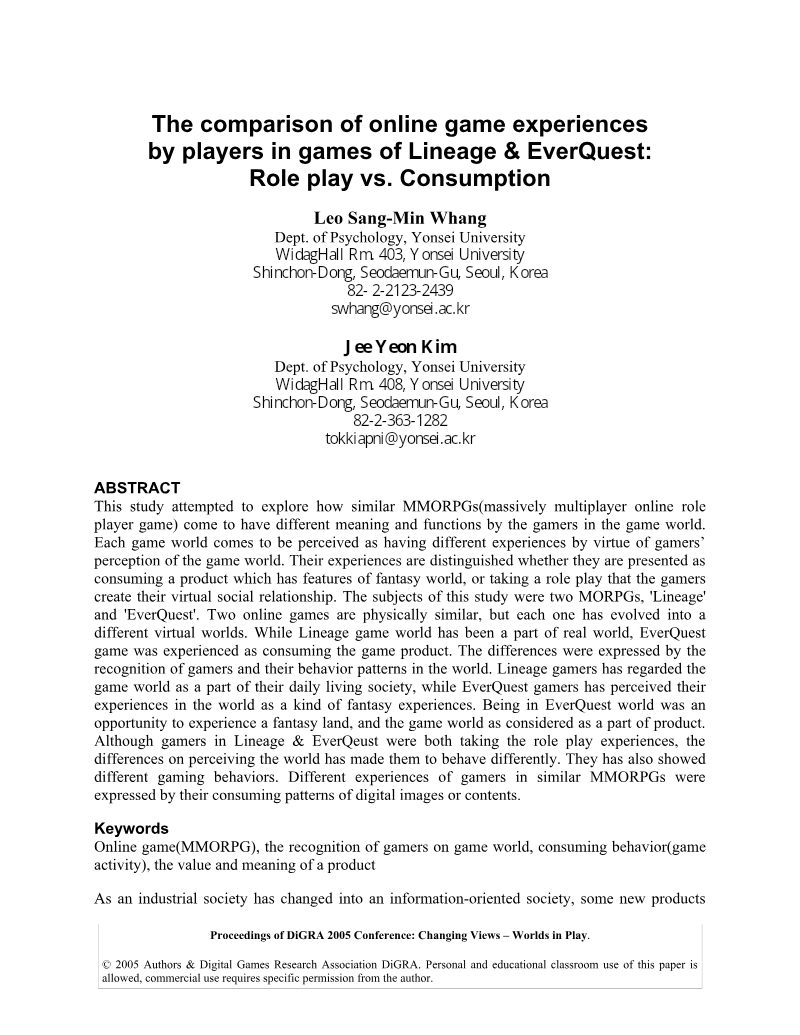
The Comparison of Online Game Experiences by Players in Games of Lineage & EverQuest: Role Play vs. Consumption
This study compares how two physically similar massively multiplayer online role-playing games, Lineage and EverQuest, acquire markedly different meanings depending on how their players perceive them.
- The same physical design and technology in Lineage and EverQuest produced fundamentally different virtual worlds, because players' understanding and use of each game differed; the authors argue digital content's value is shaped by consumers rather than solely by designers.
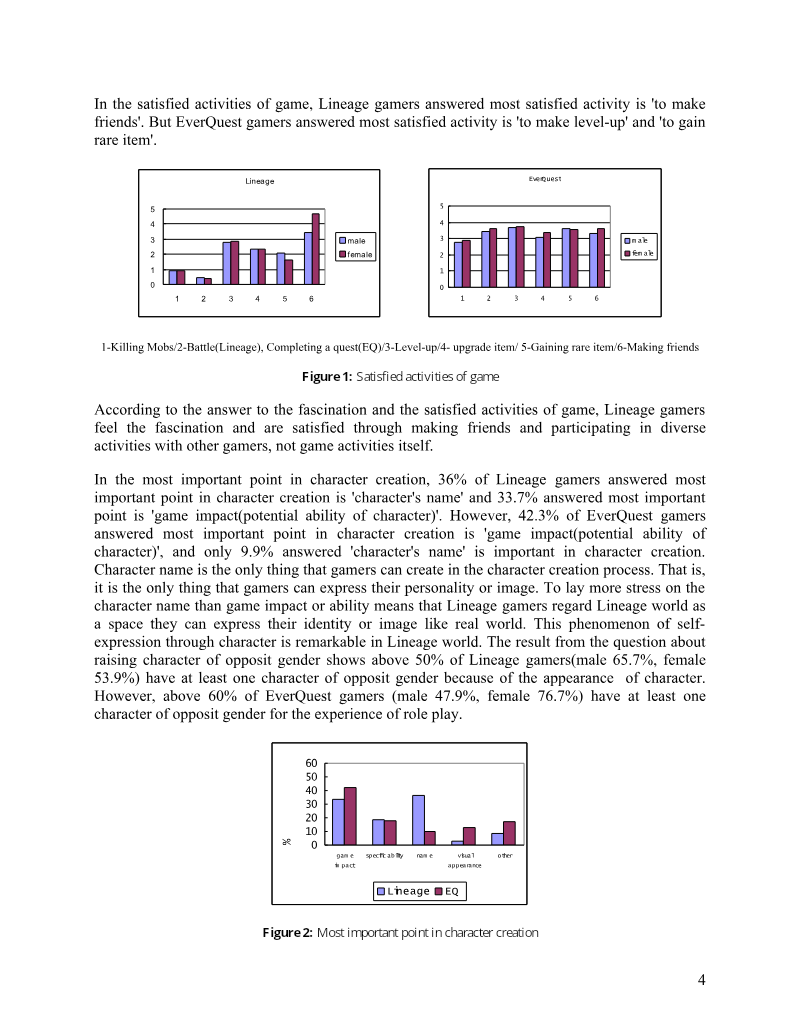
- Lineage players treated the game as an extension of everyday social life, using it to express identity, build relationships, and conduct economic activity, while EverQuest players viewed it mainly as a fantasy product to consume for exploration and goal achievement.
- Lineage respondents prioritized character names and social interaction when creating characters, whereas EverQuest respondents prioritized character ability and leveling.
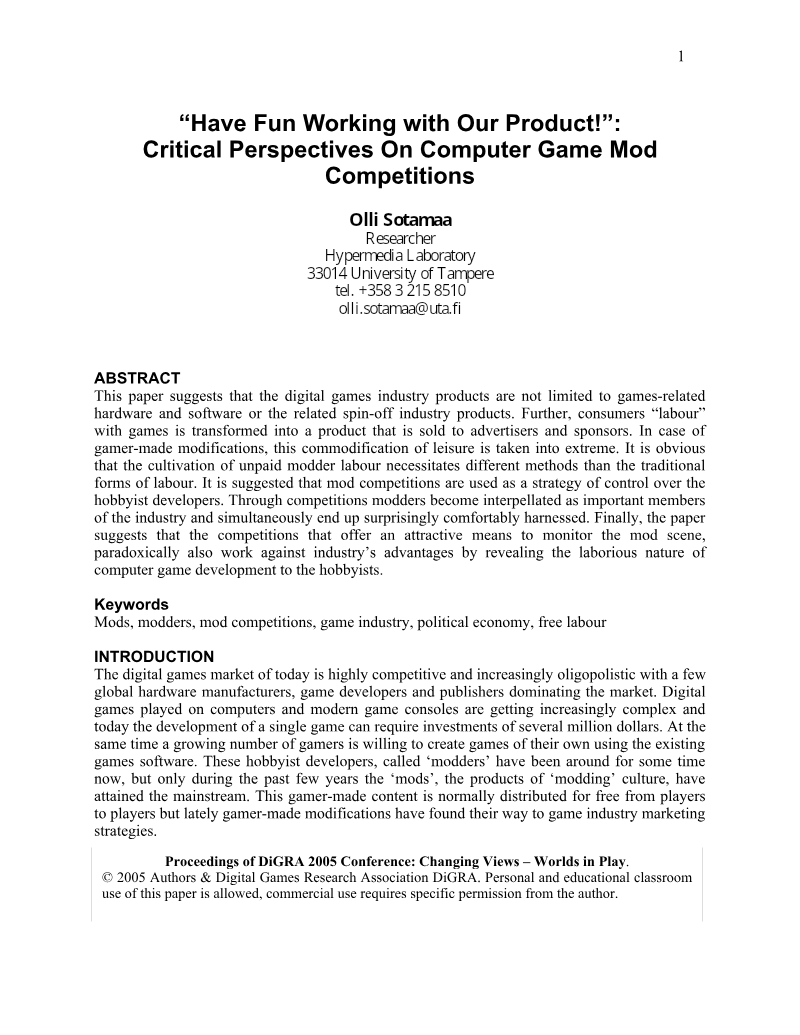
Have Fun Working with Our Product!: Critical Perspectives on Computer Game Mod Competitions
The document argues that game mod competitions function as a strategy through which the games industry draws on unpaid modder labour, converting hobbyist creativity into commodified leisure, free promotion, and recruitment opportunities.
- Game mod competitions let the games industry draw on unpaid modder labour, with contest prizes and fame standing in for wages, converting hobbyist creativity into commodified leisure, free promotion, and recruitment.
- Contest rules such as end-user licence agreements that grant developers perpetual rights to entries legitimise the appropriation of modders' work.
- Production and consumption in mod culture are mutually dependent rather than cleanly separable, and the industry gains extended product shelf-life, customer loyalty, and market research from modding activity.
Motivational Factors in Game Play in Two User Groups
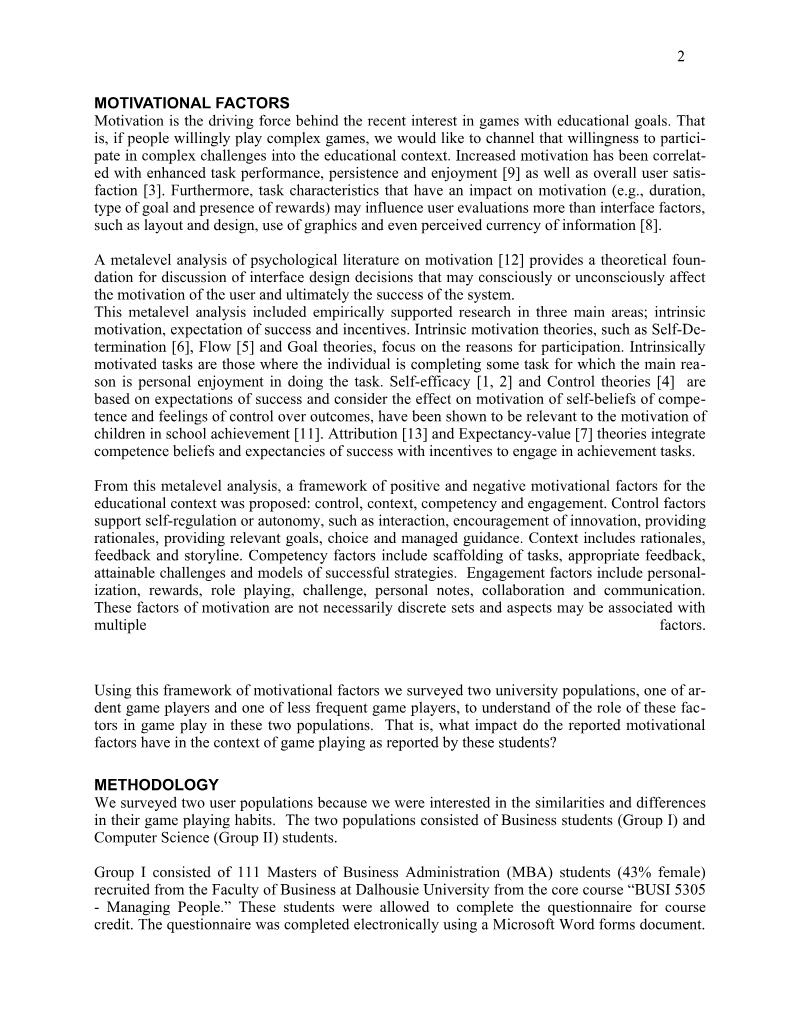
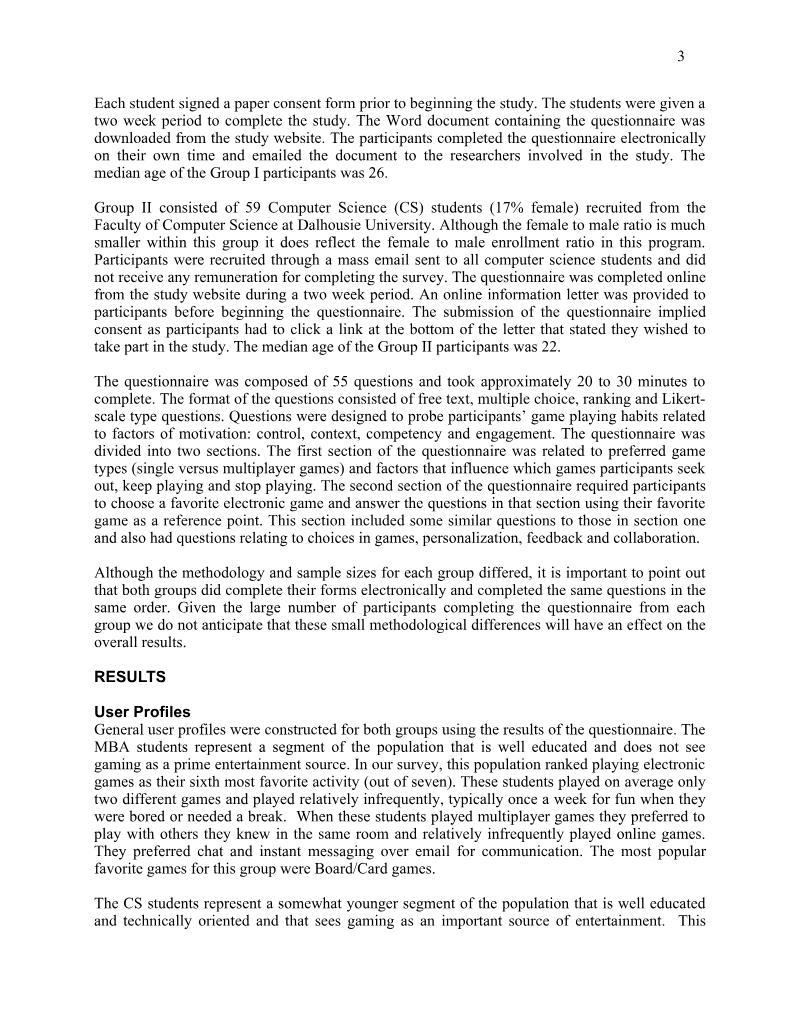
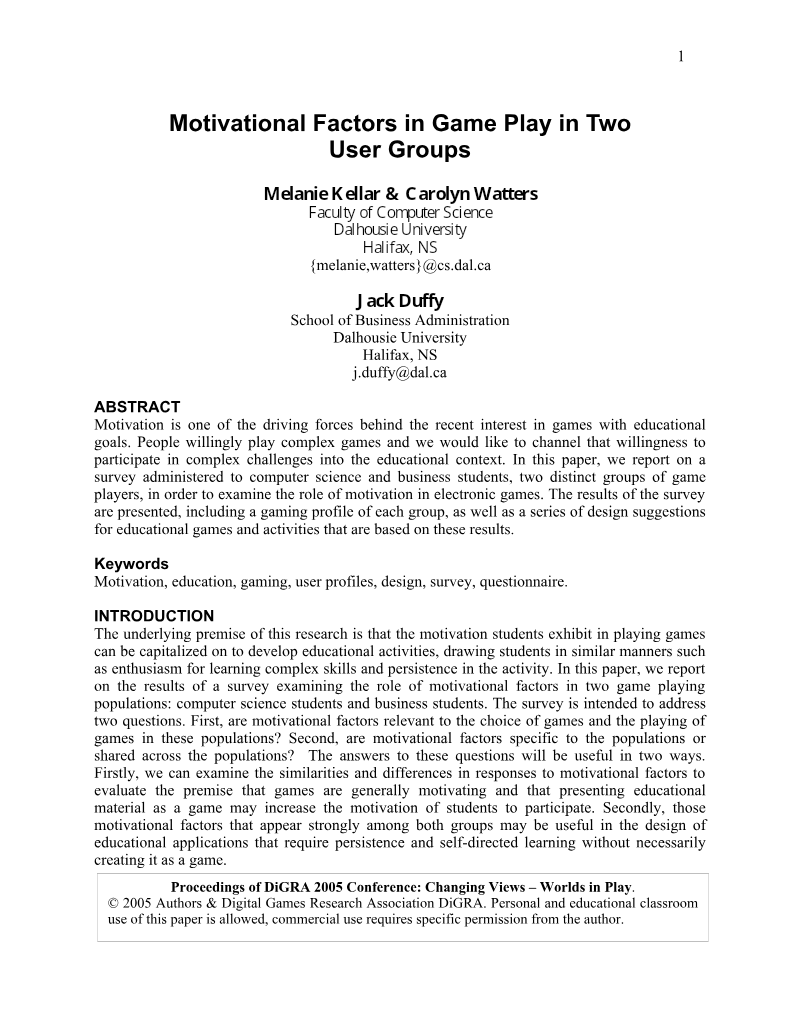
This study examines motivational factors in game play among two university populations, computer science students and MBA business students at Dalhousie University, with the goal of informing the design of educational games and activities.
- Computer science students (n=59, median age 22) ranked electronic games as their second most favorite activity and played roughly six titles, while MBA business students (n=111, median age 26) ranked gaming sixth of seven activities and played about two titles, favoring board and card games.
- The two groups diverged most sharply on engagement and social factors, which the authors attribute largely to differences in technology exposure; a validation sample of 17 high school students resembled the computer science group more closely, supporting this interpretation.
- Computer science students favored frequent, often daily, online and multiplayer play with strangers, whereas business students preferred infrequent play with acquaintances in the same room.
Evolution of Spatial Configurations in Videogames
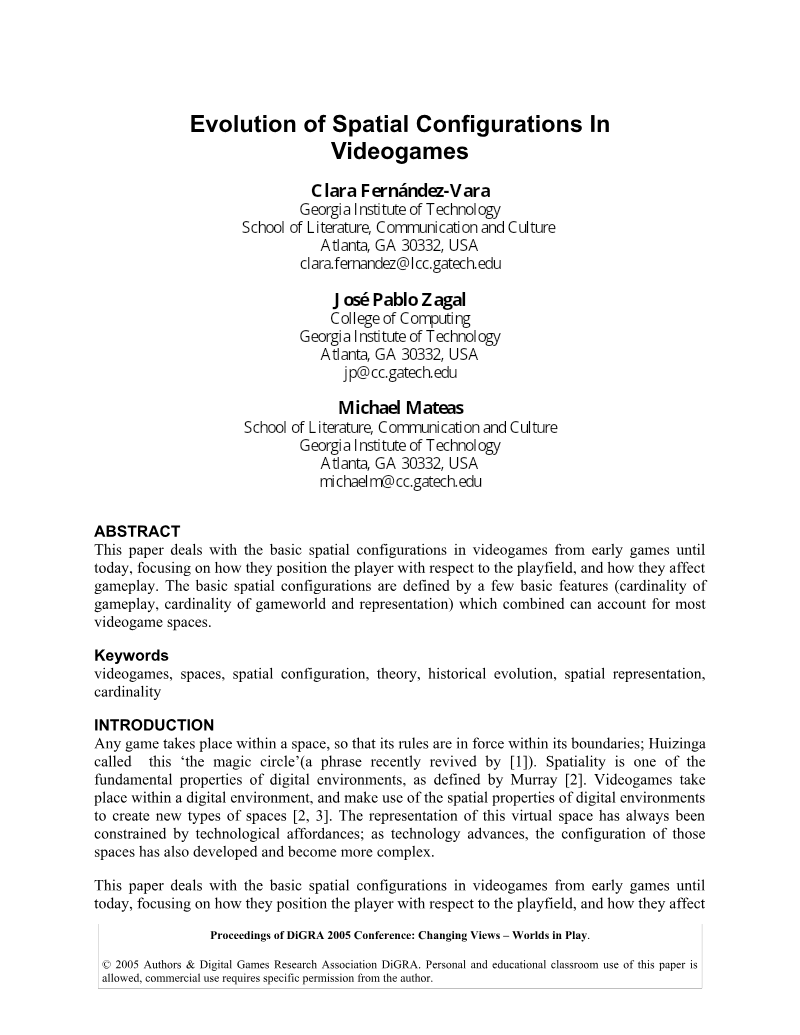
This paper examines the basic spatial configurations found in videogames from the earliest titles to the present day, focusing on how these configurations position the player relative to the playfield and how they shape gameplay.
- The paper argues that most videogame spaces can be explained by a few features: the cardinality of gameplay (how many axes the player moves along), the cardinality of the gameworld (how the space can be navigated), and the representation (2D or 3D).
- A central observation is that gameplay cardinality is usually smaller than the cardinality of the gameworld or its representation, so a space rendered in 3D may be navigable in only two dimensions.
- The analysis distinguishes discrete segmentation, where the world is divided into screen-sized fragments, from continuous presentation, where space scrolls with the viewpoint.
Spontaneous Communities of Learning: Learning Ecosystems in Massively Multiplayer Online Gaming Environments
This doctoral research proposal examines how spontaneous communities of learning emerge within massively multiplayer online games (MMOGs), using City of Heroes as its primary case.
- Massively multiplayer online games such as City of Heroes act as informal learning ecosystems where globally dispersed players self-organise to master complex environments.
- The authors argue that because mastery typically requires collaboration, players form symbiotic learning relationships that extend beyond the game into forums, chat channels, and face-to-face meetings.
- The framework draws on legitimate peripheral participation (Lave and Wenger), connectivism (Siemens), and distributed intelligence (Levy), positing that learning is best studied in naturally occurring contexts rather than formal classrooms.
New Design Methods for Activist Gaming
This paper, authored by Mary Flanagan, Daniel C. Howe, and Helen Nissenbaum and presented at the 2005 DiGRA conference, proposes a practical methodology for embedding social and ethical values into the design of games and other technical systems.
- The paper proposes a three-phase, iterative methodology (Discovery, Translation, Verification) for embedding social and ethical values into game and technical system design, positioned as an augmentation of existing game design and HCI practices rather than a replacement.
- Discovery identifies values from four sources: definition values stated in project goals, collateral values arising from specific design choices, designer values rooted in team members' backgrounds, and user values revealed through prototyping and usability testing.
- Translation converts identified values into concrete design specifications, illustrated by a code-sharing and reward mechanism in the RAPUNSEL game that operationalized cooperation.