
DiGRA
The Digital Games Research Association: the international association of academics and professionals who study digital games. Its Digital Library holds the proceedings of the DiGRA conferences since 2002.
Documents

Creating Stealth Game Interventions for Attitude and Behavior Change: An Embedded Design Model
The document outlines an "Embedded Design" model for creating persuasive games aimed at attitude and behavior change, positing that "stealthy" integration of messages is more effective than explicit approaches.
- Overt persuasion triggers psychological reactance and bias blind spots, reducing both persuasive impact and player enjoyment, while covert, embedded approaches open players to new perspectives regardless of their starting attitudes.
- Intermixing serious content with silly or off-topic material increased receptiveness, and a lower ratio of on-message content produced stronger attitude shifts than overloaded versions, which generated negative affect.
- Players of Awkward Moment and Buffalo rarely identified the games' true aims, and controlled comparisons showed Buffalo increased social identity complexity and universal orientation.

Playing Across Media: Exploring Transtextuality in Competitive Games and eSports
The document, "Playing Across Media: Exploring Transtextuality in Competitive Games and eSports," investigates the concept of transtextuality within competitive gaming, specifically using Dota 2 as a case study.
- Egliston argues that competitive games like Valve's Dota 2 have become "dually played and surveilled" spaces, where professional broadcasts, spectator platforms such as Twitch.tv, and surrounding media blur the boundaries of the game itself.
- Drawing on Gérard Genette's paratext framework extended into a broader concept of transtextuality, the paper proposes that guides, tournament broadcasts, and statistics platforms act as strategies that amateurs reconfigure as tactics, with professional play serving as a proxy for these paratexts.
- The central claim is that amateur players draw game knowledge from professional broadcasts while also exerting reciprocal influence on professional play, so influence runs in both directions rather than purely top-down.


Affective and Bodily Involvement in Children's Tablet Play
This study explores pre-school children's engagement with tablet games, specifically focusing on a game designed to teach emotional intelligence.
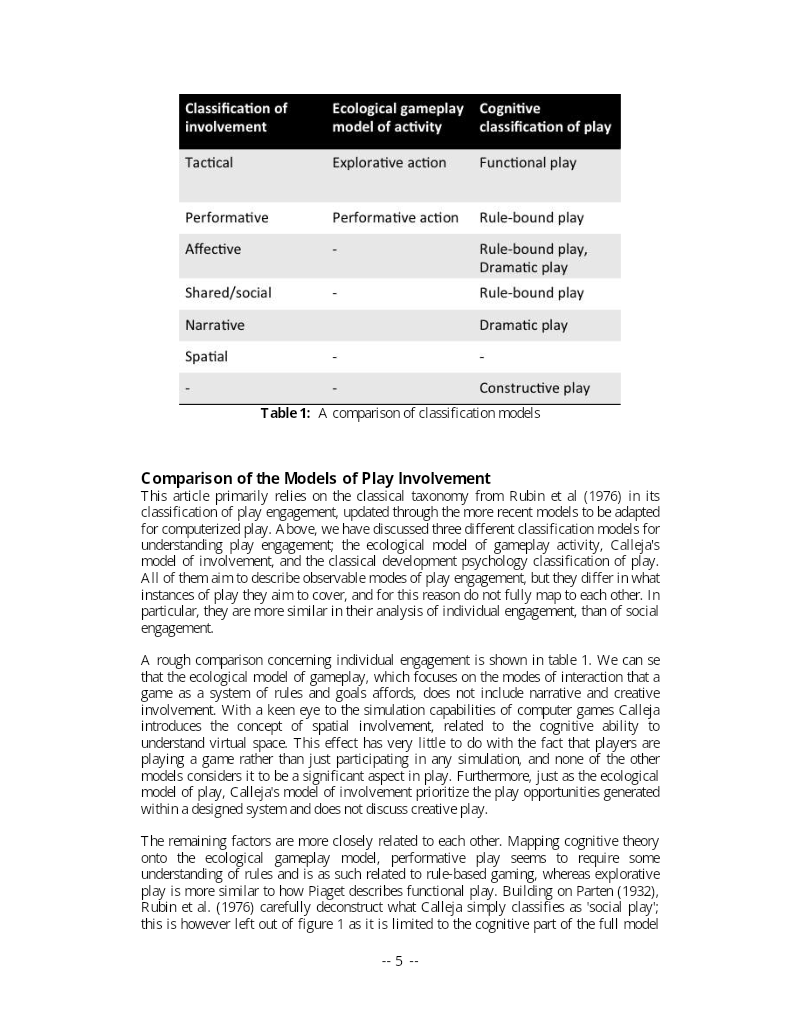
- Young children (roughly ages 3 to 6) can grasp and retell the emotional content of stories in low-interactivity tablet games even when their gameplay is mostly functional and exploratory, such as clicking to make animals move.
- The clearest evidence of emotional understanding appeared in retrospective talk and replay rather than during active gameplay, suggesting that reflection after play may reveal learning that in-the-moment behavior hides.
- Children expressed the emotional content of the stories through affective involvement and corporeal dramatic play, such as mirroring characters' breathing or facial expressions.
Systematic Analysis of In-Game Purchases and Social Features of Mobile Social Games in Japan
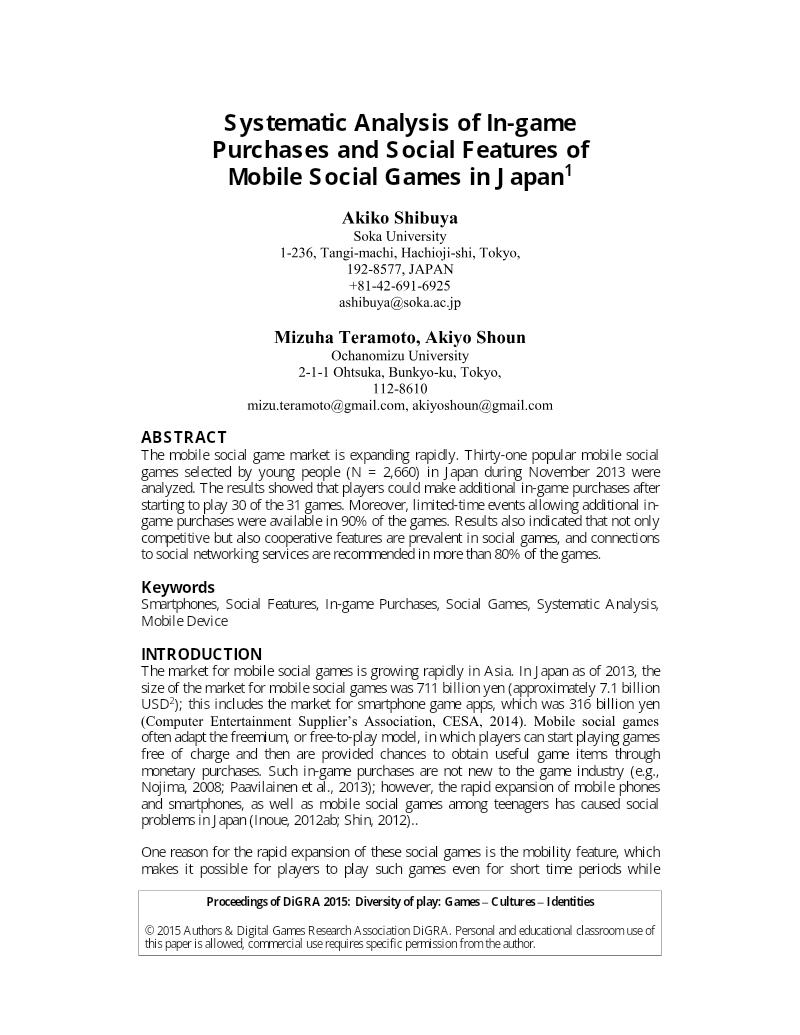
This analysis systematically investigates the prevalence and characteristics of in-game purchases and social features within popular mobile social games in Japan.
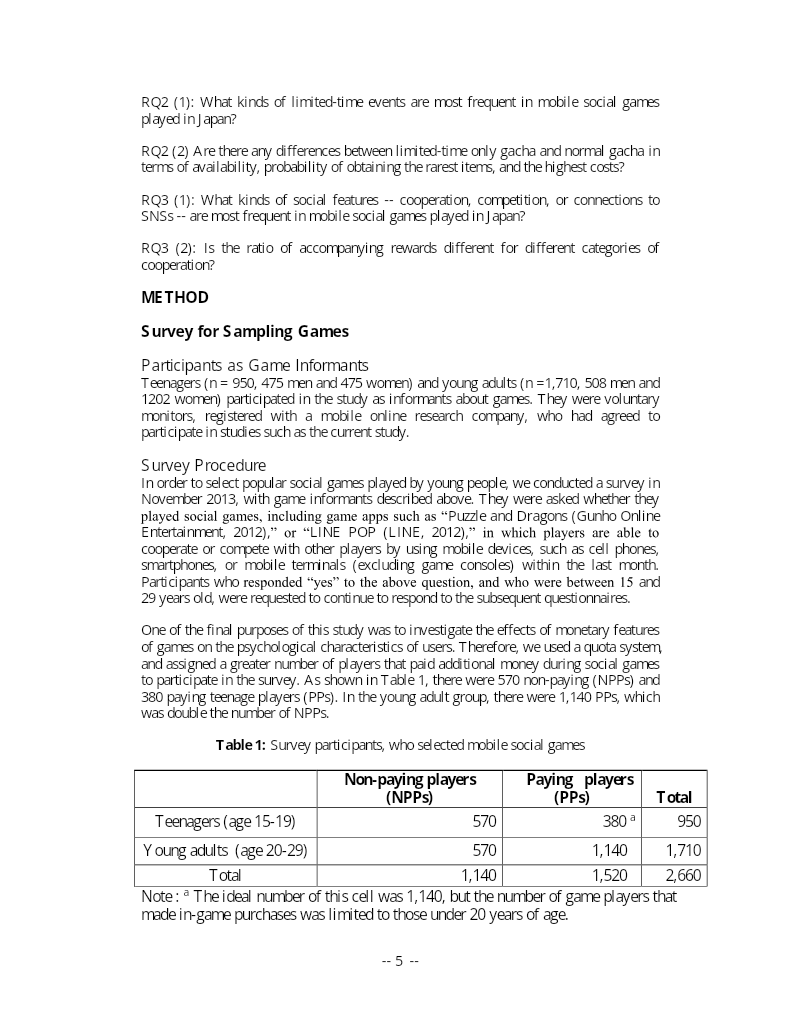
- Nearly all of the 31 studied Japanese mobile social games (30 of 31) include in-game purchases, with gacha appearing in 27 titles and stamina-restoration or story-advancement payments in an equal number.
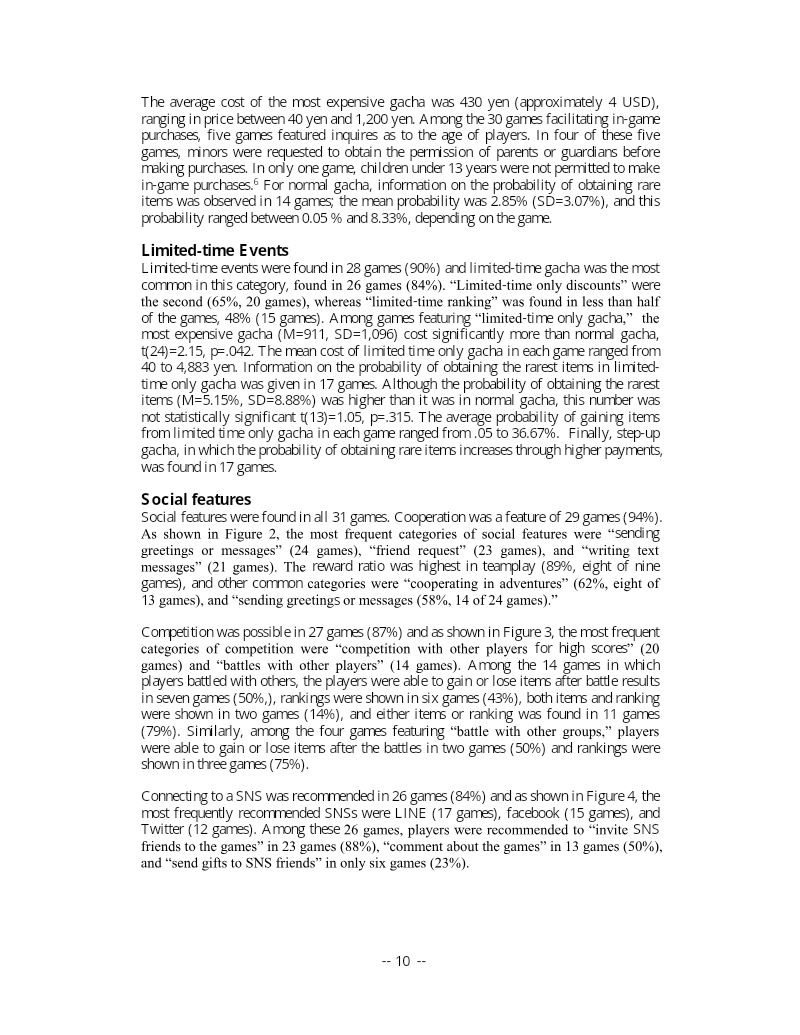
- Gacha likely serves as the principal monetization engine, with the most expensive gacha averaging 430 yen, though exposure to gacha did not always translate into additional spending.
- Limited-time events appeared in 28 games, led by limited-time gacha in 26, indicating near-constant offerings designed to sustain player engagement.
Animal Crossing: New Leaf and the Diversity of Horror in Video Games
Horror in video games can emerge unintentionally from titles never designed to frighten, and the cutesy life simulation Animal Crossing: New Leaf demonstrates this.
- The study argues that horror in a non-horror game like Animal Crossing: New Leaf can arise from its own mechanics rather than from conventions borrowed from horror cinema.
- Interactions are deliberately laborious: selling an item takes thirteen inputs, compared with seven to ten in comparable titles, which fosters a sense of limited and "blind" agency.
- Villagers who cannot be consoled and choices that loop back without consequence, such as Brewster's coffee, reinforce a feeling of hollow control for the player.
The Use of Theory in Designing a Serious Game for the Reduction of Cognitive Biases
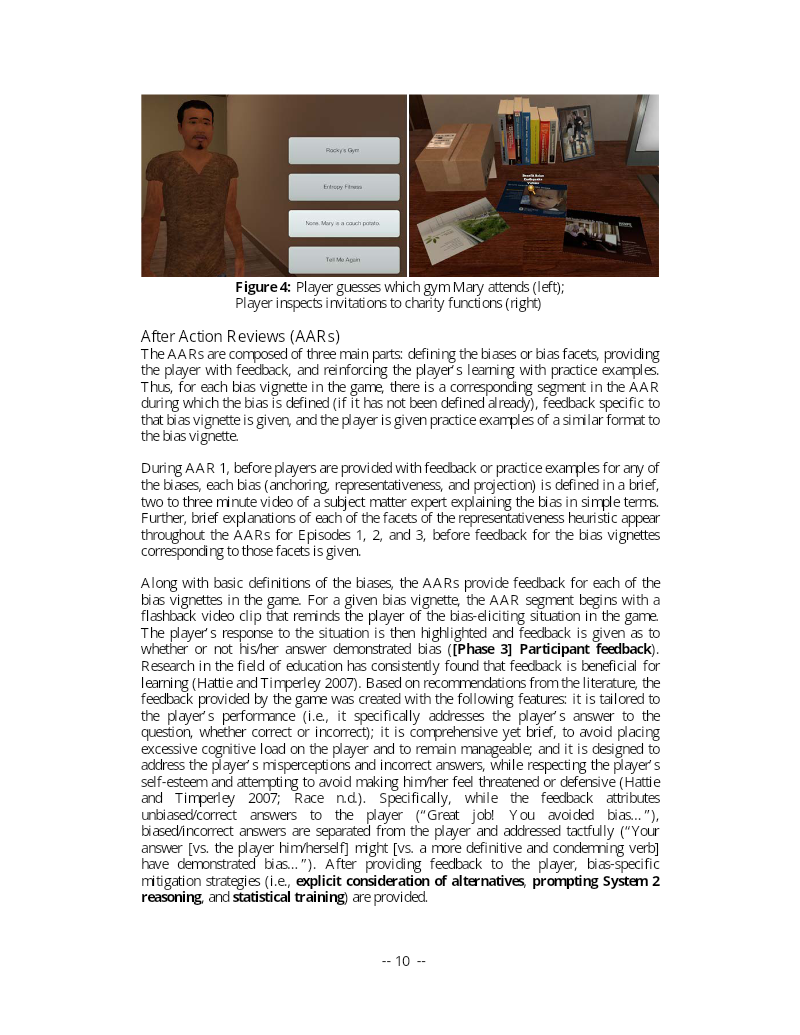
Leidos, Inc. developed "Missing: The Final Secret," a serious game intended to train players in recognizing and mitigating cognitive biases.
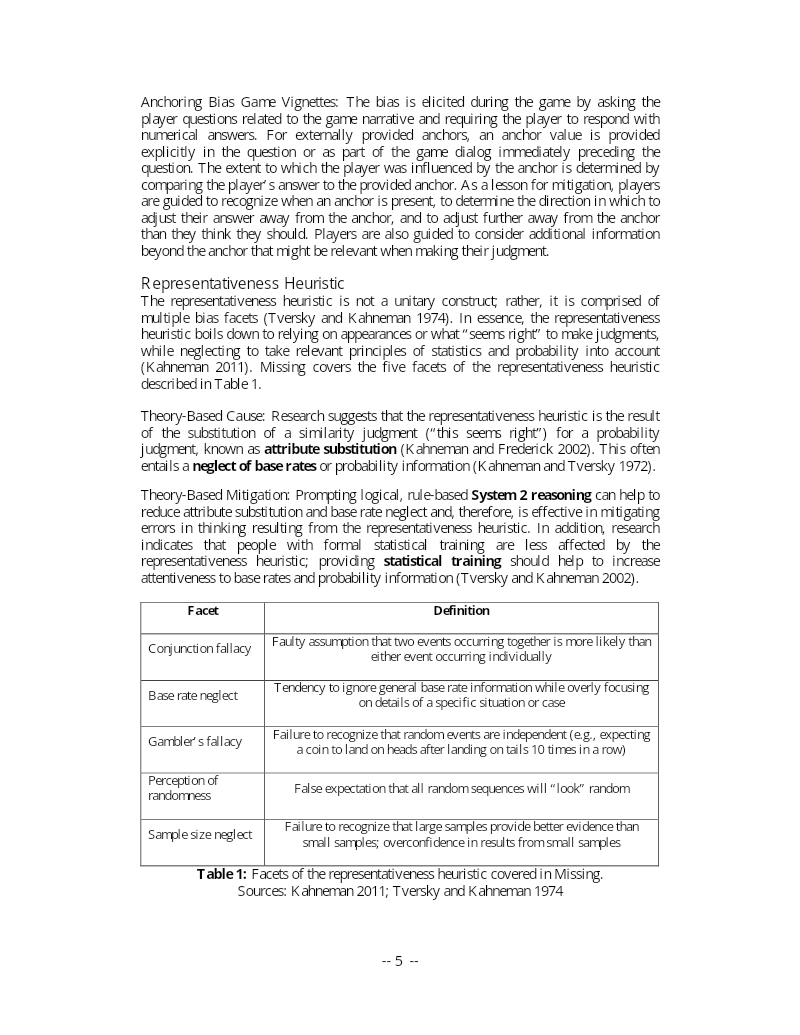
- The game "Missing: The Final Secret" targets three cognitive biases (anchoring, the representativeness heuristic, and projection/false consensus bias) and is grounded in dual-process theory, linking each bias to System 1 origins and System 2 mitigation strategies.
- In an efficacy study of 156 game participants versus 82 control-video participants, the game produced large gains in bias recognition and discrimination (d = 1.43 at immediate posttest, d = 0.66 at follow-up).
- Bias mitigation improved substantially with the game (d = 1.75 immediately, d = 1.17 at follow-up), indicating the largest effects in the study.
Gaming Experience as a Prerequisite for the Adoption of Digital Games in the Classroom?
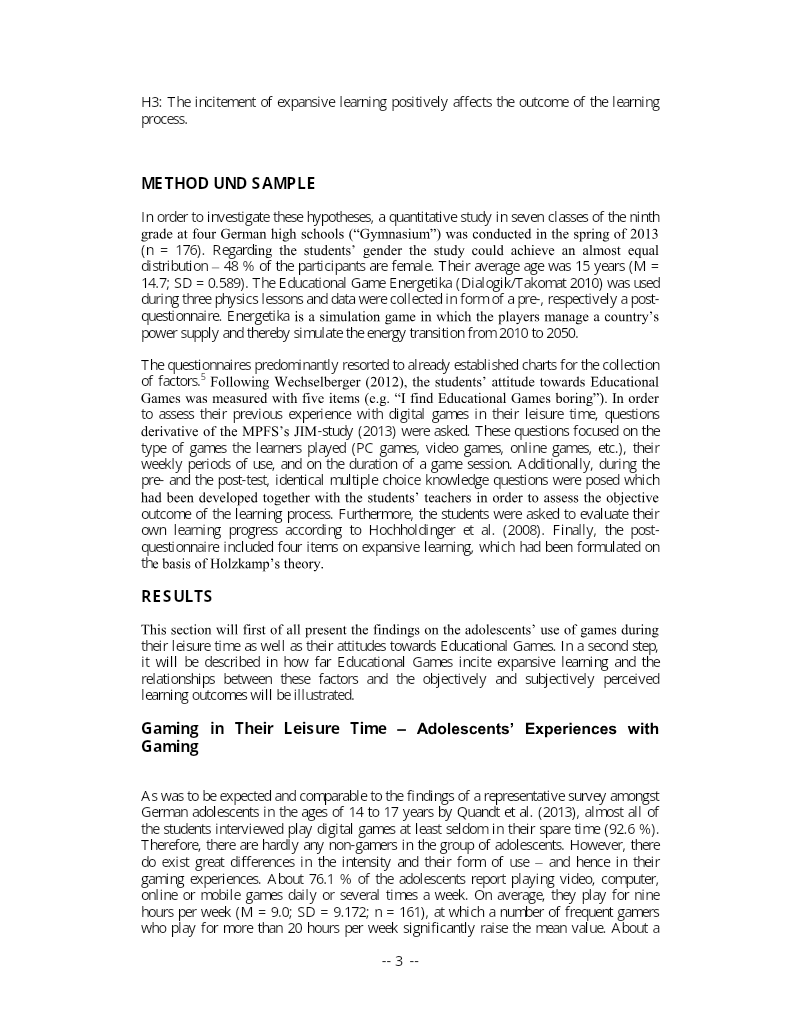
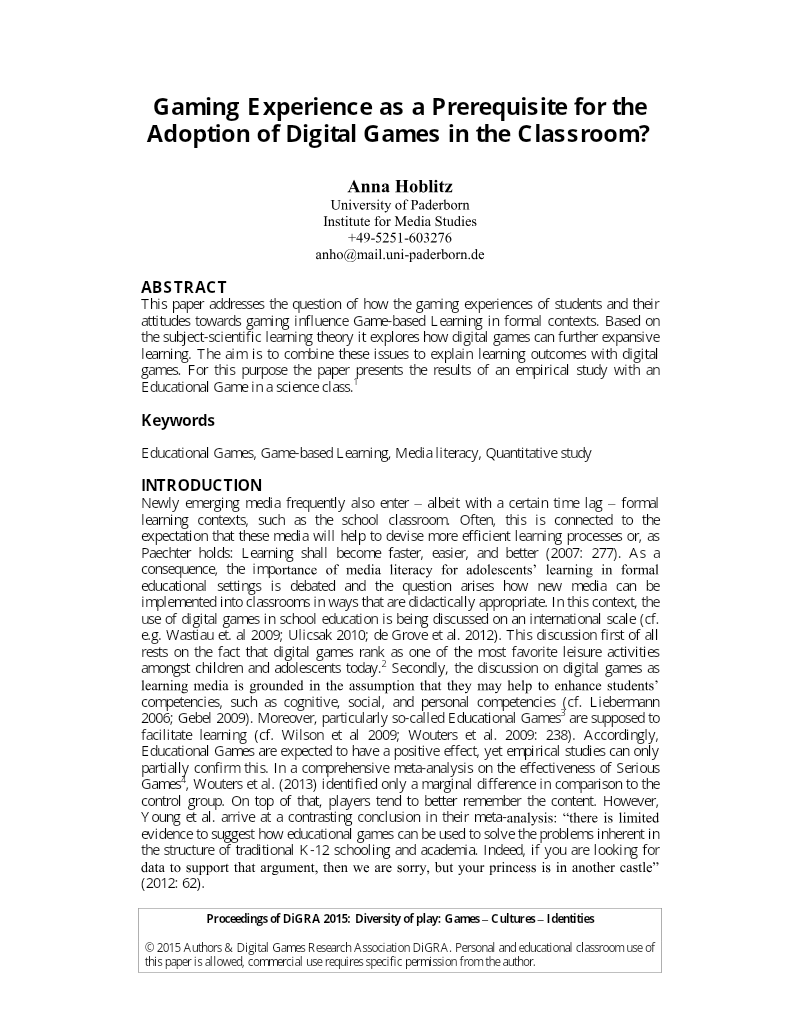
The document investigates the relationship between students' prior gaming experience and their adoption and learning outcomes from digital games in educational settings.
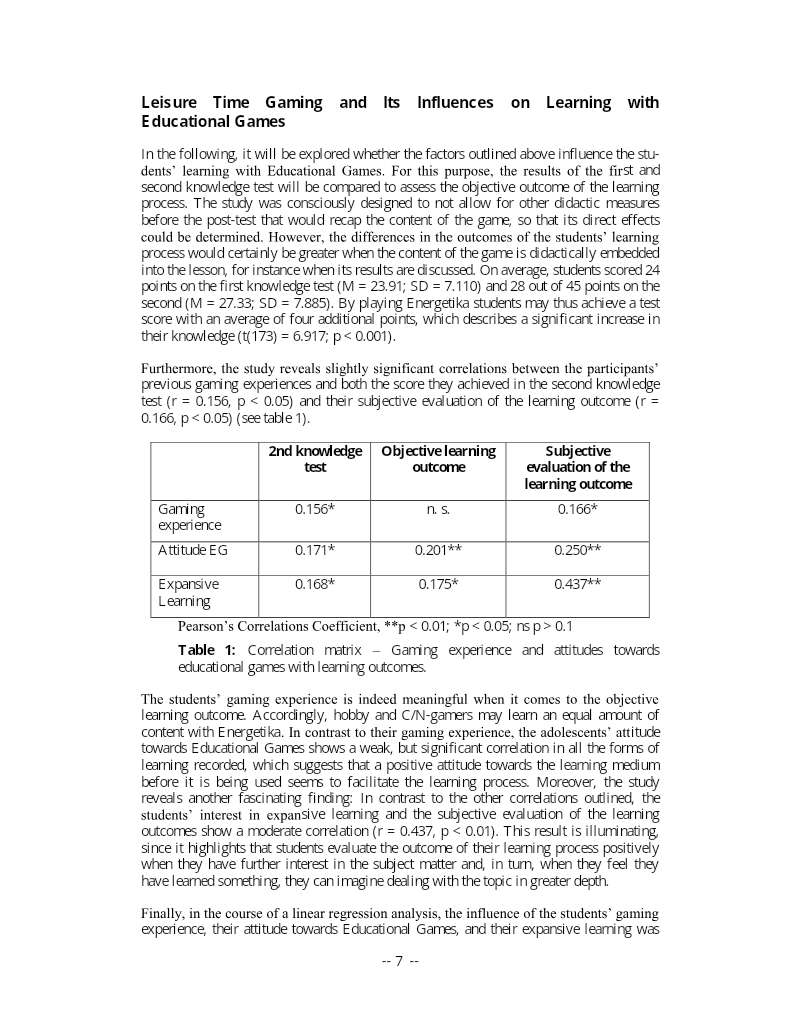
- Gaming experience did not significantly predict objective learning outcomes; prior experience showed only weak correlations with the second knowledge test (r = 0.156) and with subjective learning evaluations (r = 0.166).
- Disposition mattered more than familiarity: attitudes toward educational games correlated weakly but significantly with all learning measures, and sustained interest in the topic (expansive learning) correlated moderately with subjective learning evaluations (r = 0.437).
- Hobby gamers were more critical of educational games than casual players despite their greater gaming experience.


Cues and Insinuations: Indicating Affordances of Non-Player Characters Using Visual Indicators
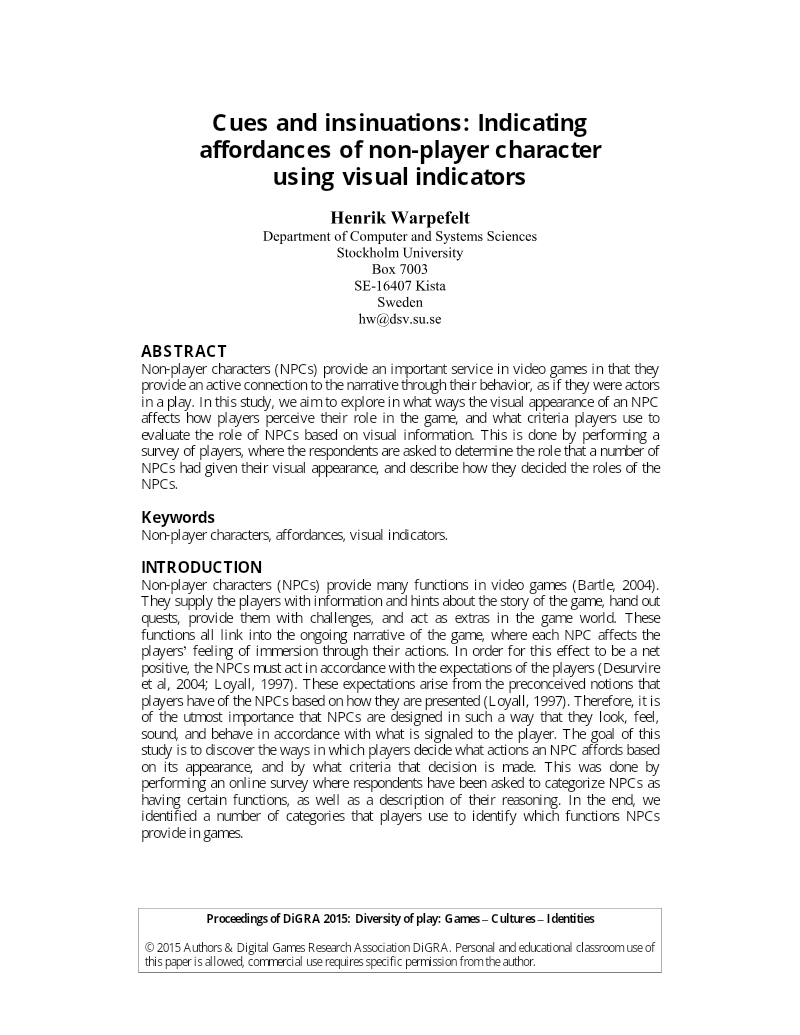
This study investigates how players perceive the roles and affordances of Non-Player Characters (NPCs) in video games based solely on their visual appearance.
- Players judge an NPC's functional role mainly from visual indicators, drawing on three factors: the surrounding area and location, the actions the NPC performs, and its attributes and visual presentation.
- Shopkeepers were identified through counters and wares, guards through weapons, armor, and wariness, and quest givers through distinctive, face-forward presentation, while generic, masked, or clustered figures were read as filler or as enemies to be killed for loot.
- The study was based on an online survey of 213 valid responses from a self-selected, social-media-recruited sample aged 18 to 52, mostly from Sweden and the United States, classifying 27 NPCs from four 2014 games according to Bartle's (2004) functional roles.


Applying the Two-Factor Theory to the PLAY Heuristics
This study investigates the applicability of Herzberg's Two-Factor Theory to video game heuristics, specifically Desurvire and Wiberg's (2009) PLAY heuristics.
- Applying Herzberg's Two-Factor Theory to the 48 PLAY heuristics (Desurvire and Wiberg) split them into 22 Hygiene Factors (essential for basic functionality) and 24 Motivators (aimed at enjoyment), with one split evenly and a few ambiguous.
- Usability, controls, interface consistency, and goal clarity were predominantly classified as Hygiene Factors, with "Players feel in control" showing the strongest hygiene classification.
- Motivator heuristics centered on emotional connection, persistence of the game world, reward systems, and immersion, with "emotional connection between the player and the game world" ranking highest.
Ethical Recognition of Marginalized Groups in Digital Games Culture
The document, "Ethical Recognition of Marginalized Groups in Digital Games Culture," asserts that moral agents within the digital games industry and culture bear an ethical obligation to actively recognize and affirm marginalized groups.
- The paper argues that everyone in games culture, including publishers, developers, critics, researchers, and players, has an ethical obligation to promote equal treatment and justice for marginalized groups, with recognition extending beyond representation to visibility, participation, platform access, and power redistribution.
- Industry data from the IGDA Diversity Report 2014 indicate the Western games workforce is roughly 79% White and 86% heterosexual, while character studies find White characters make up about 70–74% of those reviewed.
- Female characters account for only about 10–15% of characters across major studies, and non-heterosexual characters are rare.
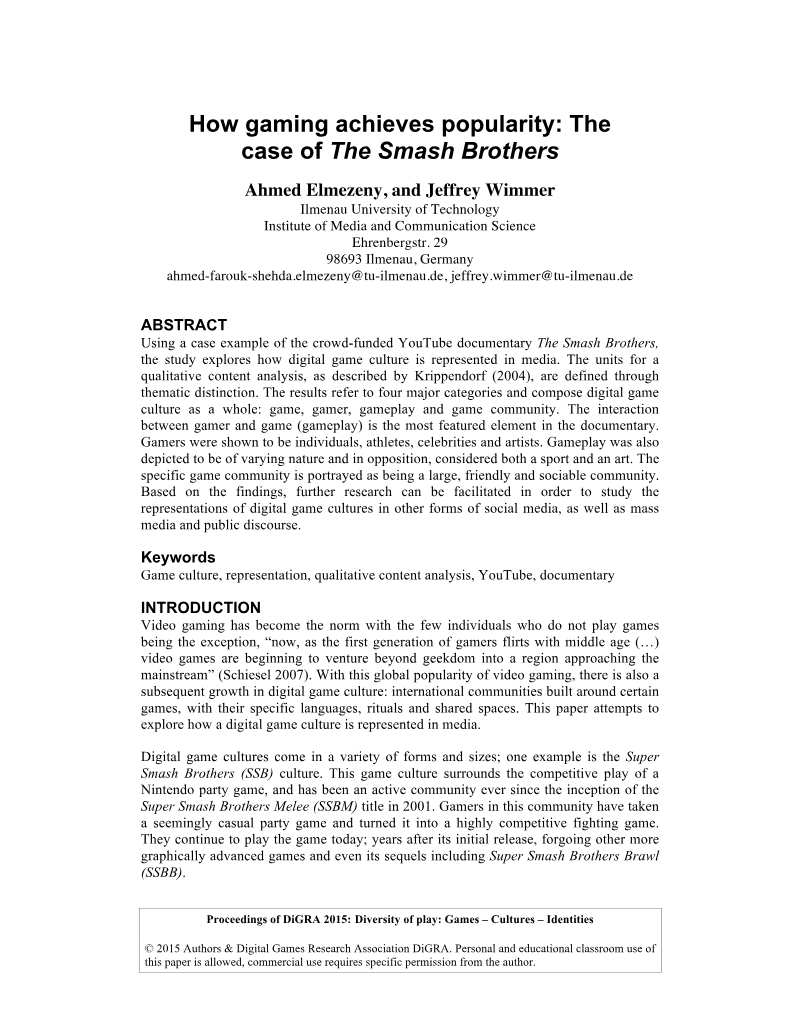
How Gaming Achieves Popularity: The Case of The Smash Brothers
The crowd-funded YouTube documentary The Smash Brothers (2012) helped move the competitive Super Smash Bros.
- The study is a 2015 DiGRA paper by Elmezeny and Wimmer that uses the nine-episode, roughly 257-minute YouTube documentary series The Smash Brothers as a case study of how gaming is portrayed in media, focusing on the competitive Super Smash Bros. Melee (SSBM) community after its 2012 surge in visibility.
- A qualitative content analysis coded the documentary into four categories (gamer, game, gameplay, community), with gameplay (216 codes) and gamer (197 codes) dominating, and the portrayal of gamers was found to both challenge and reinforce stereotypes.
- The documentary underrepresents female gamers, who appear in only four instances, and the community it depicts is male-dominated and geographically split, especially between East and West Coast players.

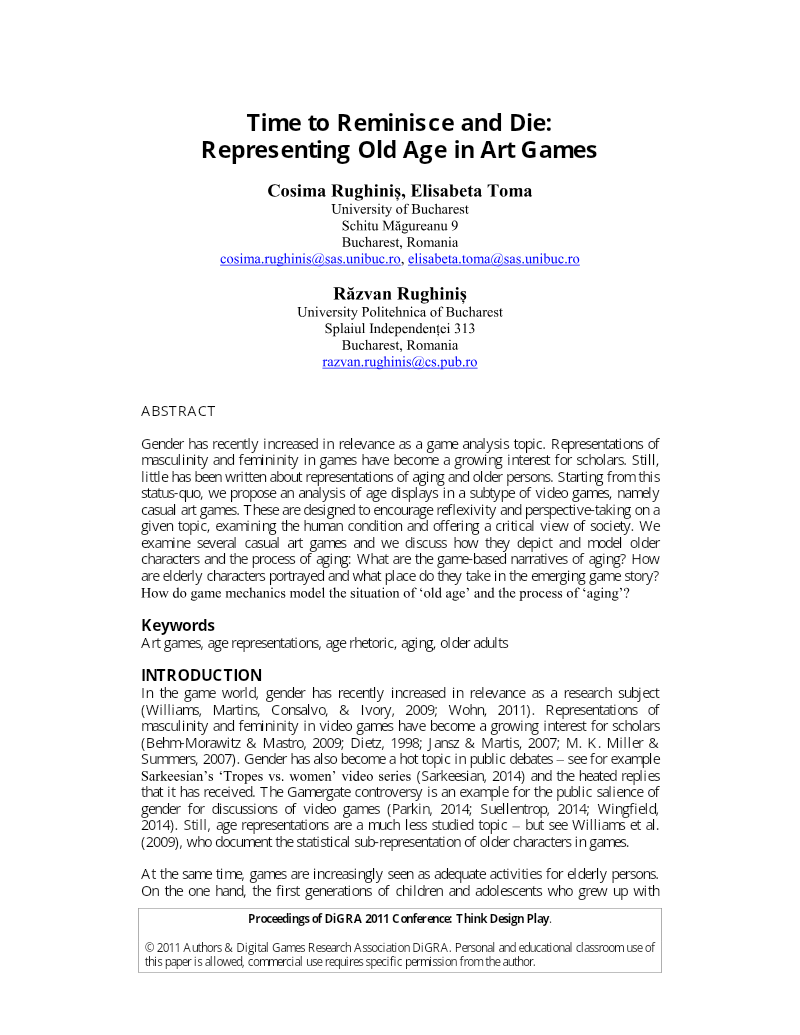
Time to Reminisce and Die: Representing Old Age in Art Games
The document, "Time to Reminisce and Die: Representing Old Age in Art Games," investigates the portrayal of aging and older individuals within video games, specifically focusing on casual art games.
- Depictions of older characters in art games are narrow: aging is most often framed through impairment, failure, cognitive decline, and death rather than as a full life stage.
- Elderly characters typically serve as rhetorical devices for meditating on mortality rather than as protagonists with their own goals, interiority, or capacity for growth.
- Aging is commonly modeled procedurally as degradation, expressed through slowness, diminished ability, or eventual failure.
Do you work at DiGRA? Get a free report of how these documents are read and cited here.