1 free read left. Create a free account for unlimited reading + AI research.
Create free accountWhitepaper DiGRA
1 free read left. Create a free account for unlimited reading + AI research.
Create free accountWhitepaperDiGRA
Distilling the key insights…
"Time to Reminisce and Die: Representing Old Age in Art Games" argues that the medium's depictions of aging are narrow, and that older characters are rarely developed as complete, agentic figures. Examining a set of casual and art-oriented titles, including ALZ, Home, Passage, The Graveyard, To the Moon, and I Am a Brave Knight, the work finds that old age is most consistently framed through impairment, failure, cognitive decline, and death. Elderly characters tend to function as rhetorical devices for meditating on mortality rather than as protagonists with their own goals, interiority, or capacity for growth.
Across the games reviewed, aging is typically modeled procedurally as degradation, expressed through slowness, diminished ability, or eventual failure. The analysis identifies only I Am a Brave Knight as offering an ambivalent and partly positive view of later life, while To the Moon presents meaningful but largely static and passive portrayals. Older characters are largely absent from art games that engage other serious human themes such as love, labor, or resilience, suggesting that the medium's emotional range is constrained when age is involved.
The authors situate these findings within a broader body of research on representation in games, drawing on prior scholarship examining gender, race, and age in both mainstream and casual titles. Their argument rests on the observation that scholarly and design attention to older characters remains limited, and that existing representations rarely move beyond stereotypical, deficit-based frameworks. The scope of the analysis is confined to a small selection of art games, and the work presents its conclusions as a critique of recurring patterns rather than as a comprehensive survey of the industry.
Each row is a game or company this document names, each column a document, oldest first. A mark means that document names it. Select a row to see those documents.
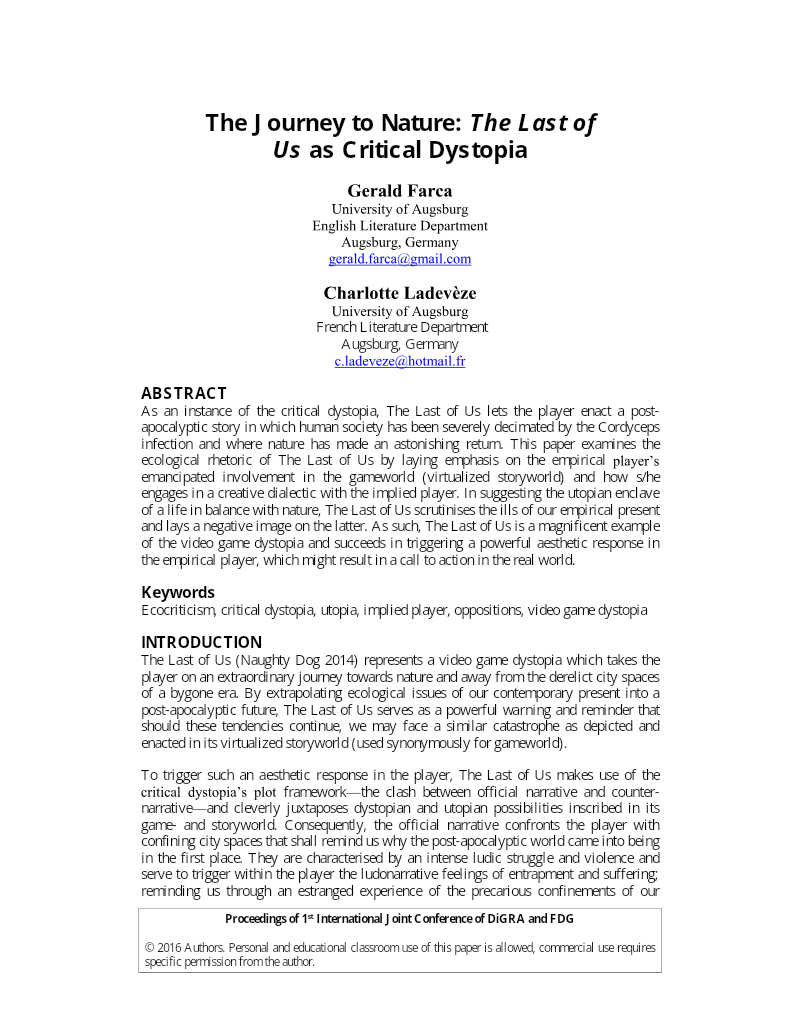
DiGRA · 2016
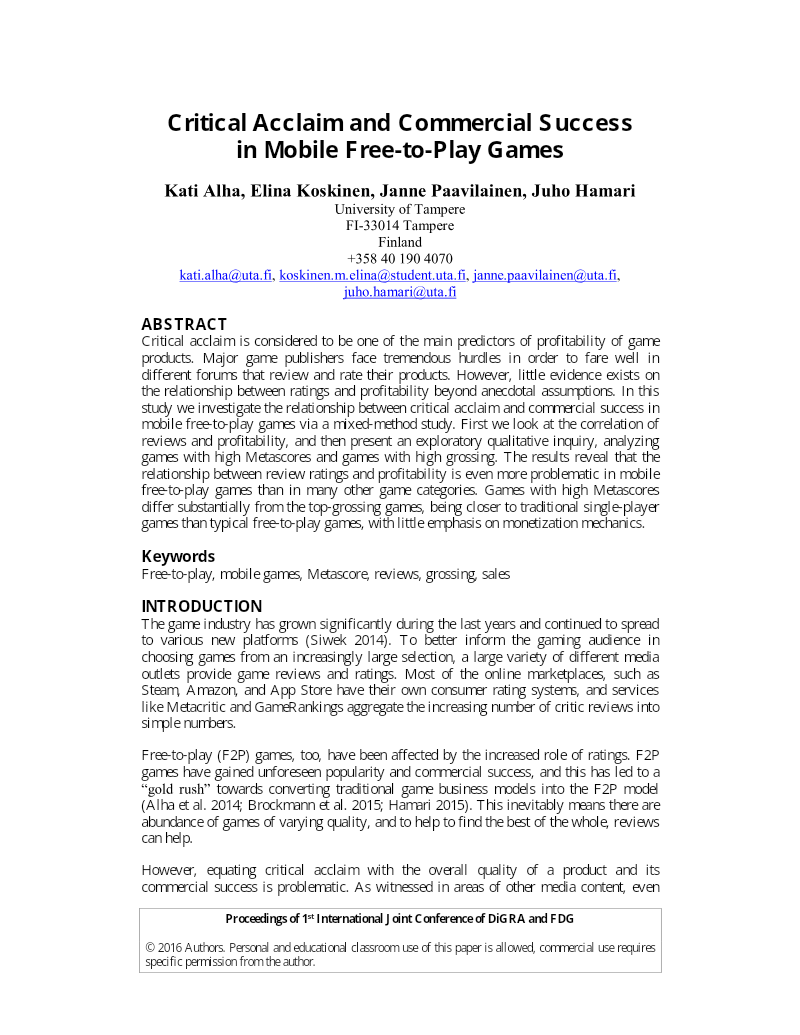
DiGRA · 2016
DiGRA · 2016



DiGRA · 2016



DiGRA · 2016



DiGRA · 2016



DiGRA · 2016



DiGRA · 2016



DiGRA · 2016

DiGRA · 2015



DiGRA · 2015



DiGRA · 2015
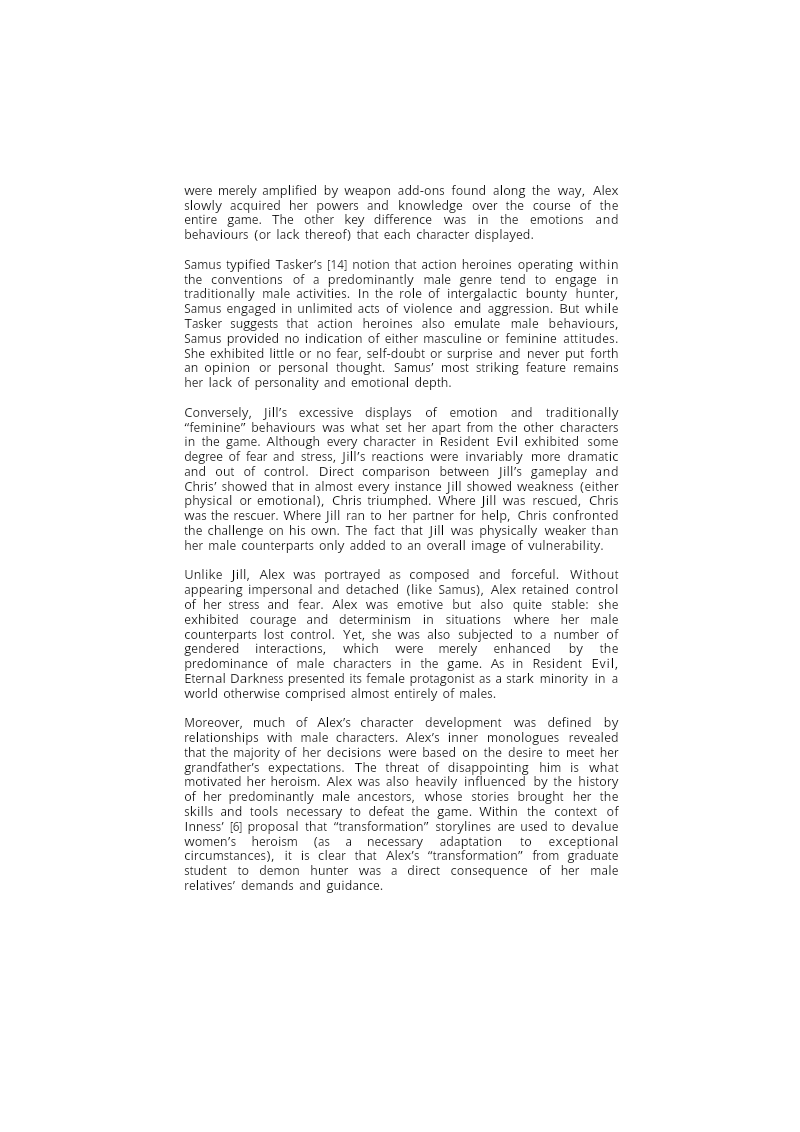
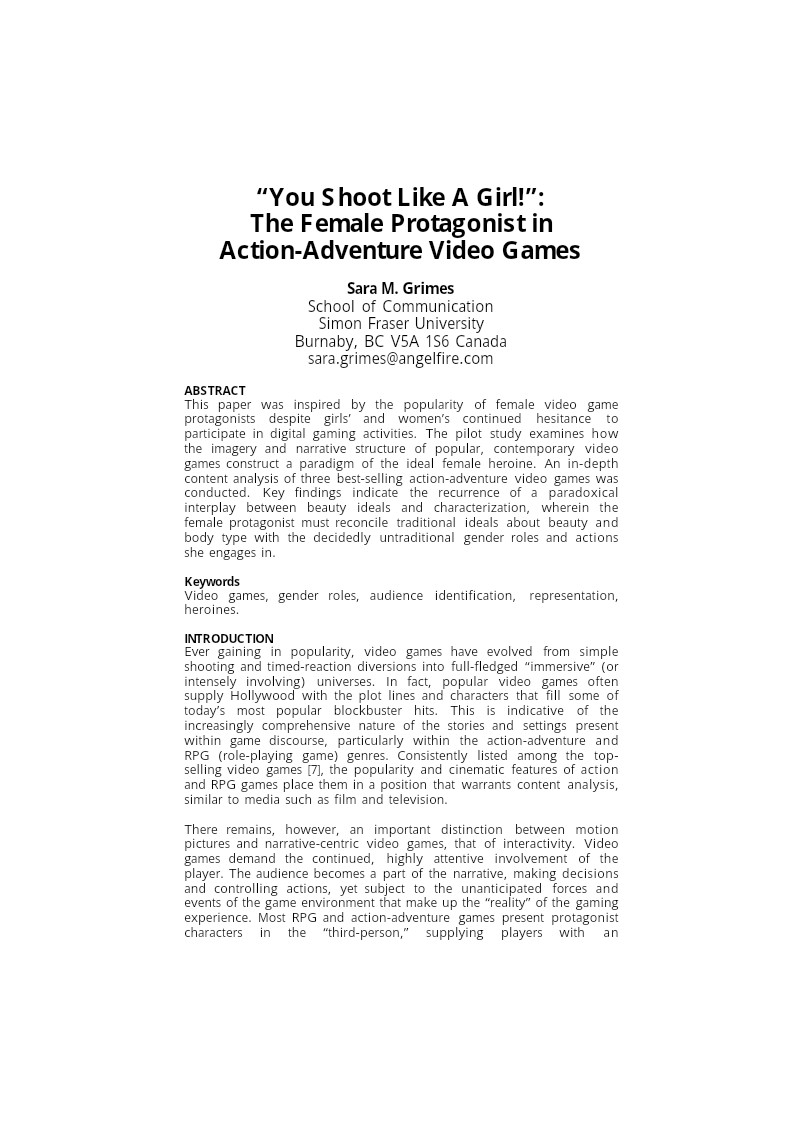
DiGRA · 2009