1 free read left. Create a free account for unlimited reading + AI research.
Create free accountArticle DiGRA
1 free read left. Create a free account for unlimited reading + AI research.
Create free accountArticleDiGRA
The analysis argues that Animal Crossing: New Leaf generates unease through its own design rather than through conventions borrowed from horror cinema.
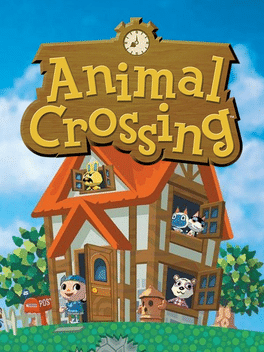
Horror in video games can emerge unintentionally from titles never designed to frighten, and the cutesy life simulation Animal Crossing: New Leaf demonstrates this. A 2015 DiGRA paper applies Consalvo and Dutton's interaction mapping to the game, drawing on three themes from horror game scholarship: loss of agency, the Freudian uncanny, and the Heideggerian uncanny. The authors, prompted by their own "creeped out" experiences, used an abductive, qualitative approach and captured unsettling non-player character (NPC) dialogue through screenshots.
The analysis shows that the game's deliberately laborious, dialogue-heavy interactions foreground player-NPC relationships. Selling a single item takes 13 inputs, seven of them dialogue, compared with seven to ten inputs in comparable games. Within these exchanges, player agency is limited and "blind." Villagers show unexplained hostility, sad residents cannot be consoled, dialogue outcomes are unpredictable, and some choices are illusory, such as Brewster's coffee loop. The result is a sense of powerlessness that leaves players feeling childlike.
The Freudian uncanny arises from the village's hollow mimicry of human society. Characters eat without purpose, police norms such as gendered clothing, and voice adult anxieties. Pete frets about his job, and Tom Nook's 428,000-Bell "trifling" renovation loans keep success perpetually out of reach. The Heideggerian uncanny stems from a world that persists on the real-time clock while the console is off, and from NPCs with perfect memory who can move away on their own, even "into nothingness."
The authors conclude that horror themes can surface in non-horror games, which undermines strict genre boundaries and suggests design approaches for subtler dread, as fan works like The Terrible Secret of Animal Crossing already show. They caution that the game is kid-friendly and children may not find it unsettling. The study is a single-title case study of a Nintendo 3DS game, and its references draw on scholarship about music and the uncanny in horror play.
Each row is a game or company this document names, each column a document, oldest first. A mark means that document names it. Select a row to see those documents.

DiGRA · 2026

DiGRA · 2026



DiGRA · 2026
DiGRA · 2026