
DiGRA
The Digital Games Research Association: the international association of academics and professionals who study digital games. Its Digital Library holds the proceedings of the DiGRA conferences since 2002.
Documents
Quilting the Meaning: Gameplay as Catalyst of Signification and Why to Co-op in Game Studies
The document presents a unified theory of meaning-making in digital games, positing that signification primarily emerges from cognitive and interpretive processes embedded within gameplay.
- The paper argues that meaning in digital games arises chiefly through the interpretive work of gameplay, which acts as a hub linking semantics, narrative, aesthetics, interaction, and mechanics.
- Its central thesis is that a gameplay-centered perspective can help consolidate a fragmented game studies field in which many partial and sometimes conflicting theories struggle to engage one another.
- A thought experiment built on Street Fighter II illustrates that changing how players act can alter a game's meaning even when its visuals and rules stay identical.
An Ontological Meta-Model for Game Research
Aarseth and Grabarczyk address the fragmentation of game ontology, a tradition of roughly sixty years running from Caillois through Avedon, Björk and Holopainen, and Zagal and colleagues.
- The paper proposes a four-layer meta-ontological model for game research (physical, structural, communicational, and mental), each subdivided into three sub-layers, designed for comparing existing game frameworks rather than defining games.
- Established frameworks such as Konzack's model, MDA, Zagal et al., and Aarseth and Calleja can be mapped onto the four-layer model, though the mapping exposes mismatches; MDA's "Dynamics" and "Aesthetics" cut across several layers.
- Across nine game definitions, most address the structural and mental layers, most omit the physical layer, and later definitions tend to cover more layers; Deterding's definition uniquely spans the physical, mental, and communicational layers but omits the structural one.

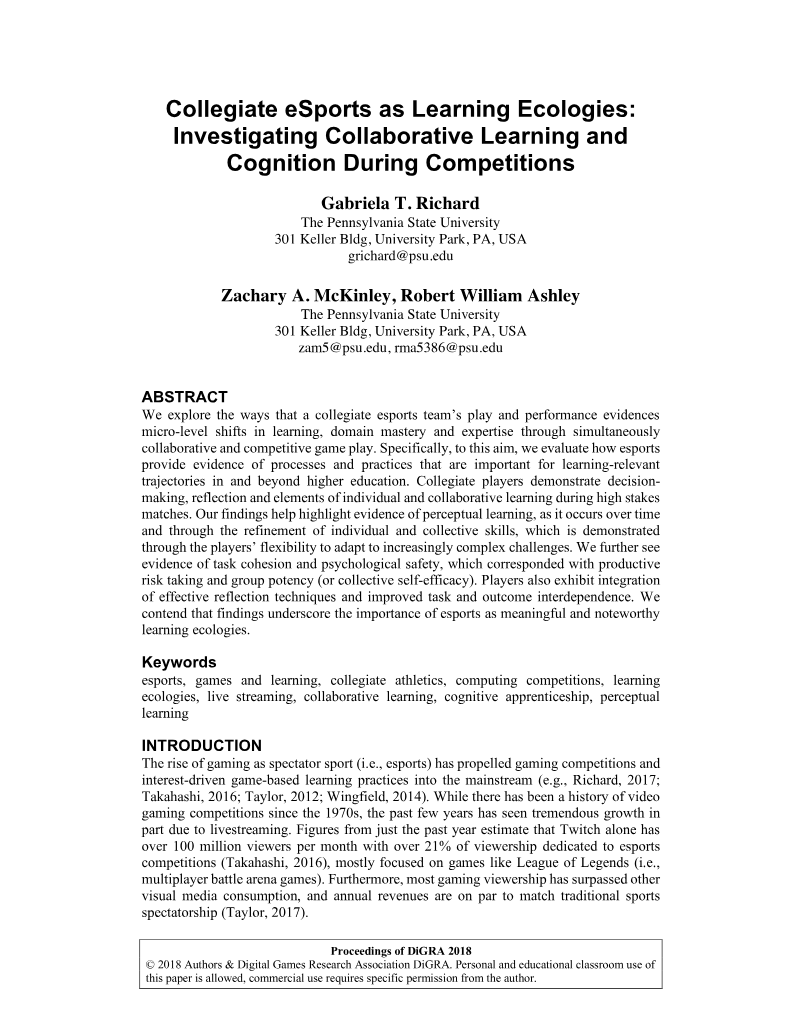
Collegiate eSports as Learning Ecologies: Investigating Collaborative Learning and Cognition During Competitions
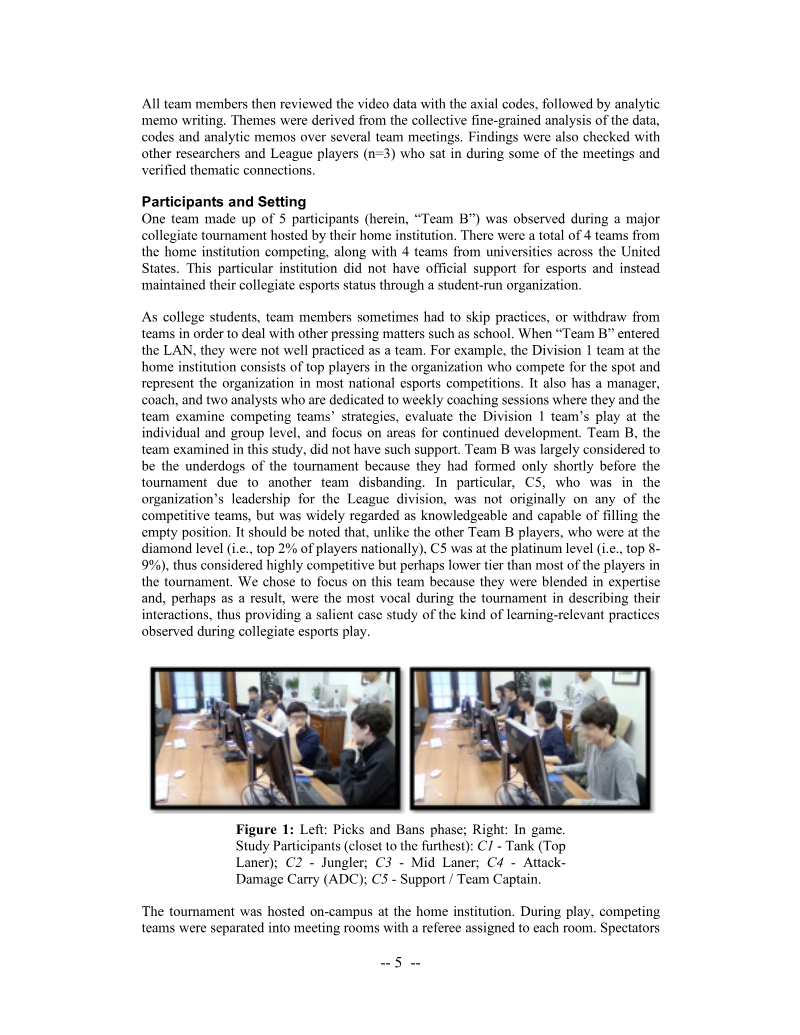
The document explores collegiate esports, specifically a League of Legends team ("Team B") during a high-stakes tournament, as a dynamic learning ecology.
- The study is a qualitative, exploratory case study of a single newly formed, mixed-expertise university League of Legends team across one home-institution tournament and a small set of matches, so its findings are illustrative and not generalizable to other teams, games, or institutions.
- The team's collaborative learning strengthened over successive games, with members shifting by the third game from individual replay reflection to team-level abstracted replay, which the authors link to higher proficiency, greater play congruency, and more willingness to take strategic risks.
- Not all strategic risks succeeded, but the authors present the recurring pattern of reflection and adjustment after both successes and failures as evidence of reflective learning in action.
The Human Machine Art Interface: Arcade Port Aesthetics and Production Practices
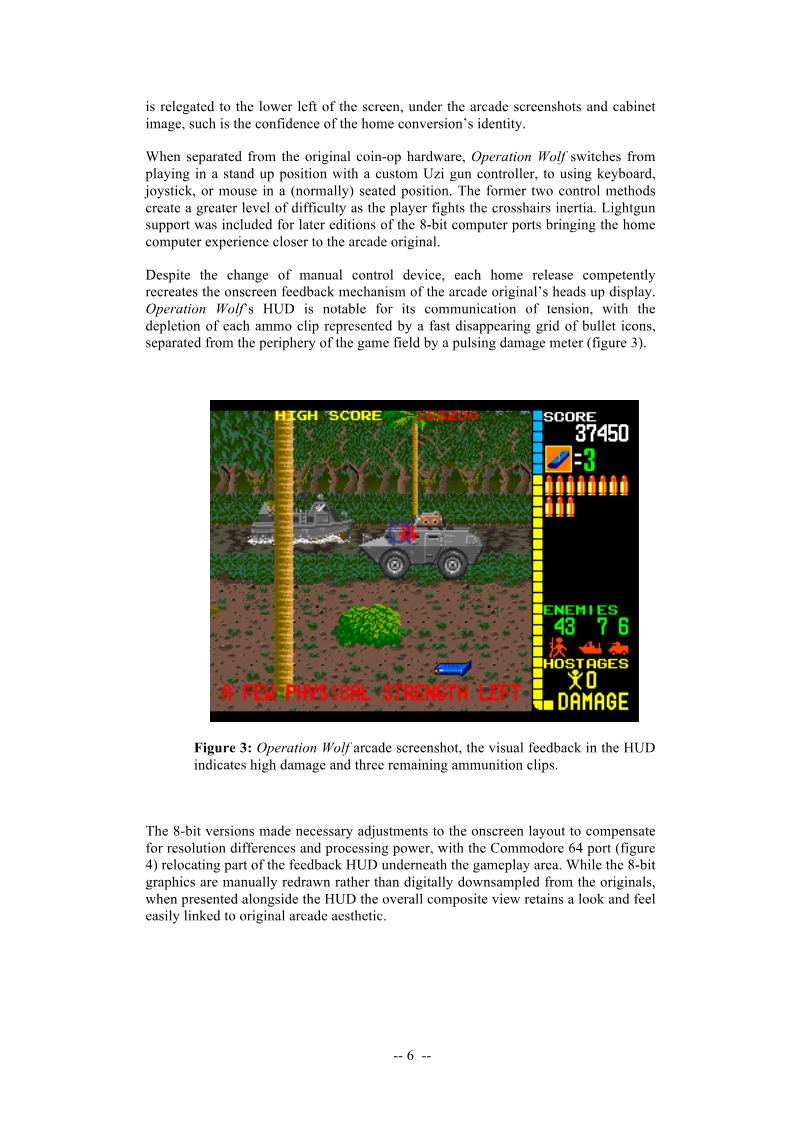
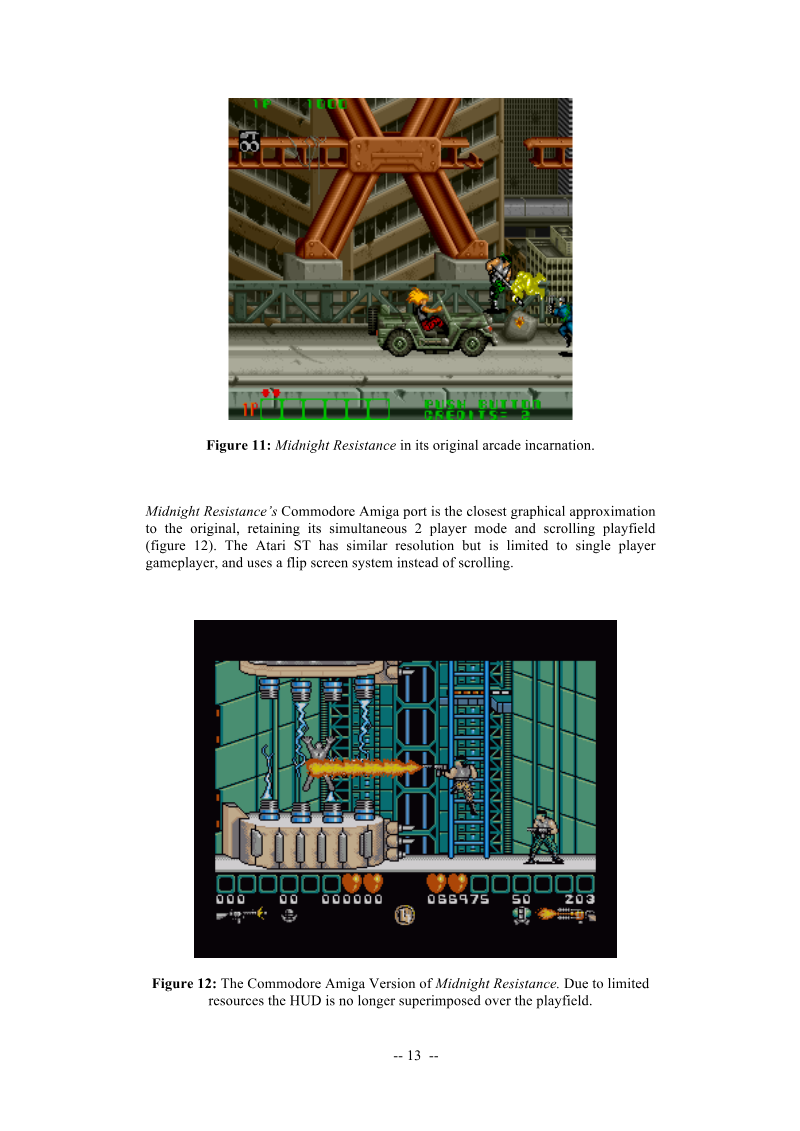
This analysis investigates the aesthetic characteristics and production methodologies employed in arcade-to-home computer game ports during the 1980s and 1990s.
- British conversion teams typically reconstructed arcade graphics, music, and gameplay by capturing video from the cabinets and manually redrawing assets, rather than working from source files, which produced substantial aesthetic departures from the originals.
- The authors argue that these departures were shaped by individual teams' stylistic choices, not by platform constraints alone, reframing the ports as creative adaptations rather than duplications.
- Conversion teams including Arc, Graftgold, Special-FX, Ocean, and Tiertex relied on stippling to simulate extra colours within restricted palettes, custom converter tools to move assets between systems, and one-button joystick control schemes.
Are Loot Boxes Gambling? Random Reward Mechanisms in Video Games
The document, "Are Loot Boxes Gambling?
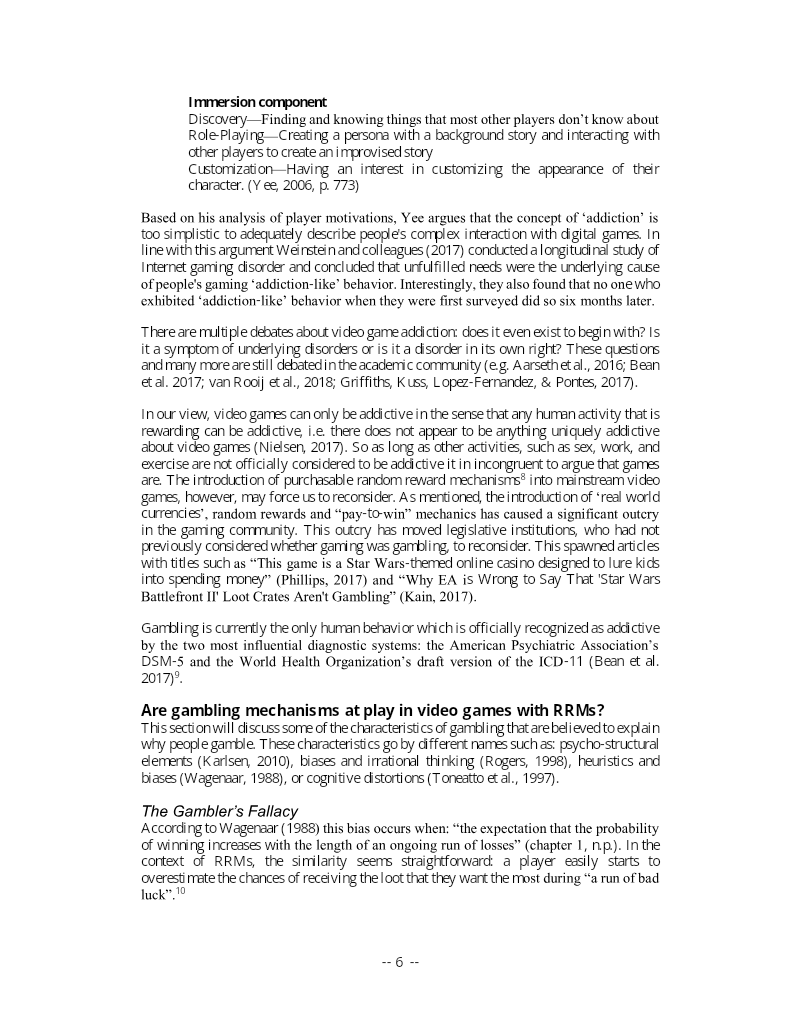
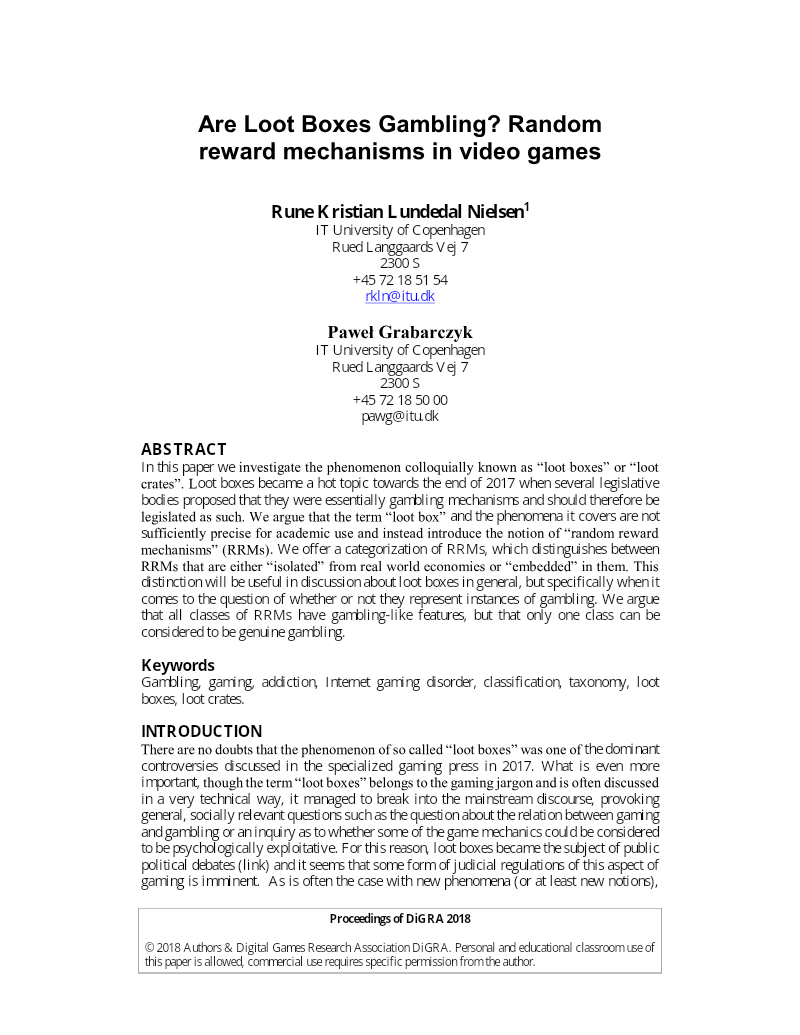
- The paper argues "loot box" is too imprecise for academic and regulatory use and proposes "random reward mechanisms" (RRMs), defined as an eligibility condition that triggers a random procedure delivering a reward.
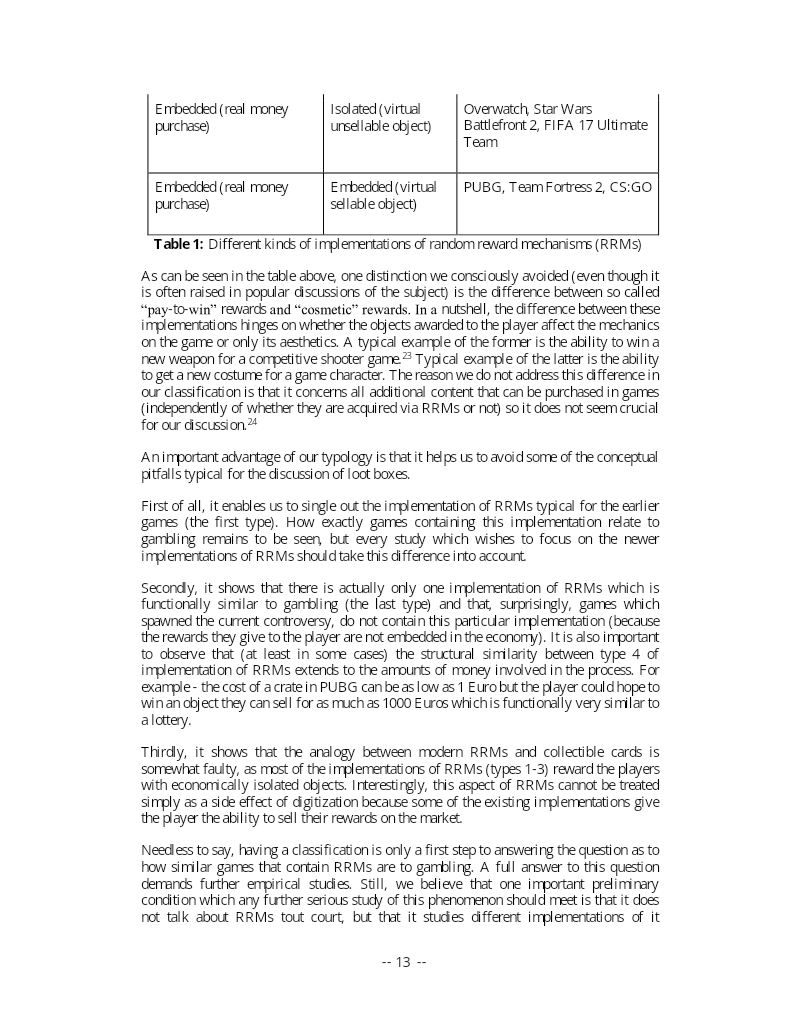
- The authors' central finding is that RRMs resemble gambling only when both the purchase and the reward are embedded in the real-world economy, i.e., they can be bought with and exchanged for real money.
- Regulators diverged on this point: Denmark's Gambling Authority treated CS:GO skin-betting as gambling because skins could be sold for cash, but did not classify Star Wars Battlefront 2 loot boxes, whose contents could not be converted to currency.
Playing Whiteness in Crisis in The Last of Us and Tomb Raider
Soraya Murray argues that The Last of Us (2013) and Tomb Raider (2013) present beleaguered white protagonists as reflections of a post-9/11, post-Obama United States anxious about shifting demographics and the erosion of narratives of progress.
- Soraya Murray argues that The Last of Us (2013) and Tomb Raider (2013) depict whiteness in crisis, where whiteness becomes self-aware within a dominant cultural frame rather than remaining invisible as critical whiteness studies often describes.
- The paper contends these games "make whiteness strange," exposing its normative claims to invincibility and universality, drawing on Richard Dyer's theories and critical whiteness studies.
- The analysis is situated in a post-9/11 and post-Obama American climate of anxiety over the declining white majority and shifting national power.
Does Platform Matter? A Game Design Analysis of Female Engagement in MOBA Games
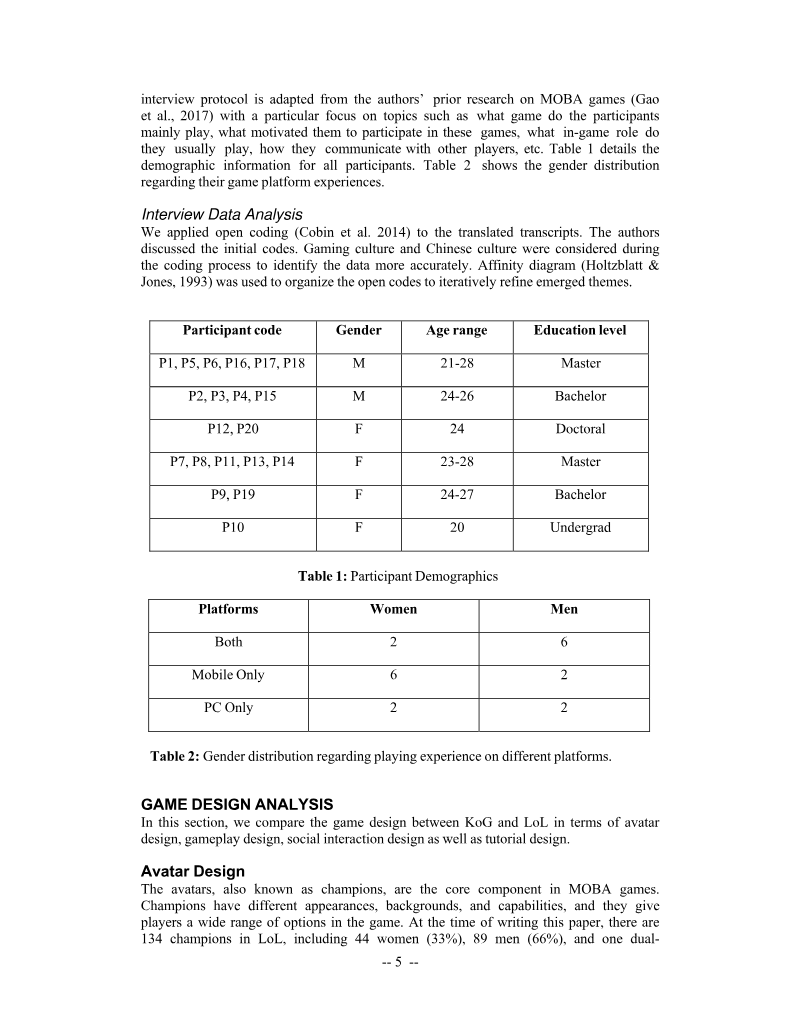
This analysis explores the factors contributing to the significantly higher female player engagement in the mobile Multiplayer Online Battle Arena (MOBA) game, King of Glory (KoG), compared to its PC counterparts like League of Legends (LoL).
- King of Glory, a mobile MOBA reportedly around 54% female in China, draws substantially more female players than League of Legends, a PC MOBA with roughly 35% female participation, despite similar core mechanics, suggesting platform shapes female engagement.
- King of Glory's accessibility advantages include simplified controls, fewer abilities, QQ and WeChat login integration, interactive tutorials, handheld mobility, and avatars that players found appealing.
- Interviewees identified sociability as a key draw of King of Glory, while serious players of either gender often preferred League of Legends for its complexity and teamwork demands.
"Clementine Will Remember That": Methods to Establish Design Conventions for Video Game Narrative
This paper proposes a rigorous empirical framework for establishing design conventions in video game narrative, moving beyond traditional media theories to focus on the unique interactive properties of digital experiences.
- The paper argues narrative game design should be treated as an empirical research field, with the goal of establishing concrete, transferable design conventions that reliably produce predictable audience effects, distinct from unmeasurable abstract patterns and broader principles like Murray's 'scripting the interactor'.
- The proposed four-phase method moves from identifying candidate techniques in acclaimed narrative games, through focus groups and review analysis, to validation via controlled quantitative testing using established user-experience scales.
- The authors warn that typical samples of 25 to 30 participants per condition are underpowered for the small-to-medium effects likely to be found, and recommend larger samples, a priori power calculations with GPower, and reporting effect sizes such as Cohen's d.
An Inclusive Perspective on Gameplay: Towards a Wide Understanding of Gameplay in Theory and Praxis
Jahn and Möring argue that practices conventionally treated as non-standard, including cheating, modding, speedrunning, glitching, and repurposing games, should be understood as ordinary gameplay.
- Jahn and Möring argue that non-standard gameplay practices such as cheating, speedrunning, modding, glitch exploitation, and subversive play have been wrongly marginalized as "other" and should be integral to any understanding of gameplay.
- The authors critique foundational game theory (Huizinga, Caillois, Juul, Adams and Rollings, Leino, Smith) for treating deviations from designer intent as exceptional, and contend that no clear formal distinction separates functional rule-learning from rule-breaking.
- Drawing on Perron and Arsenault's model of the player's mental model, the paper argues that the boundary between standard and non-standard play is hard to sustain formally and reflects developer hegemony over legitimate play.
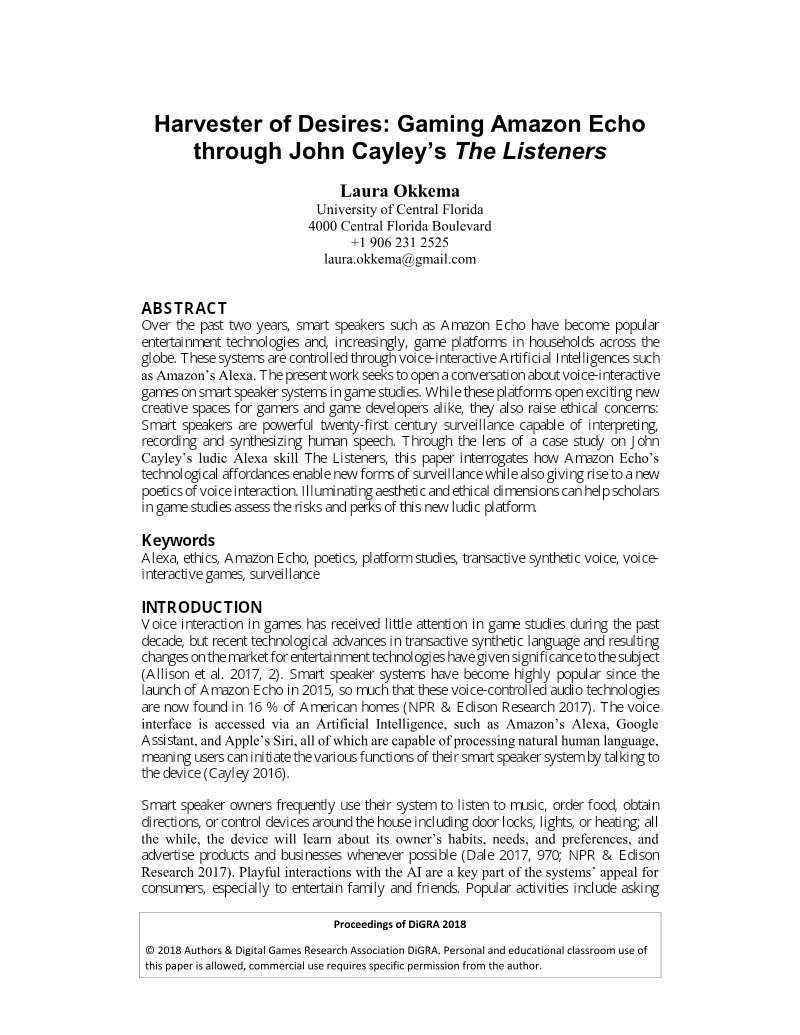
Harvester of Desires: Gaming Amazon Echo through John Cayley's The Listeners
Smart speakers such as Amazon Echo are emerging as game platforms that double as surveillance devices, and Okkema argues that game scholars must take both roles seriously.
- Always-listening voice devices like Amazon Echo extend surveillance into intimate spoken interaction, recording interactions for speech recognition and personalized advertising, which the study argues Amazon's design tends to obscure.
- John Cayley's Alexa skill The Listeners exploits the Echo's recording affordances to critique both surveillance and the deceptive human-likeness of voice AI, with the line "we kept your words... desires too" making data practices visible.
- The study frames voice data harvesting as a way to identify "the most profitable human desires" for targeted advertising, situating it within Foucault's panopticon and Galloway's concept of "reverse panopticism."
Understanding the Experience of Australian eSports Spectatorship
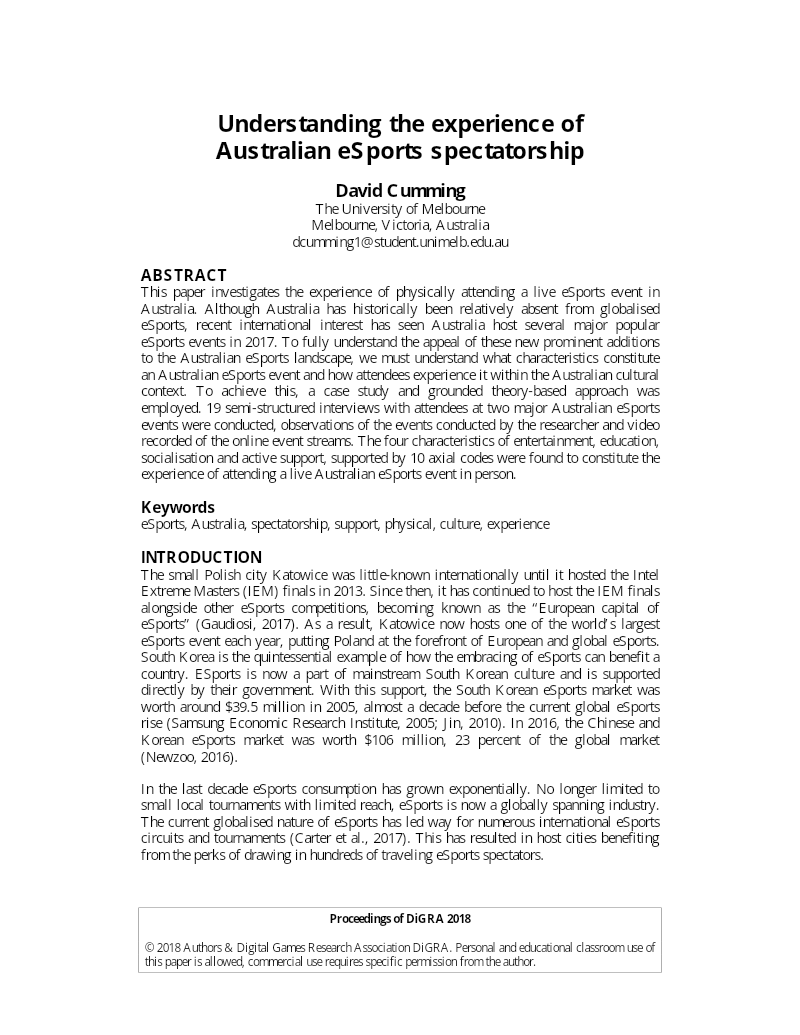
The experience of physically attending live esports events in Australia is characterized by a unique blend of entertainment, education, socialization, and active support.
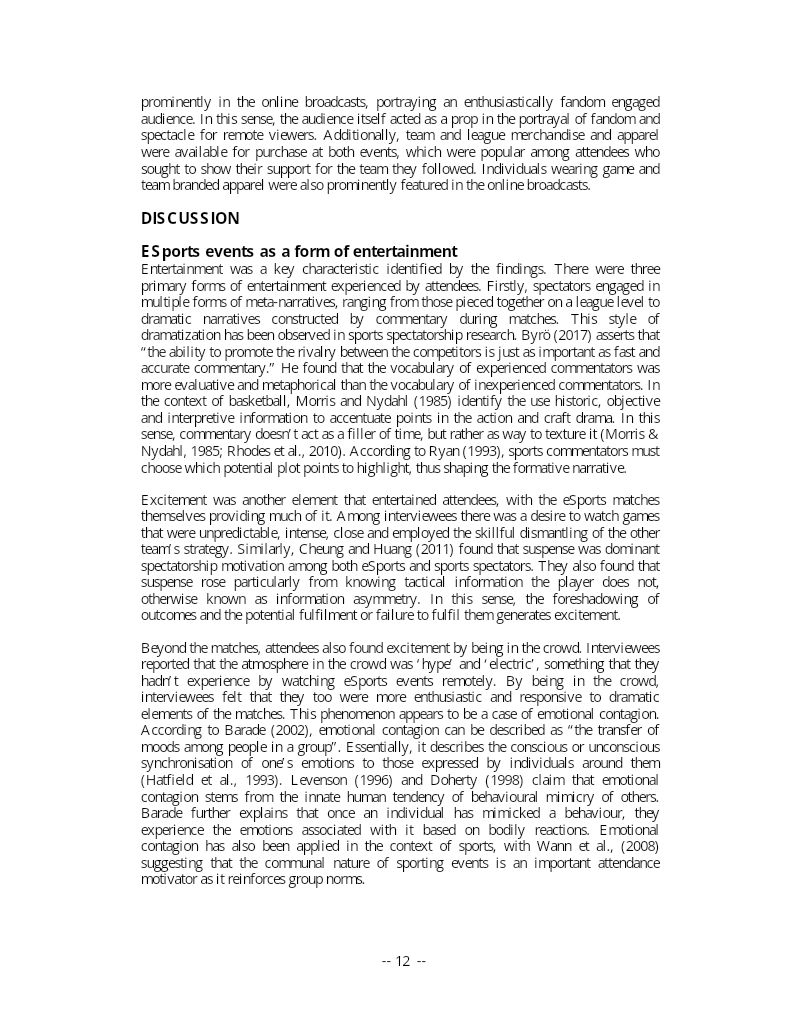
- Attending a live eSports event is treated as a distinct experience from remote viewing, with crowd energy, staging, and a sense of "liveness" lending events their perceived legitimacy.
- Based on 19 interviews, observations, and stream recordings analysed through Straussian grounded theory, the study identifies four core characteristics of attendance: entertainment, education, socialisation, and active support.
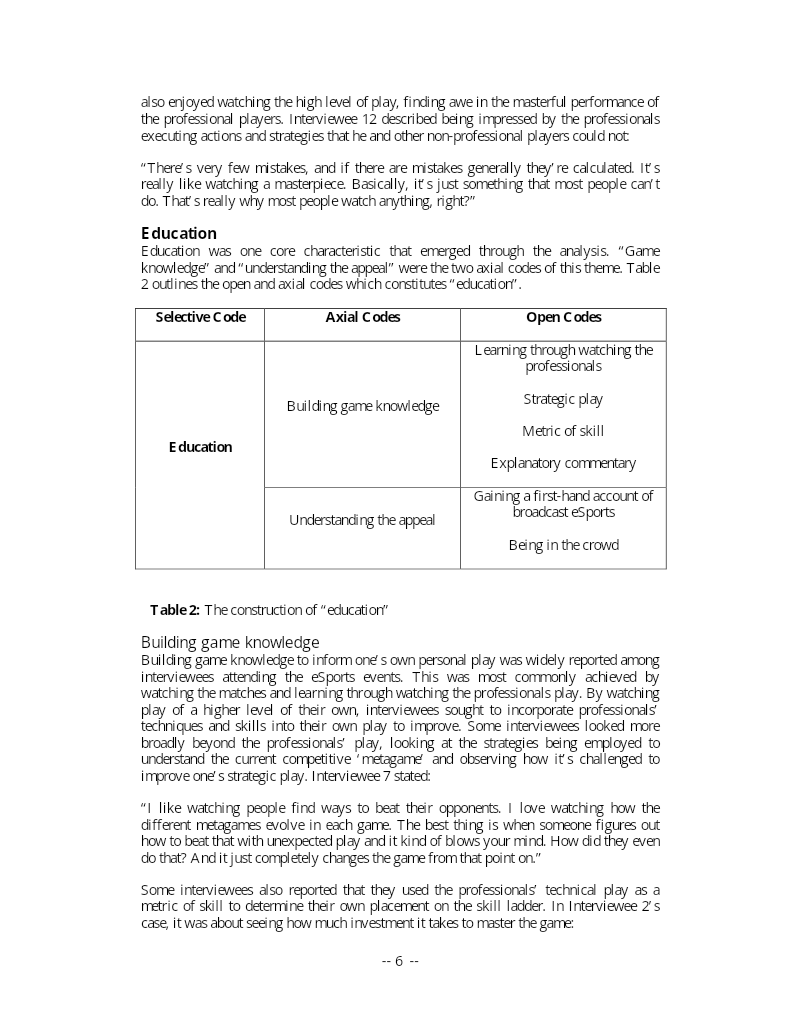
- Attendees sought strategic learning about offline aspects of competition that cannot be seen through a broadcast, and many were drawn by curiosity about live crowd atmosphere.
A Three Person Poncho and a Set of Maracas: Designing Ola De La Vida, A Co-Located Social Play Computer Game
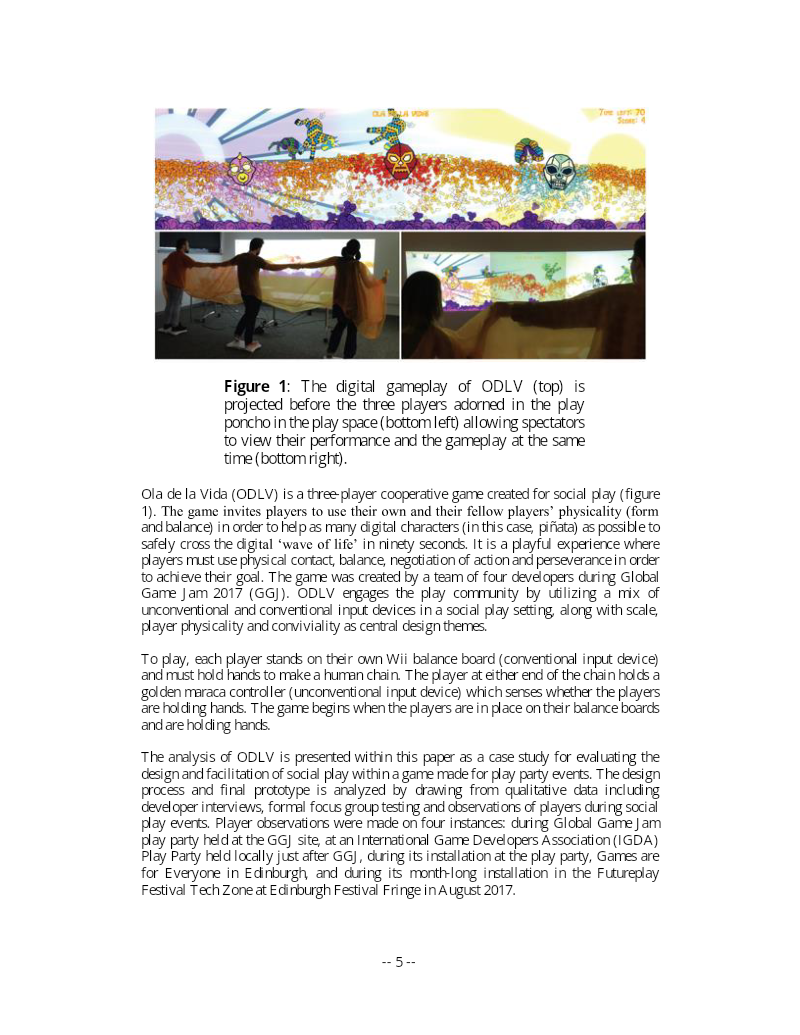
The document examines the design principles of "Ola de la Vida," a co-located social play computer game, as a case study for fostering temporary play communities.
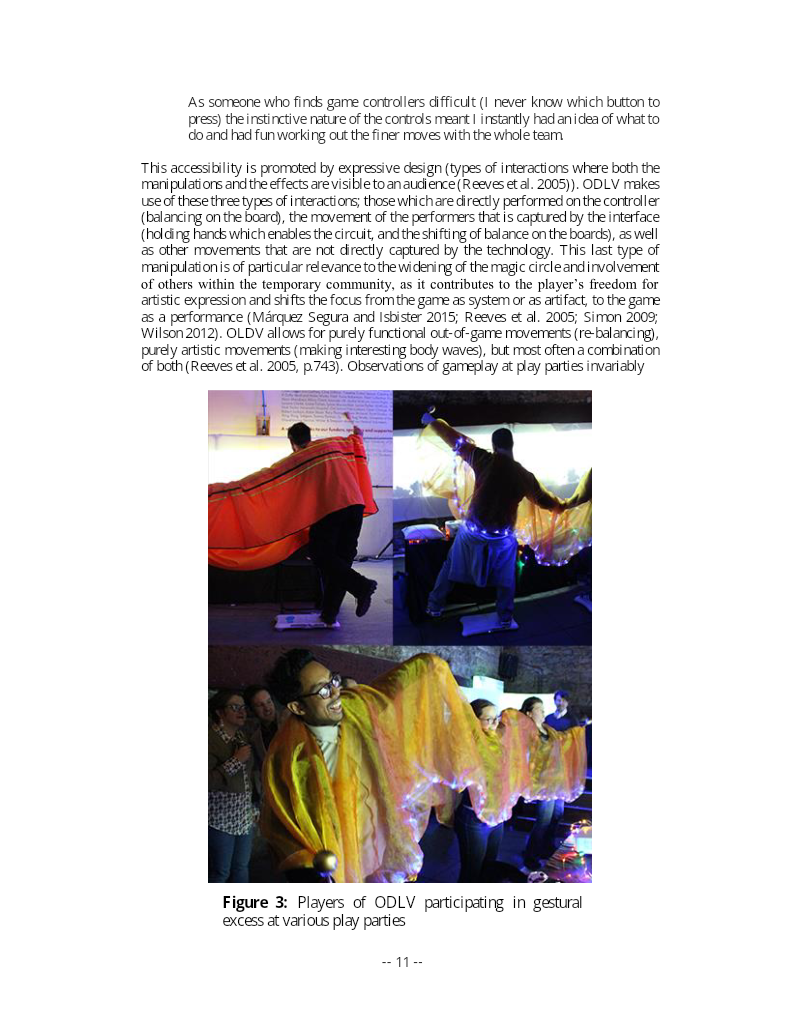
- The paper argues that co-located social play games staged at 'play parties' can create temporary play communities by widening the game's magic circle through deliberate social design, event curation, and 'semi-spectatorship' (alternating between active play and observation).
- Its central case study, Ola de la Vida, is a three-player cooperative game played with a Wii balance board, golden maraca controllers, and a shared poncho, and the research is qualitative, based on a single game, developer interviews, focus groups, and observations across four events in 2017.
- A three-month post-development review with 18 student focus-group participants identifies four design approaches: spectacle, physical game design, internal semi-spectatorship through mechanics, and external semi-spectatorship.
Do you work at DiGRA? Get a free report of how these documents are read and cited here.