1 free read left. Create a free account for unlimited reading + AI research.
Create free accountArticle DiGRA
1 free read left. Create a free account for unlimited reading + AI research.
Create free accountArticleDiGRA
Jahn and Möring argue that cheating, speedrunning, modding, glitch exploitation and subversive play have been wrongly sidelined. They should be integral to any understanding of gameplay.
Jahn and Möring argue that practices conventionally treated as non-standard, including cheating, modding, speedrunning, glitching, and repurposing games, should be understood as ordinary gameplay. Their central thesis is that game theory and the industry "other" these practices by giving them separate labels or leaving them out of definitions altogether, and that this grants theorists and developers power over how players may legitimately engage with games.
The argument proceeds through a critique of foundational and contemporary scholarship. Definitions from Huizinga, Juul, Adams and Rollings, Leino, and Smith each draw a boundary between standard and non-standard play, whether as permitted versus prohibited actions, "playing with" versus "playing" a game, or rational versus active players. Even work sympathetic to rule-breaking, such as that by Aarseth, Consalvo, Salen and Zimmerman, and Leino and Möring, ends up marginalizing it, because the authority to define permissible play still rests with developers and the line itself remains vague.
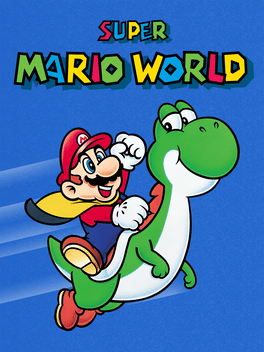
To dismantle that line, the authors point to SethBling's Super Mario World credits warp, in which code is effectively rewritten through ordinary in-game inputs. Drawing on Perron and Arsenault, Myers, and Linderoth, they frame gameplay as a learning process of testing limits, so that rule-breaking becomes functionally indistinguishable from rules-learning and serves as a means for players to assert agency over their experience.
The power struggle over acceptable play is illustrated by Valve's 2015 paid-mods feature for Skyrim, which prompted a petition with 132,476 signatures and was ultimately withdrawn. The authors conclude that the standard/non-standard distinction is context-dependent and rests on assumptions inherited unexamined from early game studies, and that "there is no innovative, subversive, or transgressive gameplay. There is only gameplay."
DiGRA · 2026
European Conference on Games Based Learning (ECGBL) · 2026