Streaming reports and market data
Documents
Yearly Live Streaming Trends Report 2024
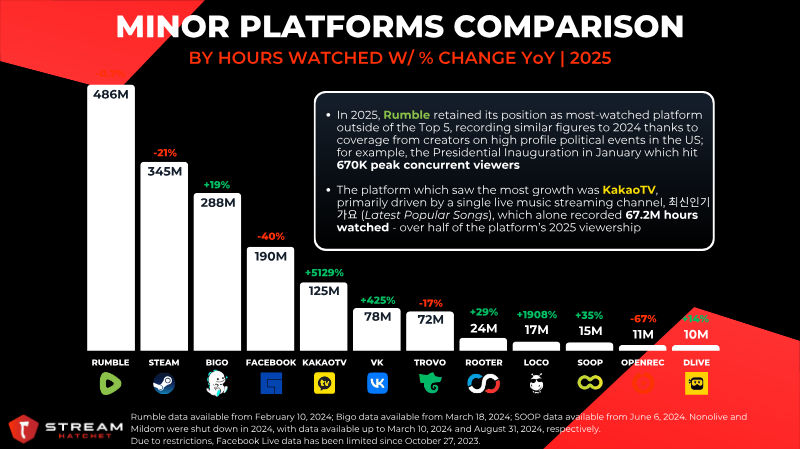
Global live streaming viewership reached 36.4 billion hours in 2025, marking a 6% year-over-year increase that brings the industry nearly back to its 2021 pandemic-era peak.
- The live streaming industry reached 35 billion hours watched in 2024, reflecting a stable 3% year-over-year growth rate as the market shifts toward long-term sustainability.
- Kick grew its viewership by 45% in 2024 by leveraging aggressive revenue-sharing models and non-exclusive contracts to challenge Twitch’s market leadership.
- The 'Just Chatting' category remains the dominant content type, accounting for nearly 15% of all platform activity across the industry.

TWIG #313 Netflix Games Gets Jacked while the Game Awards Jacks Up Numbers
The global gaming industry is currently navigating a period of strategic recalibration, characterized by shifting investment priorities and the search for sustainable growth models.
- Long-term retention in the mobile gaming sector is increasingly driven by core gameplay depth rather than high valuations or marketing, as evidenced by established giants like Supercell struggling to maintain engagement for new titles.
- Netflix is re-evaluating its gaming strategy by potentially pivoting toward internal intellectual property after experiencing challenges with the high costs and removal of major licensed titles.
- The Game Awards reported 154 million viewers, but industry analysts remain skeptical of this figure due to the use of non-traditional measurement methodologies that lack standard broadcast rigor.
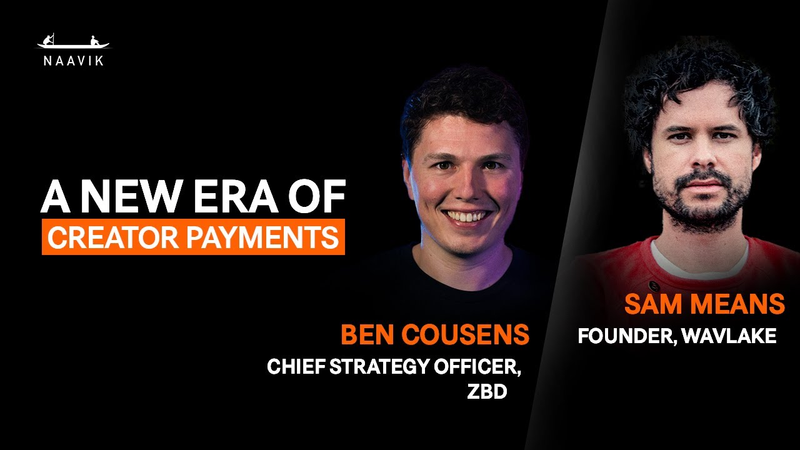
Gaming, Music, & Tipping: A New Era for Creator Payments
The integration of the Bitcoin Lightning Network into the creator economy marks a fundamental shift toward decentralized, direct monetization for artists and developers.
- The Bitcoin Lightning Network enables decentralized, near-instant, and low-fee micro-payments, allowing creators to bypass traditional high-friction royalty systems and intermediaries.
- Platforms such as Wavlake and ZBD are utilizing the Nostr protocol to facilitate global, interoperable value exchange between fans and creators.
- Developers can now embed music and content directly into gaming environments with automated, transparent revenue splits that function with the simplicity of email.

Winning with Creators: How Gaming’s Marketing Strategy is Evolving
The gaming industry is undergoing a fundamental shift in marketing strategy, moving away from transactional, short-term influencer campaigns toward long-term creator programs.
- Gaming studios are shifting from transactional influencer campaigns to long-term creator partnerships that utilize in-game revenue-sharing systems, such as creator codes, to align financial incentives.
- Integrating creators into the development process through early access and direct communication channels transforms them into community stakeholders, fostering more authentic brand advocacy.
- Creator-led programs serve as a primary growth engine in mobile gaming by effectively driving both new player acquisition and the reactivation of churned users.
Crypto on Live Streaming Mini‑Report
This analysis examines the intersection of cryptocurrency and live streaming, tracking the rapid growth of digital asset content across Twitch, YouTube, and Kick.
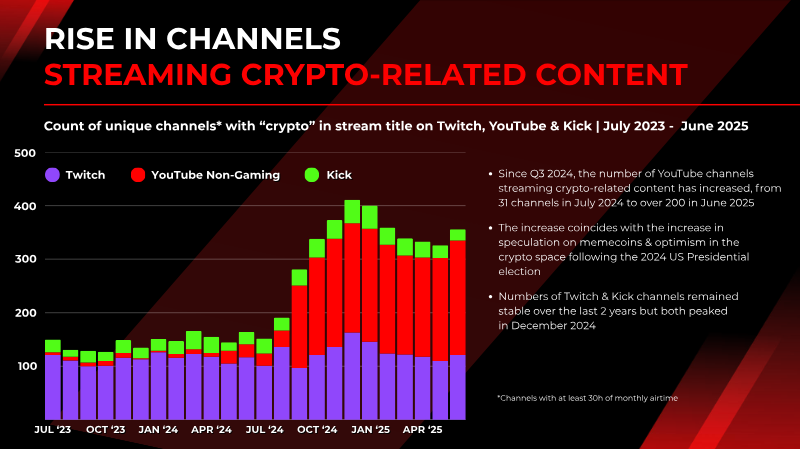
- The number of unique crypto-focused streaming channels doubled in the six months leading to late 2024, with YouTube channels surging from 31 in July 2024 to over 200 by June 2025.
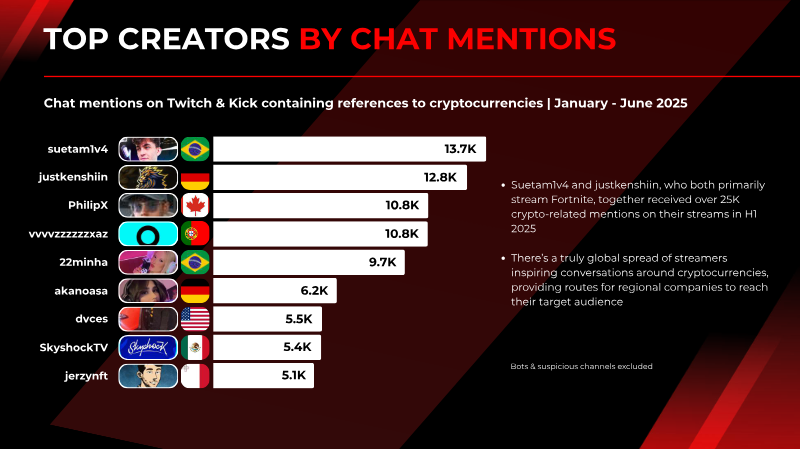
- India has become a primary hub for crypto content, hosting four of the top ten global creators who stream primarily on YouTube.
- Bitcoin remains the most discussed asset with over 500,000 chat mentions in the first half of 2025, while Solana has emerged as the dominant secondary interest with 171,000 mentions.
Mobile Games Report: H1 2024
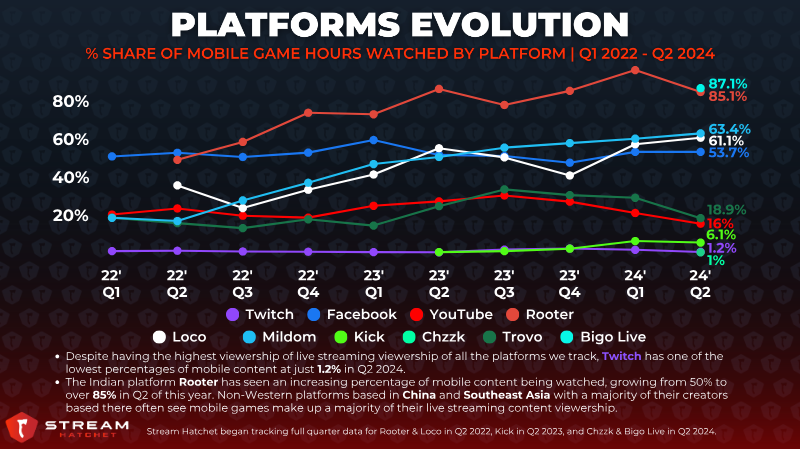
The mobile gaming live-streaming landscape experienced a period of stabilization during the first half of 2024, following a post-pandemic decline in general viewership.
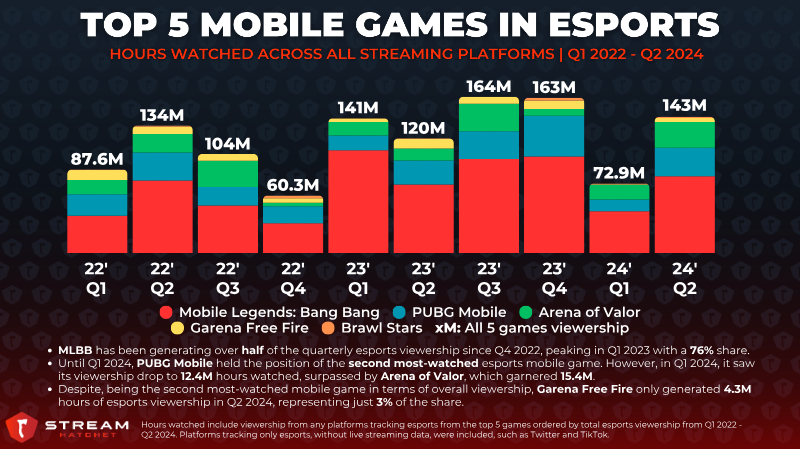
- YouTube Gaming dominates the mobile sector with 69% of total mobile hours watched and 77% of mobile esports viewership, driven largely by audiences in India and Indonesia.
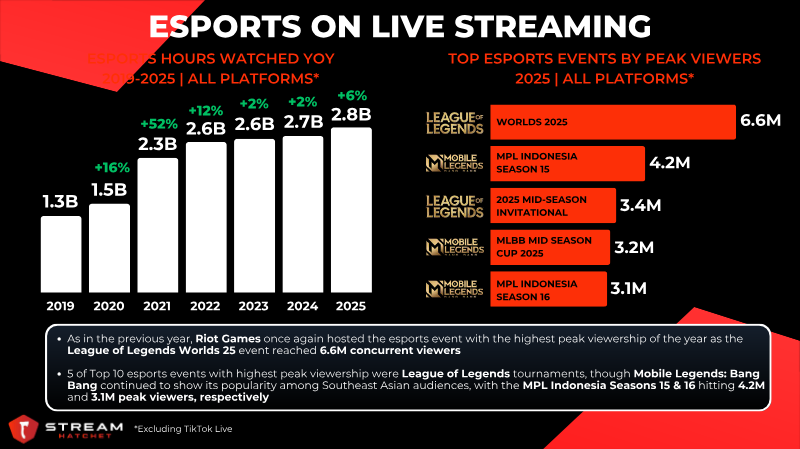
- Mobile esports is the primary growth engine for the sector, experiencing a 52% increase in hours watched between 2022 and 2023 and now accounting for nearly half of all mobile gaming viewership.
- Mobile gaming live-streaming viewership showed resilience in H1 2024 with a 4% year-over-year increase, despite mobile games representing only 7% of total live-streaming hours in Q2 2024.
Live Streaming Trend Report: Q3 2024
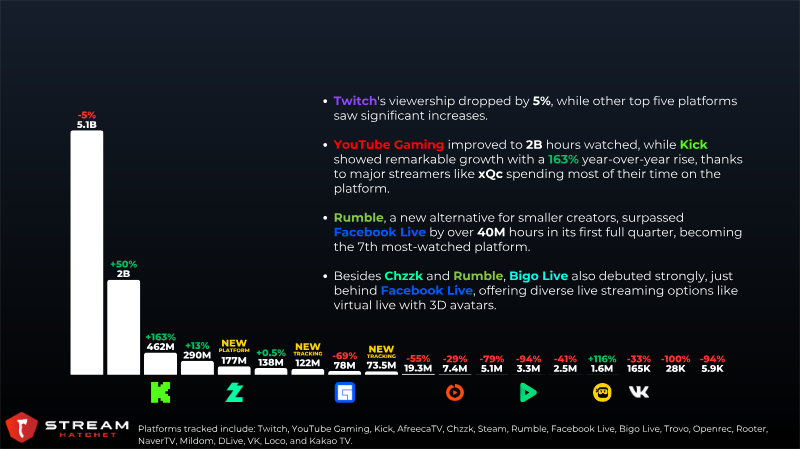
The analysis of live-streaming activity in the third quarter of 2024 demonstrates a robust rebound in overall viewership, with total hours watched rising 12 percent year-over-year to reach 8.5 billion.
- Total live-streaming viewership reached 8.5 billion hours in Q3 2024, marking a 12 percent year-over-year increase.
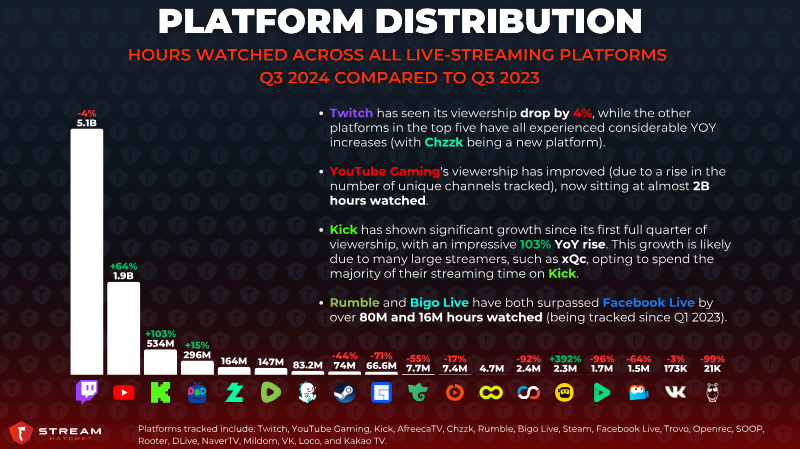
- Kick emerged as the third-largest streaming platform with 534 million hours watched, representing a 103 percent growth rate and a 6.3 percent market share.
- Twitch experienced a 4 percent decline in viewership during Q3 2024, even as it hosted record-breaking subscriber events like ironmouse’s 320,000-follower marathon.
Is Chess the Next Big eSport?♟️| Extra Credits Gaming
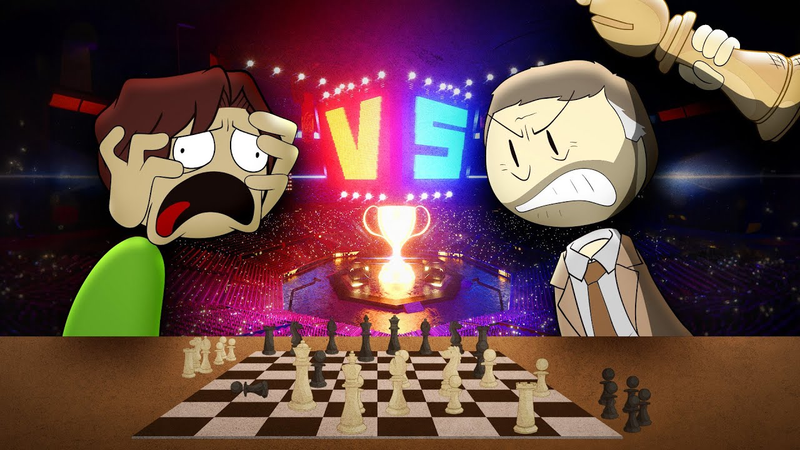
Chess has successfully transitioned from an ancient tabletop strategy game into a prominent, modern eSport.
- Online chess has successfully transitioned into a viable eSport by shifting from traditional, slow-paced play to high-frequency formats like blitz and bullet tournaments.
- The game meets core eSport criteria by offering a high skill ceiling with zero randomness, as players start with identical pieces and no luck-based mechanics like dice rolls.
- Modern digital platforms like Chess.com have popularized the game by integrating real-time 'evaluation bars' powered by the Stockfish engine, which provide viewers with immediate, data-driven insights into match momentum.
TWiG #293: Twitch Loses $1B while Apple Admits the Truth about VR
The video game industry is currently navigating a period of strategic recalibration, defined by the tension between traditional licensing models and the pursuit of sustainable platform-based growth.
- Twitch continues to lose approximately $1 billion annually due to an ineffective advertising model that fails to convert its live-streaming audience into game players.
- Hasbro’s mobile title Monopoly Go generated $3 billion in revenue, demonstrating the high-earning potential of leveraging established IP through mobile licensing.
- Investment capital is shifting away from individual game titles toward platforms and distribution infrastructure, exemplified by the growth of the Unreal Editor for Fortnite ecosystem.
Stream Hatchet Q2 2024 Report
Live streaming viewership reached 8.5 billion hours watched in the second quarter of 2024, marking a 10% year-over-year increase and a significant resurgence following a post-pandemic decline.
- Live streaming viewership reached 8.5 billion hours in Q2 2024, representing a 10% year-over-year increase.
- Twitch's market share of hours watched declined from 70% in Q2 2023 to 60% in Q2 2024.
- YouTube Gaming grew to a 23% market share, while the platform Kick captured 5.5% of the total viewership.
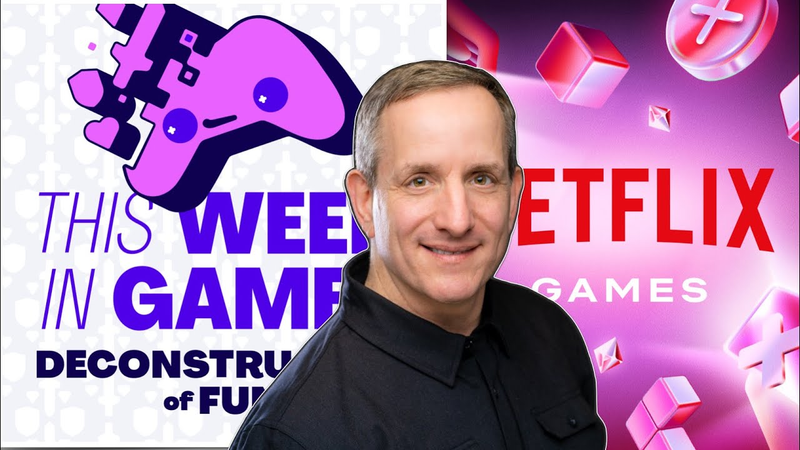
mini TWIG (#289) Eric Kress Solves ALL Netflix Games problems with a Must-See Rant!
Netflix is currently navigating a transitional phase in its gaming strategy, characterized by a lack of clear, unified direction and a reliance on what is described as a spaghetti-on-the-wall approach.
- Netflix has invested approximately $3 billion into its gaming division, yet the strategy remains fragmented between high-end AAA aspirations and a current focus on ad-free, microtransaction-free mobile titles.
- The company lacks a unified direction, characterized by a disconnect between executive leadership focusing on immersive future projects and the VP of external games prioritizing licensed and ported titles.
- Data indicates that Netflix's current model of removing monetization from existing games has failed to produce a measurable impact on platform churn or user retention.
XBOX & Sony & Indie Games Future Plans | 350
The global gaming industry is currently navigating a period of profound instability, characterized by a severe wave of layoffs that saw 10,000 positions eliminated in the first half of 2024 alone.
- The gaming industry is experiencing a period of aggressive workforce overcorrection, with significant layoffs occurring across traditional AAA studios following a period of post-COVID over-hiring.
- Subscription-based models like Xbox Game Pass face long-term sustainability questions as companies struggle to balance the high cost of content production with the need to grow user bases through low-cost access.
- Industry data indicates that 79% of the online population engages with games, with nearly 50% of players operating across multiple platforms and 57% having spent money on games within the last six months.