Streaming
Documents
Live Streaming Trend Report: Q3 2024
The analysis of live‑streaming activity in the third quarter of 2024 demonstrates a robust rebound in overall viewership, with total hours watched rising 12 percent year‑over‑year to reach 8.5 billion. Growth is concentrated on emerging services, most notably Kick, which expanded its audience by 103 percent, delivering 534 million hours of content and securing a 6.3 percent share of the market. Its peak week recorded 45 million hours watched, positioning Kick as the third‑largest platform despite Twitch’s modest 4 percent decline in the same period. The surge extends to Spanish‑language streams on Kick, where viewership accelerated sharply, underscoring the platform’s expanding appeal in non‑English markets.
Subscriber dynamics also reached new heights. VTuber ironmouse achieved an all‑time high of roughly 320 thousand followers on Twitch during the “SUBtember” marathon, while FaZe Clan’s 30‑day joint subathon generated 99.5 thousand and 73.7 thousand new subscribers for members jasontheween and plaqueboymax respectively. These figures illustrate a growing willingness among audiences to convert viewership into direct financial support for creators.
Esports viewership contributed a historic peak, with the LCK Grand Final between T1 and GEN drawing an estimated two million concurrent viewers, reinforcing the continued draw of high‑stakes competitive events. Collectively, the data reveal a diversifying ecosystem in which emerging platforms and regional language streams are reshaping audience distribution, while monetization through subscriptions and esports remains a powerful driver of engagement across the global live‑streaming landscape.
- Total live-streaming viewership reached 8.5 billion hours in Q3 2024, marking a 12 percent year-over-year increase.
- Kick emerged as the third-largest streaming platform with 534 million hours watched, representing a 103 percent growth rate and a 6.3 percent market share.
- Twitch experienced a 4 percent decline in viewership during Q3 2024, even as it hosted record-breaking subscriber events like ironmouse’s 320,000-follower marathon.
- Esports remains a primary engagement driver, evidenced by the LCK Grand Final between T1 and GEN drawing a peak of two million concurrent viewers.
- The live-streaming ecosystem is diversifying through the rapid expansion of non-English markets, particularly Spanish-language streams on the Kick platform.
Live Streaming Trends Report: Q2 2024
The global live streaming industry experienced a significant resurgence in the second quarter of 2024, with total viewership reaching 8.5 billion hours. This 10% year-over-year increase represents the first substantial growth period since the pandemic-era peak. While Twitch maintains its position as the primary market leader, its dominance has softened from 70% to 60% of total hours watched. This shift reflects a diversifying landscape where YouTube Gaming and Kick have captured 23.4% and 5.5% of the market, respectively, and Rumble has established itself as a top-ten platform by leveraging political content and debate-related viewership.
Content trends during this period were heavily influenced by major software releases and political events. The launch of downloadable content for Elden Ring triggered a 331% surge in viewership for the title, driving a 30% increase in the broader Action genre. Conversely, traditional pillars such as First-Person Shooters and MOBAs saw slight declines in market share. The VTuber segment remains a high-growth area, particularly within the Grand Theft Auto V category, where individual creators saw viewership spikes exceeding 300%. Esports also reached new heights, evidenced by the LCK Grand Final achieving a record 2.7 million concurrent viewers.
A critical structural shift is occurring in creator demographics, characterized by the decentralization of viewership. The market share held by the top 5% of streamers fell to 86% from a 2019 high of 98%, while the share held by the top 0.01% of channels dropped from 45% to 33%. This trend suggests a maturing ecosystem where visibility is increasingly distributed among a broader range of mid-tier creators rather than being concentrated exclusively at the top. These findings indicate a healthy, diversifying industry that is successfully transitioning from pandemic-driven volatility to sustainable, multi-platform growth.
- The live streaming industry saw a 10% year-over-year growth in Q2 2024, reaching 8.5 billion total hours watched.
- Twitch's market share dropped from 70% to 60%, while YouTube Gaming and Kick captured 23.4% and 5.5% of the market, respectively.
- Viewership is decentralizing, with the top 5% of streamers now holding 86% of the market share, down from 98% in 2019.
- The top 0.01% of channels saw their market share decline from 45% to 33%, indicating a shift toward mid-tier creator visibility.
- Major software releases significantly impact genre performance, evidenced by Elden Ring's DLC launch driving a 331% surge in its viewership and a 30% increase in the broader Action genre.
Stream Hatchet Q2 2024 Report
Live streaming viewership reached 8.5 billion hours watched in the second quarter of 2024, marking a 10% year-over-year increase and a significant resurgence following a post-pandemic decline. While Twitch remains the market leader, its dominance is waning; its market share of hours watched fell from 70% in Q2 2023 to 60% in Q2 2024. This shift is driven by the growth of YouTube Gaming, which rose to a 23% share, and the emergence of alternative platforms like Kick, which now holds 5.5% of the market. Regional and niche platforms such as the South Korean Chzzk and the politically-oriented Rumble also gained traction, with the latter seeing a viewership spike during U.S. presidential debates.
The industry is also witnessing a democratization of viewership. The market share held by the top 5% of creators dropped from 98% in 2019 to 86% in 2024, suggesting a more diverse ecosystem for smaller streamers. In terms of content, Grand Theft Auto V and League of Legends remain the most-watched titles, though the Action genre saw a 30% surge driven by the Elden Ring DLC. Esports viewership remained stable at 654 million hours, with the League of Legends Mid-Season Invitational serving as the quarter's premier event.
This analysis covers global live-streaming trends across major platforms including Twitch, YouTube, Kick, and several emerging services. Data is derived from Stream Hatchet’s business intelligence platform, which aggregates granular viewership metrics such as hours watched and peak concurrent viewers. The findings highlight a transition from traditional FPS and MOBA dominance toward more dynamic RPG and Action titles, alongside a shifting platform landscape where new competitors are successfully challenging established leaders.
- Live streaming viewership reached 8.5 billion hours in Q2 2024, representing a 10% year-over-year increase.
- Twitch's market share of hours watched declined from 70% in Q2 2023 to 60% in Q2 2024.
- YouTube Gaming grew to a 23% market share, while the platform Kick captured 5.5% of the total viewership.
- The top 5% of creators now account for 86% of total viewership, down from 98% in 2019, indicating a more democratized creator ecosystem.
- The Action genre experienced a 30% surge in viewership, largely driven by the release of the Elden Ring DLC.
How to Master Europe’s Digital Infrastructure Needs?
Video Games Europe argues that Europe’s digital infrastructure policy should reinforce, rather than reshape, the existing market dynamics that underpin the continent’s thriving video‑game ecosystem. Representing roughly 110 000 employees and a €24.5 billion industry in which 53 percent of Europeans play, the association stresses that the sector’s growth is driven by digital distribution, which already reduces the environmental burden of physical media and, in many cases, relies on cloud delivery to limit data transfer. Typical online gameplay consumes between 60 and 80 megabytes per hour, with even the most data‑intensive titles rarely exceeding 250–300 megabytes, a fraction of the traffic generated by video streaming services.
The response highlights that network operators successfully managed the surge in traffic during the COVID‑19 lockdowns and that game publishers have collaborated with ISPs and content‑delivery networks to smooth peak loads through measures such as off‑peak download scheduling. It refutes claims that content providers “free‑ride” on ISP infrastructure, noting that publishers already pay for enhanced upload capacity and invest in their own CDN and data‑centre assets. Consequently, the relationship between content and application providers and ISPs is portrayed as symbiotic, fostering competition and consumer choice.
Against proposals to impose network fees or extend the European Electronic Communications Code to cloud services, the association warns that such pre‑emptive regulation could undermine net neutrality, increase consumer prices, and jeopardise Europe’s digital competitiveness. It calls for regulatory stability to protect investment security and urges that any infrastructure deployment be guided by concrete market demand rather than aspirational targets. The position draws on industry data, BEREC assessments of network resilience, and the sector’s own mitigation practices, concluding that preserving the current regulatory framework will best support sustainable growth and innovation across Europe’s digital economy.
- Video Games Europe opposes new network fees or expanded regulation of cloud services, arguing these measures would threaten net neutrality, increase consumer costs, and damage European digital competitiveness.
- The European video game industry generates €24.5 billion in annual revenue and employs approximately 110,000 people, with 53 percent of the European population participating in gaming.
- Gaming traffic is significantly lower than video streaming, with typical online gameplay consuming 60–80 megabytes per hour and high-intensity titles rarely exceeding 300 megabytes per hour.
- Game publishers refute 'free-riding' allegations by noting they already invest in their own data centers and content-delivery networks (CDNs) while paying for enhanced upload capacity.
- The industry maintains that existing market dynamics are sufficient, citing the successful management of COVID-19 traffic surges and ongoing collaboration with ISPs to schedule downloads during off-peak hours.
Live Streaming Trends Reports (Q2'24)
Live streaming viewership reached 8.5 billion hours in the second quarter of 2024, marking a 10% year-over-year increase and the industry's first significant growth surge since the post-pandemic decline. This resurgence is characterized by a diversifying platform landscape and a shift in creator influence. While Twitch remains the market leader, its share of hours watched dropped from 70% in Q2 2023 to 60% in Q2 2024. YouTube Gaming capitalized on this shift, growing its share to 23.4%, while newer competitors like Kick and the South Korean platform Chzzk secured spots in the top five.
The competitive landscape for creators is also evolving toward a more decentralized model. The market share held by the top 5% of streamers fell from 98% in 2019 to 86% in 2024, suggesting increased visibility for smaller broadcasters. Content trends highlight the massive impact of major updates and DLCs; for example, Elden Ring saw a 331% viewership surge following its expansion release. While Grand Theft Auto V and League of Legends maintain their positions as the most-watched titles, traditional esports genres like First-Person Shooters and MOBAs have seen their total viewership share decline in favor of Action and RPG categories.
Geographic and niche platform trends show Rumble emerging as a significant player for political content, particularly in North America, where debate-related streams accounted for nearly a third of its weekly viewership. In the creator space, KaiCenat claimed the top overall spot, while Mira led the female creator rankings. The report, produced by Stream Hatchet using data from major global streaming platforms, indicates that the industry is moving away from a "winner-take-all" dynamic toward a more fragmented and diverse ecosystem of platforms, genres, and creators.
- Live streaming viewership reached 8.5 billion hours in Q2 2024, representing a 10% year-over-year increase and the first significant growth surge since the post-pandemic decline.
- Twitch’s market share of hours watched dropped from 70% in Q2 2023 to 60% in Q2 2024, while YouTube Gaming grew its share to 23.4%.
- The streaming ecosystem is becoming less centralized, with the top 5% of streamers now holding 86% of the market share, down from 98% in 2019.
- Viewer interest is shifting away from traditional FPS and MOBA esports toward Action and RPG categories, with major game updates like the Elden Ring expansion driving viewership spikes of up to 331%.
- Newer platforms are gaining traction, with Kick and South Korea's Chzzk entering the top five, and Rumble establishing a significant niche in North American political content.
2023 Yearly Live Streaming Trends Report
The global live streaming market entered a period of stabilization in 2023, reaching 38.3 billion hours watched with the lowest volatility recorded since 2020. While the industry leader, Twitch, experienced a 4.9% decline in total hours watched, the broader landscape remained dynamic due to the 11% growth of YouTube Gaming and the rapid ascent of Kick. Within its first year, Kick secured the position of the third-largest Western streaming platform, displacing Facebook and hosting nearly one million unique channels. This shift reflects a diversifying market where platform loyalty is increasingly challenged by new entrants and multi-platform simulcasting, the latter of which has been shown to increase creator audiences by an average of 100%.
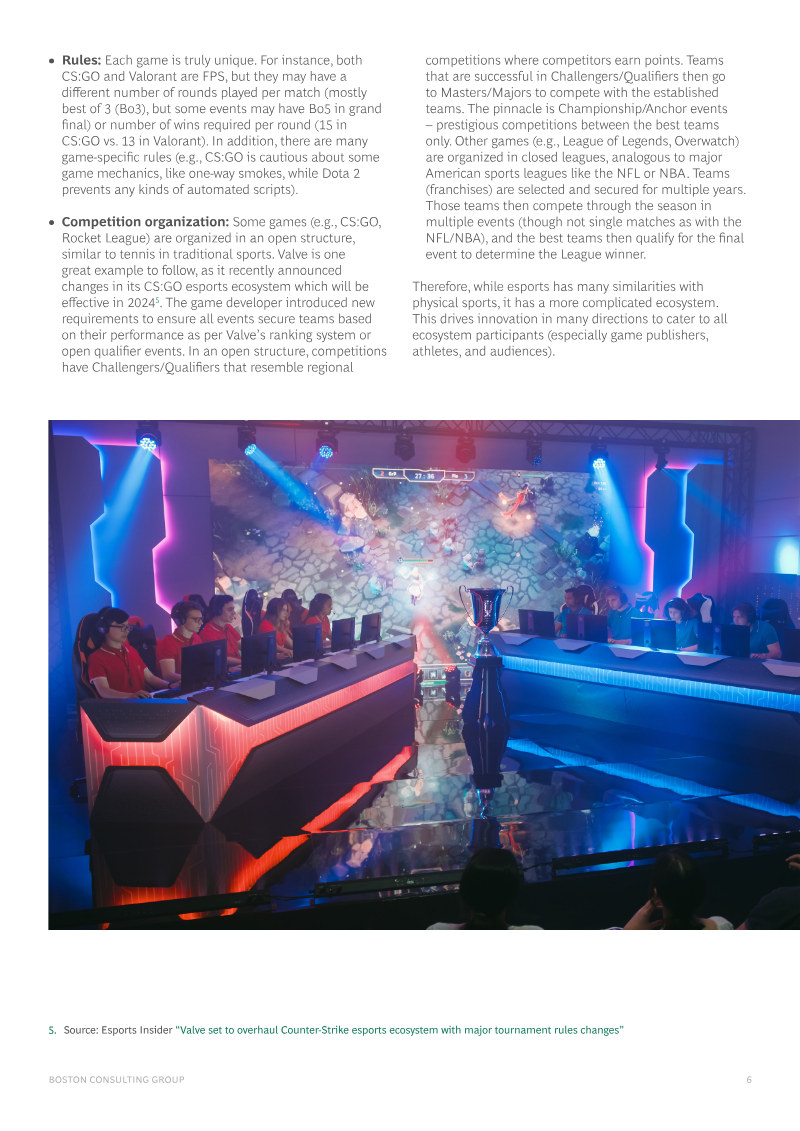
Esports remains a primary engine for engagement, with viewership rising 9% year-over-year to 2.5 billion hours. This growth is heavily supported by the rise of co-streaming, which now accounts for nearly 30% of total esports consumption. While First-Person Shooters remain the dominant gaming genre at 4.7 billion hours, non-gaming categories such as "Just Chatting" and "Sports" are expanding their market share. Notable content trends include the continued rise of VTubers on YouTube and significant regional growth in Japan, where Twitch viewership increased by 283 million hours.
Demographic and geographic shifts further define the current landscape. Kick has established a predominantly English-speaking base and shows a slightly higher representation of top female creators compared to its competitors. Meanwhile, Europe saw a massive 400% surge in Battle Royale esports viewership driven by major international championships. As the industry matures, the integration of sophisticated analytics and marketing ecosystems allows stakeholders to navigate a complex environment where traditional gaming content, creator-led events, and diverse language markets intersect to maintain high levels of global engagement.
- The global live streaming market stabilized at 38.3 billion hours watched in 2023, characterized by Twitch's 4.9% decline and YouTube Gaming's 11% growth.
- Kick emerged as the third-largest Western streaming platform within its first year, hosting nearly one million unique channels and displacing Facebook.
- Esports viewership grew 9% year-over-year to 2.5 billion hours, with co-streaming now driving nearly 30% of total esports consumption.
- Multi-platform simulcasting has become a critical growth strategy, increasing creator audiences by an average of 100%.
- First-Person Shooters remain the dominant gaming genre with 4.7 billion hours watched, though non-gaming categories like 'Just Chatting' are gaining market share.
Reinvent India's Media & Entertainment Sector Is Innovating for the Future
The Indian media and entertainment sector reached a valuation of INR2.32 trillion in 2023, marking an 8.1% growth rate driven primarily by digital media and online gaming. While television remains the largest individual segment, the industry is transitioning into a "linear and digital" hybrid market, with digital media expected to become the dominant segment by 2024. Total industry revenue is projected to exceed INR3 trillion by 2026, supported by a 10% CAGR and a massive expansion of active screens, which are expected to reach nearly one billion by 2030.
The digital surge is characterized by a "vernacular-first" strategy and the rapid rise of Connected TV, which is anticipated to reach 100 million homes by 2030. Online gaming has emerged as a powerhouse, surpassing filmed entertainment to become the fourth-largest segment despite a new 28% GST mandate. While traditional mediums like print and radio remain resilient and profitable, they are pivoting toward niche audiences and hyper-local advertising to maintain relevance. Meanwhile, the filmed entertainment sector saw record revenues in 2023, fueled by a revival in Hindi cinema and premium experiential offerings, even as theater admissions faced pressure from rising costs.
The industry is currently navigating a "profitability-first" era defined by consolidation and technological integration. Generative AI is expected to provide an INR450 billion boost by 2027 through enhanced content creation and operational efficiencies. However, significant challenges remain, including low digital monetization relative to high engagement levels, digital ad fraud, and a tightening regulatory landscape. New frameworks, such as the Digital Personal Data Protection Act and updated broadcasting bills, are forcing companies to balance aggressive AI-driven personalization with stringent compliance and data transparency requirements.
- The Indian media and entertainment sector reached a valuation of INR2.32 trillion in 2023 and is projected to exceed INR3 trillion by 2026, growing at a 10% CAGR.
- Digital media is expected to overtake television as the dominant industry segment by 2024, supported by a projected expansion to nearly one billion active screens by 2030.
- Online gaming has become the fourth-largest segment, surpassing filmed entertainment despite the implementation of a 28% GST mandate.
- Generative AI is projected to contribute an INR450 billion boost to the industry by 2027 by driving operational efficiencies and enhanced content creation.
- Connected TV is a key growth driver, with adoption expected to reach 100 million homes by 2030 as the industry shifts toward a 'vernacular-first' strategy.
The Games We Watched: Lurkit’s Top 500 Streaming Report Q1 2024
The global game streaming market experienced a 10% year-over-year growth in the first quarter of 2024, with the top 500 titles on Twitch generating 3.8 billion hours of watch time. While industry mainstays like Grand Theft Auto V and League of Legends continue to lead the market with 479 million and 379 million hours watched respectively, the landscape is showing signs of gradual diversification. The market share held by the top ten developers decreased from 63% to 59% compared to the previous year, driven in part by breakout successes like Palworld, which secured the eleventh position with 76 million hours watched shortly after its release.
The streaming ecosystem maintains a robust long tail of engagement that spans various genres and eras. Beyond the top-tier competitive titles, significant viewership is distributed across a mix of recent AAA releases, such as Rise of the Ronin and The Legend of Zelda: Tears of the Kingdom, and enduring legacy games like Skyrim and Pokémon Red. Even titles at the lower end of the top 500 rankings, including older entries like L.A. Noire and Morrowind, consistently command over 328,000 hours watched per quarter. This indicates that community interest remains high for both modern indie simulations and classic console franchises long after their initial launch windows.
Methodologically, this analysis focuses strictly on video game content by excluding non-gaming categories such as Just Chatting and filtering out inactive streams to ensure data integrity. The findings highlight a healthy balance between the dominance of established live-service giants and the sustained relevance of a diverse catalog of titles. This trend underscores a maturing market where niche audiences and retro communities contribute significantly to the overall growth and stability of the global streaming audience throughout the early months of 2024.
- The global game streaming market grew 10% year-over-year in Q1 2024, with the top 500 titles on Twitch generating 3.8 billion hours of watch time.
- Market dominance by the top ten developers is softening, with their collective market share dropping from 63% to 59% compared to the previous year.
- Grand Theft Auto V and League of Legends remain the market leaders, recording 479 million and 379 million hours watched respectively.
- New releases are successfully disrupting the rankings, evidenced by Palworld securing the eleventh position with 76 million hours watched shortly after its launch.
- The streaming ecosystem shows high long-tail engagement, with even the lower-ranked titles in the top 500 consistently generating over 328,000 hours of watch time per quarter.
Live-Streaming Trends Report: Q1 2024
The live-streaming industry experienced a significant resurgence in the first quarter of 2024, with global viewership reaching 8.2 billion hours watched. This represents a 10% year-over-year increase and marks the first Q1 growth since 2021, signaling a recovery from the post-pandemic decline. While Twitch remains the dominant platform with a 69% market share, its lead narrowed as competitors like YouTube Gaming and Kick gained ground. Notably, Steam emerged as a breakout platform by doubling its hours watched, largely driven by developers using the service to market new releases.
Geographic shifts were prominent in South Korea following Twitch’s exit from the market. Local platforms AfreecaTV and the Naver-backed newcomer Chzzk successfully absorbed the displaced audience, with Chzzk showing rapid growth and high creator retention. In terms of content, Palworld dominated as the top game launch of the quarter, generating 95 million hours watched in its first 30 days and outperforming 2023’s major hits. Grand Theft Auto V reclaimed the overall top spot among games, while the First-Person Shooter (FPS) genre led all categories due to high-profile esports tournaments for Counter-Strike and VALORANT.
The analysis highlights a diversifying creator landscape where co-streaming major events remains a primary driver for top talent like Gaules and Jynxzi. In the female and VTuber segments, established names like Amouranth and Pekora Ch. reclaimed top rankings, while new entrants leveraged trending titles like Palworld and GTA V to achieve triple-digit growth. This data, compiled by Stream Hatchet, utilizes metrics such as hours watched and average concurrent viewers across all major global streaming platforms to provide a comprehensive overview of the current state of digital broadcast media.
- Global live-streaming viewership reached 8.2 billion hours in Q1 2024, marking a 10% year-over-year increase and the first Q1 growth since 2021.
- Twitch maintains a 69% market share, though its dominance is being challenged by YouTube Gaming, Kick, and Steam, the latter of which doubled its hours watched this quarter.
- Twitch’s exit from South Korea triggered a successful migration of viewers to local platforms, specifically AfreecaTV and the rapidly growing Chzzk.
- Palworld became the quarter's top game launch with 95 million hours watched in its first 30 days, while Grand Theft Auto V reclaimed the top spot for overall viewership.
- The First-Person Shooter (FPS) genre led all content categories in Q1 2024, bolstered by major esports tournaments for Counter-Strike and VALORANT.
Save Point 2024: Recapping the Year's Biggest Trends in Live Streaming
The live streaming industry in 2024 underwent a fundamental transformation characterized by decentralization and the diversification of content beyond traditional gaming. As platforms like Kick experienced explosive growth and new services emerged to fill regional voids left by Twitch’s departure from Korea, the ecosystem shifted toward a multi-platform approach. Creators increasingly utilized simulcasting to expand their reach, while high-production marathons and global IRL content became the primary drivers of audience engagement. This evolution reflects a broader move away from platform exclusivity toward a creator-led model where individual influence dictates viewership patterns.
Esports and competitive gaming remained central to the industry’s success, though the nature of consumption changed significantly. Co-streaming emerged as a dominant force, accounting for nearly 45 percent of all esports viewership, while mobile esports solidified its status as a global powerhouse, particularly during the Esports World Cup. Simultaneously, the industry benefited from a strong synergy between transmedia adaptations and gaming, as film and television projects like Fallout revitalized interest in specific titles. The rise of VTubers and the enduring popularity of RPGs and nostalgia-driven remakes further sustained high levels of viewer retention throughout the year.
Beyond gaming, the landscape expanded to include political commentary, music-focused programming, and massive independent events that rivaled traditional broadcast media. Large-scale spectacles, such as La Velada del Año 4, demonstrated the potential for creators to command millions of concurrent viewers outside of established gaming frameworks. Brands successfully capitalized on these shifts by integrating directly into the viewer experience through strategic initiatives like Twitch Drops. Ultimately, the industry in 2024 proved that long-term growth is now tethered to the ability to blend interactive community engagement with diverse, multi-genre content that transcends the traditional boundaries of the gaming sector.
- The live streaming industry shifted toward a creator-led, multi-platform model in 2024, characterized by widespread simulcasting and the rise of alternative platforms like Kick following Twitch’s withdrawal from the Korean market.
- Co-streaming has become a dominant force in competitive gaming, now accounting for nearly 45 percent of total esports viewership.
- Large-scale, non-gaming spectacles like La Velada del Año 4 demonstrated that independent creators can now command millions of concurrent viewers, rivaling traditional broadcast media.
- Mobile esports solidified its status as a global powerhouse in 2024, highlighted by the significant viewership performance of the Esports World Cup.
- Transmedia adaptations, such as the Fallout series, proved highly effective at revitalizing interest in specific gaming titles and driving viewer retention.
India's Media & Entertainment Sector: March 2024
India’s media and entertainment landscape is in the midst of a rapid digital pivot, with online platforms projected to surpass traditional television as the leading revenue driver by 2024. The sector is expected to grow at a 10 % CAGR, reaching INR 3.1 trillion ($37 billion) by 2026, driven largely by new‑media segments such as OTT video, gaming and digital advertising. Traditional channels—print, radio, out‑of‑home (OOH) and regional TV—continue to expand modestly, reinforcing a “linear + digital” model that balances legacy audiences with emerging consumption patterns.
Key growth engines include a surge in mobile‑first media, where 904 million broadband subscriptions and 574 million smartphone users fuel a daily mobile media spend of over four hours. OTT video viewership now covers 98 % of smartphone owners, with regional‑language content rising from 47 % to 52 %. Gaming dominates the mobile gaming market, with Free Fire and BGMI generating a quarter of in‑app purchase revenue, while esports viewership climbs to 78 % of gamers. Music and radio also expand through digital monetisation, with streaming revenues growing 10 % to INR 24 billion and radio advertising up 17 %.
The sector’s future hinges on cross‑platform content strategies, bundled FAST/OTT offerings, AI‑driven personalization and unified audience measurement. Challenges persist: low OTT profitability, ad‑rate pressure, regulatory uncertainty around gaming and gambling, and the need for first‑party data in a cookie‑less environment. Nonetheless, India’s position as the world’s largest app‑download market and its growing 1 billion active screens by 2030 underscore a resilient, technology‑driven growth trajectory across film, television, gaming, music and live events.
- India's media and entertainment sector is projected to reach INR 3.1 trillion ($37 billion) by 2026, growing at a 10% CAGR as online platforms overtake traditional television as the primary revenue driver.
- Mobile-first consumption is the primary growth engine, supported by 904 million broadband subscriptions and 574 million smartphone users who spend over four hours daily on mobile media.
- Gaming is a dominant market force, with Free Fire and BGMI accounting for 25% of in-app purchase revenue and esports viewership reaching 78% of the gaming population.
- OTT video viewership has reached 98% of smartphone owners, with regional-language content consumption increasing from 47% to 52% of the market.
- Digital monetization is expanding across legacy segments, evidenced by a 10% growth in music streaming revenue to INR 24 billion and a 17% increase in radio advertising.
Live Streaming Trends Annual Report 2024
The live streaming landscape in 2024 reflects a maturing industry characterized by the stabilization of viewership hours and a strategic shift toward platform diversification. Following the volatile growth cycles of previous years, the current market demonstrates a consolidated ecosystem where Twitch, YouTube Gaming, and Kick represent the primary pillars of audience engagement. While Twitch maintains its dominance in the non-gaming and community-driven sectors, YouTube Gaming has leveraged its integrated VOD ecosystem to capture a larger share of the competitive esports market. Emerging platforms like Kick have successfully disrupted traditional market shares by offering aggressive revenue splits, leading to a more fragmented but competitive talent landscape.
Technological integration serves as a primary driver for growth, with mobile streaming accounting for nearly half of all global viewership. This trend is particularly pronounced in Southeast Asia and Latin America, where mobile-first infrastructure has allowed platforms like TikTok Live to challenge established desktop-centric services. Data indicates that short-form video integration acts as a critical discovery funnel, with creators who utilize cross-platform promotional strategies seeing a twenty percent higher retention rate compared to those relying solely on live broadcasts. Furthermore, the rise of "VTubing" and AI-enhanced avatars has expanded the creator economy, allowing for new forms of interactive entertainment that bypass traditional physical production constraints.
Monetization strategies have evolved beyond simple ad-revenue models to prioritize direct fan support and brand integrations. Virtual gifting and subscription tiers remain the most reliable revenue streams, though sponsored content and affiliate commerce are becoming increasingly sophisticated. The industry is also witnessing a significant push toward "shoppable" live streams, mirroring successful e-commerce trends in Asian markets. As the industry moves forward, the focus remains on enhancing low-latency infrastructure and developing more robust moderation tools to ensure brand safety and community longevity in an increasingly crowded digital marketplace.
- Mobile streaming now accounts for nearly 50% of global viewership, driven by mobile-first infrastructure in Southeast Asia and Latin America.
- Creators using cross-platform promotional strategies that integrate short-form video content achieve a 20% higher audience retention rate than those relying exclusively on live broadcasts.
- Twitch remains the leader in community-driven content, while YouTube Gaming is capturing significant market share in competitive esports through its integrated VOD ecosystem.
- The platform landscape is becoming increasingly fragmented as Kick disrupts traditional market shares by offering aggressive revenue splits to attract talent.
- Monetization is shifting away from simple ad-revenue toward direct fan support, subscription tiers, and the adoption of 'shoppable' live streams for e-commerce.