Retention reports and market data
Documents
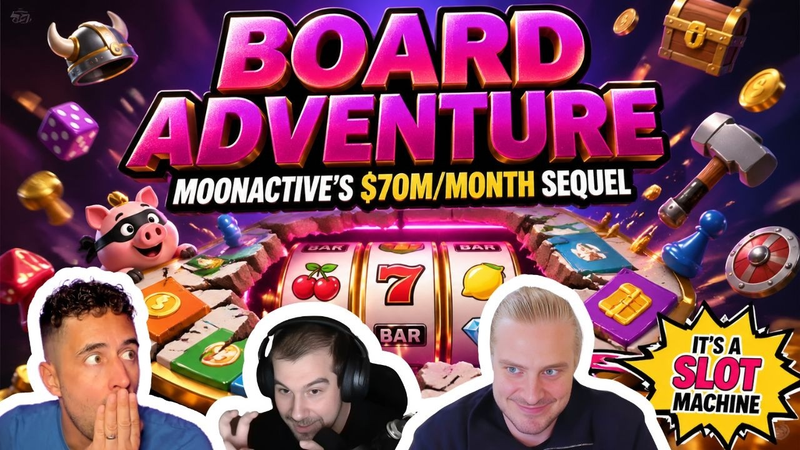
🎲 Will Coin Master Board Adventure eat Monopoly Go? (Our year-end predictions)
The mobile gaming landscape is currently defined by a high-stakes battle between established titans and aggressive new entrants within the social casino and board game genres.
- MoonActive’s Coin Master Board Adventure is directly challenging Monopoly Go, currently recording 2.2 million monthly downloads compared to Monopoly Go’s 1.8 million.
- The mobile gaming sector is shifting toward hybrid experiences that integrate merge and idle systems with traditional social casino mechanics to drive engagement.
- Monopoly Go faces significant market pressure due to rising user acquisition costs and diminishing returns, despite maintaining a massive creative library of over 15,000 assets.
The Evolution of Forever Games | Design Club
Lifestyle games, often categorized as forever games, function as a player’s primary hobby by providing effectively unlimited, repeatable content that transcends the finite nature of traditional narrative-driven titles.
- Long-term viability for 'forever games' requires prioritizing technical debt, such as engine modernization and server architecture upgrades, over purely cosmetic content updates.
- To prevent player burnout and accommodate aging demographics, developers must transition from rigid daily requirements to flexible weekly progression systems.
- Successful live-service titles mitigate onboarding barriers for new players by implementing level-syncing and accelerated progression paths that allow them to integrate with veteran communities.
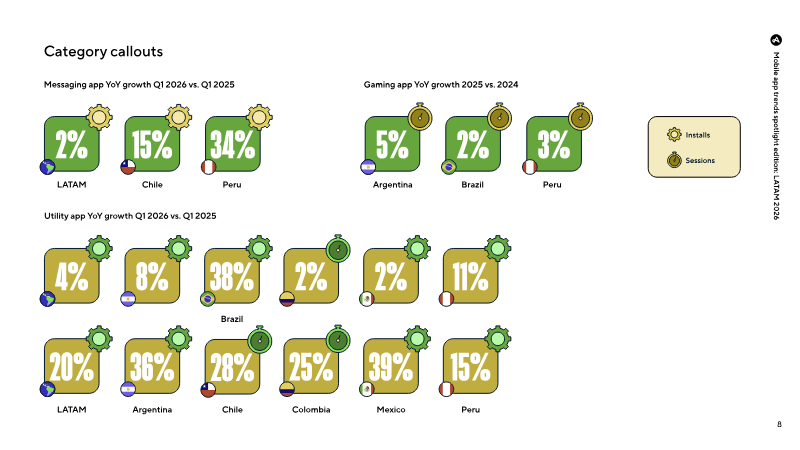
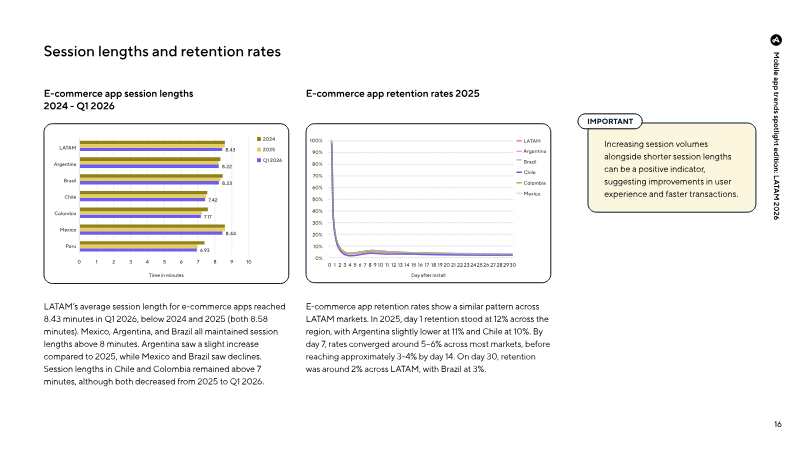

Mobile App Trends: LATAM
The Latin American mobile app market is experiencing robust growth, driven by a highly mobile-first population and rapid economic digitalization.
- The Latin American mobile app market is projected to reach a valuation of $56.1 billion by 2034, supported by a smartphone penetration rate expected to hit 93% by 2030.
- User privacy opt-in rates in the region reached 49% in Q1 2026, significantly outperforming the 38% global average, with Brazil leading at 54%.
- Finance apps experienced a 34% year-over-year increase in session activity during Q1 2026, driven by the adoption of super apps and real-time payment systems like Brazil’s Pix.
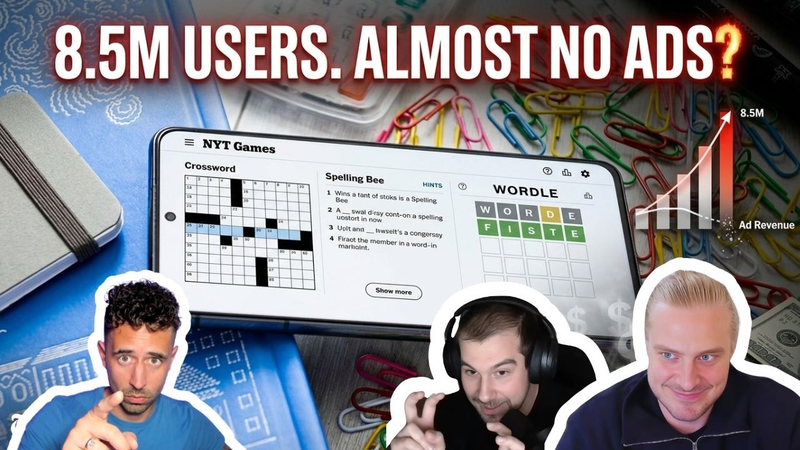
📰 NYT Games Wordle & Crossword: The most PREMIUM audience in gaming
The New York Times Games app represents a unique case study in the mobile gaming industry, functioning as a massive, high-retention ecosystem rather than a traditional revenue-optimized mobile game.
- The New York Times Games app maintains 8.5 million daily active users, positioning it as one of the largest gaming platforms in the U.S. alongside Discord and Roblox.
- The platform prioritizes brand integrity and subscription retention over aggressive monetization, generating approximately $6 million in monthly subscription revenue.
- By eschewing interstitial ads in favor of static banners, the app earns only $15,000 to $20,000 daily, whereas standard industry practices could theoretically increase this to over $400,000 per day.

Butcher Hero Review: The Next Alien Invasion? Not quite yet!
Butcher Hero, an idle RPG developed by Multicast, currently occupies a precarious position in the mobile gaming market.
- Multicast’s 'Butcher Hero' generates 20,000 to 30,000 daily downloads but suffers from high churn rates due to a repetitive, shallow gameplay loop.
- The title currently generates approximately $5,000 in daily ad revenue, a figure that highlights the limitations of its current design and monetization model.
- There is a significant disconnect between the game's effective marketing creatives and the actual user experience, which lacks the depth and variety of the developer's previous hit, 'Alien Invasion'.

Shooter Monthly #6: RADICAL Marathon Solutions, Deadlock’s Secret Design, & Fortnite Extraction Mode
The modern shooter landscape is undergoing a significant transition as established titles struggle to balance core gameplay integrity with the demands of platform-based growth.
- Valve is prioritizing long-term polish for Deadlock by treating it as an iterative platform rather than a static product, leveraging expertise in both MOBA and shooter design.
- Bungie’s Marathon is currently underperforming in mass-market acquisition compared to competitors like Arc Raiders, despite possessing high-quality mechanics that drive strong player retention.
- Epic Games is facing competitive pressure from platforms like Roblox, forcing a strategic shift toward refining core monetization and gameplay quality rather than pursuing unfocused expansion in Fortnite.

Want To Make Indie Games? Fix These 10 Things In Your Game NOW
Retention is the most critical metric for the success of indie games, as it directly influences platform algorithms and overall sales.
- The median playtime for Steam game demos is only 14 minutes, making early player retention the most critical metric for driving algorithm visibility and sales.
- Onboarding must be intuitive and avoid walls of text; players should learn mechanics through gameplay without feeling overwhelmed or unintelligent.
- Developers should front-load their games with 'triggered sequences'—frequent, reactive environmental events—to keep players engaged during the critical first 14 minutes.

BITKRAFT Summit Day 2: Scaling Today's Consumer Apps with Dani Tran, Xiang Shen, Mark van Ryswyk
This discussion explores strategies for scaling consumer applications and games by integrating engagement loops, data-driven development, and nuanced market positioning.
- Validate product concepts early using CPI testing, gameplay video analysis, and retention metrics before committing significant development resources.
- Design monetization strategies that align with the user journey starting from the first seven days of engagement, as product development and business models are inseparable.
- Navigate the post-IDFA landscape by leveraging advanced ad technology and performance marketing to identify and target high-value user cohorts.

GDC 2026 Keynote - An Odyssey in Building Games That Last
Enduring success in the modern gaming industry is not a product of rigid top-down mandates or formulaic pitch decks, but rather the result of an iterative, non-linear odyssey.
- The most reliable indicator of a game's potential for success is when the development team becomes so obsessed with the core experience that they must be forced to stop playing to return to work.
- Game development is rarely a linear process; teams must be prepared to pivot, cancel, or fundamentally restructure projects—such as the transition from the failed 'Titan' project to the development of 'Overwatch'—when the core vision fails to resonate.
- At Bonfire Studios, the team identifies viable projects by having staff from all disciplines pitch 'seeds' (early concepts), which are then evaluated through mood boards and stack-ranked by the entire team to ensure collective buy-in.
When Scale Stops Working: The New Rules Of Mobile Growth
The mobile gaming industry is undergoing a fundamental transition from a volume-based user acquisition model to a monetization-first strategy centered on long-term retention and deep player engagement.
- The mobile games market has shifted from a volume-based acquisition model to a 'monetization-first' era, where revenue growth depends on deepening engagement with existing players rather than incremental installs.
- Games are now services rather than one-time products, requiring studios to maintain continuous live operations to ensure long-term commercial viability.
- Roblox is significantly impacting industry growth, with research from Matt Ball indicating that the broader games industry's growth is stagnant when Roblox's performance is excluded.
Rewarded Grows Up: Why Monetisation Now Shapes The Model
The rewarded advertising model has undergone a fundamental transformation, evolving from a basic user acquisition tool into a sophisticated, core monetization strategy.
- Rewarded advertising is shifting from a simple user acquisition traffic channel to a core monetization strategy focused on increasing lifetime value and deep-funnel engagement.
- Mistplay’s testing of a hybrid model—combining time-based rewards with specific in-game tasks—resulted in a 30% increase in playtime and a 20% lift in D30 ROAS.
- The upcoming 'Playtime Events' feature aligns reward mechanics with specific game progression milestones, moving away from generic, time-only incentive structures that often fail in complex genres like RPGs and strategy games.
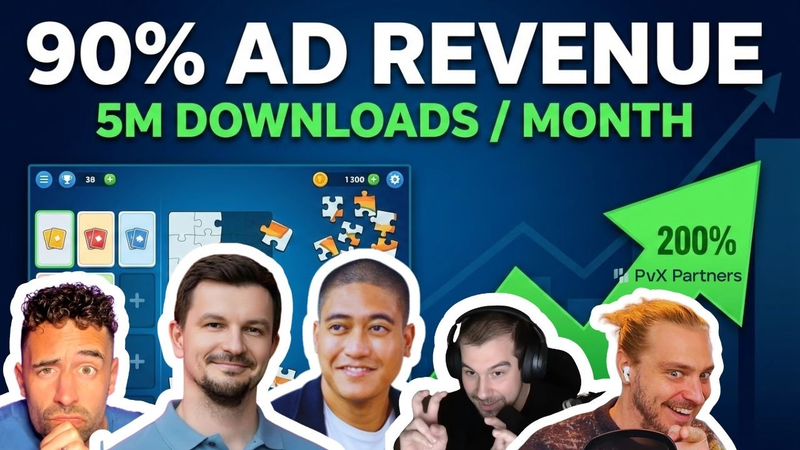
How Malpa Games scaled “Boring” puzzle games to millions!
Malpa Games has achieved significant scale in the mobile puzzle market by prioritizing operational efficiency and high-volume ad monetization over experimental game design.
- Malpa Games achieved 5 million monthly downloads by focusing on evergreen puzzle genres like word games, Sudoku, and jigsaw puzzles rather than experimental design.
- Over 90 percent of the studio's revenue is generated through ad monetization, which is continuously optimized via rigorous A/B testing of ad frequency and placement.
- The studio scaled growth by transitioning from fixed budget caps to a return on ad spend (ROAS) model, allowing for uncapped marketing expenditure as long as performance thresholds are met.