VideoThomas Brush
Want To Make Indie Games? Fix These 10 Things In Your Game NOW
24 Mar 202612 min video
Transcript
Okay, there's this single hack that nobody seems to be talking about and it's probably going to I don't know 10x your game sales. And in my opinion, it's the most valuable marketing hack that you can apply to your indie game. Here's the kicker. It's not even a traditional marketing hack, right? It's actually just baked into the game itself. Even crazier, this hack
[music]
is not just for games, right? It's been relevant for centuries. For books, for films, for TV shows, and I don't know, door-to-door salesmen.
Good morning. Walter calling.
Okay, so what's this hack? What's this marketing hack that's going to 10x [music] my game sales, Thomas? It's retention. Retention, retention, retention. I want you to retain that word. Retention. Let me ask you this. Why did I just binge watch Night of the Seven Kingdoms like it was my final dying wish? I [music] love that show, by the way. Why does Migenix have players ranking up hundreds, if not thousands of hours? Probably not thousands. Why does some salesmen seem to wave a magic wand and they can keep customers sitting on their
own doorstep for hours? It's all about retention. The single most important metric for any entertainment product, whether it's videos, TV shows, movies, reels, games, retention is king. And here's the thing, if you can retain somebody the way that, let's say, Night of the Seven Kingdoms retained me, Steam's algorithm is going to notice and it's going to push your game to more people. And this isn't just a Steam thing, right? This is a YouTube thing. It works the same way. Sure, YouTube wants people to click videos, [music] right? So we care about what's called click-through rate, but YouTube checks if a person has, you know, actually watched the video, right? That's retention. But here's the bad news. According to Chris Zukowski, and by the way, he's like a marketing indie game dev data guru guy. I really like him. He has some incredible advice. The medium play time for demos on Steam is just wait for it, 14 minutes. That's it. 14 minutes before most players are going to check out. Okay, so goal and my goal should be to exceed that 14
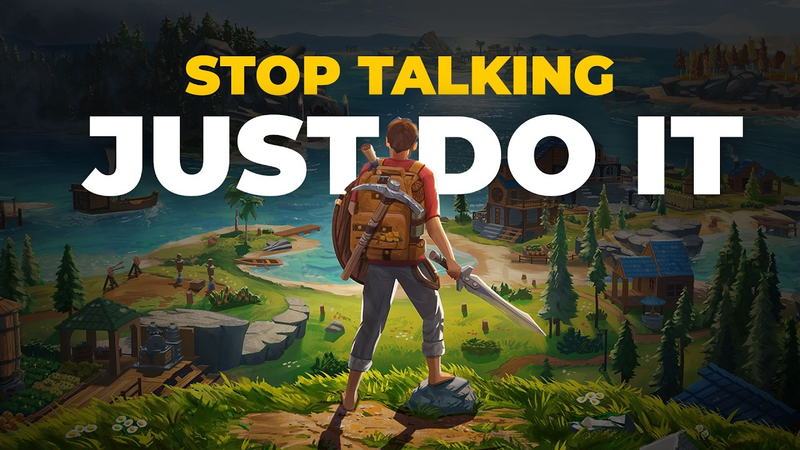
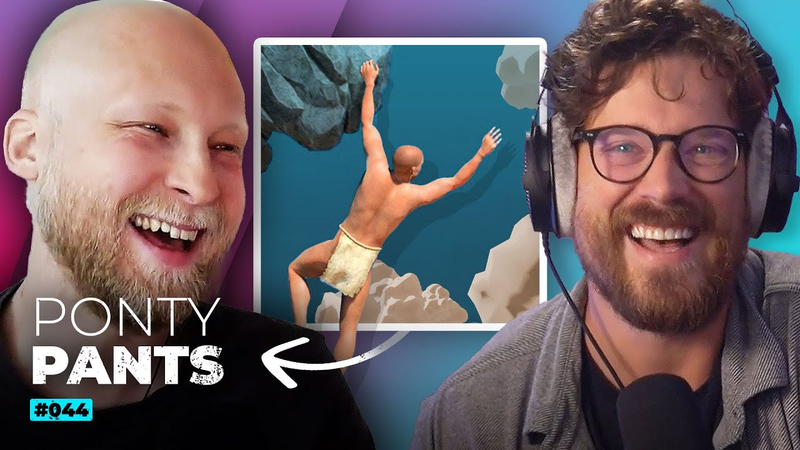
minutes. We got to keep players hooked, right? Captivated. We got to have them into our game [music] like a 1980s businessman is into crack cocaine, right? We got to keep players hooked, captivated. Okay, so my goal for this video is to show you how to do it and I'm going to call this [music] the 10-minute Commandments. And they might just change the way you think about how you make your game forever. Oh, and I want you to stick around to the end because I'm actually going to show how my own game, Twisted Tower, stacks up against that 14-minute median. Am I actually following the 10-minute Commandments? Spoiler, actually no, I'm not going to spoil it for you. I want your retention. I want you to stick around. Okay, so how do we capture players in the first 10 minutes? I've had over 50 conversations with top-tier indie devs on my podcast. These are people like Thomas Sala, Jonas Tyroller, Pony Pants, Jonathan Blow, Edmund McMillen, Ken Levine, American McGee, and more. There's a ton of them. They're awesome. Um, and they've actually been very, very helpful in helping playtest Twisted Tower. And I've distilled their advice
down into 10 essential ingredients that will hopefully hook your players and keep them playing, right? Keep them retained. Grab a pen and paper because these are going to rock your game dev world. Number one, onboarding. Onboarding is going to help with player retention. Okay, I want you to think about Portal. Every mechanic is taught carefully, gently, and without weird, boring walls of text. There's no way to screw up the intro, right? You play the game, you feel smart doing it, you learn how to do it, but it's not you who's smart, it's actually Valve because they're teaching you in a way where you don't realize you're being taught, right? Now, I want you to compare that to games that throw you into five simultaneous mechanics or bombard you with walls of text. It's overwhelming and you feel stupid. And what do you do when you feel stupid? Oh, you quit before the 14-minute mark. Let's not do that. Let's onboard our players with solid tutorials that do not feel like tutorials. Number two, give the player some kind of destination. Players, they need a clear goal, right? In Twisted
Tower, you see the tower rise up. Subconsciously and also just because of like fairy tales and fables, you know that you've got to get to the top of that tower and rescue that girl. In Half-Life 2, it's the Citadel. In Half-Life 1, it's escaping the facility, right? There's a clear destination and it keeps players moving forward. Number three, let's give the player a motive. Why should players even care? Why should they play past that 14-minute mark? In Resident Evil 4, the motive is simple. Get the girl, right? This is a primal trophy motive, but I mean it works, right? Compare that to Destiny where you it's it's hard to even know what your destiny is, right? The motive is vague. Push against the darkness and protect humanity. Sure, what's the darkness and what who am I and why? It's a motive, but it's not a clear, distinct, or primal motive. Number four, give the player some juicy mechanics. I think most indies should probably forget about groundbreaking mechanics, okay? Just focus on juicing up tried-and-true mechanics. Does the player have a sword? Okay, let's make that sword the
snappiest, juiciest, funnest, most rewarding sword to swing ever in the history of sword swinging. Let's use particles, screen shake, instant snappy animation, crunchy, bloody, splashy sound effects when hitting an enemy. We'll use reticle flashes and UI elements to remind the player that we care about them as the developer. And we care that they're pressing a button. Okay, this is called game feel and it's crucial to your first 10 minutes of gameplay. Okay, what about player movement? How do you reward player movement? Well, perhaps a Well, this is controversial, but maybe just maybe a subtle head bob. The sound of your feet crunching in the sand, right? Does the player get stuck on things? That's frustrating. Does the player jump and then suddenly feel clunky and slow? That's not good game feel and the player is going to quit. Ultimately, indie devs, they need to focus on fine-tuning what works, right? Their core, their trophy, overused mechanics. Focus on making those juicy and satisfying every single time the player presses a single button. Number five, these are my
favorite. Triggered sequences. Valve is the master of triggered sequences. In Half-Life, every 5 seconds, there's something that happens, right? A light flickers, a character breaks through a wall, an elevator drops, the sounds are echoing down the halls, like footsteps or slamming doors. I tried to do the same in Twisted Tower. The world reacts to the player. All we're really saying as a developer is, "Hey, player, I'm glad you're moving forward. Here's some cool stuff happening to let you know to keep moving forward and to get what? Get past that 14-minute mark." Now, do you need to do these triggered sequences for the entire game? Well, not at all. After the 14-minute mark or maybe all the way up to like the 30-minute mark, you can slowly taper off these triggered sequences. Because honestly, the player at this point, they're bought in and they're more willing to grind. If you're giving the player plenty of juice and a motive and a destination like we talked about, and they're properly onboarded, see, eventually they're going to forgive any lack of triggered sequences towards the middle of the game. A quick note here is though, as your game wraps up, especially if it's a linear game, it's
wise to add some triggered sequences towards the end to make the player feel like they were given triggered sequences the entire time. Now, is this tricking the player? Yes. Yeah, we're tricking the player. Number six, let's reward misbehavior. We're playing a game here, so we want the player to misbehave, right? It's not the real world, it's a game. So, let's let players break the rules. So, in Half-Life, you can kill your colleagues, right? In Doom, you can find secrets by going outside of level boundaries. We're rewarding players for experimenting and misbehaving. We're rewarding players for playing the game, right? Players feel a rush when they feel like the developer foresaw their base their misbehavior, and they might stick around for another 14 minutes to get that reward again. Ultimately, my job as a developer, your job as a developer, is to tell our players, "Hey, I see you. I see you misbehaving, and here's a little treat." This in turn teaches the player that, yep, they should keep playing past that
14-minute mark. Number seven, let's immediately change the scenery, especially in those first 15 minutes. Keep things visually fresh. Get the player to experience different flavors of the game fast. You certainly want to get a slow down the changes, but in the first 14 minutes, try and get them into two or more biomes or fields. So, for example, in BioShock, the first 5 minutes take you from a plane crash to swimming in the ocean to entering a lighthouse, and then descending into an underwater city. In Banjo-Kazooie, we're in Banjo's house, and then we're in his backyard, and then we're swimming underwater, and then we're in a giant witch's spooky head, and then we're in a mountain village within the first 10 minutes of gameplay. Let's compare that to Castlevania 64. Honestly, it's one of my favorite games, but but that first level drags on forever. And I can specifically remember hating this game when I first played it at Best Buy. I was with my brothers, and we were playing it, and we were thinking, "What is this thing?" We felt like we were in this sort of loop, lost in the woods, right? That was the first level, and it was a problem cuz it was all basically
static. But I did love it once I beat the first level, so it's a shame that they didn't just move on past that first level, you know, after the first 5 minutes. Number eight, this is a weird one. You probably might disregard this one. You shouldn't. Juicy menus. First impressions matter even in menus, especially in menus. For example, in Metroid Prime, it sets the tone for the entire game. Resident Evil Requiem, man, that's a good menu. The sounds, the music, the reactivity, the dark tones, it's all screaming to the player. The developer is saying, "We take this game seriously." I've had play testers play my own game, and immediately, I kid you not, one of them said, "I feel like I got my money's worth when I looked at the menu. Now, obviously they're being a little bit hyperbolic, but players really do feel this in their core. [music] A menu with snappy selections, color changes when they hover over text, a subtle selection sound, a punchy crunchy new [snorts] game sound, a strong tone set by the music. This brings players into your world and tells them to take your game seriously. Why do we want them to take
the game seriously? So that they play it for more than 14 minutes, right? We're kind of making a promise, kind of like we are with cover art or a trailer. A menu is kind of like that. It's like a promise that you're delivering to the player, but you're delivering it through UI elements. Number nine, a jaw-dropper. Start your game with a bang, okay? The temptation for game developers is to build up to the bang, right? In the game world, especially now with 20,000 games being released in 2025, let's start off that game with a freaking bang, right? In God of War, the first 10 minutes feature an epic fight against Balder. It's unforgettable. In the Twisted Tower, I try to do this with the tower rising into place, right? Twisting and shifting as the player progresses through the world. By the way, I don't want to show this just yet in the B-roll because that's for the trailer that's coming out soon. For an indie, it could be as simple as a terrifying sequence, right? A jump scare, an emotional cutscene where you lose your sister, right? Ultimately, it should be something that takes a good chunk of your budget and a good chunk of your time. But, it's going to be that
one thing that, let's say, Jacksepticeye sees in the first minute playing the game and, well, tells him to keep playing for the whole game and now there's 10 episodes on his channel of him playing your game. Okay, so how does my own game Twisted Tower compare to the data? I don't want to be a hypocrite here. I want to follow my own 10 Commandments. After about a year of being released, I went and checked the median play time for the Twisted Tower demo. In fact, I just looked before I started recording. And the play time for for demo is 38 minutes. That's pretty good. That's actually gold tier retention. So, honestly, that's about the length of the demo. So, I'm stoked to see that most players are actually sticking around to beat the demo. I'm really, really happy with that number. That's considered gold tier retention, at least if you read into Chris Zukowski's article or whatever. But, we'll see. Fingers crossed that 1.0 performs as well as the demo.
Auto-generated captions from YouTube — names and numbers may be misheard.
Key insights
7 takeaways · ~3 min read- 01The median playtime for Steam game demos is only 14 minutes, making early player retention the most critical metric for driving algorithm visibility and sales.
- 02Onboarding must be intuitive and avoid walls of text; players should learn mechanics through gameplay without feeling overwhelmed or unintelligent.
- 03Developers should front-load their games with 'triggered sequences'—frequent, reactive environmental events—to keep players engaged during the critical first 14 minutes.
- 04To maintain momentum, games should provide a clear destination, a primal motive, and frequent changes in scenery or biomes within the first 15 minutes of play.
- 05Game feel is more important than groundbreaking mechanics; developers should 'juice' standard actions like sword swinging or movement with screen shake, sound effects, and particle effects.
- 06A high-impact 'jaw-dropper' moment should occur at the very start of the game to hook players and attract content creators, rather than building up to it slowly.
- 07Menus serve as a promise of quality; using responsive UI, punchy sound effects, and consistent tone signals to the player that the game is worth their time.
Ask AI about this video
Cite this video
Citation
Generating citation…




















Comments