VideoBITKRAFT Ventures
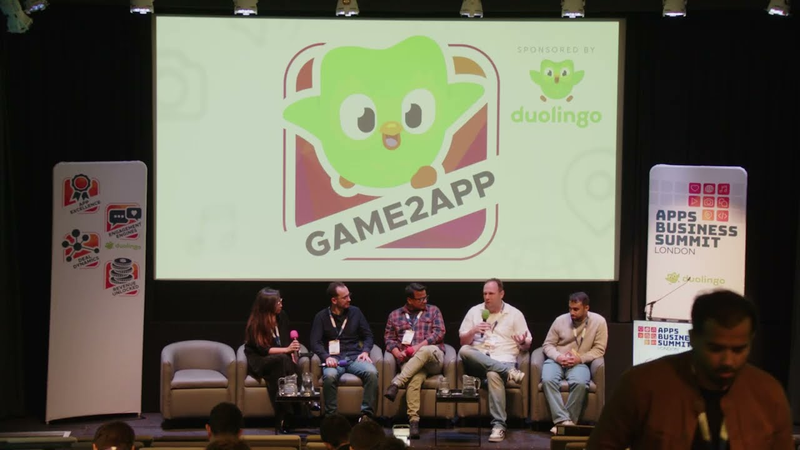
BITKRAFT Summit Day 2: Scaling Today's Consumer Apps with Dani Tran, Xiang Shen, Mark van Ryswyk
18 Mar 202626 min video
Transcript
All right. Hello everybody. Uh we have an exciting panel uh here for you today. Uh my name is Danny Tran. Uh I recently joined the BigCraft team on the equity team as a principal. I'm joined here [clears throat] today by uh Mark Mark Van Ryzswick uh and Shan Shen. And we will have five minutes at the end here for questions. Uh but before we get into the meat of the discussion, I want to invite Mark and Chong to give their own personal introductions here.
Awesome. Thank you and thanks for having me. Uh Mark Van Riswick, I was most recently chief product officer at Tinder and then prior to that I was at Glue Mobile uh and part of the team that ultimately led a $2.4 billion acquisition to Electronic Arts. And then prior to that, I was EA mobile COO. I like to think of myself through the lens of just being really passionate about consumer problems and consumer technology and so I've taken a lot of those experiences and I'm working on a stealth startup right now.
All right. So I'm Sean. I'm CTO of Centry Games. Uh before Century Games I used to work for a lot of large game publishers like EA, Ubisoft, Tensson, uh Roblox and uh then I started my own company which got acquired by Centry Games. Now I'm a CTO of the company.
Amazing. Amazing. So Mark, just to start with you, you've had a very unique experience working in both games and traditional consumer apps. What advice would you give to founders in bringing in game mechanics into their applications? And what do you feel like works from an engagement loop standpoint, from a monetization loop standpoint? And we'd love to hear any stories that you have as well.
For sure. Uh I think one of my biggest moments of learning was when I stepped in as GM of Crowdstar and at that point that studio was doing about 48 million of revenue. They had a single product in market and they were uh incubating a title called Design Home. And what was
interesting stepping into that studio was that there was inherently uh a very clear mix of convictions around are we building an app or are we building a game? And then I would attend panels like this and and I'd hear that from other developers like, uh, I don't know if you're building an a game. It seems like what you guys have is more of an app. And what I inherently realized in that question is that we needed to answer that. We couldn't build a road map without really understanding our identity. [clears throat] And so we put it in the hands of consumers and we asked consumers, what are we? Are we a game? Are we app? Are we a social platform? And consumers were so comfortable. It was focus group after focus group. And we did them both in LA and in the Midwest. They put us right in the middle and they said, "You're both. You're you're an app for me. I'm discovering new products, discovering trends. Uh I'm learning about my own taste and style preferences, but you're also a game. You're my creative outlet. You know, it's my opportunity to connect with with meeting new people that have like-minded uh interests. And ultimately, you know, I get rewarded
with, you know, these micro rewards by participating in this product." And so often it's our own biases that get in the way of thinking like we need to categorize things. we need to have an a a structure around what we're building. But what I learned through that experience is consumers don't necessarily think that way. They you know uh they very much just see does the experience meet their needs? Does it serve them and and the use cases and the you know opportunities for for ultimately delight and engagement and that can take a lot of different forms. Um you know you flash forward to my experience at Tinder. It was interesting stepping into an organization you know that was a little bit concerned about it. you know, someone that came from games [snorts] into the dating space. And you know, the first question I was often asked in a town hall was like, you know, is the goal here to make Tinder a game? And at the heart of any app, you have to be ultra conscious about the user problems that you're intending to solve and focus on solving those really well. And for Tinder, it is ultimately about finding that companion, finding
that plus one and the vulnerabilities of creating a profile and putting yourself out there, you know, knowing that you're getting swiped on and people are making choices about you and and how you've, you know, uh, created your persona. And then ultimately, the anxiety of a conversation, you you can't lose sight of that emotional depth in that experience and how that actually shapes you as a person going through that interaction. And so when you think about game mechanics, you have to think about in the context of what's relevant to this audience and the psychological state that they're in.
And so in CrowdStar, it was fairly easy in thinking about this delight moment married with, you know, discovery. You know, at Tinder, it was really about like how do we make sure that every session someone feels successful, like they've learned something about themselves, you know, because not every session was going to lead to a match. Uh, and so we thought about game mechanics really through the psychology of the experience that we were delivering.
Yeah. And speaking of just like fi like finding the right audience, Sean, you
have built for uh a number of different platforms within games. You've built for mobile with the success of White Out Survival. Uh, but you've also built successful Roblox titles uh such as Lifetopia. And so how do you how do you can you walk us through the product and technical validation for building for these two different platforms? And how should founders think about having a a core like a core game and also being able to experiment with new titles and new platforms?
Yeah. Um in general I would say data talks. So um if if I say we're pretty ad hoc probably not satisfying most of the audience here but um in general uh internally we have a process uh we never never name it but I came up with a name. We call that te uh test everything and fail fast. Uh ultimately it's data driven right. So um you started testing like I'm just use mobile game as example because we are doing pretty well over
there. Um uh we we initially test the concept of the game. So uh before the game even uh start development uh we we got some kind of concept testing the CPI testing the audience uh see if actually this is the the right market we we're thinking about or or the CPI is too high uh if it's too high it's probably not really a big addressable market then we probably will give up uh in very early stage and once we we kind of validate the market and we started to develop the uh the game prototype and uh and then we start testing the early game prototype and even before the game has been playable even like the game is barely playable sometimes. Um we start record the game play video and we start testing this gameplay video because sometimes the the the game play could work quite different from the early concept. So and then we testing the market and we see if
everything still as originally like we we thought about uh and then we start test uh uh early retention right like day two retention uh and then after that like if it's also validated then we start test day seven retention and then monetization and then like one uh one month's monetization then we start test because most of our mobile game strategy are uh performance marketing. Um so we wanted to make sure like we have a uh a good ROI model uh for for each of the game we test and basically all these steps contribute to a potential success for the game and we kill like nine out of 10 game we develop um at the at the t at the time. So probably like the kill rates will be way higher than than supercell which they are very famous of. Um and for Roblox very similar strategy
because Roblox even in the extreme side because Roblox are all about discovery. So and all the discovery were driven by the platform search and uh discovery algorithm. So you literally just uh spend some time develop the prototype of the game and just release I mean sometime the the boundary between a prototype and a real game in Roblox and this platform is pretty blurred. So you like like uh uh grow a garden literally took like a man was maybe just two weeks to develop the game the full game. So on Roblox you it's much faster process and you taste it and most of the uh the algorithm uh were focused on the they call it QPTR uh qualified play through rate and also retention. So you can quickly understand if this is a market fit or not and once it I mean roblox is even easier because once it's a market fit it will just give you tons of organic traffic then you can
take off.
Yeah. Mark, you you're now building uh you're building in stealth. Uh you're back on the founder roller coaster. Um how has your approach to finding product market fit changed and what do you think what core principles have really stayed the same?
Yeah, what I'd say has stayed the same is I I've rarely built or led product that was for me. Uh you know, if I think about Tinder, it's amazing experience, but that was really for a generation much younger than me. So I had to look through the lens of, you know, really my daughter at the end of the day. Um, you know, and when I think about, you know, CrowdStar Products, Design Home, Covet, or, you know, Kim Kardashian was in my, uh, remmit, you know, these were not consumers, uh, that were a reflection of, of like my own personal experiences. And so, I've always had to immerse myself and really be empathetic to what that consumer is looking for, what they're experiencing. And then, you know, of course, in an an app, what is their pain point? And you know, in this particular category that we're working in right now, it's probably much more
akin to something that I'm quite passionate about. But what I've learned very quickly is that what my problem is is not uh the problem that we're hearing from the users that we're talking to. And so that's already been a pivot because what I've learned about my problem is that as a new nient product, we don't have the brand recognition. We won't have the trust coming out the gate to solve my problem. Consumers will not believe that we can realistically solve that. But what we did learn was a ton of nuanced insights that we have discovered truths in the category that we can solve for those problems that arguably the incumbents probably won't touch. You know, I think about Tinder and we would uh we created a rubric with all the user problems and essentially scaled those problems in terms of, you know, what would have the largest percentage population to the smallest. And sometimes, you know, we would take the small ones because it was either an easy win or, you know, it was frankly the right thing to do because it was, you know, the experience was broken for a consumer group. But there were many problems in that bottom tranch that we
were never going to tackle because we were talking about a fraction of a decimal point. And so that's for me as a startup, I lean into the fraction of the decimal point because I know the incumbents don't have the time or the cycles to spend focused on those problems. And so we have now a set of hypotheses that we're applying. And you know the challenge I always found with MVPs was how do you keep compete with an incumbent? You know how do you wrestle through that decision of hey I'm launching a a game but you know all the products out there have a social system. Can we really launch without a social system? Are we going to get the right signal from that? And so the way that we're approaching this product is that we've essentially modulized the product and it has a marketplace component to it. So we're going to release the product as modules and the consumers will eventually meet in the middle but we will form mastery around each one of these modules that you know a team of eight we've got to do one at a time. Uh but we're launching our first module this year and what we're going to learn
we're not going to focus on you know big beats like you know what does day one you know retention look like. We're going to look for nuance signals of you know did we get x number of exchanges in terms of an interaction and so we're looking for signals of like did we get the top of funnel right and then the next module is going to focus on the other side of the marketplace and it's going to be much more for us thinking about the content wheel and how do we kick up that um content creation aspect and as we form mastery around that we'll start building the components on each one of these products and then eventually they'll they'll the market will come to see uh the product that we've built. Sean, how do you think about resource allocation between proven revenue streams and new experimental opportunities and what is the importance of having a core, you know, set of uh infrastructure to be able to build and scale new products like Kingshot and for the founders in the audience like what what do you think it takes to to build the next century games?
Yeah. Um so to answer your first
question uh we typically allocate more than half of our resourcing uh developing new concept uh exploring new genre. Uh one of the philosophy we have is uh if the genre is too niche then we are not touching that but so as long as like other than like forex strategy we're also working on uh casual game which is a huge market right so and also Roblox we believe is a huge market that's why we are working on that. So as long as we we know this genre is big enough then we'll pull resource over there until we understand that and throughout this process then I would say like the technology and knowledge communicate accumulation is extremely important like kingshot is a very good examples like it basically built upon uh the uh established knowledge and established framework and established marketing practices of of white about survival uh and actually bu the game was developed by the same team. So it's much
faster and uh a lot of best practices over there and also when we launched Kingshot uh to be to be honest we didn't have that high expectation for this game. We thought the game will white out survival uh it turns out to be way better than we thought a few reasons. One is like when we launched Kshot we already know the wild uh the wild out model. So we when we do marketing uh uh do performance marketing is we we we have a lot of benchmarks over there. So we we can easily spend the money uh as fast as we could. Um so and also like uh we we we know a lot of do as dos and don'ts. So uh it's much easier for us to to grow the through the initial phases because you know code start is always the hardest part for launching any product. Even you understand this market, you understand uh uh you even you have a good uh metrics early metrics because I mean it could be a golden cohort right it could be could be a lot
of reasons uh so when you really scale that so you you actually need a lot of additional knowledge I mean a lot of confidence uh especially like when you are spending money on that I mean if you can't be all right positive there'll be a lot of questions here and there um so so yeah the all all of these are bas on some fundamental knowledge that you have already established and also technologies and uh including the ad technology and also the uh live ops technologies uh and and yeah it's uh I would say it's very important but the first thing is you need to get your first product out um so which is going through all the test process I mentioned earlier
moving on from product market fit so distribution has drastically changed from the early days of, you know, Facebook, you know, early so uh social games to iOS's privacy changes to the very diversified channels that we're seeing now with Discord and Roblox and
even AI native discovery platforms. You both have successfully navigated the the many shifts that have happened across these distribution channels. What changes are you observing today? uh what strategies do you would you advise for uh founders to take advantage of and what what other suggestions do you have for some of the founding teams that we have in this audience?
Oh, you want to go first?
Sure. Yeah, it's ultimately [snorts] you have to have a distribution mindset right at the beginning of product development. I think um you know more of my efforts are going towards distribution than the product at times and that's really a reflection of how hard it is to reach a consumer that is so distracted. You know we had the you know most people in this room I think we had the luxury over the last 10 years of watching time on device grow to arguably at a level that we should all be a little bit uncomfortable with. you know, your average Gen Z is spending eight hours a day on their phone. And I spot check this all the time with different
uh you know, different uh Gen Z consumers. And it's true in Europe, it's true here. And the challenge with that is is as developers now, we're fighting and we're competing for that eight hours, which again, arguably I would like that to be lower. Um, and so distribution is a massive challenge because if we think there's been a a content explosion over the last 10 years, I think we're at the at the starting point of something that explodes well beyond anything that we've seen. And finding that consumer is going to be more difficult than ever. For me, my approach leans into my product strategy. Like where are the use cases? Where are the niches? Where are the consumers that are not being properly served today by the incumbents? And there's a lot of use cases out there. I think you probably can look at almost any category. Certainly the category I'm in is that is very much true. And we're going to serve them and we're going to serve them well and we're going to reach them, you know, arguably through strategies of, you know, being on the street with them, creating the content that's applicable to them. Uh ultimately, we're bringing some of them on in through essentially a web 3
strategy. We've established an SPV for early investors to come on board so that the community is helping us build the product early and we're iterating with their needs in mind. And I believe these hyperlocal communities are the ones that talk, the ones that share, the ones that will find themselves, you know, in a channel in in, you know, Discord or Reddit and they will share these experiences because, you know, there's finally products out there that are serving their needs. So for us, we're constraining ourselves geographically, taking a little bit of a page out of Tinder's playbook. We're not starting on a college campus but uh very much geographic constraint and then another constraint of thinking about the audience that we're serving.
Yeah. Um from my perspective in general it's just you you go to where the users are in. So any any of the platforms or or market as long as there are qualified users you want to go there. Um and now we are in terms of performance marketing we are in the post IDFHA um era I would
say. Uh so uh like M said it's uh hard to find the right audience. So you you you need to understand how the uh uh like where the user are and uh there's a product marketing match and also for advertisement you need to make sure like you you understand the ad technology and make good use of that and use the the the ads like uploving uh meta Google to find you the right audience uh and then you sell the right uh product to them. So uh in general for us uh it's uh I would say it basically just uh like two things. One is uh you get the product down to the highest level that you could and then just use whatever available technologies or tech stack I would say to help you to funnel the user in and make sure the user stay in your game because like live ops or the and
community building those are critical important right user is more and more expensive you don't want to waste your marketing dollar you want to make sure like you maximize the lifetime value of the user Uh so so yeah all the all these matters.
Yeah one thing I would just add on to this as well is that I think content is really a big part of our distribution strategy within our within the content that we're uh intending to enable. We believe out of that comes a richness of knowledge and insights that we can translate into AEO. And so how do we in a world today become on the forefront of these LLM through discovery? How do we become that authoritative search? uh and we believe it sits in the content that will be created inside our experience.
Before we get into the Q&A, did I did have one more question about monetization and retention because both of you have very deep experiences in very in very different monetization models from freeto play to monetizing lifestyle apps to subscription to freetoplay and uh play platform specific
models. And so Shan, you were talking about yeah users are getting more more expensive to acquire and Mark you're talking about this this fight for attention really. what are you seeing working when it comes to monetization and retention and how do you balance that focus on short-term revenue uh versus like building a uh like building a player or user community?
I I I can start on this one. So uh yeah I mean in general um in terms of monetization you like I just mentioned you do want to maxim max out the the the value of the user and typically there are a few ways of doing that right so first of all just to make sure like user staying again attention and uh then we talk about live ops lives obviously important it's like Mark mentioned that you need to keep delivering content to make sure that user engaged over time. Uh and for all of game we've been uh operating it's live ops is a critical important like the single critical
important element for for making the game successful like the longest game we have been running is already over I think 15 years and still generating a lot of revenue. uh and user just keep coming back and uh um and also today I mean thanks to AI for you can actually do a lot of personalization right so because different user they have different uh flavor and uh they have different uh uh like paying uh abilities you want to serve them the right content and you don't want to monetize all of them at the same level uh so all of these are pretty important in today's live ops strategy And uh in terms of uh the the short-term capital and the long-term for us it's all about your model. So we want to make sure like uh we we are very confident like given all the risks associated with the market turbulence or
everything that we every dollar we spend we can make it ROI positive in for foreseeable future. I understand some publish been doing like three years all model. I think it's a little bit too aggressive. Uh we we would never try to go that long. But as long as you are confident with your product and you you're pretty like confident about the marketing trend. Uh then you should be able to extend your uh ROI cycle which will help you to uh generate a long-term revenue cash the cash flow. Yeah, I would say two real quick things. One, you know, my thesis or hypothesis is that uh the incumbents have business models that are now 10 to 15 years old. Um they serve the consumer well at that point in time. The consumer is so radically different today. And so I think within that there's an opportunity to do things differently. And when you think about your product, you can't think about your product absent your business model. They're they're arguably
one and the same. And so thinking about that consumer journey, how you support them and the business mechanics that ultimately accelerate their experience is critical. The second part I would say is it's true on any product I've worked on. 80% of those that are going to convert happens in the first seven days. And so I think that's going to be true going forward as well. And so in that first seven days, you cannot not think about engagement. You can't think, you know, ignore retention. You can't not think about what is the hook, what is the what's going to drive their next session because you need to win those seven days in order to capture anyone that's going to monetize. And so I don't uh decouple the two. I think they're intrinsically the same.
Yeah. Thank you for adding those la those last two things. I think we have time for maybe one question if we want to do this uh do this here. I think there is somebody walking down the aisle with a mic uh if you do want to ask. Uh but otherwise uh please feel free to pull aside uh our speakers after the session.
All right, we got a pretty shy audience today. So why don't we go ahead and wrap things up. Uh thank you both so much for the time and yes, please do uh have conversations with these both after the session. Awesome. Thank you. [applause] assume. Oh, you're getting wired right now.
Auto-generated captions from YouTube — names and numbers may be misheard.
Key insights
Distilling the key insights…
Ask AI about this video
Cite this video
Citation
Generating citation…






Comments