Player Demographics reports and market data
Documents


Esports in the Americas: Sports, Spanish, and Spending
The Americas represent a critical hub for the global esports industry, accounting for 25% of the worldwide audience and 40% of total industry revenues.
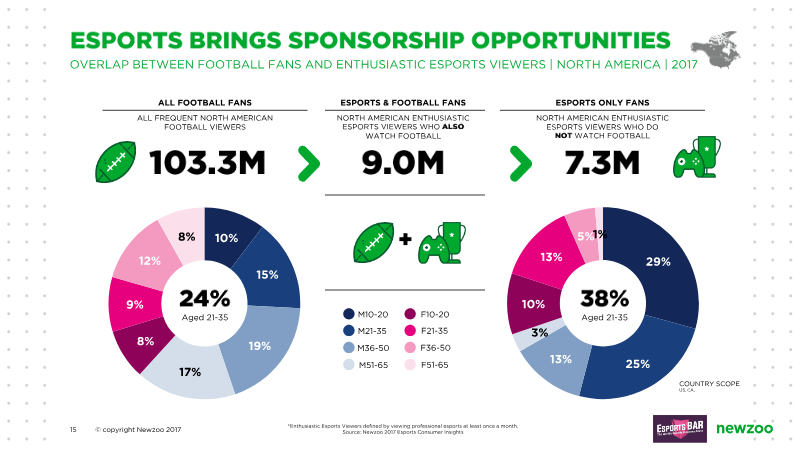
- The Americas represent a major global esports hub, accounting for 25% of the worldwide audience and 40% of total industry revenues.
- Nearly 50% of the regional esports audience speaks Spanish or Portuguese, necessitating localized strategies rather than a unified approach for North and Latin American markets.
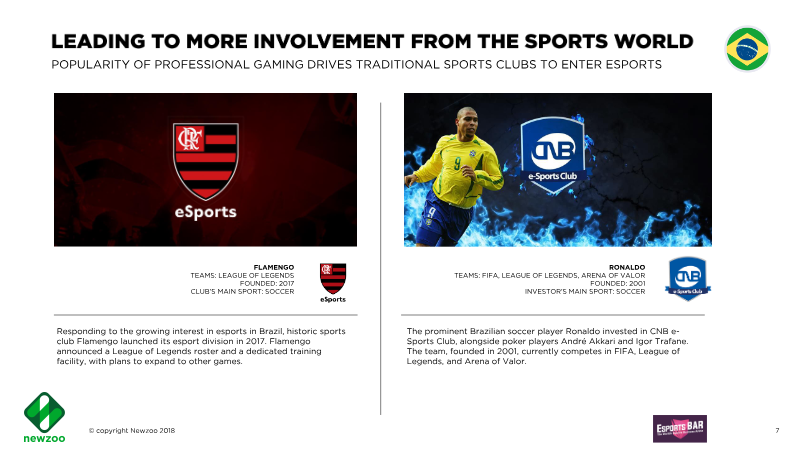
- Traditional sports organizations are increasingly acquiring esports teams to diversify fan engagement and reach younger demographics across both continents.

Esports in Brazil: Key Facts, Figures, and Faces
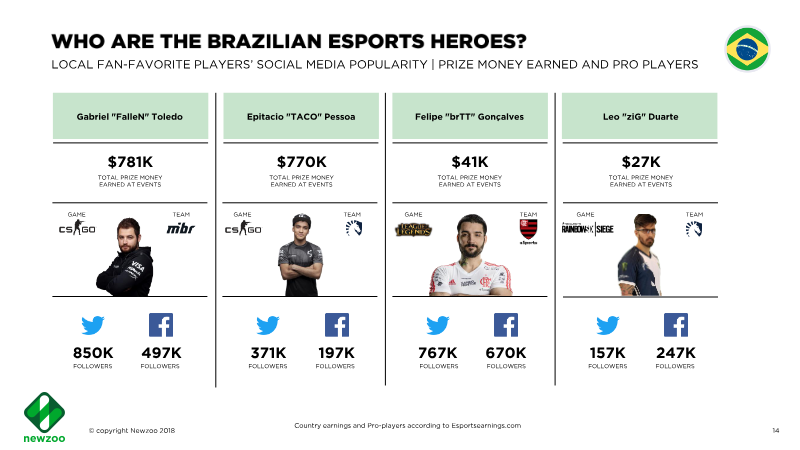
Brazil has emerged as a global powerhouse in the esports industry, ranking third worldwide with 7.6 million esports enthusiasts as of 2018.
- Brazil is a top-tier global esports market, ranking third worldwide with 7.6 million enthusiasts as of 2018 and a projected audience growth to nearly 30 million viewers by 2020.
- The Brazilian gaming market is supported by a large base of 75.7 million gamers out of a 210.9 million online population, generating $1.5 billion in total game revenues.
- The audience is exceptionally young, with 43% of enthusiastic viewers falling within the 10 to 20 age demographic.

Gamer Motivation Study
Global gaming engagement is defined by a complex interplay of cultural values and individual motivations, necessitating a shift away from traditional demographic segmentation toward behavior-based personas.
- The industry should transition from traditional demographic segmentation to a behavior-based framework consisting of eight distinct gamer personas to better capture engagement drivers.
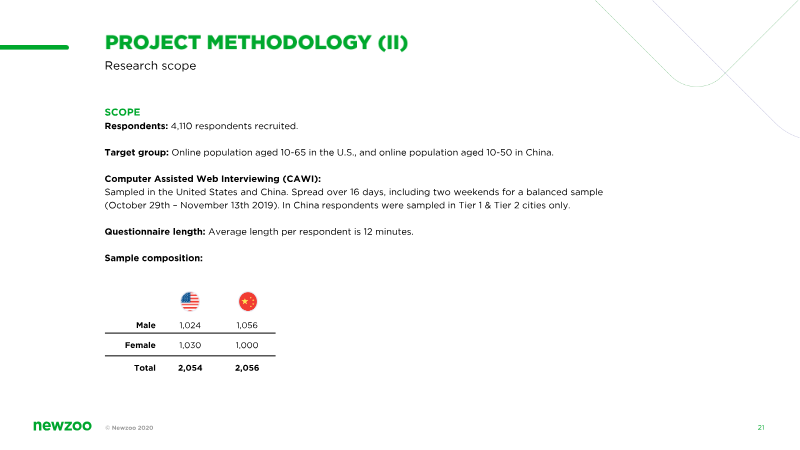
- The study analyzed 4,110 respondents across 30 international markets to identify the core motivations and habits defining global gaming engagement.
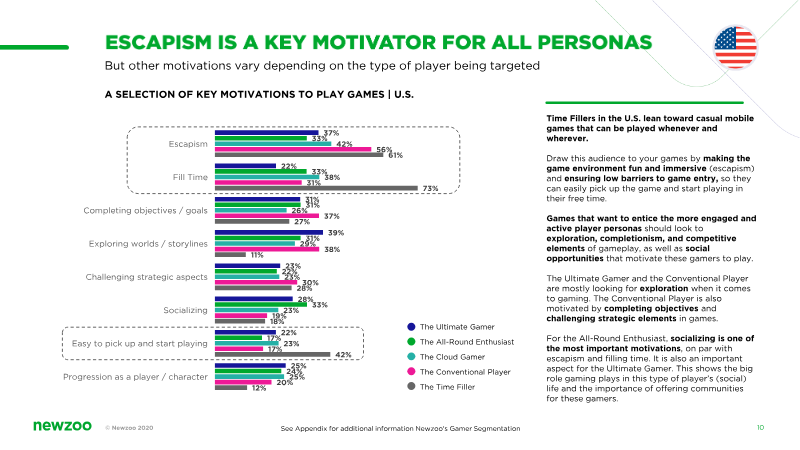
- U.S. gamers are primarily driven by escapism and filling idle time, while Chinese gamers prioritize competitive achievement, exploration, and skill mastery.

Casino Gaming Report & Data: US Social Casino Market
The social casino market in the United States exhibits high levels of engagement and monetization, characterized by a diverse player base that frequently interacts with multiple franchises.
- The US social casino market is highly fragmented, with the average user actively engaging with 5.6 different gaming titles.
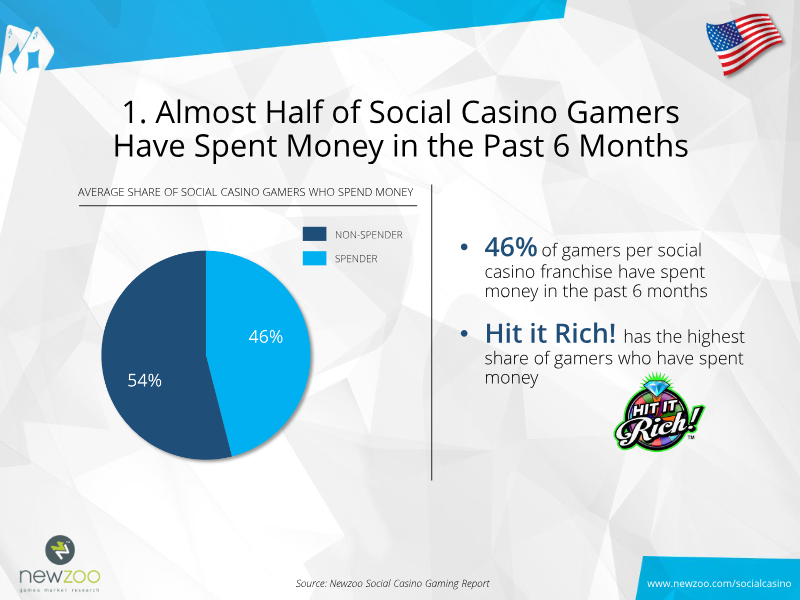
- Monetization is robust, as 46% of social casino gamers have made in-game expenditures within the last six months.
- Men aged 21 to 35 represent the largest segment of paying users, accounting for one-third of total industry spend.
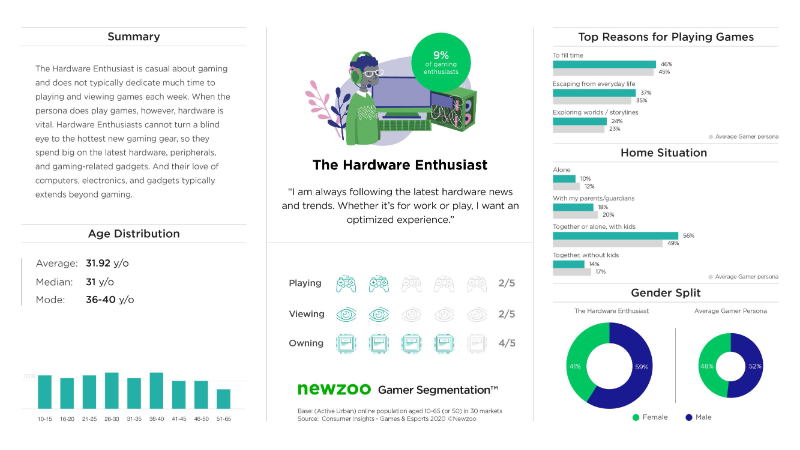
Newzoo Gamer Segmentation: An Overview of the Nine Unique Personas
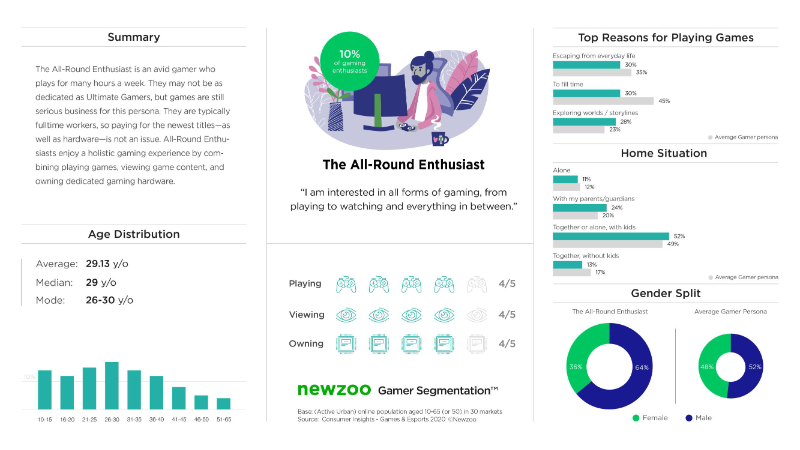
The Newzoo Gamer Segmentation framework categorizes the global gaming audience into nine distinct personas to better understand the diverse motivations, behaviors, and spending habits of players.
- The 'Ultimate Gamer' persona accounts for 30% of gaming enthusiasts, characterized by high levels of active play, content consumption, and significant hardware investment.
- The global gaming audience is mature and heterogeneous, with the average age of the nine personas ranging from approximately 28 to 39 years old.
- Engagement is no longer defined solely by active gameplay, as segments like the 'Popcorn Gamer' and 'Backseat Viewer' prioritize esports and video content consumption.
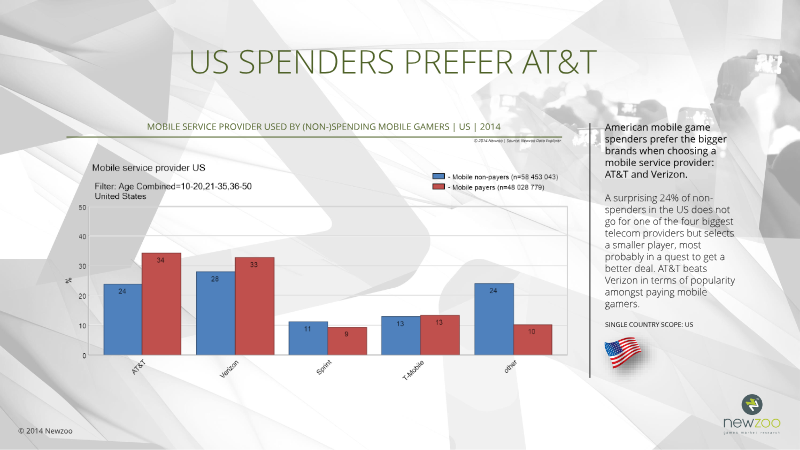
Spotting the Mobile Spenders: An Analysis of Paying Smartphone and Tablet Gamers
The mobile gaming industry is experiencing significant expansion, with global revenues projected to reach $25 billion in 2014.
- Mobile gaming is projected to reach $25 billion in global revenue by 2014, with mobile expected to account for 50% of total game revenues by 2017.
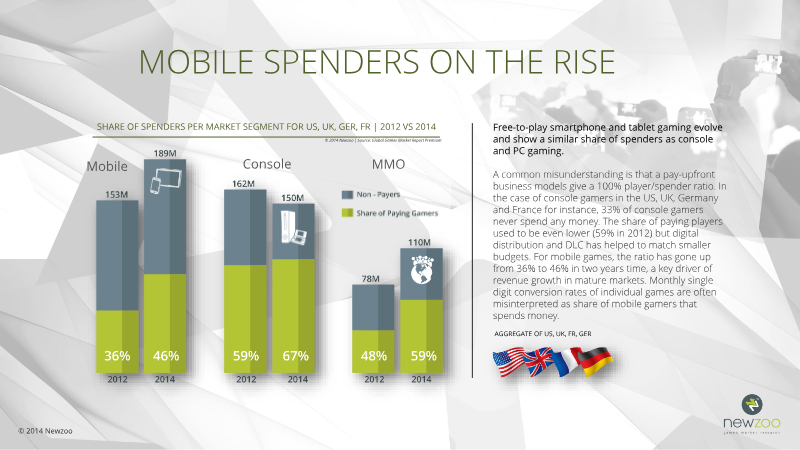
- The share of paying mobile users in Western Europe and the United States grew from 36% to 46% over the last two years, debunking claims of market saturation.
- The Amazon Appstore is an undervalued channel, as its users demonstrate a higher propensity to spend money compared to those on Google Play or Apple platforms.
Gamer Motivation Model: Reference Sheets and Details
The Gamer Motivation Model provides a comprehensive framework for understanding player behavior by categorizing gaming preferences into twelve distinct motivations.
- The Gamer Motivation Model categorizes player behavior into twelve distinct motivations derived from psychometric factor analysis of over two million global participants.
- Motivations are organized into three high-level clusters: Action-Social (immediate, interpersonal), Mastery-Achievement (goal-oriented, progression), and Immersion-Creativity (narrative, expressive).
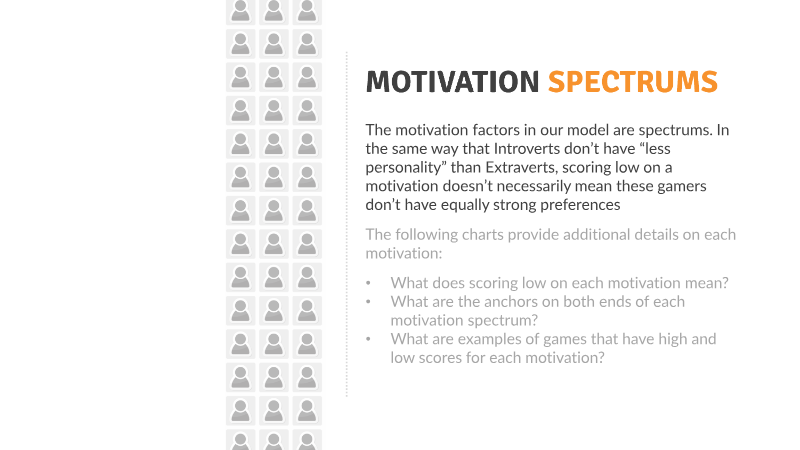
- Player preferences are measured as spectrums rather than binary choices, allowing for nuanced profiling of how individuals balance competing psychological drivers.

La Industria del Videojuego en España: Anuario 2025
The Spanish video game industry in 2025 stands as a vital cultural and technological pillar, characterized by a maturing ecosystem that balances robust consumer engagement with complex economic and regulatory challenges.
- The Spanish video game industry generated 2.293 billion euros in 2025, a 3.2% year-over-year decline driven by a contraction in digital content spending.
- Digital sales remain the primary revenue driver, accounting for 61.9% of total market income.
- The sector serves a player base of 22.8 million people, with mobile devices being the most popular platform, reaching 18 million users.
Essential Facts About the U.S. Video Game Industry: 2026
The 2026 Essential Facts About the U.S.
- The U.S. video game industry reaches 212.3 million Americans, representing 67% of the total population.
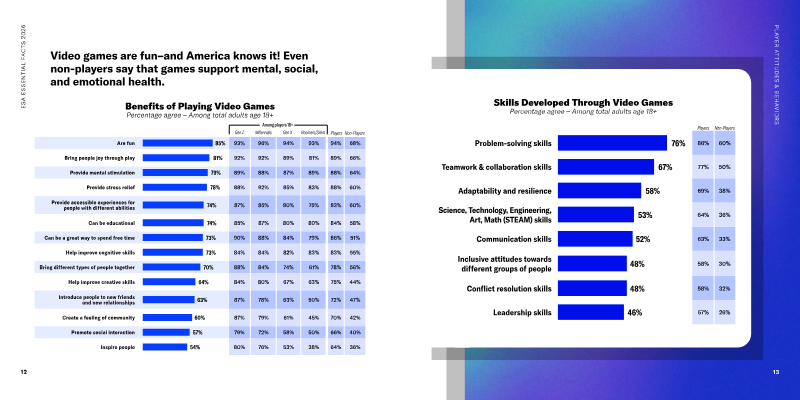
- The average American gamer is 37 years old, with a gender distribution that is nearly equal across all generations.
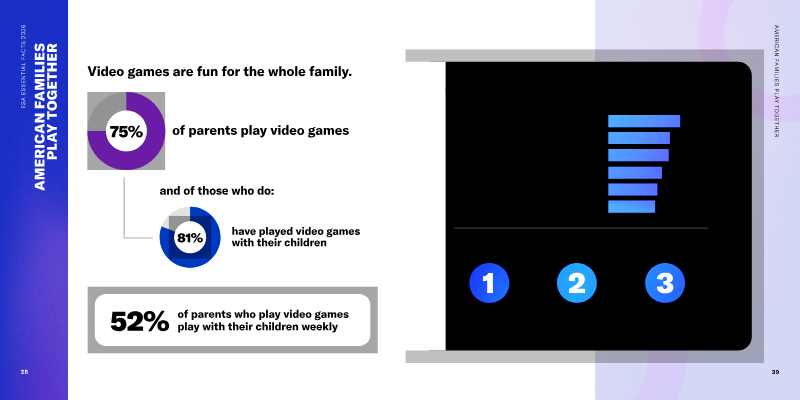
- Gaming is a primary social activity, with 70% of players interacting with others and 81% of gaming parents playing alongside their children.
Essential Facts about Video Games in Italy: 2025
In 2025, roughly 14.2 million Italians—about a third of the population aged six to seventy-five—engage in video gaming, with a pronounced male bias and a concentration of players under 35.
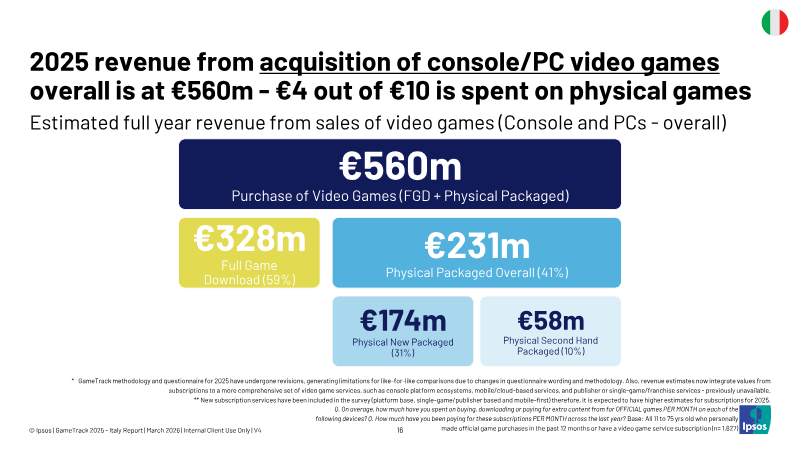
- The Italian video game market generated €2.4 billion in 2025, with game sales accounting for 77 percent (€1.8 billion) of total revenue.
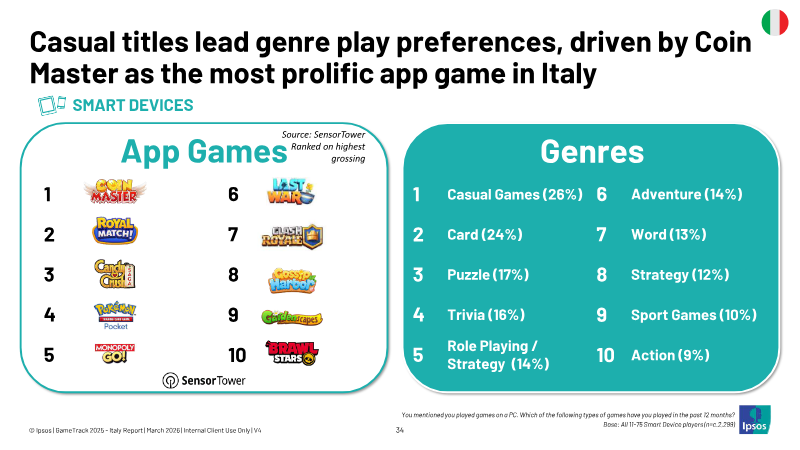
- App-based gaming dominates the market, representing over half of total revenue with a freemium model where only one percent of earnings come from upfront purchases.
- Smart devices are the primary revenue driver at €929 million, while console gaming accounts for €643 million, supported by an average of eight hours of gameplay per week across the population.

Swipe Before Type: India's Interactive Media Consumer Survey 2024–2025
The survey, covering September 2024 to September 2025, examines India’s interactive media landscape across video, audio, social, gaming and emerging AI-driven content.
- Gaming dominates high-value consumer spending, capturing 70% of wallet share for transactions exceeding INR 1,000, while video and social media command 30% each at the INR 200–500 price point.
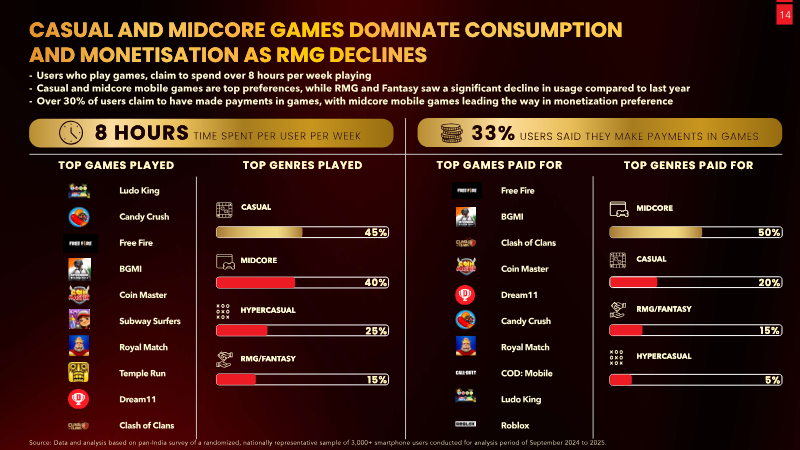
- Mobile-first gaming remains the primary format, but 30% of users now engage via PC and 22% via consoles, with casual and midcore titles driving 8 hours of weekly engagement.
- UPI is the near-universal payment method for digital content, accounting for 90% of all in-app purchases.



Gaming in Africa 2024
Gaming in Africa 2024 reveals a market that is overwhelmingly mobile-centric, with 92% of respondents playing on phones and 81% using smartphones.
- The African gaming market is overwhelmingly mobile-centric, with 92% of users playing on phones and Android devices accounting for 92% of all downloads.
- Monetization is driven by microtransactions, utilized by 63% of players, with Kenya serving as a key market where mobile money accounts for over 60% of payment methods.
- Player engagement is high, as 78% of respondents played within the last day and one-third of gamers spend three or more hours per session.