PC reports and market data
Documents
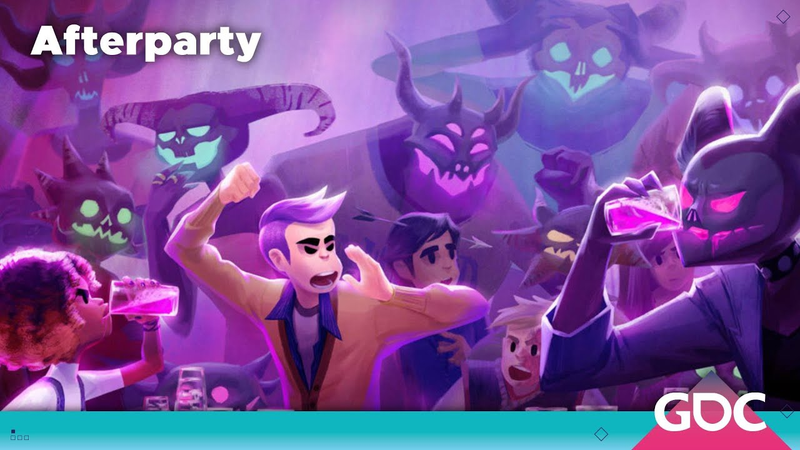
GDC Plays Afterparty with game director Adam Hines
Afterparty explores the intersection of comedy and adventure through the journey of two friends navigating Hell to outdrink Satan.
- Night School Studio's Afterparty development process relied on an 1,800-page script, with game director Adam Hines writing 80% to 90% of the content.
- The studio employs a rigorous iterative workflow, conducting two to three rounds of rewrites after initial implementation to ensure gameplay mechanics and dialogue timing function correctly.
- Afterparty incorporates a drinking mechanic that serves as a puzzle-solving system, allowing players to manipulate character personality types to overcome obstacles like bypassing bouncers.
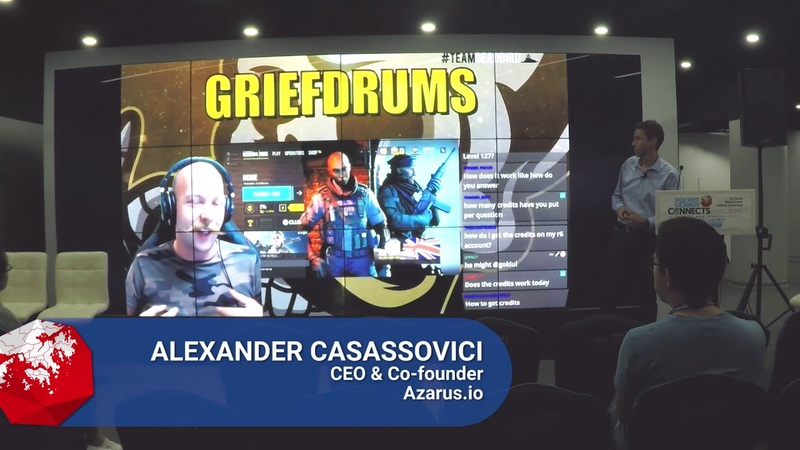
Boosting Your On-stream and In-game Engagement and Retention
The presentation explores strategies for enhancing player engagement and retention in live-service games by leveraging streaming platforms and data-driven incentive loops.
- Integrating real-time game data with streaming platforms can increase player retention by transforming passive viewers into active participants through interactive overlays.
- Watch time serves as a strong proxy for play time, with data showing a correlation between the two ranging from 40% to 90% depending on the implementation of interactive elements.
- Deploying overlays that track in-game events—such as kills or objective completions—to issue challenges and rewards directly to viewers significantly increases session lengths.

Game Dev: 3 Weeks to Finish! (Devlog)
The development of the indie game Will You Snail is currently governed by a strict four-week production timeline, with the focus shifting toward finalizing the game’s concluding level and implementing a comprehensive dialogue system.
- The development of 'Will You Snail' is operating under a strict four-week production timeline, with the final phase focused on completing the concluding level and implementing a new dialogue system.
- The developer produced approximately 450 new lines of context-specific voice dialogue to transition the AI antagonist into an active observer role.
- Dialogue integration proved to be the most time-intensive task of the project, exceeding initial estimates and requiring the use of pre-allocated buffer time to prevent schedule slippage.
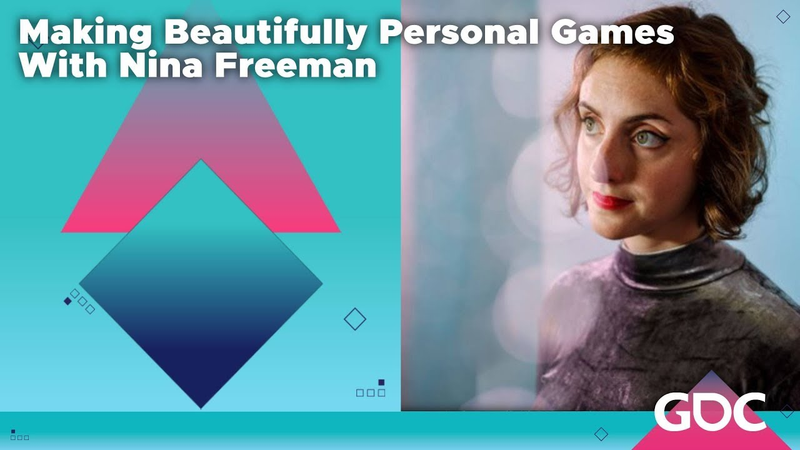
Making Beautifully Personal Games With Nina Freeman - GDC Podcast Ep. 3
Autobiographical game design functions as a powerful medium for transforming private, lived experiences into resonant, interactive narratives.
- Autobiographical game design transforms personal history into interactive narratives by treating lived experiences as research subjects and archiving digital artifacts like chat logs or journals.
- Developers can achieve necessary critical distance by viewing their younger selves as distinct characters and allowing sufficient time to pass before translating sensitive memories into game mechanics.
- Success in the indie industry is driven by the consistent release of creative work and a robust portfolio rather than formal academic credentials.
The Latest Graphics Technology in Remedy's Northlight Engine
Remedy Entertainment’s Northlight engine represents a significant shift in modern game development by transitioning from traditional screen-space rendering techniques to geometry-aware DirectX Raytracing.
- Remedy's Northlight engine supports ray tracing by building top-level acceleration structures every frame, while handling deforming geometry via a compute shader that updates static buffers on the GPU before the bottom-level builder processes them.
- Ray-traced shadows provide accurate contact points and soft-shadow transitions, but shooting 16 rays per pixel at Full HD resolution incurs a performance cost of approximately 80 milliseconds.
- To optimize material binding for DirectX 12, the engine packs all material parameters into a single buffer and reserves dedicated space in the descriptor heap, allowing for draw calls without additional bindings.
Physic Scientist to Game Engineering with Joschka Pottgen | Game Dev Unchained Episode 208
The transition of high-level scientific expertise into game engineering highlights a significant convergence between particle physics and real-time simulation.
- The gaming industry has become a primary driver of innovation in parallel computing and virtual environments, with its technological advancements now being adopted by the automotive and scientific research sectors.
- High-level scientific expertise, such as that from research environments like CERN, is increasingly vital to game engineering due to the industry's growing demands for automation, build systems, and high-performance computing.
- To overcome resource constraints, smaller studios should move away from redundant proprietary tool development and instead prioritize reusable systems and open-source practices.

Creating a BOSS (Unity Basics!)
The process of designing complex boss characters in Unity requires a multi-disciplinary approach that integrates illustration, animation, and programming.
- Use animation events to trigger external functions like particle effects or screen shakes directly from the animation timeline, avoiding the need to hardcode every interaction.
- Implement a modular design by separating visual behavior in the Unity Animator tree from the underlying movement and difficulty logic managed by programmers.
- Utilize rigging tools like Spine to establish skeletal structures from Photoshop layers, ensuring a cohesive workflow between illustration and animation.
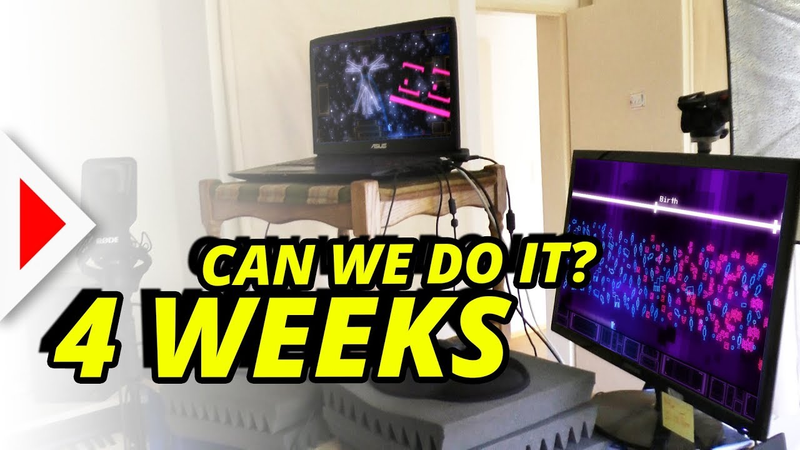
Can I Finish my Indie Game in 4 Weeks? | Devlog
The primary objective of this project is to finalize the development of the indie game Will You Snail within a structured four-week timeframe.
- The developer is executing a four-week final production sprint for the indie platformer 'Will You Snail' while maintaining a sustainable work schedule of six hours per day to prevent burnout.
- The core gameplay mechanic features an antagonistic AI that predicts player movement to spawn obstacles in real-time.
- The narrative integration phase involves implementing a system that triggers approximately 64 unique voice lines based on specific player behaviors, such as death patterns and idle states.

One Year of Sokpop Games Subscription on Patreon
The Sokpop Collective has established a sustainable independent development model by leveraging a Patreon-based subscription service that delivers a new, polished game every two weeks for a monthly fee of three dollars.
- The Sokpop Collective generates approximately $4,000 in recurring monthly revenue by maintaining a base of 1,000 Patreon subscribers who pay $3 per month.
- The studio sustains its output through a strict four-week development cycle, releasing a new, polished game every two weeks.
- Financial stability is achieved by combining the subscription model with freelance work and occasional full-scale commercial releases, ensuring creative autonomy.
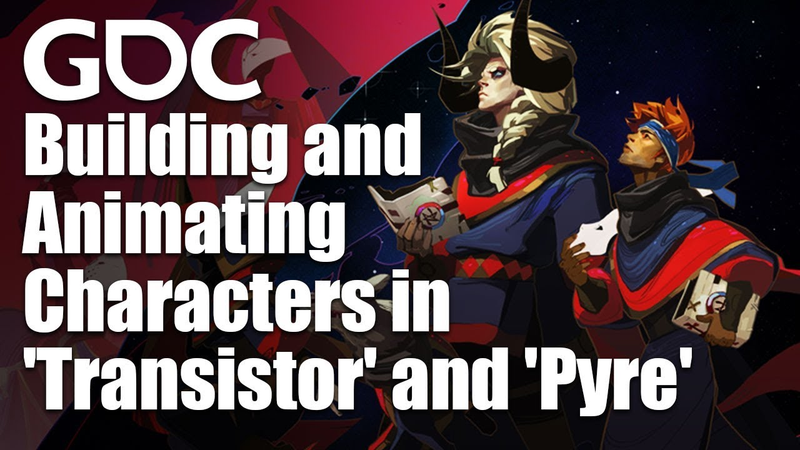
From Red to Rukey: Building and Animating Characters in 'Transistor' and 'Pyre'
Character animation in independent game development thrives on a philosophy of simplicity, modularity, and iterative design.
- Supergiant Games utilizes a 2D-engine workflow where characters are rendered from 60 to 64 camera angles, requiring approximately 2,500 PNG files per animation sequence.
- To manage complexity, characters are broken down into individual modular sections—such as body, platform, and accessories—allowing for independent rigging and simplified animation adjustments.
- The animation process relies on a locator-based system for translation and rotation, which allows for precise synchronization with game effects and easy character swapping without re-animating timing.
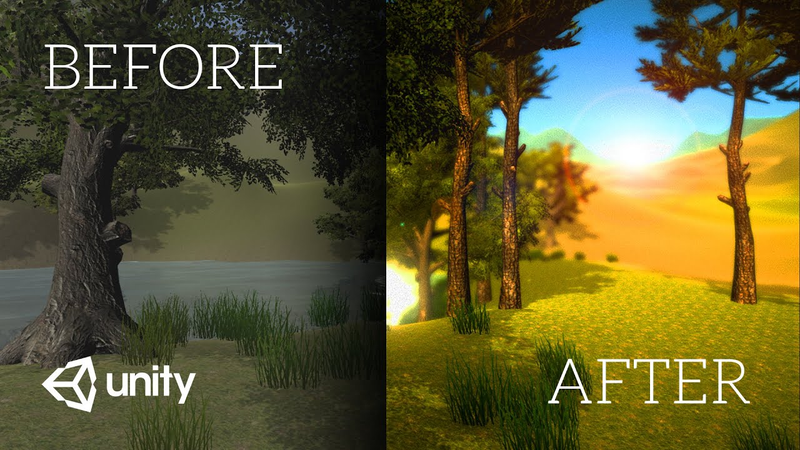
Your game 100x prettier in 10 seconds (Unity Image Effects Tutorial)
The implementation of post-processing effects serves as a highly effective method for enhancing the visual fidelity and professional aesthetic of video games developed within the Unity engine.
- The Unity Post-Processing Stack allows developers to rapidly enhance visual fidelity and cinematic quality without requiring extensive manual asset adjustments.
- Strategic use of post-processing is a critical factor in the success of game pitches, crowdfunding campaigns, and overall player reception.
- Key technical effects include ambient occlusion for edge shadows, bloom for high-dynamic-range lighting, and color grading for precise atmospheric control.

GDC Plays indivisible with Mike Z and Mariel Cartwright
The development of Indivisible serves as a case study in balancing ambitious creative vision with the practical realities of independent game production.
- Lab Zero Games chose IndieGoGo over Kickstarter for their crowdfunding campaign because IndieGoGo charged lower overhead fees, though they noted that Kickstarter holds significantly more brand recognition and reach in the industry.
- The team prioritized open development by hosting multiple backer previews, which provided valuable public feedback but required significant extra work to ensure early builds did not spoil the game's story.
- To optimize performance for the Nintendo Switch, the developers cut content and character screens to reduce memory usage, ensuring the console only needed to load active NPCs and party members rather than entire level assets.